


The 3-month mark is one of the most celebrated milestones in the first year — and for good reason. It's the point where most of the hardest parts of the "fourth trimester" begin to ease, and where baby's personality starts to emerge in genuinely exciting ways. Here's a complete look at what to expect at 3 months, what's developing under the surface, and how to support each area of growth.
Physical Milestones at 3 Months
Head Control
By 3 months, most babies can hold their head at 90 degrees during tummy time and maintain it steadily for several minutes. When pulled gently to sitting, the head no longer lags behind the body. Full independent head control is typically established between 3 and 4 months. See our full guide on when babies hold their head up for the complete timeline.
Rolling (Beginning)
Some babies begin rolling front to back as early as 3 months, though 4–5 months is more typical. If you notice your baby shifting their weight or rocking to one side during tummy time, rolling is coming soon. Now is the time to stop leaving baby on elevated surfaces unattended.
Hand and Arm Control
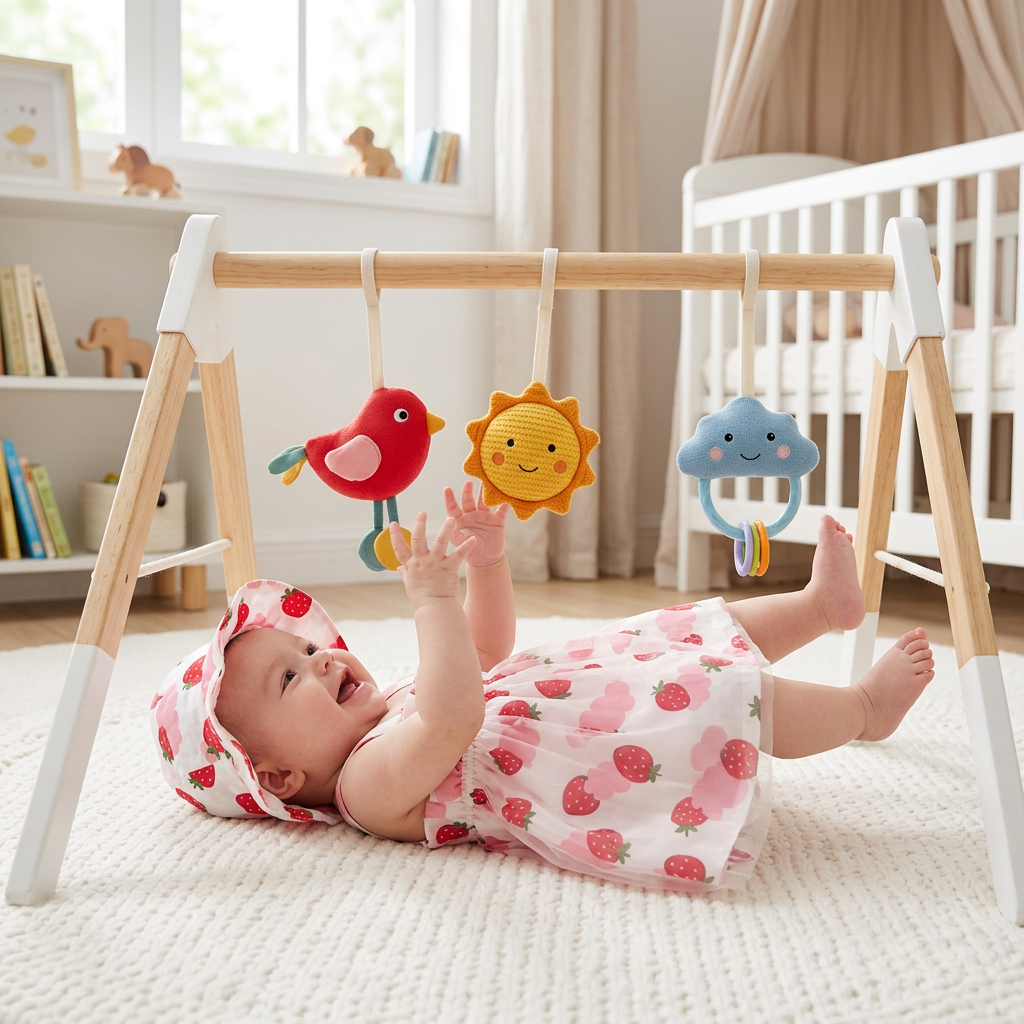
By 3 months, baby is actively batting at hanging toys and attempting to reach for objects placed within arm's reach. The grasp reflex from birth is fading, replaced by intentional grasping. Hands spend a lot of time at the mouth — this is normal sensory exploration, not teething.
Social and Emotional Milestones at 3 Months
Social Smiling and Laughing
The social smile — a real smile in response to a face or voice — should be well established by now. Many babies produce their first genuine laugh around 3–4 months, usually in response to tickling, a funny sound, or a face they find surprising. These laughs are among the most rewarding moments of early parenthood.
Face Recognition
Baby now clearly recognizes primary caregivers and may visibly calm or light up at a familiar face. They're starting to distinguish strangers from known people, though full stranger anxiety doesn't typically arrive until 6–8 months.
Emotional Range
The range of emotions baby can express is expanding. Beyond hunger and discomfort cries, you'll notice different vocalizations for boredom, excitement, and tiredness. Learning to read these signals makes daily life significantly smoother.
Communication Milestones at 3 Months
Cooing and Babbling
Soft vowel sounds ("ooh", "aah") are well established by 3 months. Some babies begin producing consonant sounds (ba, ga, ma) earlier than expected. "Serve and return" conversation — where you respond to baby's sounds and wait for their response — is one of the most effective ways to support language development at this age.
Visual Tracking
Baby tracks moving objects smoothly across the full visual field. Color vision has improved significantly. High-contrast toys and books remain excellent for visual stimulation, though baby is now beginning to show preferences for color. See our guide on when newborns start to see for the full visual development timeline.
Sleep at 3 Months
Many babies begin consolidating nighttime sleep around 3 months as circadian rhythms develop. A 4–6 hour nighttime stretch becomes more common, though not universal. Total sleep is typically 14–16 hours per day, distributed across 3–5 naps plus a longer nighttime period.
What to Dress a 3-Month-Old In
At 3 months, baby is increasingly active — batting, kicking, beginning to roll. The best outfits are stretchy, non-restrictive, and have nothing on the front that presses into them during tummy time. Soft bodysuits, lightweight rompers, and dresses with onesies underneath all work well. For detailed outfit guidance by milestone stage, see our guide to what to wear at each milestone.
When to Speak to Your Pediatrician
Flag these signs at your 3-month well visit: no social smiling, no cooing or vocalization, not tracking objects with eyes, no head lifting during tummy time, or floppy muscle tone. Most well-child visits include a developmental screening — use it to ask any questions that have been building up.