


Dressing your baby between 3 and 6 months old is a sweet, fleeting adventure. This is one of the most rapid growth spurts they’ll experience, and it's a time when comfort, safety, and convenience become your guiding stars. Think soft, stretchy fabrics and simple designs that make those frequent diaper changes a little easier on everyone.
Welcome to the 3-6 Month Clothing Adventure
If you're navigating the world of 3 to 6 months baby clothes, it can feel like a whirlwind of confusing sizes and endless choices. You're not alone. It's so easy to worry you're buying too much for a phase that seems to fly by in the blink of an eye.
Think of this guide as a warm, reassuring friend holding your hand through it all. We’re here to give you practical, parent-tested advice that puts your baby's comfort—and your peace of mind—first. We'll walk through everything from why one brand's "6 months" is another's "3 months" to how to choose the safest, softest fabrics for their delicate skin.
What to Expect in This Guide
Our goal is to help you build a simple, functional wardrobe that’s as adorable as it is practical. Let's cut through the noise and focus on what you truly need. Here’s what we'll cover together:
- Sizing Secrets: Finally make sense of the wild world of baby sizing charts.
- Fabric and Safety: Learn how to spot the good stuff, like GOTS-certified cotton, and steer clear of hidden irritants.
- Wardrobe Essentials: Get a no-fuss checklist so you buy just enough, not too much.
- Seasonal Smarts: Master the art of layering to keep your little one comfy, whatever the weather.
With so many parents prioritizing quality and comfort, it's no surprise the global infant clothing market was valued at a whopping USD 56 billion in 2023 and is only growing. You can read more about the baby apparel market trends to see how families just like yours are shaping the industry.
This guide is here to make you feel confident and prepared. We want you to spend less time stressing about outfits and more time soaking in every precious cuddle and coo of these fleeting months.
Decoding Baby Clothes Sizing with Confidence
Have you ever held up two "3-6 month" onesies from different brands and noticed one is clearly bigger? You're not imagining things. This is a common frustration, and it comes down to a simple truth: the age on the tag is just a guideline.
Think of 3 to 6 months baby clothes sizing as a brand's best guess based on average baby measurements. But babies aren't average—they’re all wonderfully unique. A long, lean baby and a short, chubby baby might be the exact same age but will fit into clothes completely differently. That's why relying on your baby’s actual weight and height is always a smarter move than just going by age.
The baby apparel industry is booming as parents seek out better options. The global market for baby clothes was valued at a huge $56 billion in 2023 and is expected to climb to $82 billion by 2032.
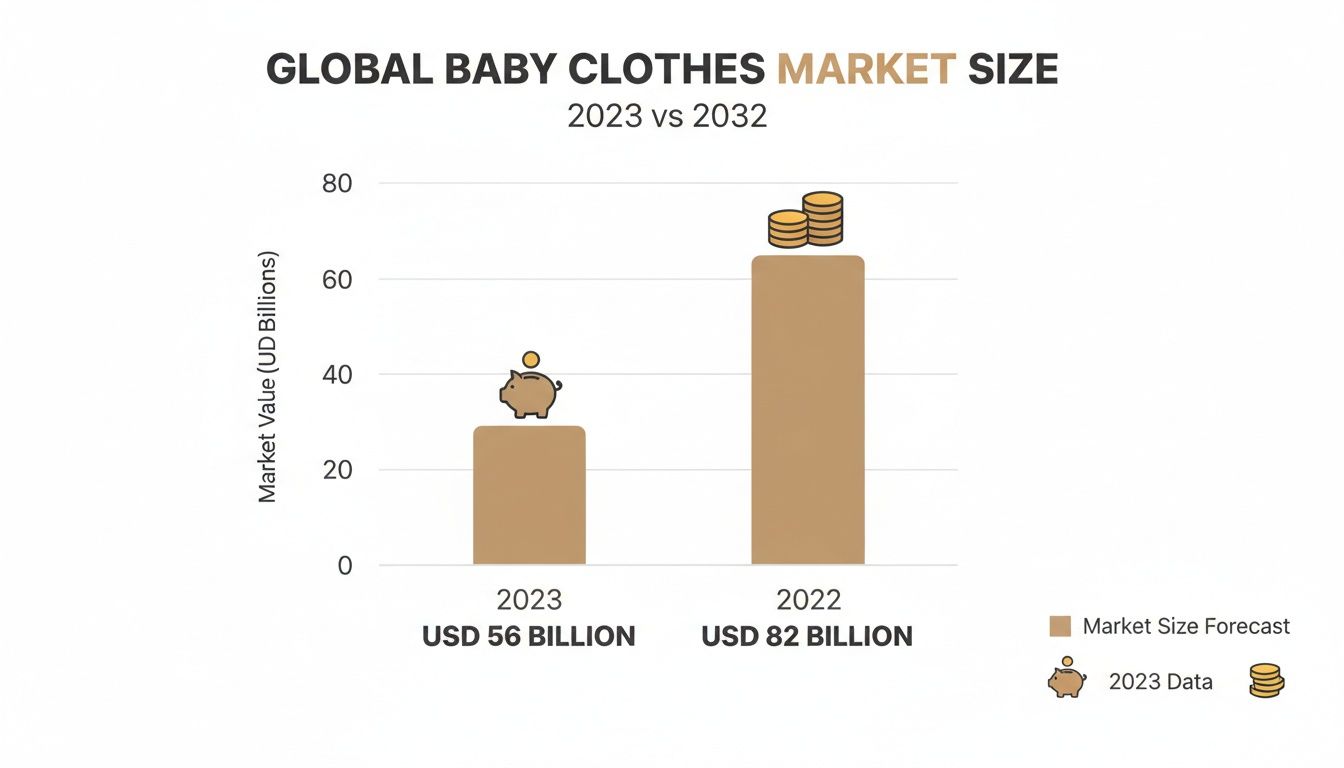
This incredible growth shows just how much parents value finding high-quality, comfortable clothes that fit their little ones just right.
Navigating the Sizing Maze
Since there's no universal sizing chart, what’s considered "3-6 months" at one store can be different at another. European brands, for example, often use a baby’s length in centimeters, which can be a much more precise way to find a good fit. This is why it’s so important to glance at each brand's specific size chart before buying.
To help you get that perfect fit, here’s a quick comparison of what "3-6 months" often means across a few popular brands.
Quick Guide to 3-6 Month Baby Clothes Sizing
| Brand | Size Label | Average Weight (lbs/kg) | Average Height (in/cm) |
|---|---|---|---|
| Mimou | 3-6M | 12-17 lbs / 5.4-7.7 kg | 24-26 in / 61-66 cm |
| Carter's | 6M | 12.5-16.5 lbs / 5.7-7.5 kg | 24-26.5 in / 61-67 cm |
| Gerber | 3-6M | 12-16 lbs / 5.4-7.3 kg | 24-26 in / 61-66 cm |
| H&M | 4-6M | 13-18 lbs / 6-8 kg | 24.5-27 in / 62-68 cm |
| Old Navy | 3-6M | 12-17 lbs / 5.4-7.7 kg | 23-27 in / 58-69 cm |
As you can see, the numbers can vary quite a bit! A quick check like this can save you a lot of guesswork.
Practical Tips for a Perfect Fit
Beyond the charts, you can use a few simple tricks to see if an outfit fits well right now.
- The Two-Finger Rule: Around the neck and waist, you should be able to slide two fingers comfortably between the fabric and your baby’s skin. If it’s too tight, it's a no-go. If it’s way too loose, it could be a safety issue.
- The Diaper Check: Any bodysuit or onesie needs plenty of room for a diaper—even a full one! If the snaps are straining to close, it’s definitely time to size up.
- Go for Stretch: Fabrics with a little give are a parent's best friend. We love using soft, stretchy cottons in our Mimou Babywear collections because they offer more wiggle room and can make an outfit last that much longer.
When in doubt, always size up. It's far better for an outfit to be a little roomy than uncomfortably tight. A slightly larger size ensures your baby has the freedom to move, kick, and explore their world without restriction. This simple rule will save you from frequent returns and keep your little one happy.
Choosing the Safest and Softest Fabrics for Your Baby
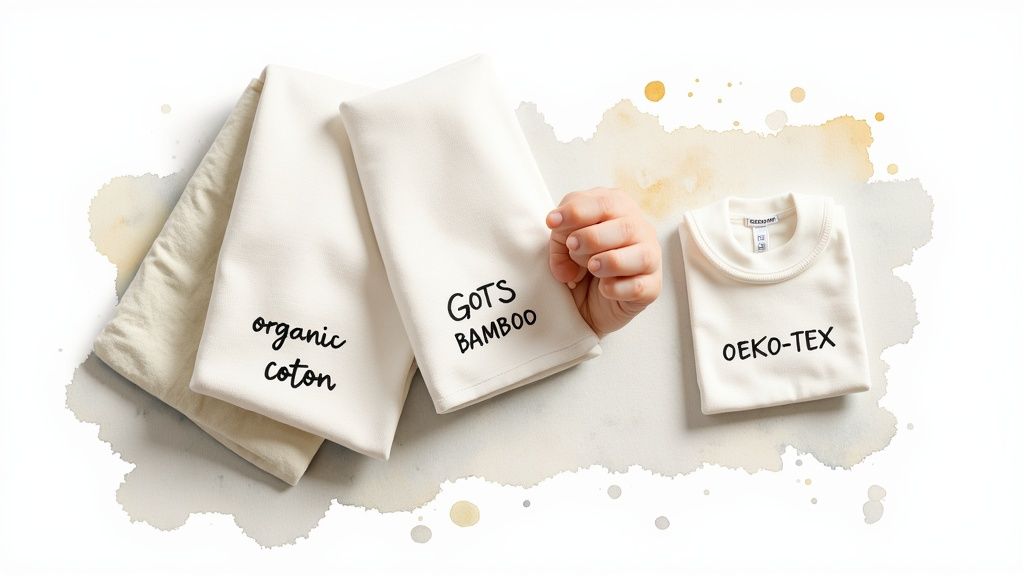
Your baby's skin is new to the world and incredibly delicate. When you're picking out 3 to 6 months baby clothes, the fabric is so much more than a cute pattern—it's one of the most important choices you'll make for their comfort and wellbeing. Think of their clothes as a gentle, protective hug that lasts all day.
This is why natural fibers are a new parent's best friend. Materials like organic cotton and bamboo are superstars because they're breathable, naturally hypoallergenic, and amazing at helping your baby regulate their body temperature. They keep your little one cool on warm days and perfectly cozy when it's chilly.
Why Natural and Certified Fabrics Matter
When you see a GOTS (Global Organic Textile Standard) label on a garment, it's a huge reassurance. This certification is a promise that the cotton was grown without harsh pesticides and processed cleanly, resulting in a pure, soft fabric that’s gentle on sensitive skin. It’s a simple way to avoid potential irritants.
Another label to look for is OEKO-TEX STANDARD 100. This is your guarantee that every part of the item—from the thread to the buttons—has been tested and found free of a long list of harmful substances. It gives you peace of mind that what's touching your baby's skin is as safe as it gets. You can dive deeper into the benefits in our guide to the best organic cotton baby clothes.
With parents prioritizing these premium, safe materials, the U.S. baby clothes market is expected to hit about USD 8.17 billion in 2025. This growth is largely driven by families like yours seeking out organic and sustainable options.
Choosing certified organic fabrics is like picking the freshest, most wholesome food for your baby’s skin. You're opting for something pure, gentle, and free from the harsh chemicals often found in conventional textiles, giving you total peace of mind.
Looking Beyond the Fabric Itself
Safety in 3 to 6 months baby clothes isn't just about the material. As babies start wiggling, grabbing, and exploring, it's crucial to check for potential hazards in the clothing's design.
Here are a few simple safety checks to keep in mind:
- Avoid Small Embellishments: Steer clear of tiny buttons, beads, or decorative sequins. These can pop off and quickly become a choking hazard.
- Check for Secure Fastenings: Make sure snaps and zippers are sewn on tightly and don't have any sharp edges that could scratch delicate skin.
- Remove All Drawstrings: Hoodies or pants with drawstrings are a serious strangulation risk and should be avoided completely. The safest outfits are simple and free of unnecessary cords.
By focusing on soft, certified fabrics and simple, safe designs, you can build a wardrobe that not only looks adorable but truly nurtures and protects your baby.
Building a Practical Wardrobe Without Overbuying
It’s so easy to get carried away by all the tiny, adorable outfits out there. One minute you’re browsing, and the next, your baby’s closet is bursting at the seams—yet you still reach for the same few trusty pieces every day. Building a practical, almost minimalist wardrobe for 3 to 6 months baby clothes is a game-changer for new parents.
The goal isn’t to deny your baby cute clothes! It’s about creating a smart, functional system that saves you time, money, and stress. A smaller, thoughtfully chosen collection means less laundry, less clutter, and faster decisions when you’re dressing a wiggly baby.
The Capsule Wardrobe Concept for Baby
Ever heard of a capsule wardrobe for adults? The same idea works wonders for babies. It’s all about having a core collection of essentials where every piece can be mixed and matched with everything else.
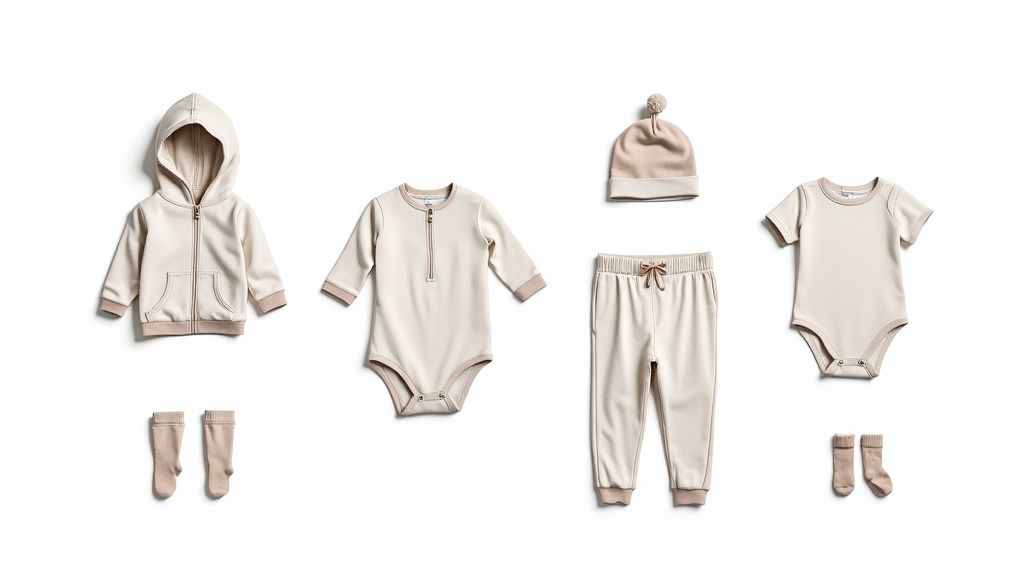
Start by picking a simple color palette—think soft neutrals like cream, beige, and grey, with a few complementary accent colors. This simple trick makes putting together an outfit effortless. Now, no matter what you grab in a hurry after a spit-up incident, it’s all going to look coordinated and cute. It’s a brilliant way to turn a handful of items into dozens of different outfits.
The secret is to focus on the hardworking essentials you’ll use day in and day out. These are the versatile pieces that can handle messy feedings and long naps, all while keeping your baby comfortable and happy.
The Essential 3-6 Month Baby Clothes Checklist
So, how much do you actually need? This checklist offers a solid foundation for a functional wardrobe, giving you enough to handle daily messes without feeling chained to the washing machine. You can always add a few special occasion outfits later, but these are the true workhorses.
Here's a handy table to guide your shopping and help you stock up on just the right amount.
| Clothing Item | Recommended Quantity | Key Features to Look For |
|---|---|---|
| Bodysuits (Onesies) | 8-10 | Envelope necklines, soft cotton, sturdy snaps |
| Footed Sleepers | 6-8 | Two-way zippers for easy diaper changes |
| Pants or Leggings | 5-7 | Soft, stretchy waistbands, breathable fabric |
| Socks | 6-8 pairs | Grips on the bottom, stay-on cuffs |
| Light Cardigan/Jacket | 2-3 | Simple zip or snap closures, no hoods for sleep |
| Seasonal Hat | 1-2 | Sun hat for warm weather, a soft beanie for cold |
With this list as your guide, you’ll have a fantastic starting point for building a practical set of 3 to 6 months baby clothes that really works.
If you love this simplified approach, curated collections can make shopping even easier. Bundles are often designed with mix-and-match versatility in mind, taking the guesswork out of building a cohesive wardrobe. To see how it all comes together, feel free to explore our thoughtfully designed Mimou baby bundle sets. By focusing on quality over quantity, you can create a beautiful and practical collection that truly serves your family.
Dressing Your Baby Comfortably for Every Season
"Is my baby too hot? Or too cold?" This is a question that runs through every new parent's mind. Keeping your little one comfortable as the seasons shift can feel like a guessing game, but it doesn't have to be. With a few simple layering tricks, you can feel confident you're dressing your baby perfectly for any weather.
The key to dressing a baby in the 3 to 6 month stage is layering. Babies aren't great at regulating their own body temperature yet—they count on you to help them stay just right. A fantastic rule of thumb is to dress your baby in one more thin layer than you're comfortably wearing yourself.
Mastering the Art of Winter Layering
When the temperature drops, it's tempting to bundle your baby in the puffiest outfit you can find. But too much bulk can be uncomfortable and unsafe, especially in a car seat. Instead, think in three easy layers:
- Base Layer: Start with a soft, breathable long-sleeved bodysuit made from organic cotton. Comfort is key for this layer against their skin.
- Mid Layer: Next, add a warmer layer, like a fleece sleeper or a cozy sweater-and-pants set.
- Outer Layer: If you're heading outside, a jacket or a snowsuit is perfect. Just always remember to remove this bulky layer before buckling them into their car seat for safety.
This layering system is brilliant because it traps warm air close to their body and makes it easy to peel a layer off when you go from the chilly outdoors into a warm house.
The best way to check if your baby is comfortable is to feel the back of their neck or their chest. If it feels sweaty, they're too warm. If it feels cool, they might need another light layer. Don't be fooled by their hands and feet—they often feel cold and aren't a reliable indicator of their core body temperature.
Staying Cool and Safe in the Summer
Once warm weather arrives, the focus shifts to sun protection and breathability. A single layer of light, loose-fitting clothing is usually all your baby needs.
A simple cotton bodysuit or a breezy romper in a light color (which reflects sunlight) is perfect. For any time spent outside, a wide-brimmed sun hat is an absolute must-have to protect their delicate face and scalp.
Weather is a huge factor for parents, and it shows in the market. Outerwear—from winter coats to light cardigans—is projected to make up about 69.3% of the baby apparel market share by 2025. You can see more insights on baby clothing trends at Persistence Market Research. For a deeper dive into keeping your baby comfortable, check out our guide on how to tell if your baby is too hot.
Keeping Baby Clothes Clean and Soft
Baby clothes are magnets for messes, aren't they? Between spit-up, drool, and the occasional diaper blowout, those adorable little outfits go through a lot. Figuring out a simple laundry routine can make all the difference, keeping those sweet 3 to 6 months baby clothes clean, soft, and ready for more cuddles.
First, let's talk about detergent. Your baby’s skin is incredibly sensitive, so you'll want to choose a detergent that's gentle, fragrance-free, and hypoallergenic. Harsh chemicals and strong perfumes can easily lead to rashes and irritation. It's best to think of their laundry soap like their lotion—it needs to be pure and mild.
Tackling Tough Stains
Let’s be honest, some of those stains look intimidating. But with quick action, even the most stubborn ones don’t stand a chance. The secret is to treat them right away, before they have time to set.
For everyday messes like spit-up or formula, here’s a simple plan:
- Rinse Immediately: Hold the stained spot under cold running water to wash away as much as you can.
- Pre-Treat Gently: Dab a small amount of your baby-safe detergent directly onto the stain. A paste made from baking soda and water also works wonders!
- Soak if Needed: For really tough spots, let the item soak in a small basin of cold water for about 30 minutes before tossing it in the wash.
This little pre-treatment routine is a lifesaver. It lifts most stains without harsh chemicals, which helps keep those delicate fabrics in great shape.
Smart Laundry Hacks for Baby Clothes
A few clever tricks can make laundry day feel less chaotic. For the first few months, it’s a good idea to wash your baby's things in a separate load. This keeps their delicate clothes away from heavily soiled adult clothes and stronger detergents.
A small mesh laundry bag will quickly become your best friend. Toss tiny socks, mittens, and hats into one before they go in the wash, and you’ll never lose a single sock to the machine again. It's a simple hack that saves so much frustration!
Finally, always give the care label a quick glance. Following the washing and drying instructions is the best way to maintain the softness and shape of your baby’s wardrobe, keeping every piece cozy and picture-perfect for as long as possible.
Answering Your Top Questions About 3–6 Month Baby Clothes
Let's talk about some of the questions that might be on your mind. When you're in the thick of it with a new baby, everything can feel new and uncertain. Don't worry—we've got answers to help you feel more confident.
Should I Buy 3–6 Month Clothes or Jump to the 6–9 Month Size?
This is a classic dilemma! While it's tempting to buy bigger clothes they can "grow into," a proper fit is important for both comfort and safety right now. Clothes that are too baggy can get tangled up, especially during sleep.
Our best advice? Focus your shopping on the 3–6 month size for the bulk of their wardrobe. However, it's a smart move to have a couple of sleepers and bodysuits in the 6–9 month size tucked away. That way, you're not caught off guard by a sudden growth spurt (and they do happen overnight!).
Are Secondhand Baby Clothes a Safe Bet?
Yes, absolutely! Hand-me-downs and secondhand finds are fantastic—they're gentle on your wallet and a great choice for the planet. Babies grow so quickly that these clothes are often barely worn.
Just give everything a quick inspection before use. Check for things like loose buttons, remove any drawstrings, and make sure zippers are working properly. A thorough wash with a gentle, baby-friendly detergent is all you need to make them fresh, clean, and safe for your little one.
A study on first-year baby expenses showed that parents can spend over $600 annually on clothing alone for a child under two. Embracing hand-me-downs and secondhand finds is one of the most effective ways to manage this cost.
Realistically, How Many Outfits Does a Baby Need in a Day?
Get ready for some quick changes! For a baby this age, you can easily go through 2-3 outfits a day. Between spit-up, the constant drool from early teething, and the inevitable diaper blowouts, things get messy fast.
Having a good stack of bodysuits and sleepers on hand is a lifesaver. It means you aren't constantly doing laundry and always have a fresh, cozy outfit ready to go. It's all about making your life just a little bit easier during this beautiful stage.
Here at Mimou Babywear, we're parents too, and we're all about making those daily moments as simple and sweet as possible. We craft soft, durable essentials designed for real life with a baby—gentle on their skin and practical for you.