


A day at the beach with a baby sounds idyllic. And it can be — but only if you're prepared. Between the heat, the sun, the sand, and the sea, the beach is one of the most demanding environments you'll take a young baby into. The right outfit and the right bag can be the difference between a magical memory and a stressful afternoon cut short.
Here's the complete guide to dressing your baby for the beach and packing everything you'll actually need.
Is the Beach Safe for Babies?
Yes — with the right precautions, and at the right age.
- Under 6 months: The AAP advises against direct sun exposure for newborns and young infants. Sunscreen is not recommended at this age. If you take a very young baby to the beach, keep them entirely in the shade, cover with lightweight long-sleeve clothing, and limit exposure during peak UV hours (10am–4pm).
- 6 months and older: Baby-safe mineral sunscreen (SPF 50+) can be used. Still prioritize shade, hats, and UV-protective clothing over sunscreen as the first line of defense.
The best beach timing for any age: early morning (before 10am) or late afternoon (after 4pm). The light is softer, the sand is cooler, and UV exposure is significantly reduced.
What to Dress Baby in at the Beach
The beach outfit needs to do four things: protect from sun, stay cool, handle sand and water, and be easy to change.
For Babies Not Yet in the Water
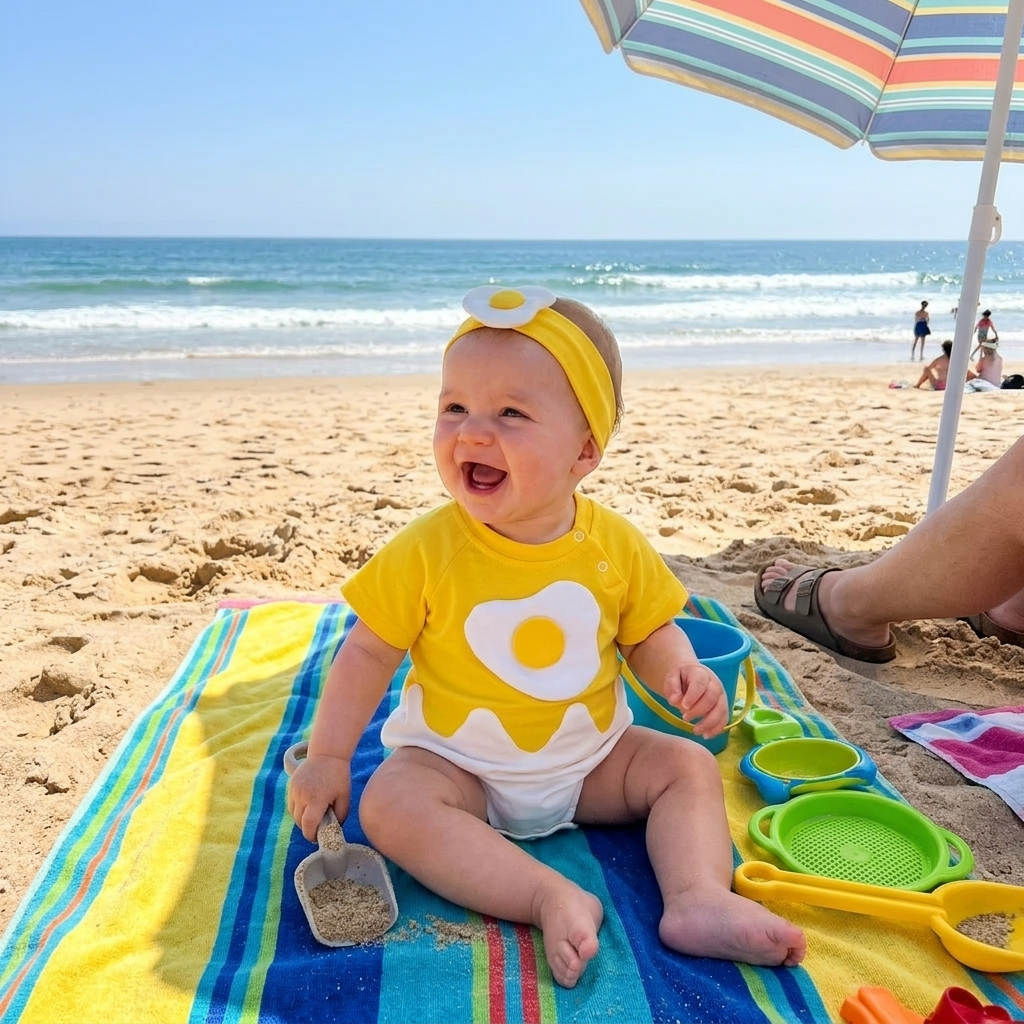
- A single lightweight layer: A short-sleeve cotton romper or a loose bodysuit. Breathable, easy to remove, and provides light coverage without overheating.
- UPF-rated long-sleeve rashguard: If sun exposure will be more than minimal. UPF 50+ blocks 98% of UV rays — far more reliable than sunscreen alone on squirming babies.
- Wide-brim hat: The single most important beach accessory. Protects face, ears, and neck. Choose one with a chin strap — ocean breeze will take a hat off an unstrapped baby instantly.
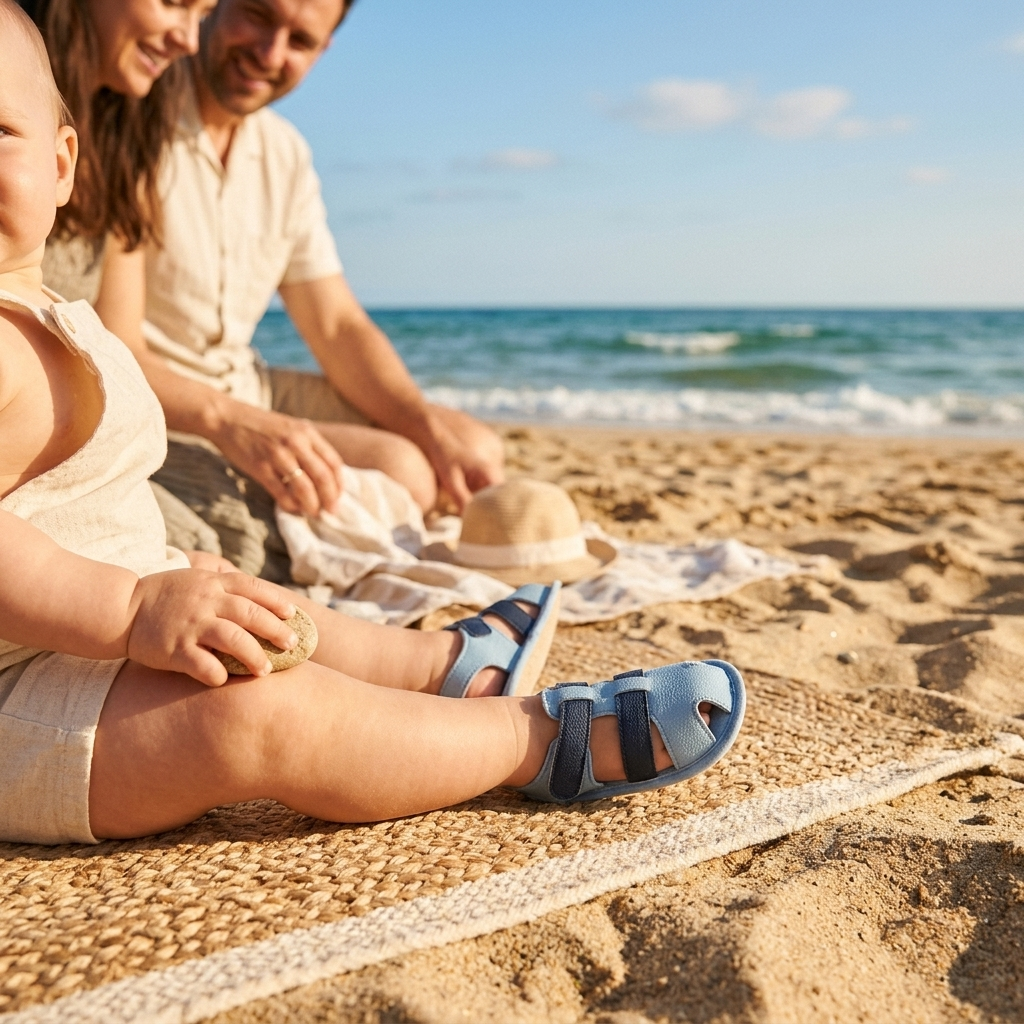
- Soft cotton sandals: For moving from towel to shade and back. Breathable soles, easy to take off when baby sits in the sand, comfortable for short walks on cooler sand.
For Water Time (6 months+)
- Swim diaper: Regular diapers absorb water and become heavy and dangerous. Swim diapers are essential for any water contact.
- UPF rashguard set: Top and bottoms with UPF 50+ rating. Covers most of the body so sunscreen only needs to go on face, hands, and any exposed areas.
- Water shoes: Optional but useful if the shoreline has rocks or shells. Soft-sole options work well for younger babies.
The Complete Beach Bag Checklist
Sun Protection
- Mineral sunscreen SPF 50+ (babies 6 months+)
- Wide-brim hat with chin strap
- UV beach tent or pop-up shade — the single best investment for a beach baby
- UPF rashguard or long-sleeve layer
Feeding
- Extra feeds — heat increases fluid needs. Breastfeed more frequently or offer additional formula.
- For babies 6 months+: a small water bottle with a few sips available
- Snacks for older babies, kept in an insulated pouch
- Insulated bottle bag to keep formula or expressed milk at safe temperatures
Clothing
- 2 full outfit changes (wet, sandy, and blowout all happen at the beach)
- Swim diaper x2
- Extra hat
- Dry bag or waterproof zip bag for wet clothes
Comfort & Safety
- Large beach towel or blanket for baby to lie on (sand-free mat is ideal)
- Portable changing pad
- Baby-safe insect repellent if near vegetation
- Small cooling mist spray for very hot days
Beach Safety Rules Worth Knowing
- Never leave baby unattended near water — even a very shallow edge. Drowning can happen silently and in seconds.
- Watch for overheating signs: flushed cheeks, sweaty neck, unusual fussiness, reduced alertness. Move to shade immediately and feed.
- Keep baby hydrated: In heat, breastfed babies may need to nurse more frequently. Formula-fed babies may need slightly more formula than usual. For babies under 6 months, no water — breast milk or formula only.
- Sand in eyes and mouth: Inevitable. Keep a clean wet cloth nearby. For eyes, rinse gently with clean water.
- Hot sand burns: Sand in direct sun can reach temperatures that burn baby skin. Always lay a mat or towel down and never let baby touch unshaded sand with bare skin on hot days.
After the Beach: What to Do
- Rinse baby with fresh water as soon as possible to remove salt, sand, and sunscreen residue.
- Check for sunburn — redness may not appear immediately. If you notice any pinkness, keep baby out of the sun and consult your pediatrician if severe.
- Expect a long nap — fresh air, sun exposure, and new stimulation is genuinely tiring for babies. This is normal and healthy.
- Offer extra feeds post-beach to rehydrate.
Shop Beach-Ready Baby Outfits at Mimou
Our summer collection is built for exactly these moments: lightweight organic cotton rompers that breathe in the heat, soft sandals that handle sand and shoreline, and easy-care fabrics that wash up perfectly after the adventure. From the first beach outing to a whole season of seaside memories, Mimou has everything your baby needs to be comfortable, protected, and beautifully dressed.
Browse the full summer and beach collection at Mimou Babywear.