


Few things make a new parent anxious quite as quickly as worrying about their baby's bowels — and few topics are as surrounded by confusion about what's actually normal. Before anything else, here's the most reassuring fact: baby bowel habits vary enormously, and a lot of what looks like constipation isn't. A breastfed baby can go a week without a dirty nappy and be perfectly fine. A baby can grunt, strain, go red in the face, and still not be constipated. Knowing what genuine constipation looks like — and what's just normal baby business — is the first and most important step.

What’s Normal (and Often Mistaken for Constipation)
- Infrequent pooing in breastfed babies: After the first 6 weeks, breastfed babies sometimes go several days — occasionally up to a week or more — between bowel movements. Because breast milk is so efficiently absorbed, there's simply little waste. As long as the stool, when it comes, is soft, this is completely normal and not constipation.
- Grunting, straining, and going red: Young babies often grunt, strain, and turn red while passing a perfectly soft stool. This is called infant dyschezia — they haven't yet learned to coordinate relaxing the pelvic floor while pushing. It looks like a struggle but isn't constipation, and it resolves on its own.
- Variable frequency: Newborns may poo after every feed; older babies far less often. Both ends of the range can be normal.
What Constipation Actually Looks Like
Genuine constipation is defined by the consistency and difficulty, not just the frequency. The real signs:
- Hard, dry, pellet-like stools — the single most reliable sign. Little hard balls rather than soft.
- Stools that are clearly painful to pass — crying, genuine distress, drawing up the legs in pain (different from routine grunting)
- Firm, bloated tummy
- A noticeable drop in appetite or general discomfort
- Streaks of blood on the stool or nappy — usually from a small tear (anal fissure) caused by passing a hard stool
Constipation is genuinely uncommon in exclusively breastfed babies. It becomes more likely with formula, and especially around two big transitions: starting solids, and switching to cow's milk at around a year.
Common Causes
- Formula feeding: Formula is digested differently from breast milk and can produce firmer stools. Always make up formula exactly to the instructions — over-concentrated formula (too much powder) is a common, avoidable cause of constipation.
- Starting solids: The transition to solid food frequently causes a bout of constipation as the digestive system adjusts. Low-fibre first foods (rice cereal, banana) can contribute.
- Dehydration: Not enough fluid — during hot weather, illness, or the shift to solids — leads to harder stools.
- Switching milks: Moving from breast to formula, changing formula brands, or introducing cow's milk can all trigger a temporary change.
Gentle Ways to Relieve Constipation
For younger babies (before solids):
- Bicycle legs: Lay baby on their back and gently move their legs in a cycling motion. This stimulates the bowel mechanically and often gets things moving.
- Warm bath: A warm bath relaxes the abdominal muscles and can encourage a movement.
- Tummy massage: Using gentle pressure, massage the tummy in clockwise circles (following the direction of the colon) below the belly button.
- Check formula preparation: Double-check you're measuring exactly — water first, then level scoops of powder.
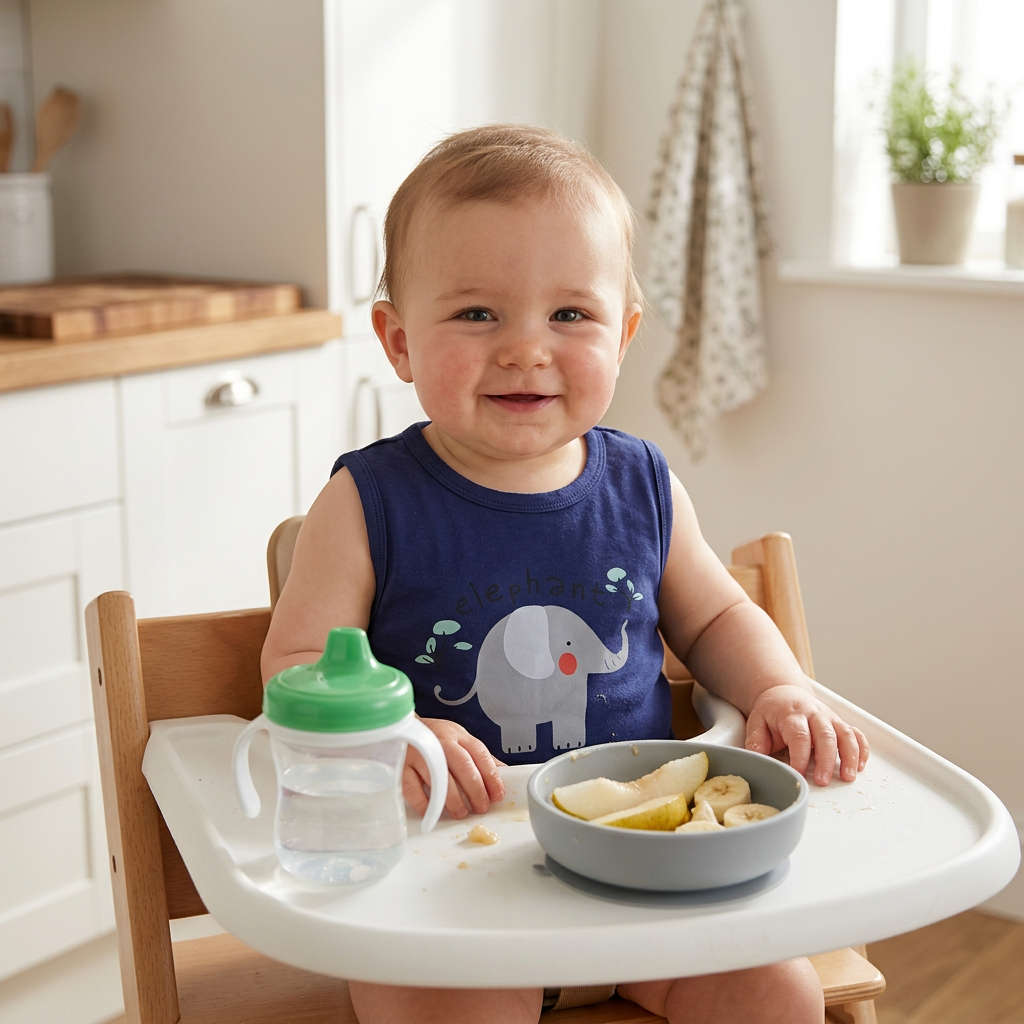
For babies on solids (around 6 months+):
- Offer extra water: Small amounts of cooled boiled water between meals once solids have started.
- The “P” fruits: Prunes, pears, peaches, plums, and apricots are natural, gentle stool-softeners. A few teaspoons of pureed prune or pear is a classic, effective remedy.
- More fibre: Wholegrain cereals, and pureed vegetables like peas and broccoli, add the fibre that firmer first foods may lack.
- Cut back temporarily on binding foods: Rice cereal, banana, and excess dairy can firm stools — ease off if constipation appears.
What NOT to Do
- Don’t give laxatives or suppositories without medical advice — baby bowels need a doctor's guidance for any medication.
- Don’t add sugar, juice, or anything to formula bottles to “loosen things up.”
- Don’t give water to a baby under 6 months without medical advice — it can be unsafe for young infants.
- Don’t use adult remedies or anything not specifically approved for infants.
When to Call the Doctor
Speak to your pediatrician if: constipation lasts more than a few days despite gentle measures; there's blood in the stool (beyond an occasional small streak from a fissure); your baby seems to be in significant pain, has a hard swollen belly, or is vomiting; a baby under 6 weeks old becomes constipated (always worth checking at this age); or constipation is recurrent. These can occasionally signal an underlying issue that's worth ruling out, and your doctor can recommend a safe infant-appropriate treatment if needed.
For the most part, though, baby constipation is an occasional, temporary, and very treatable bump — usually tied to a feeding change and resolved with a few gentle measures at home. For related digestive comfort, see our gas relief guide and, for the solids transition, our finger foods guide.