

The internet will tell you that you need hundreds of items before your baby arrives. Baby retailers, registry checklists, and well-meaning relatives will suggest gadgets, gear, and clothing in quantities that seem impossible to manage. The reality is far simpler: most babies need far fewer things than the industry suggests, and the parents who do best are often the ones who buy less, buy better, and stay flexible.
Here is the honest, practical list of what babies actually need — separated by category, trimmed of everything non-essential, and annotated with what actually matters.
The Truly Essential Baby Necessities
Sleeping
- A firm, flat sleep surface — A crib, bassinet, or bedside sleeper that meets current AAP guidelines. The mattress matters more than the crib itself: firm, flat, and fitted with a tight sheet. Nothing else in the sleep space.
- 2–3 sleep sacks — Season-appropriate TOG rating. Replaces loose blankets safely. Get at least two so one can be in the wash.
- A white noise machine or app — Not strictly necessary but dramatically improves sleep for most babies and parents. A simple, inexpensive option is perfectly fine.
Feeding
- Nursing supplies (if breastfeeding): Nursing bras, breast pads, a quality pump (many are covered by insurance), and nipple cream. A nursing pillow is genuinely helpful but not essential.
- Bottles (if formula or pumping): Start with 4–6. Don't buy 12 in one brand before knowing if baby takes to them. Nipple flow rate matters more than brand.
- Formula if not breastfeeding: Start with a smaller quantity until you know baby tolerates it.
- 6–8 burp cloths: You will use these many times daily. Muslin or cotton. The thicker the better.
Diapering
- Diapers: Don't stockpile newborn size — many babies outgrow NB diapers in the first week. Start with one small pack NB and stock up on size 1.
- Wipes: Fragrance-free. Buy in bulk once you know the brand works for your baby's skin.
- A changing mat: A simple portable pad works as well as an elaborate changing table. You'll change diapers everywhere.
- Diaper cream: A zinc oxide formula for rash prevention. Keep one at home and one in the bag.
Clothing
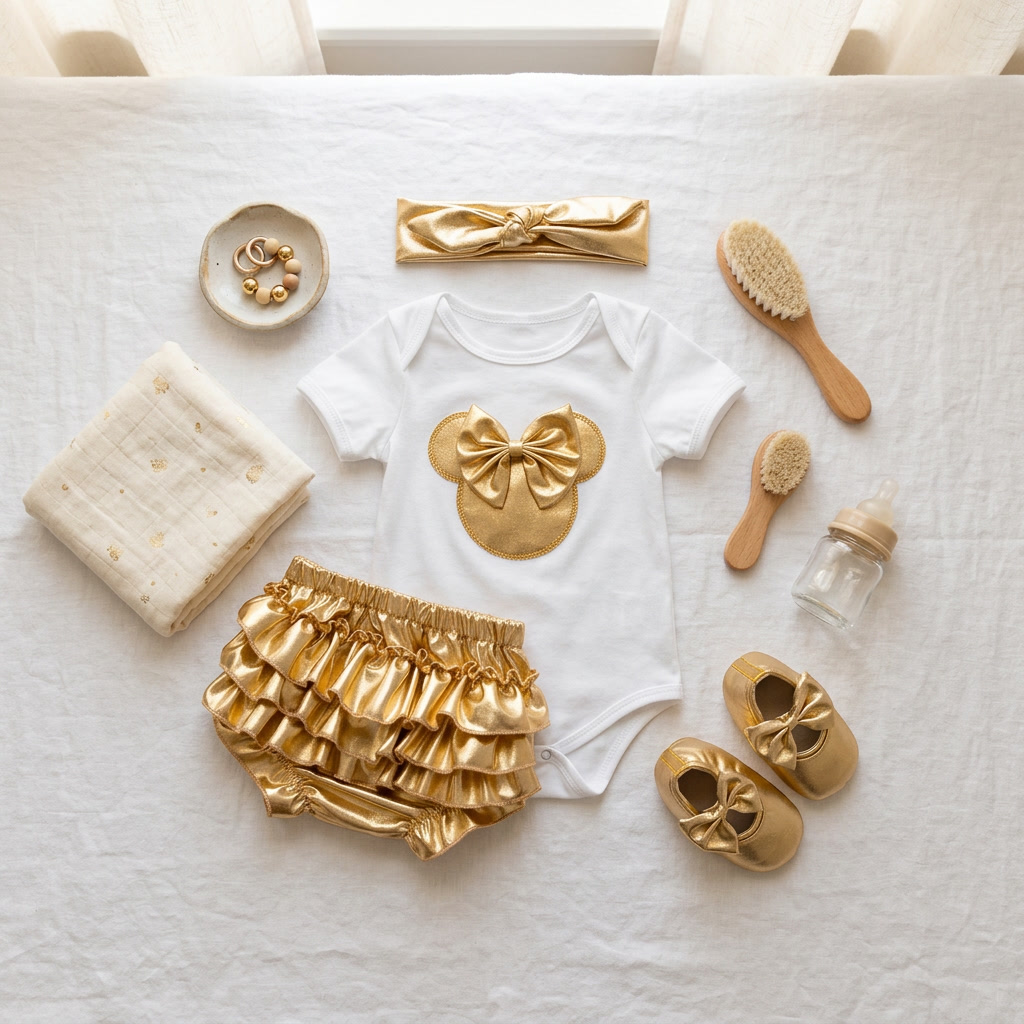
- 5–7 short-sleeve onesies in 0–3M: The daily uniform. Organic cotton, envelope neckline, quality snaps.
- 3–4 sleepers or footie pajamas: For nights and naps. Two-way zipper is essential.
- 3–4 pants or leggings: Soft waistband, easy to pair with onesies.
- 2–3 warmer layers: A zip cardigan, fleece suit, or knit jacket depending on season.
- 2–3 hats: Sun hat for outdoor warmth, knit hat for cooler weather.
- 4–6 pairs of socks: They get lost constantly. Have extras.
- 2–3 muslin swaddles: Used for swaddling, stroller shade, nursing cover, impromptu changing pad, and burp cloth. One of the most versatile items in existence.
Don't over-buy clothing in newborn size. Most babies wear NB for just 2–6 weeks. Focus your purchasing on 0–3M and 3–6M.
Bathing
- A baby tub or bath insert: A simple contoured tub or mesh insert for a regular tub works perfectly. No need for elaborate bath stations.
- Fragrance-free baby wash and shampoo: One gentle, certified product that covers both. Less is more here.
- 2–3 hooded towels: Soft, absorbent, and the hood keeps baby's head warm immediately after bath.
- Baby nail scissors or file: Newborn nails grow faster than you'd expect and are sharp. A soft file or baby-specific scissors is safer than clippers at first.
Travel and Outings
- A car seat: Non-negotiable from the first day. An infant bucket seat works well for the first 9–12 months; a convertible seat grows with baby longer.
- A stroller or carrier: One or both, depending on your lifestyle. A carrier is often enough for the first few months; a stroller becomes more useful as baby gets heavier.
- A diaper bag: Any bag with enough pockets and a waterproof lining. It doesn't need to be marketed as a diaper bag.
What You Don't Need (That Everyone Tells You That You Do)
- A wipe warmer: A nice idea that creates dependency and isn't necessary.
- A dedicated diaper pail: A regular trash can with a lid and fragrant bags works fine.
- A baby monitor with video unless you want it: A basic audio monitor is sufficient for most homes. Video is nice, not necessary.
- Shoes before walking: Soft booties for warmth only. Real shoes wait until baby walks independently.
- A changing table: A changing pad on a dresser or on the floor works identically.
- Elaborate toy sets for newborns: Newborns don't interact meaningfully with toys. Your face, your voice, and contrast patterns are all they need for the first months.
- Multiple bouncers and swings: Try one before committing. Not all babies like all types, and these are large, expensive items.
What to Buy Versus What to Borrow or Receive as Gifts
- Buy new: Car seat (safety standards; no way to verify history), crib mattress (same reason), sleep sacks, and any item that goes directly against baby's skin.
- Fine secondhand: Stroller (check for recalls), bouncer, swing, play mat, high chair.
- Great to receive as gifts: Clothing in 0–3M and 3–6M, muslin swaddles, sleep sacks, bath items, burp cloths.
The One Principle That Cuts Through Everything
Buy less, buy better, buy as you go. Most baby items that parents end up actually using were purchased after the baby arrived and they discovered what their specific baby needed. Resist the urge to fully equip before birth. Get the essentials, and add the rest based on what your baby actually responds to.
Build Your Baby Essentials Wardrobe at Mimou
The clothing portion of this list starts with quality basics: organic cotton onesies, soft sleepers, and versatile layering pieces that earn their place in the drawer every single day. At Mimou, every piece is designed to be a genuine essential — used daily, washed repeatedly, and built to last through the whole first year and beyond.
Browse the full Mimou newborn essentials collection.