


If there's one piece of clothing every baby wears in their first year, it's the onesie. Simple, practical, and available in every fabric and print imaginable, the baby onesie has earned its place as the true foundation of infant dressing. But not all onesies are created equal — and knowing what to look for, how many to buy, and how to use them makes a real difference.
Here's everything parents need to know about baby onesies, from first purchase through the first year.
What Is a Baby Onesie, Exactly?
A baby onesie (also called a bodysuit) is a one-piece garment that covers the torso and snaps closed at the crotch. That snap closure is what makes it a onesie rather than a regular shirt — it keeps the garment in place, prevents it from riding up, and provides clean, easy access for diaper changes without removing the whole outfit.
Onesies come in short-sleeve, long-sleeve, and sleeveless versions, and in dozens of fabrics, prints, and collar styles. They're worn as standalone outfits in warm weather and as base layers under pants, rompers, and dresses in cooler temperatures. It's the most versatile item in baby's wardrobe — and the one you'll reach for most often.
Types of Baby Onesies
By Sleeve Length
- Short-sleeve — The everyday workhorse. Perfect for warm weather alone, or as a base layer year-round. This is the one to stock the most of.
- Long-sleeve — For cooler months or as an under-layer for dresses and overalls. Provides warmth without adding bulk.
- Sleeveless — Ideal for very warm summer days or as a layering piece under cardigans and zip-ups.
By Neckline Style
- Envelope neckline — The fold-over shoulder design that allows the onesie to be pulled down rather than over baby's head during a blowout. A practical essential, especially in the newborn stage.
- Classic round neck — Clean and simple. Works well with collar accessories or worn alone.
- Collar detail (Peter Pan, lotus, bow) — Elevates a simple onesie into a complete outfit. Great for outings and photos without requiring additional pieces.
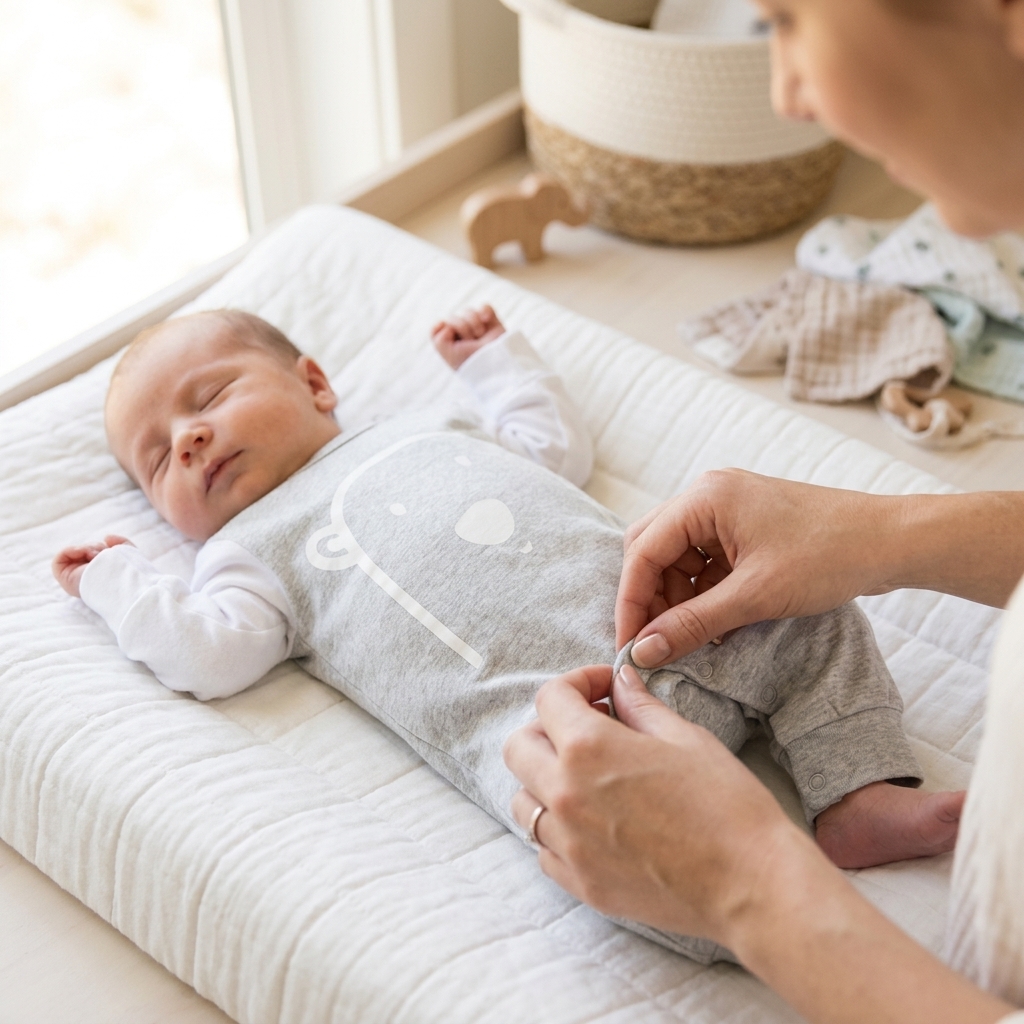
How Many Onesies Does a Baby Need?
More than you might think — but not as many as you might fear. Babies go through multiple outfit changes daily, especially in the newborn stage when spit-up, blowouts, and leaks are constant occurrences.
A practical count by size:
- Newborn: 5–7 (if you buy this size at all — many babies skip it)
- 0–3M: 7–10 (this is the size to stock the most)
- 3–6M: 6–8
- 6–12M: 5–7
With enough onesies to run a laundry cycle every 1–2 days without running out, you're well covered. Don't over-invest in any single size — babies outgrow each one faster than you expect.
What to Look for in a Quality Baby Onesie
- Organic cotton fabric — Soft, breathable, and free of harsh chemical finishes. The standard for anything worn directly against newborn skin.
- Flat seams — Seams that lie flat against the skin rather than raised ones. Check the inside of any onesie before buying — rough seams become irritants over hours of wear.
- Quality snaps — Test every snap. It should click positively when closed and release cleanly when opened. Snaps that feel loose or sticky at purchase will fail faster.
- Envelope neckline — A functional essential in the early months. The fold-over shoulder allows blowout removal without pulling over baby's head.
- Good snap count — Most onesies have 2–3 snaps at the crotch. Three-snap designs give slightly better coverage and diaper access.
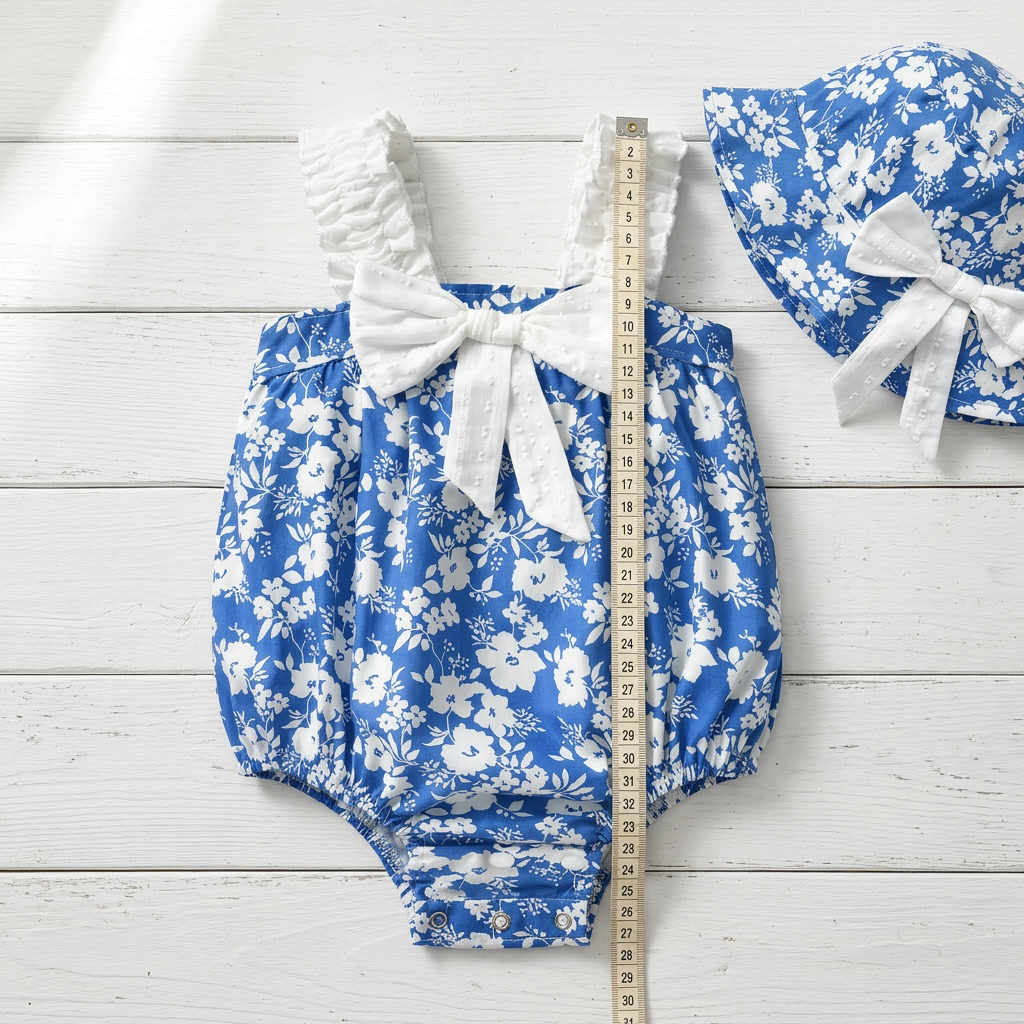
How to Use Onesies as a Layering Base
The onesie works hardest when it's used as a foundation rather than a standalone piece:
- Under overalls or shortalls: A plain or printed onesie under denim shortalls is an instant complete outfit with no coordination effort required.
- Under dresses: A long-sleeve onesie under a knit dress extends the dress into cooler seasons and provides full coverage for diaper changes.
- Under sleep sacks: A short-sleeve onesie is the standard first layer under a sleep sack in mild temperatures; long-sleeve for cooler rooms.
- Alone on warm days: In summer heat, a single short-sleeve onesie with a hat is often the most comfortable complete outfit.
Onesie Sizing: What to Know
Onesies are the most forgiving garment in terms of sizing because of the snap crotch — the bottom can be left unsnapped if a baby is between lengths, giving extra weeks of wear. When in doubt, size up rather than down: a slightly larger onesie still works well, while a too-small one is done.
Always check the weight range on the label rather than relying on the age label alone. Brands vary significantly in how they cut their sizes.
Caring for Baby Onesies
- Wash before first wear — always, to remove manufacturing residues
- Cold water on gentle cycle preserves color and fabric integrity
- Treat stains immediately with cold water (warm sets protein stains like milk and spit-up)
- Air dry when possible to extend the life of elastic and snaps
- Turn inside out for washing to preserve print quality
Shop Baby Onesies at Mimou Babywear
Every onesie in the Mimou collection is made from certified organic cotton with flat seams, envelope necklines, and quality snaps designed to last 100+ washes. From plain essentials to delicate collar prints, our bodysuits are built to be the foundation of a baby wardrobe that works every single day.
Browse the full Mimou onesie and bodysuit collection.