


Welcome, new parents, to one of the most exciting (and nerve-wracking!) milestones: your baby is on the move! As they start pulling up and exploring, your world gets a whole lot bigger—and suddenly, those shiny hardwood floors look like a slip-n-slide. This is where baby slipper socks come in, offering the perfect mix of a warm, cozy sock and a grippy, stable shoe to give you both a little more confidence.
The Secret to Safer First Steps
Watching those first wobbly steps is a heart-in-your-throat moment you'll cherish forever. It’s a huge leap into toddlerhood, but it often happens on surfaces like tile or laminate that are tricky for unsteady little feet. That's precisely the problem slipper socks were designed to solve.
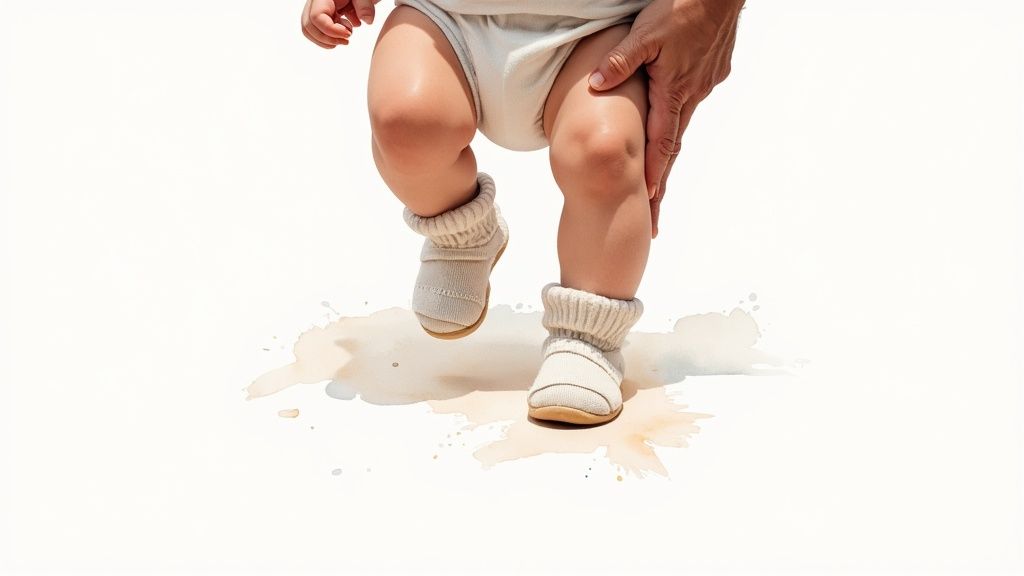
Think of them as a gentle introduction to the world of footwear. Rigid, hard-soled shoes can actually get in the way of natural foot development. Slipper socks, on the other hand, provide a "barefoot-but-better" feeling. They protect those delicate feet from cold floors and rough textures but are flexible enough to let your baby build strong muscles and find their balance naturally.
Why They're More Than Just Cute
While they are ridiculously adorable, the real brilliance of slipper socks is in their thoughtful design. They tick multiple boxes for new crawlers and early walkers, making them a must-have in every baby's wardrobe. Here’s what sets them apart:
- Safety First: The non-slip grips on the bottom are a game-changer. They provide that crucial bit of traction to help prevent the tumbles that can knock a new walker's confidence.
- All-Day Comfort: Crafted from soft, breathable materials like cotton, they keep tiny toes warm and cozy without ever getting sweaty or stuffy.
- Healthy Foot Development: Their flexible, sock-like fit mimics being barefoot, which podiatrists say is the best way for babies to strengthen the tiny muscles in their feet and ankles.
Slipper socks are the perfect bridge between the freedom of bare feet and the protection of a shoe. They give your baby the sensory feedback they need from the ground to learn balance, all while adding a crucial layer of safety.
At the end of the day, they provide a secure foundation for every new adventure, from cruising along the furniture to taking those first triumphant steps across the room. They aren't just an accessory; they're a tool that supports one of the biggest milestones in your baby's life.
Why Slipper Socks Are a Nursery Essential
Just when you think you've got this parenting thing figured out, your little one starts pulling themselves up on the coffee table. It's an amazing milestone! But suddenly, your once-harmless hardwood floors look like a toddler-sized ice rink. This is exactly where baby slipper socks become a parent's best friend.
Honestly, the biggest reason we all love them is the peace of mind they bring. Those little silicone dots on the sole aren't just a cute design; they provide real, honest-to-goodness traction on slippery surfaces like tile, laminate, or wood. For a wobbly new walker, that extra grip can make all the difference, turning a potential slip into just another step on their big adventure.
It's a simple idea, but it’s one that parents are catching onto fast. The global market for baby non-slip slipper socks was worth about USD 1.2 billion in 2023 and is projected to skyrocket by 2033. Why? Because more and more of us are looking for practical, safe solutions for our increasingly mobile kids. You can dive deeper into the numbers with market insights from DataHorizzon Research.
More Than Just a Grip
But hold on, preventing a tumble is just the beginning. The real magic of slipper socks is how they manage to do so much more for your baby's development and your daily sanity.
-
Happy, Healthy Feet: Unlike stiff, clunky shoes, slipper socks are wonderfully soft and flexible. This lets your baby's feet bend, flex, and grip the floor naturally, which is crucial for building up those tiny foot muscles and arches they'll need for confident walking.
-
The "Barefoot-But-Better" Feeling: You’ve probably heard pediatricians say that barefoot time is fantastic for helping babies develop balance and feel the world around them. Slipper socks are the next best thing. They give your baby that close-to-the-ground sensory feedback while protecting their soft skin from cold floors or rough textures.
-
Go-Anywhere Practicality: They're so light and easy to stuff into a diaper bag, making them perfect for pretty much any indoor setting. Heading to daycare? Visiting Grandma's house with the super-slick floors? Or just trying to keep those little toes warm on a chilly morning? Slipper socks are the answer.
Think of slipper socks as the perfect compromise. They offer all the developmental benefits of being barefoot, but with the safety grip of a shoe and the cozy comfort of a favorite sock.
At the end of the day, slipper socks aren't just another cute piece of baby gear. They're a genuinely smart and practical tool for modern parents. They support your baby's physical journey, keep them safer during those crucial early steps, and just make life a tiny bit easier for you.
How To Choose The Perfect Pair Of Slipper Socks
Stepping into the world of baby gear can feel like navigating a maze, but picking out the perfect pair of baby slipper socks should be fun, not frustrating. Think of it like choosing a cozy little sweater for their feet—you’re really just looking for the right material, a safe design, and a fit that’s just right.
Let's break down the three key things to look for. It's actually pretty simple.
When you're deciding what your baby should wear for indoor playtime, a simple visual can make things much clearer.
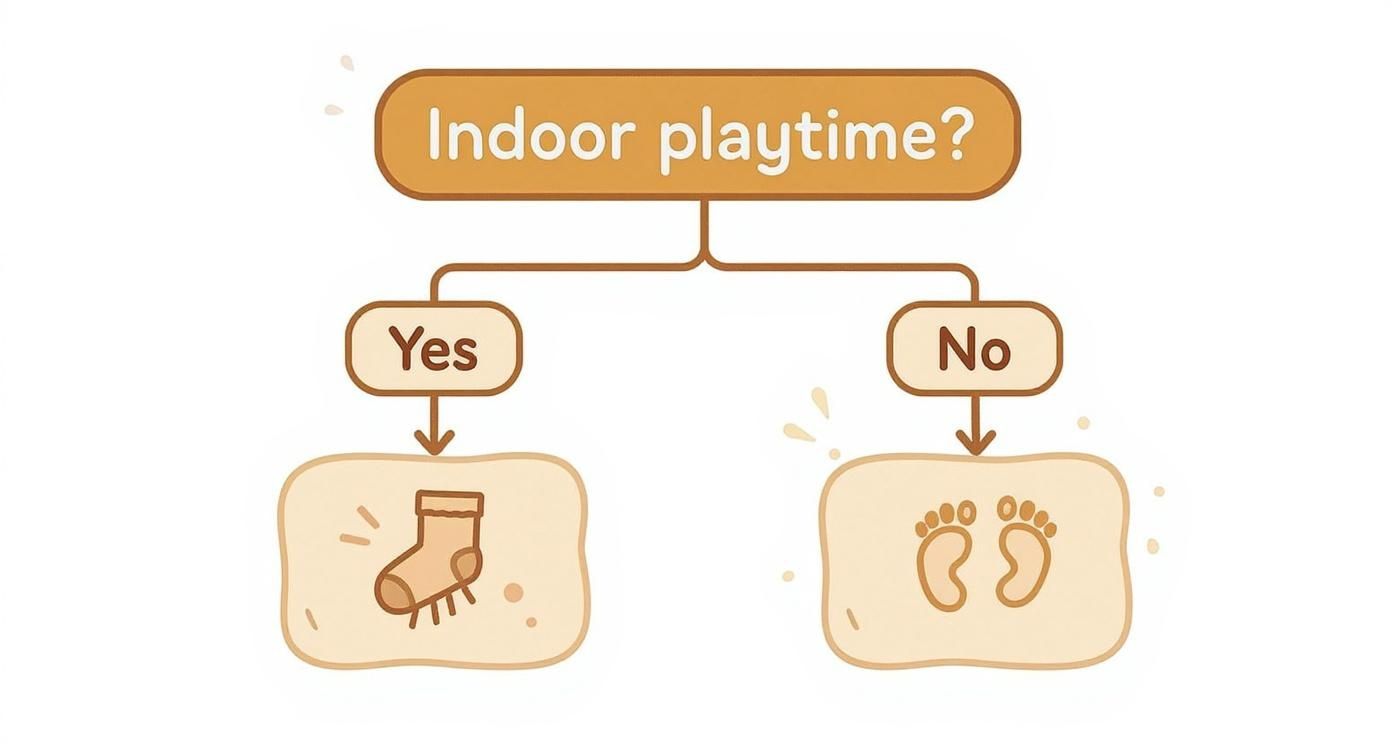
This little chart sums it up perfectly. For those active indoor adventures, slipper socks give your baby a safe, grippy alternative to bare feet, especially on slick floors.
1. Materials That Cuddle Their Feet
A baby’s skin is incredibly delicate, so the fabric touching their feet all day really matters. You’ll want to look for soft, breathable materials that are gentle and have a little give.
Natural fibers like cotton are fantastic because they let air circulate, which helps keep those tiny feet from getting all sweaty and uncomfortable. Many of the best slipper socks use a cotton blend, which adds just enough stretch and durability to stand up to endless crawls and tumbles.
Stay away from stiff, synthetic materials that don't breathe. They can sometimes irritate sensitive skin or make little feet too hot—exactly what you don't want for a happy, comfortable baby.
2. A Good Grip On Safety
Hands down, the most important feature of any baby slipper sock is its non-slip sole. Those little grips are the only thing standing between a confident toddle and an unexpected slip. But here’s the thing: not all grips are created equal.
When you flip the sock over, look for a few key things:
- Coverage: Are there just a few dots, or do the grips cover most of the sole? More coverage, especially around the ball of the foot and the heel, means better traction no matter how they step.
- Material: Silicone is the gold standard here. It’s tough, flexible, and provides amazing traction on smooth surfaces like hardwood, tile, or laminate floors.
- Flexibility: The sole should still feel like a sock, not a shoe. A great slipper sock grips and protects without being rigid, allowing your baby’s foot to bend and move naturally as they learn to balance.
Think of the grips as tiny, reliable brakes for your little explorer, giving them the stability they need to navigate their world safely.
3. Finding That Just-Right Fit
Finally, getting the size right is a huge deal for both comfort and safety. A slipper sock that’s too big can bunch up or slip right off, turning into a tripping hazard. If it’s too small, it can pinch and restrict movement in those fast-growing feet.
The best way to get it right is to measure. Place your baby's foot flat on a piece of paper, mark the tip of their longest toe and the back of their heel, and then measure the distance. Always check this against the brand’s specific size chart, because sizing can be all over the place.
For a super detailed walkthrough, check out our complete guide on how to understand infant sock sizes. It’ll help you pick a pair that stays on securely without ever being too tight.
Your Baby Slipper Sock Feature Checklist
Feeling a little overwhelmed by the options? Use this quick checklist to compare features and find the perfect slipper socks for your baby's needs.
| Feature | What to Look For | Why It's Important |
|---|---|---|
| Material | High-cotton blends, soft natural fibers. | Gentle on sensitive skin, breathable to prevent sweaty feet. |
| Non-Slip Soles | Full-coverage silicone grips. | Provides maximum traction on slick floors to prevent slips and falls. |
| Flexibility | A soft, sock-like sole that bends easily. | Allows for natural foot movement, crucial for balance and development. |
| Fit | A snug but not tight fit, matching baby's foot measurement. | Prevents socks from falling off or bunching up, ensuring safety and comfort. |
| Ankle Style | Elasticated or cuffed ankle design. | Helps the slipper socks stay put during active play without being restrictive. |
Keeping these key points in mind will make it so much easier to find a pair of slipper socks that you and your baby will absolutely love. Happy shopping!
Caring for Your Baby Slipper Socks
Let's be real—life with a little one is messy. Between spilled milk, crawling expeditions, and those first wobbly steps, those adorable baby slipper socks are going to get dirty. The good news? Keeping them fresh, soft, and grippy is way easier than you think.
With just a little bit of gentle care, you can make sure your favorite pairs last through all the tumbles and adventures. The trick is to clean them well without damaging the soft fabric or those all-important silicone grips that help keep your baby upright.
Simple Washing Machine Steps
For most of us, the washing machine is a lifesaver. You just need to be a little gentle. A good rule of thumb is to treat your slipper socks like you treat any other delicate baby clothing—a little extra care makes a huge difference.
Here’s a simple, parent-tested routine:
- Prep Them First: Turn the slipper socks inside out before tossing them in. This is a great little hack to protect the non-slip grips from rubbing against other clothes.
- Keep Them Together: Pop them into a mesh laundry bag. This is my secret weapon against the mysterious case of the missing sock! It also stops them from getting snagged on zippers or buttons.
- Go Gentle: Always choose a delicate cycle with cool or cold water. Hot water is the enemy here; it can damage the elastic and wear down the silicone grips over time.
- Pick the Right Soap: Stick with a mild, fragrance-free detergent made for sensitive baby skin. You definitely want to avoid any harsh chemicals on items that are right up against your baby's skin.
The Best Way to Dry Slipper Socks
I know it’s tempting to just toss them in the dryer, but high heat can really mess with the elasticity and the silicone grips. It can make the sock lose its snug fit and even make the grips brittle and less effective.
The absolute best way to dry them is to air-dry. Just lay them flat on a clean towel or hang them on a drying rack. They’re so small they’ll be dry in no time, and this keeps the fabric and grips in perfect shape for their next adventure.
Proper care also plays a role in keeping your baby comfortable. For more tips, check out our guide on how to tell if your baby is too hot. Following these simple steps will ensure their favorite slipper socks stay a cozy, safe, and reliable part of their wardrobe.
When Your Baby Will Use Slipper Socks Most
It’s one thing to hear that slipper socks are helpful, but it's another to picture exactly how they'll fit into your day-to-day life. Let's talk about those real-world moments where they go from a "nice-to-have" to an absolute lifesaver.
Imagine your little one, full of wobbly determination, trying to pull themselves up on the coffee table. It's an adorable milestone! But on slippery hardwood or tile floors, it can also be a recipe for a tumble. A good pair of slipper socks gives their little feet the grip they need, helping them build confidence as they practice standing and cruising.
It’s no surprise this simple solution has become a must-have. The global market for non-slip baby socks is booming, mostly because parents are looking online for safe, practical gear. From organic cotton to cute animal designs, the demand proves how much we rely on these everyday essentials. You can dig into the numbers and market trends on Verified Market Reports if you're curious!
Perfect for Everyday Adventures
Slipper socks aren't just for your living room floor. They're incredibly versatile and quickly become the go-to footwear for almost any indoor activity.
- At Daycare or Playgroups: Many childcare centers ask for indoor-only shoes. Slipper socks are the perfect answer. They’re easy for caregivers to slip on and off, keep tiny feet clean, and provide that all-important grip when toddlers are running around together.
- Visiting Friends and Family: Ever taken your little explorer to Grandma’s house with those beautifully polished (and slick!) floors? Tossing a pair into your diaper bag gives you instant peace of mind, letting your baby roam safely in a new environment.
- Chilly Mornings at Home: On those cold mornings, the first thing you want to do is keep those little toes warm. Slipper socks add a cozy layer without the clunkiness of a traditional slipper, so they're comfy enough for your baby to wear all day long.
Think of slipper socks as your baby's trusty sidekick for indoor adventures. They offer the freedom of bare feet but with the warmth and safety of a shoe, ready for action on any surface.
A Gentle Transition to Shoes
As your baby gets more stable on their feet, you’ll start thinking about their first real shoes. This is where slipper socks play another key role—they act as the perfect bridge.
They provide more protection and grip than bare feet but are way more flexible than the stiff soles on many "first walker" shoes. That flexibility is crucial for healthy foot development, as it allows your baby's muscles to strengthen naturally without being restricted.
When it's time for outdoor exploring, you can find a wonderful selection of supportive and comfy first-step baby shoes that put safety first. But for now, enjoy the simple, brilliant support of a great pair of slipper socks.
Got Questions About Slipper Socks? We’ve Got Answers.
As a parent, you’re always asking questions—it’s part of the job! And when it comes to your little one’s first steps, you want to get it right. We've pulled together the most common questions we hear about baby slipper socks to give you peace of mind as your baby starts to explore.
When’s the Right Time to Introduce Slipper Socks?
The magic window for slipper socks opens right when your baby starts pulling up on furniture or "cruising" around the living room. This exciting phase usually kicks in between 6 and 12 months. That’s when those non-slip grips become your best friend, especially on slick hardwood or tile floors.
But honestly, they’re great for younger babies, too! For little ones who aren't on the move yet, they're simply a wonderfully cozy way to keep tiny toes warm, without the hassle of socks that always seem to vanish.
Slipper Socks vs. Bare Feet for Learning to Walk—Which is Better?
This is such a great question, and one we hear all the time. Experts like pediatric physical therapists often recommend plenty of barefoot time. It's fantastic for helping babies build up the tiny muscles in their feet and ankles and allows them to really feel the ground beneath them, which is a huge part of learning to balance.
But let's be realistic—barefoot isn't always practical, especially on cold, hard floors. That's where slipper socks come in as the perfect compromise.
- They’re super flexible, so your baby's foot can move and bend naturally, almost like being barefoot.
- They add that crucial layer of safety with non-slip grips, preventing the kinds of tumbles that can make a new walker hesitant.
Think of slipper socks as "barefoot-plus." They give your baby all the developmental freedom of being barefoot, but with the added warmth and safety needed for indoor adventures.
How Do I Find the Perfect Fit?
Getting the fit right is key. You're looking for a sock that's snug enough to stay on, but never tight. A good rule of thumb is that you should be able to slide a finger easily between the ankle cuff and your baby’s skin. Make sure there’s a little bit of wiggle room for their toes at the end, too.
Socks that are too big will just bunch up and could cause a trip, while ones that are too tight can be restrictive. Your best bet is to always check the brand's size chart and measure your baby’s foot from heel to the tip of their big toe.
Can My Baby Wear Slipper Socks to Bed?
We'd recommend saving the slipper socks for playtime. It's generally best for babies to sleep with bare feet, as this helps them regulate their body temperature. Little ones can get warm surprisingly fast, and their feet are one of the ways they cool themselves down.
If you’re worried about them being cold at night, a sleep sack or a pair of footed pajamas is a much safer bet. Keep the slipper socks for when they’re awake, exploring, and ready for action.
Here at Mimou Babywear, our mission is to support every one of those wobbly first steps with products that are as cozy as they are safe. We design our baby essentials with soft, breathable fabrics and all the little details that make parents' lives easier. Take a look at our thoughtfully crafted babywear at https://mimoubabywear.com and find the perfect pieces for your little adventurer.