


Which tooth comes first, and when should you expect it? It's one of the most-Googled baby questions, usually typed one-handed at 3am while a parent inspects a swollen little gum with a phone torch. The reassuring answer is that baby teeth tend to arrive in a fairly predictable order, on a loose but recognisable timeline — and knowing that sequence takes a lot of the guesswork out of those first toothy months. Here's exactly which teeth come in, when, and in what order.

When Does Teething Start?
Most babies cut their first tooth between 4 and 7 months, though the full normal range is wide — some babies get a first tooth as early as 3 months, while others have a bare gummy smile well past their first birthday. A few babies are even born with a "natal tooth." Late teething is almost always just a variation of normal and rarely signals a problem; it often runs in families, so if you or your partner teethed late, your baby may too.
By around age 3, the full set of 20 primary (baby) teeth is usually in place. According to the American Academy of Pediatric Dentistry, that full primary set then serves the child until the permanent teeth begin replacing them around age 6.
The Order Teeth Come In
Teeth generally erupt in symmetrical pairs, and follow this typical sequence:
| Order | Teeth | Typical Age |
|---|---|---|
| 1st | Bottom central incisors (two front bottom) | 6–10 months |
| 2nd | Top central incisors (two front top) | 8–12 months |
| 3rd | Top lateral incisors (either side of top front) | 9–13 months |
| 4th | Bottom lateral incisors | 10–16 months |
| 5th | First molars (back, top and bottom) | 13–19 months |
| 6th | Canines (pointed, either side) | 16–23 months |
| 7th | Second molars (very back) | 23–33 months |
The pattern most families see: bottom two first, then top two, then filling outward and backward, with the molars and canines completing the set through the second year. If your baby's order varies a little, that's usually fine — the sequence is a tendency, not a rule.
Signs a Tooth Is Coming
Teething symptoms typically begin a few days before a tooth breaks through and ease once it has cut. Common signs:
- Increased drooling (sometimes with a drool rash on the chin)
- Chewing and biting everything within reach
- Swollen, tender gums — sometimes you can feel or see the hard tooth just below
- Irritability and fussiness, especially in the evening
- Disrupted sleep
- Mild loss of appetite, or wanting to feed more for comfort
One important clarification supported by the AAP: teething does not cause high fever, diarrhoea, vomiting, or a runny nose. Teething can cause a very slight rise in temperature, but anything above 38°C (100.4°F) is a fever caused by something else — not teeth — and should be treated as such. If your teething baby has a true fever, see our baby fever guide rather than attributing it to teeth.
How to Soothe a Teething Baby
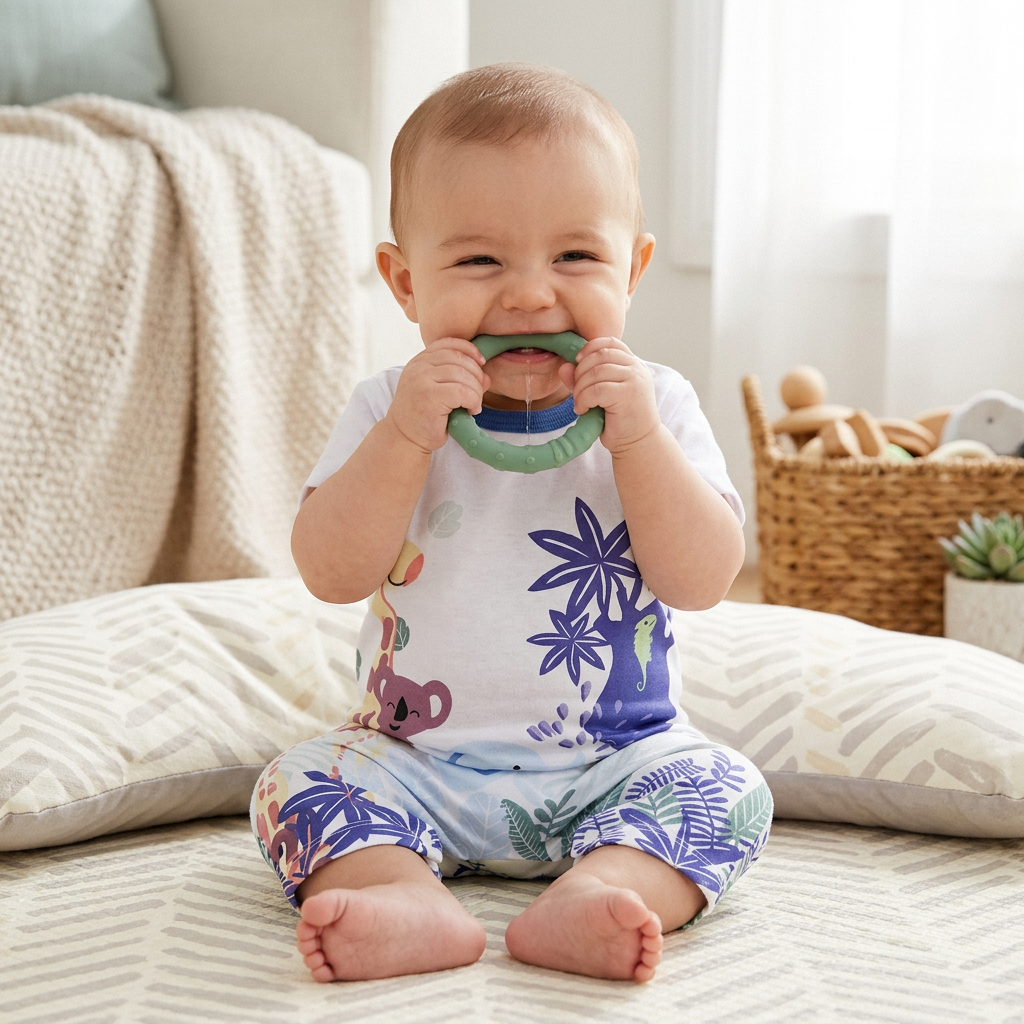
- Something firm to chew: A clean rubber or silicone teething ring gives counter-pressure that relieves sore gums. Chilled in the fridge (never frozen solid, which is too hard and can bruise gums) is even better.
- Gentle gum massage: A clean finger rubbed firmly on the sore gum provides real, immediate relief.
- A cold flannel: A clean, damp, chilled washcloth to gnaw on works beautifully and costs nothing.
- Chilled food (for babies on solids): Cold puree, or chilled soft foods in a mesh feeder, can soothe.
- Manage the drool: Wipe the chin gently and often, and a little barrier balm prevents drool rash.
- Pain relief if truly needed: For a genuinely distressed baby, infant paracetamol or ibuprofen (age-appropriate, correct dose) can help — check with your pharmacist or doctor.
What to avoid: the FDA specifically warns against teething gels containing benzocaine (a risk to babies) and against amber teething necklaces, which pose both choking and strangulation hazards with no proven benefit. Skip both.
Caring for Those First Teeth
Dental care starts with the very first tooth. Wipe or brush it twice daily with a soft infant toothbrush and a tiny smear (rice-grain size) of fluoride toothpaste. The AAP and pediatric dentists recommend a first dental visit by age 1, or within six months of the first tooth appearing. And one to know: never put a baby to bed with a bottle of milk or juice, which pools around the teeth and causes decay.
For comfort through the teething months, see our complete teething guide, and for the disrupted nights that often come with it, our wake windows guide can help you keep sleep on track.