


Choosing babywear essentials can feel like navigating a maze of tiny clothes and fabric labels. With a few thoughtful picks, you’ll keep your little one cozy from day one and simplify your daily routine. These expert-backed tips will help even the busiest parents feel confident and prepared.
Key Babywear Essentials For New Parents
Building a practical wardrobe lays the groundwork for quick outfit changes and peaceful naps. Think of it like packing a toolkit—each piece has its own job.
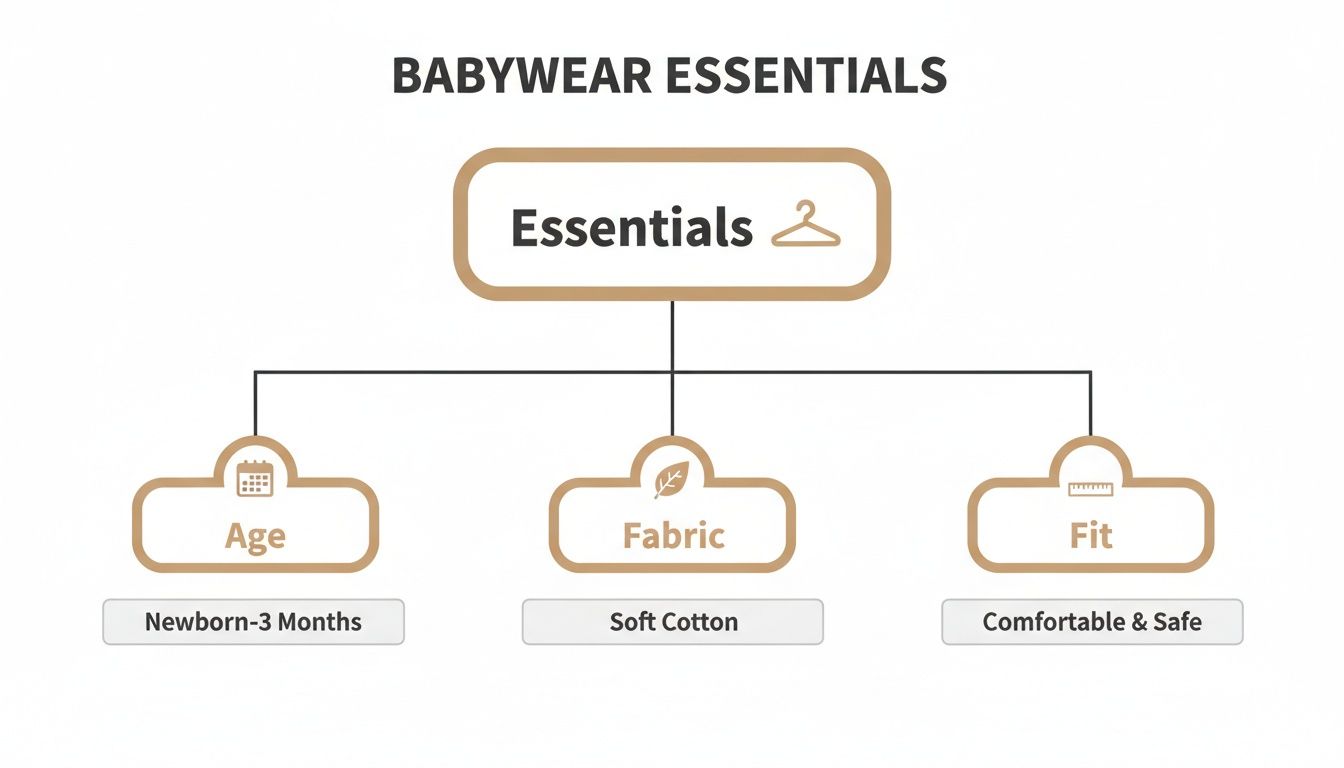
- Age-Appropriate Pieces: From newborn bodysuits to toddler sneakers, pick items that grow with your child.
- Gentle Fabrics: Choose breathable materials such as organic cotton and bamboo blends to protect sensitive skin.
- Proper Fit and Sizing: Measure chest, height, and inseam so clothes stay snug but never restrictive.
- Layering Strategies: Combine lightweight base layers with cozy mid-layers and weather-ready jackets.
- Smart Packing: Keep concise checklists for hospital stays and weekend outings to dodge last-minute panics.
- Sustainable Shopping: Look for eco-friendly, durable pieces that balance quality with your budget.
Practical Tip: Store frequently used sizes at arm’s reach and rotate outgrown items right away to free up drawer space.
What Comes Next
We’ll break down essentials by age group—from newborns to toddlers—so you know exactly what to grab at each milestone. Real parent stories and quick checklists will make choosing babywear essentials a breeze.
A well-curated wardrobe can cut dressing time in half and boost parent confidence.
The Big Picture
From basic bodysuits to advanced layering tricks, this guide weaves every topic together. Apply each tip as you read and enjoy more cuddle time.
Investing a little thought upfront means smoother mornings and happier babies.
Understanding Babywear Essentials By Age
Babies outgrow clothes faster than you can say “change me.” Slicing shopping into clear age brackets trims clutter and ensures each outfit fits its purpose.
By the way, the global baby apparel market hit USD 67.47 billion in 2024 and is on pace to reach USD 70.86 billion in 2025, according to Persistence Market Research. That steady growth shows parents worldwide value comfort-first pieces.
Below, see the must-haves that real parents swear by at every stage:
- Bodysuits with snap closures for lightning-fast changes
- Sleepers with fold-over mittens to stop tiny scratches
- Stretchy leggings or rompers that move with curious legs
- Lightweight jackets or bunting for outdoor adventures
- Hats and socks to protect against chilly heads and toes
Newborn To Three Months
In those first 12 weeks, simplicity is your secret weapon. Stock 6–8 soft bodysuits—your frontline for midday messes—and 4 snug sleepers that feel like a gentle hug at bedtime.
Real-Life Example: One mom calls organic cotton snaps “tiny marshmallows” against her baby’s skin. That level of softness makes late-night diaper changes almost pleasant.
Three To Twelve Months
Once rolling and reaching become daily feats, freedom of movement tops the list. Aim for 5 rompers with expandable necklines so you can slip them on without a fuss. Add 2 lightweight hats to shield that sensitive scalp.
Parents rave about cotton-rayon blends here—fabrics that flex and stretch, keeping up with every twist during tummy time.
One To Three Years
Toddlers treat the world as their playground, so choose basics that can take a beating:
- 4 breathable jersey tees
- 4 leggings with comfy elastic waists
- 1 reliable jacket for all-weather jaunts
Don’t forget non-slip socks. They turn every step into a safer adventure and help little ones gain dressing confidence.
“Choosing age-appropriate pieces made mornings smoother and playtimes happier,” shares busy parent Taylor.
Babywear Essentials by Age Group
| Age Group | Essential Item | Purpose |
|---|---|---|
| Newborn (0–3 months) | Bodysuits (6–8), Sleepers (4) | Fast changes, safe sleep, scratch protection |
| Infant (3–12 months) | Rompers (5), Hats (2) | Freedom to move, head warmth |
| Toddler (1–3 years) | Tees (4), Leggings (4), Jacket (1) | Everyday play, layering, weather-ready |
Tips For Sizing Quantities
Laundry routines vary, so tailor your stock:
- Wash twice weekly? Keep 5–7 bodysuits per size.
- Once-weekly laundry? Aim for 8–10 sleepers and 6–8 rompers.
- Label storage bins by size to avoid last-minute hunts.
These tweaks ensure a fresh outfit is always ready—no frantic searches required.
Building Your Wardrobe Roadmap
A little planning cuts stress and keeps mornings moving. Try this four-step checklist:
- Review current sizes before each growth spurt.
- Add 2 extra bodysuits per laundry cycle.
- Choose one versatile outer layer each season.
- Rotate hats and socks weekly.
Parent Sarah says this approach saved her hours each week and kept her little explorer cozy.
Think of your babywear essentials as a living map—one that grows and shifts right alongside them. Less guesswork, more snuggles, and room for new memories.
Choosing Safe Comfortable Fabrics
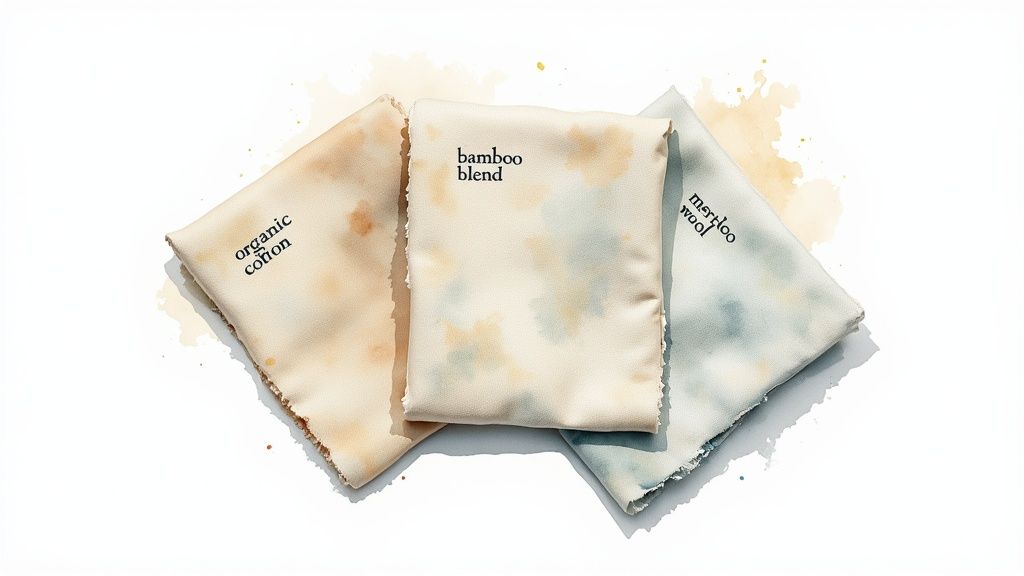
Finding the right fabric can feel like navigating a maze. Focus on breathability, moisture control, and lasting softness—and you’ll know you’ve found a winner.
Real parents see the difference. One swapped to bamboo-viscose knits and her baby’s redness faded overnight. 73% of parents say smoother textures cut down on fuss during dressing.
Fabric Benefits
| Fabric Type | Key Benefits |
|---|---|
| Organic Cotton | Chemical-free, ultra-soft |
| Bamboo Blends | Moisture-wicking, gentle stretch |
| Merino Wool | Temperature regulation, odor resistant |
| Hypoallergenic Synthetics | Durable, easy care, quick drying |
Practical Tip: Always wash new items before first wear to remove any residues and soften fibers.
Reading Labels
Certifications are your best friends:
- Look for GOTS or Oeko-Tex on inner labels.
- Feel the weave—tighter knits hold warmth better.
- Gently stretch the fabric to test recovery.
Testing Hand Feel
In store, rub swatches between thumbs. Online, rely on brand reviews and detailed descriptions.
- Inspect color and weave under natural light.
- Read post-wash feedback to know how fabrics hold up.
Alex found bamboo blends retained shape best after multiple washes—no sagging or thinning.
Wash And Care
Keep fabrics plush:
- Use mild, fragrance-free detergent.
- Wash on cool, gentle cycle.
- Skip bleach and fabric softeners.
Tumble dry on low or air dry to prevent shrinking. Store knits folded in breathable bins to avoid stretching out favorites.
Spotting Chemical Finishes
Avoid coatings that claim wrinkle resistance or stain guard:
- Skip “wrinkle free” finishes.
- Choose PFC-free waterproof treatments.
- Rinse new items twice to clear residual chemicals.
Learn more in our Fabric Guide. Mimou Babywear offers a curated selection of organic cotton and bamboo pieces that meet these criteria—explore soft rompers with snap closures and breathable sleep sacks for safe nights.
Sizing And Fit For Growing Babies
Finding the perfect fit means your little one can stretch, wiggle, and explore—and you can relax knowing they’re comfy.
Measuring Your Baby For A Good Fit
Use a cloth tape on a flat surface:
- Chest: Around the widest point, just under arms.
- Height: From crown to heels.
- Inseam: From crotch to ankle for pant length.
Add 0.5–1 in for wiggle room. Match those figures to brand size charts and note variations across labels.
| Chest Measurement | Typical Size Label |
|---|---|
| 16.5 in (42 cm) | Newborn (0–3M) |
| 18 in (46 cm) | Infant (3–6M) |
| 19.5 in (50 cm) | Baby (6–9M) |
Practical Tip: Keep a notebook by the changing station to record new measurements right away.
Choosing Flexible Styles That Grow With Babies
Stretchy features save time and money:
- Expandable necklines slip on without tugging over tiny ears.
- Fold-Over cuffs double as mittens and add extra length.
- Adjustable waistbands flex through growth spurts.
“Mixing one size up and one size down and using cuffs and waistbands saved us from constant returns,” shares parent Jamie.
Planning Ahead For Growth Spurts
Babies can grow 1–2 in each month. Stay ahead:
- Check measurements every 4–6 weeks.
- Keep a “just in case” garment in each size.
- For colder months, buy outer layers one size up to fit over bulky midlayers.
Alex’s tip: her 3-month-old jumped from 3M to 6M in weeks—thanks to a buffer stash, she never worried about early morning outfit surprises.
Seasonal Layering And Sleepwear Solutions
Dressing layers is like making a sandwich: each layer adds comfort without bulk.
How To Build Layers That Work
- Base Layer – 100% cotton onesie to wick moisture.
- Mid Layer – Bamboo-blend sweatshirt for gentle stretch.
- Outer Layer – Lightweight rain shell or insulated jacket.
On-The-Go Hack: tuck a packable vest under the stroller seat for spur-of-the-moment chills.
Sleepwear Solutions For Warm And Cold Nights
- Warm Season – Short-sleeve cotton onesie + mesh-weave sleep sack.
- Cool Season – Footed pajamas + fleece-lined sleep sack.
Many toddlers love zip-up sleep sacks at age two—they can wiggle and stretch while staying tucked in safely. No loose blankets in the crib.
Explore our guide on the best baby sleep sacks for breathable options that work year-round.
Quick Tip – Press the back of your hand against your baby’s chest. If their skin feels dry and warm, they’re comfortable. If it’s cool, add a light layer.
| Season | Recommended Fabrics | Layering Tips |
|---|---|---|
| Spring | Organic cotton, light bamboo | Onesie + cardigan + windbreaker. |
| Summer | Lightweight jersey, mesh blends | Short-sleeve bodysuit + breathable sleep sack; skip outerwear. |
| Autumn | Midweight knits, bamboo blends | Cotton base + knit cardigan + waterproof shell. |
| Winter | Merino wool, insulated blends | Long-sleeve onesie + wool cardigan + insulated snowsuit or bunting. |
Pack compact cubes labeled by season and size. Tuck in a hat, socks, and even a lightweight blanket for thanks-to-be cold p park naps.
Packing Checklist For Outings And Hospital Stay
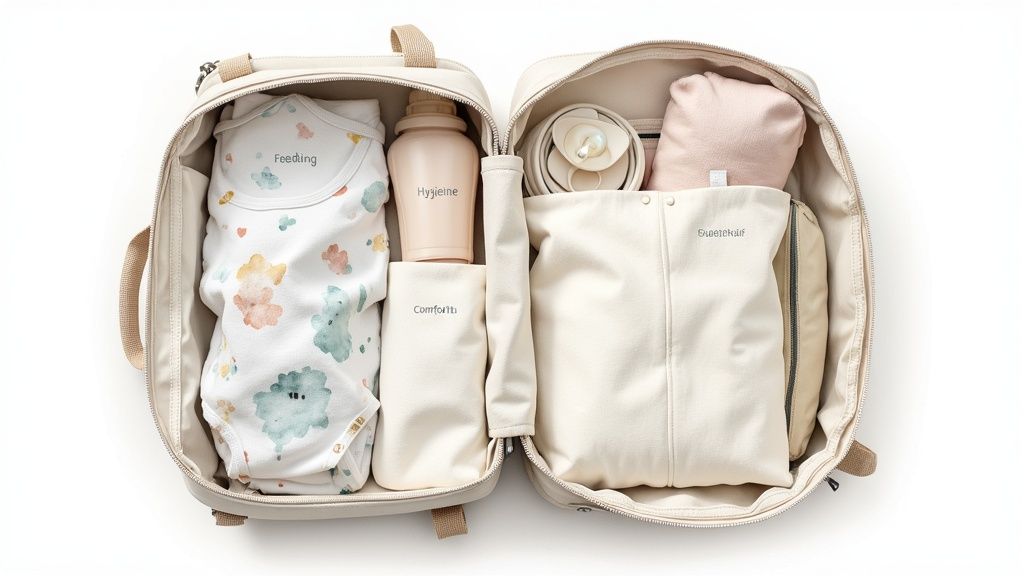
Treat your bag like a mini command center. Group items into clothing, feeding, hygiene, and comfort for stress-free outings and hospital stays.
Outing Essentials
- Clothing: 3 bodysuits and 2 breathable sleepers or rompers.
- Feeding: Spill-proof cup, portable milk container, easy-grip spoon.
- Hygiene: 8–10 wipes, travel-size diaper cream, 3 diapers per hour out.
- Comfort: Foldable blanket, favorite toy, extra socks or mittens.
One mom’s hack: a spare onesie in a waterproof pouch saved the day during a snack mishap.
“Color-coded pouches made it easy to grab what I needed in seconds,” shares parent Alex.
Hospital Bag Must Haves
Have this bag ready by 36 weeks:
Clothing Essentials
- 5 newborn onesies with snaps
- 3 night-friendly sleep gowns
- 2 hats and booties
Feeding Gear
- Nursing pads, lanolin, storage bags
- Sterilized bottles and small cooler for pumped milk
Hygiene Kit
- Travel set: shampoo, body wash, baby lotion
- Newborn diapers, wipes, disposable pads
Comfort Items
- Swaddle wrap and sleep sack
- Pacifier and a soft plush toy
Pro Tip: Use packing cubes and label them by category for quick access.
| Strategy | Benefit |
|---|---|
| Packing Cubes | Separates categories, compresses items |
| Waterproof Pouches | Shields clothes from spills and leaks |
| Color Labels | Helps you locate what you need in a snap |
Lay everything out by category, roll clothes to save space, and seal each pouch with a checklist in an outer pocket. Double-check 24 hours before departure to ensure you’re ready for any season.
Printable checklists help too—stick them by the door so nothing gets left behind. For an in-depth list, see What to Pack in Your Hospital Bag.
Sustainable Shopping Advice And Key Takeaways
A practical babywear essentials routine doesn’t have to bust your budget—or burden the planet. Convertible rompers and reversible jackets cut waste and cost.
Spotting Durable Multi Use Pieces
Look for fabrics that bounce back from washes and resist wear:
- Convertible Rompers with snaps that expand head to toe
- Reversible Jackets offering two looks for one purchase
- Neutral Colors that mix and match across seasons
- Multi-Season Fabrics like midweight bamboo blends
Joining a local clothing swap keeps perfectly good outfits in play. Find swap events through parent groups or community centers.
Finding Fair Trade Brands And Swaps
Check certifications like GOTS or Fair Wear Foundation. Tips:
- Use online directories to locate swap events.
- Read brand reports on worker conditions.
- Look for Fair Trade Certified labels.
- Donate your gently used items to fuel reuse.
Balancing Premium Investments And Budget Picks
Pair higher-end staples with everyday basics:
| Item Type | Average Cost | Estimated Wears | Cost Per Wear |
|---|---|---|---|
| Organic Cotton Romper | $30 | 30 | $1.00 |
| Basic Jersey Tee | $8 | 10 | $0.80 |
Parents are spending more on premium sustainable SKUs in a market worth billions. See industry details at bestcolorfulsocks.com.
Key Takeaways
- Seek quality fabrics that hold up wash after wash.
- Use cost-per-wear as your guide.
- Join swaps and support fair-trade markets.
- Balance investment pieces with budget basics.
- Check and refresh sizes every 3–4 months.
Start with one convertible romper and one swap event to launch a greener, wallet-friendly babywear essentials routine. For more on gentle fabrics, read our guide on best organic cotton baby clothes.