


Baby booties and socks sit in an interesting category: they're undeniably adorable, but they also serve real purposes — keeping tiny feet warm, protecting new skin, and eventually providing grip when baby starts moving. The challenge is that they're also notoriously easy to lose, tricky to get right in terms of sizing, and wildly varied in quality.
Here's everything parents need to know about choosing, sizing, and using baby booties and socks from newborn through the first year.
Do Babies Actually Need Booties and Socks?
Yes — for warmth and comfort, not for foot development. Bare feet are always better for development (the sensory feedback from surfaces helps babies build balance and coordination). But when it's cold, when you're out in public, or when baby needs a layer between their skin and a surface, socks and booties serve a genuine purpose.
The key distinction: soft, flexible coverage for warmth is always fine. Rigid, structured footwear before walking is not necessary and can actually interfere with natural foot development.
Newborn Stage (0–3 Months): Warmth Only
Newborns lose heat quickly through their extremities. Socks or soft booties help maintain body temperature, especially in air-conditioned environments or cooler weather. What to look for at this stage:
- Soft, stretchy knit fabric — Cotton or bamboo. No stiff materials.
- Gentle elastic at the ankle — Secure enough to stay on, loose enough not to leave marks. Check after 20 minutes of wear — no red lines should appear.
- No-slip sole optional — Not needed yet since baby isn't on their feet, but harmless.
- Easy on and off — You'll be putting these on and removing them many times a day. Simple is better.
3–6 Months: Still Warmth, Now With More Activity
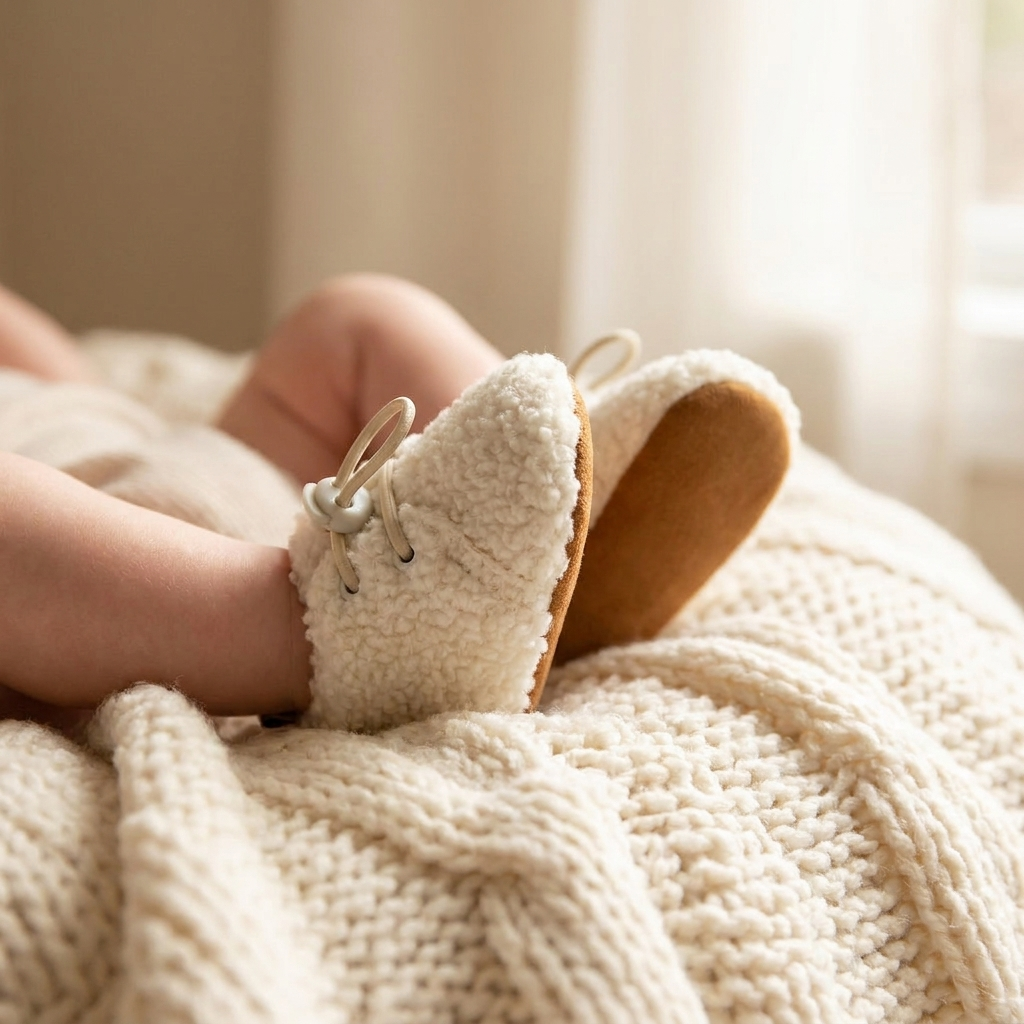
Baby is kicking more vigorously, which means socks and booties come off more easily. This is the stage where parents discover that staying-on power becomes a real consideration.
- Booties with ankle closures — A button, tie, or velcro closure at the ankle keeps them on through active kicking.
- Slightly thicker construction — Baby is on surfaces more (play mats, bouncer seats) so a little more cushion starts to matter.
- Fun details are fine — Bow details, animal motifs, ribbed knit — at this stage you can enjoy the aesthetic without any functional trade-off.
6–12 Months: Grip Becomes Essential
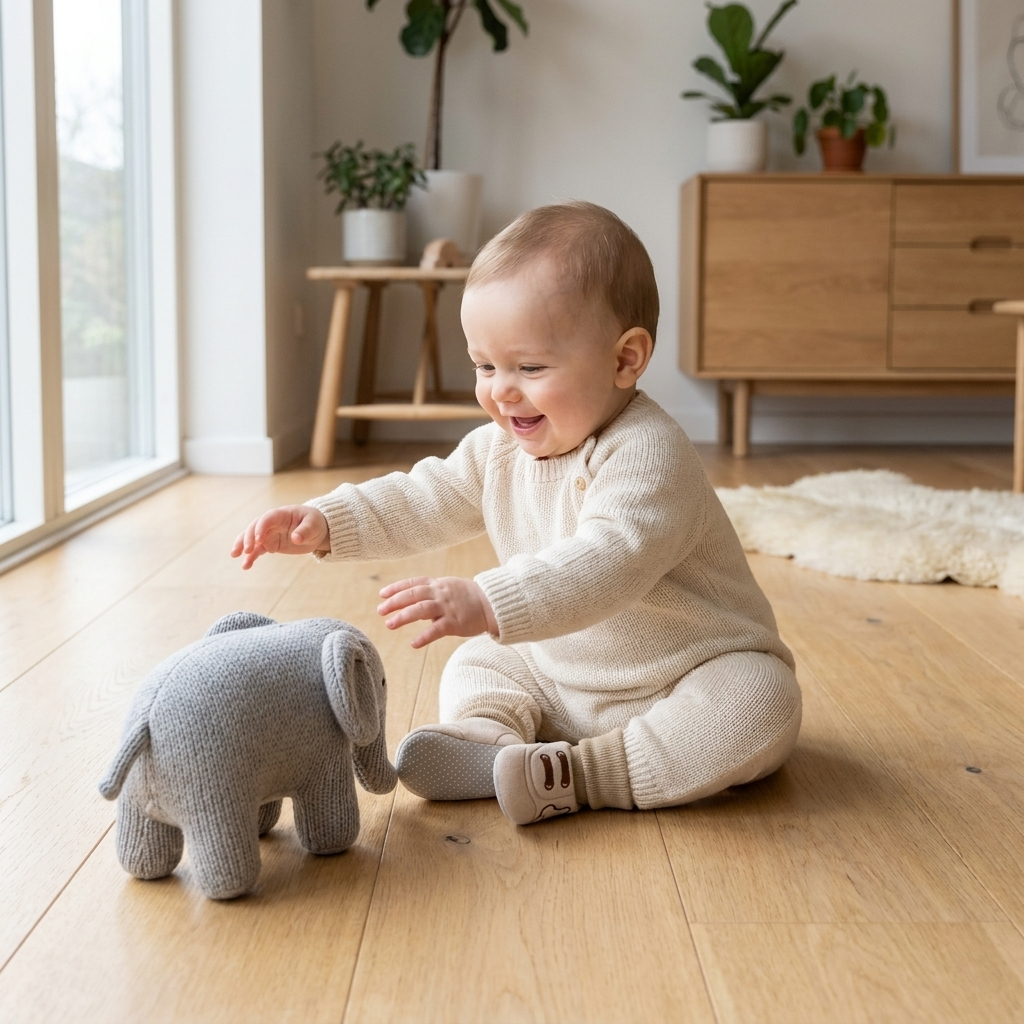
As baby starts sitting independently, pulling to stand, cruising along furniture, and eventually taking first steps, the sole of the sock or bootie becomes the most important feature.
- Anti-slip soles — Non-negotiable once baby is on smooth floors. Rubber grips, silicone dots, or textured patterns on the sole prevent slipping on hardwood, tile, and laminate.
- Ankle height or higher — More ankle coverage means less likely to come off during movement.
- Breathable fabric — Active babies generate heat. Cotton and bamboo regulate temperature better than synthetic materials.
- Washable and durable — These will be washed constantly. Look for colorfastness and grip patterns that hold up through the machine.
How to Size Baby Socks and Booties
Baby sock sizing is notoriously inconsistent between brands. Here's how to navigate it:
- Most brands size by age range (0–3M, 3–6M, 6–12M) — use these as a starting point but size up if baby is on the larger end.
- A well-fitting sock should sit smoothly against the foot with no bunching at the toe or pulling at the ankle.
- Check that the elastic isn't leaving marks — if it is, size up immediately.
- Baby feet grow fast: measure every 6–8 weeks and don't assume last month's size still fits.
How Many Pairs Do You Actually Need?
More than you expect, because socks and booties disappear at an alarming rate. A practical starter count:
- Newborn to 3 months: 6–8 pairs. They go through washing cycles quickly and get lost easily.
- 3–6 months: 6–8 pairs, mixing regular socks with 2–3 booties for outings.
- 6–12 months: 6–8 pairs of anti-grip socks plus 2–3 pairs of soft indoor shoes or booties for floor time.
Keep them all together in a small mesh bag or drawer divider — loose socks are the enemy of a tidy baby drawer.
Care Tips to Make Them Last
- Wash in a small mesh laundry bag so they don't disappear into the machine drum.
- Air dry to preserve elastic and grip patterns — high heat degrades both over time.
- Check grip soles regularly — worn-down grips are no longer effective and should be replaced.
- Store paired in a clip or folded together — the matching game is not one you want to play at 7am.
Shop Baby Booties & Socks at Mimou Babywear
Our footwear accessories are built for real baby life: soft enough for sensitive newborn skin, secure enough to actually stay on, and grippy enough for the floor time that starts sooner than you think. From cozy warm cotton booties for the early weeks to anti-slip sock sets for active movers, every pair is made from breathable natural materials and designed to hold up through countless washes.
Browse the full Mimou footwear collection and find the pairs worth keeping in the drawer.