

Choosing clothes for your new baby is about so much more than just finding something cute. You want to wrap them in pure, gentle softness. That's exactly what you get with the best organic cotton baby clothes—a fabric grown without harsh chemicals, making it a naturally safer and kinder choice for their delicate skin from the very first day.
Why Organic Cotton Is a Gentle Choice for Your Baby
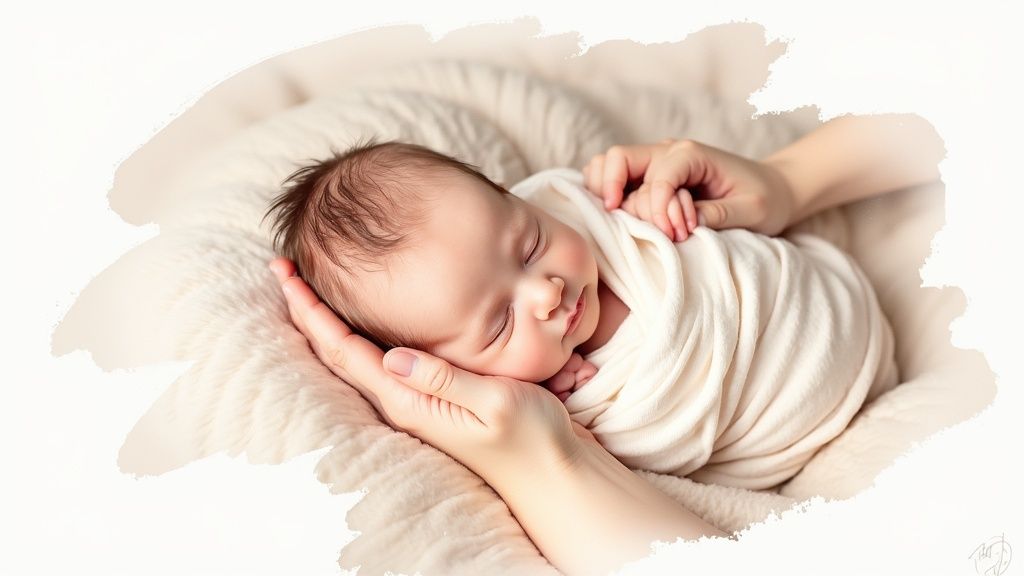
As a new parent, every decision you make is an act of love. From the lullabies you sing to the way you cradle your newborn, it’s all about their safety and comfort. Choosing their first wardrobe is no different. You instinctively reach for fabrics that feel as soft and pure as their new skin.
This is where organic cotton truly shines. It’s not just a trendy label; it’s a promise of gentleness. Think of it as the next best thing to your own hug—a comforting, protective layer that keeps your baby cozy, safe, and happy.
Naturally Better for Your Baby's Skin
It's unsettling to think about, but conventional cotton farming often relies on synthetic pesticides and harsh chemicals. Traces of these substances can linger in the final fabric, which is the last thing you want against a newborn’s porous and incredibly sensitive skin.
Organic cotton, on the other hand, is grown and processed using natural, time-tested methods. This makes a world of difference, resulting in a cleaner, softer, and more breathable fabric. For your little one, this means:
- Less Irritation: Pure fibers are far less likely to cause a reaction or aggravate delicate skin conditions like baby eczema.
- Unbelievable Softness: The cotton fibers aren't broken down by harsh chemical processing, so they stay longer, stronger, and exceptionally soft to the touch.
- Breathable Comfort: This fabric lets air flow freely, which is crucial for helping to regulate a baby’s body temperature and keep them from getting too warm.
Choosing organic cotton is one of the simplest ways to surround your baby with a healthier environment. It’s a small decision that brings immense peace of mind, knowing that what touches their skin is pure, clean, and made with care.
This focus on health and sustainability is why so many parents are making the switch. In fact, the demand for organic baby clothing is growing. Market analyses show that around 250 million units are sold each year, and that number is projected to climb to nearly 375 million units by 2030. You can learn more about the expanding organic baby apparel market and what's driving this change.
Here’s a quick look at why so many parents are falling in love with organic cotton.
Why Parents Choose Organic Cotton at a Glance
| Feature | Benefit for Your Baby |
|---|---|
| Chemical-Free | Reduces the risk of skin irritation, allergies, and eczema. |
| Exceptional Softness | Longer, stronger fibers create a luxuriously soft feel. |
| Highly Breathable | Helps regulate body temperature, keeping your baby comfortable. |
| More Durable | Fibers haven't been weakened by chemicals, so clothes last longer. |
| Eco-Friendly | Supports healthier soil, water, and ecosystems. |
Ultimately, by opting for organic cotton, you're not just dressing your baby in a cute outfit. You’re making a thoughtful choice for their immediate well-being and for the health of the world they will one day inherit.
How Softness and Safety Go Hand in Hand
When you run your hand over a piece of organic cotton clothing, the first thing you notice is its incredible softness. It just feels different—gentler, purer, and wonderfully plush. This isn't a happy accident; that signature softness is a direct result of how the cotton is grown, and it’s deeply connected to your baby’s safety and well-being.
Think of it this way: conventional cotton fibers can be weakened by harsh chemical treatments. Organic cotton, on the other hand, grows the way nature intended, nurtured in healthy soil free from synthetic inputs. Because the fibers aren't damaged, they stay long, strong, and perfectly intact. That’s the real secret behind that luxurious softness you feel.
The Gentle Barrier Your Baby’s Skin Needs
A newborn’s skin is remarkably delicate. It’s up to 30% thinner than our adult skin, which means it’s far more porous and easily irritated. This is exactly why the purity of the fabric touching them all day is so critical.
The best organic cotton baby clothes act as a soft, protective shield. They are free from the chemical residues you might find in conventional fabrics—things like harsh dyes, formaldehyde, and other finishing agents. This makes them naturally hypoallergenic and drastically reduces the risk of skin flare-ups.
- Minimizes Skin Reactions: No harsh chemicals means less chance of rashes, itchiness, or discomfort for your little one.
- Soothes Conditions Like Eczema: For babies with sensitive skin, the smooth, breathable fibers can be a game-changer, helping to prevent flare-ups by reducing friction.
- Promotes Better Sleep: It’s simple—a comfy baby is a sleepy baby. When their skin isn't irritated, they’re much more likely to rest peacefully.
Your baby experiences the world through touch, and their clothing is their second skin. Choosing organic cotton ensures every cuddle and nap is wrapped in pure, non-toxic comfort.
As a parent, this brings such incredible peace of mind. Knowing there are no hidden irritants lurking in your baby's onesie or sleeper lets you relax and just focus on soaking up all those precious moments.
Why Purity Leads to Peace of Mind
At the end of the day, the link between softness and safety is simple: pure materials create the gentlest fabrics. When cotton is handled with care from the beginning, it keeps its natural strength and integrity. The result is clothing that isn't just soft, but also inherently safer for your baby.
This is especially true for sleepwear, which stays on your baby's skin for hours at a time. Investing in a high-quality organic sleep sack ensures they’re enveloped in a breathable, non-irritating cocoon all night long. For more tips on creating a perfect sleep setup, check out our guide on the best baby sleep sacks.
Choosing organic cotton is about so much more than a preference for softness. It’s a conscious decision to protect your baby's health, making sure what you put on their body is as clean and loving as the care you give them every day.
Decoding Labels Like GOTS and OEKO-TEX: Your Guide to Safe Fabrics
Let’s be honest, staring at clothing tags can feel overwhelming, especially when you’re a sleep-deprived new parent. This section is your personal translator for the most important certifications you’ll see on the best organic cotton baby clothes. We'll break down what labels like GOTS and OEKO-TEX really mean for you and your little one.
When you're shopping for your baby, what you truly want is a clear sign that says, "this is safe, this is soft, this is pure." That's exactly what these certifications are. Think of them as stamps of approval that do all the detailed homework for you, so you can shop with total peace of mind.
GOTS: The Gold Standard for Organic Purity
When you see the GOTS (Global Organic Textile Standard) logo, you can breathe a sigh of relief. This isn't just a brand's casual claim of being "organic"; it's the highest possible seal of approval for organic textiles in the world.
Think of GOTS as a promise that covers the entire life story of your baby’s onesie, from the seed in the soil to the finished garment. It guarantees the cotton was grown without synthetic pesticides or GMOs.
But it goes deeper. GOTS also ensures every single step—from spinning and dyeing to manufacturing—is environmentally and socially responsible. That means no harsh chemicals like chlorine bleach or toxic heavy metals are used, and all workers are treated fairly.
A GOTS certification is your guarantee of true organic integrity. It means the clothing is pure from farm to family, making it one of the most trustworthy labels you can find for your baby.
OEKO-TEX: Your Chemical Safety Check
While GOTS is all about organic purity, the OEKO-TEX STANDARD 100 label has a different, but equally important, job. Picture it as a meticulous safety inspector for fabrics.
OEKO-TEX doesn't certify that a fabric is organic. Instead, it tests the final product for a long list of harmful substances. If a garment has this label, it's been independently tested and proven to be free from chemicals that could be harmful to your baby's health.
For baby clothes, OEKO-TEX uses its strictest testing criteria, Product Class 1. This ensures that every single component—every thread, button, and zipper—is safe enough for a baby's delicate skin. It’s an extra layer of reassurance that nothing harmful is hiding in the fabric.
Here’s a simple look at how that pure fiber becomes a safe, soft fabric you can trust.
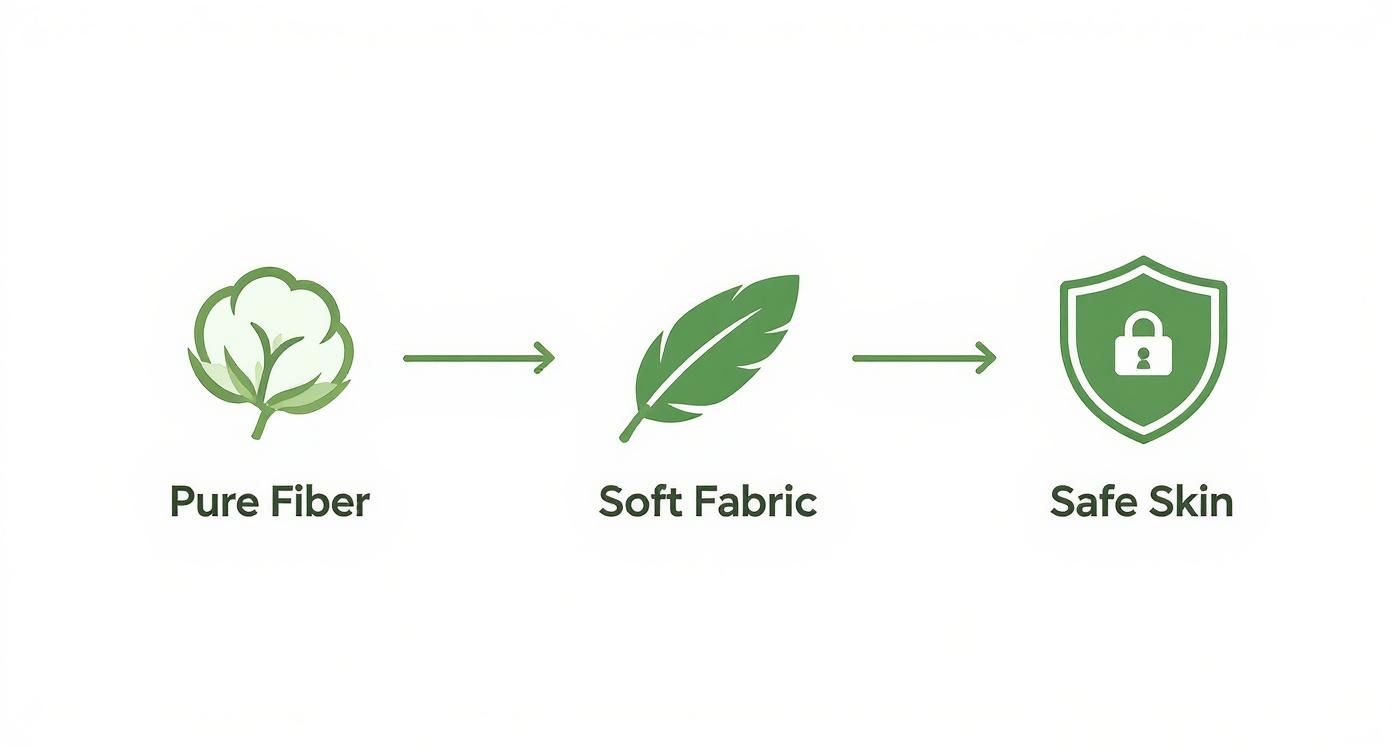
This visual journey, from the cotton boll to the cozy outfit, shows just how important it is to keep the process clean and gentle every step of the way.
Why These Labels Matter for Your Family
Seeing these certifications isn't about learning industry jargon; it's about empowering you to make the safest possible choice. These labels bring much-needed transparency to a market that can often be confusing.
The demand for traceable, certified organic cotton is growing. While certified organic still makes up a small piece of the global cotton pie, its production is steadily rising thanks to mindful parents. This careful certification process is what gives organic claims real meaning. If you’d like to dive deeper, you can explore detailed insights from the Organic Cotton Market Report.
So, next time you're shopping, keep an eye out for these two labels. They are your shortcut to knowing you’ve chosen clothing that is genuinely pure, safe, and made with the utmost care—perfect for wrapping up your precious little one.
Choosing the Right Clothes for Every Stage
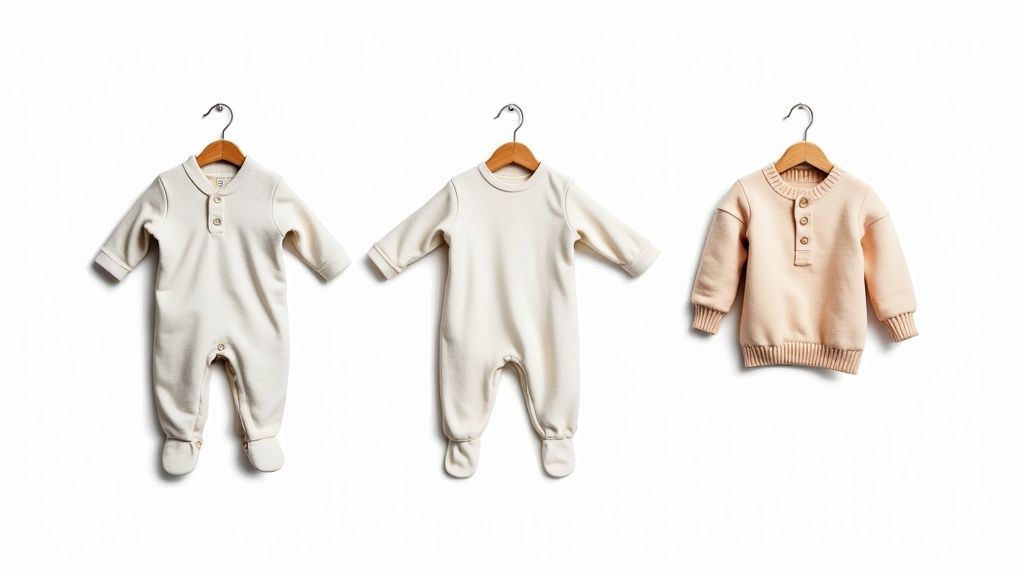
As you put together your baby’s first wardrobe, you quickly learn that practicality is just as important as softness. Your little one’s needs change in the blink of an eye, evolving from a sleepy newborn to a curious crawler. The best organic cotton baby clothes are the ones that adapt to each new stage, keeping your baby comfortable through it all.
The easiest way to choose outfits is to think about your baby's day-to-day life. What will they need for a cozy nap? For a tummy time adventure? Or for a breezy walk in the park? Let’s walk through how to pick the perfect pieces for every milestone.
Dressing Your Precious Newborn (0-3 Months)
In those first hazy months, a baby’s entire world is about sleeping, eating, and snuggling. This means comfort and ease are your two best friends. Look for designs that make dressing and diaper changes as gentle and fuss-free as possible—especially during those sleepy, middle-of-the-night wake-up calls.
Here are a few practical features to look for in newborn clothing:
- Wrap-Style and Side-Snap Onesies: These are a gift to new parents. They open completely, so you never have to pull anything over your baby's delicate head. Just lay them down and gently wrap the fabric around them.
- Built-in Mitten Cuffs: Newborns have surprisingly sharp fingernails! Those little fold-over cuffs on the sleeves protect their sweet faces from accidental scratches without you having to wrestle with separate mittens that always go missing.
- Footed Sleepers with Two-Way Zippers: A zipper that opens from the bottom is a true game-changer. It means you can get to the diaper without completely undressing your baby, keeping them warm and much happier.
For a newborn, think of their clothing as a gentle hug. Soft, stretchy fabrics and clever designs that minimize fuss will make those early days so much smoother for both of you.
Building that first wardrobe can feel overwhelming, but focusing on these essentials will ensure you have everything you need. If you're putting together a checklist, our guide to newborn baby essentials can help you feel perfectly prepared.
Outfitting Your Active Baby (4-12+ Months)
The moment your baby starts rolling, sitting up, and crawling, their clothing needs shift. Suddenly, it’s all about durability and freedom of movement. You need outfits that can stand up to wiggles, scoots, and tumbles while keeping them perfectly comfortable.
This is the stage to bring in more versatile pieces. Look for soft, stretchy organic cotton that moves with them, not against them. Think flexible joggers, soft-waisted pants, and simple tops that are great for layering. A little pro tip: reinforced knees on pants are a fantastic feature for active crawlers, adding extra life where it's needed most.
Choosing Fabrics for Every Season
Just like we switch out our own clothes with the weather, your baby needs different fabrics to stay comfy all year long. Organic cotton is wonderfully versatile and comes in various weaves and weights. Knowing which to choose makes dressing your baby for the temperature a total breeze.
To make it simple, here’s a quick guide to help you pick the right fabric for any weather.
Seasonal Organic Cotton Fabric Guide
| Season | Recommended Fabric Type | Why It Works |
|---|---|---|
| Summer | Jersey or Muslin | Lightweight and incredibly breathable, these fabrics allow for maximum airflow, preventing overheating on hot days. |
| Spring & Fall | Interlock Knit | This fabric has a bit more substance than jersey, offering the perfect amount of warmth for mild, transitional weather without being too heavy. |
| Winter | Fleece or Terry | These thicker, plusher weaves are excellent at trapping body heat, providing a cozy and insulating layer against the cold. |
At the end of the day, choosing the right clothes is all about anticipating your baby's need for comfort, safety, and movement. By selecting thoughtful pieces for each stage and season, you can build a beautiful and practical wardrobe that you and your baby will absolutely love.
How to Care for Your Organic Cotton Garments
You’ve chosen the best organic cotton baby clothes for your little one—a fantastic choice for their comfort and health. The good news is, keeping these special pieces soft and durable is much easier than you might think. Since they're made from pure, natural fibers, a little gentle care is all it takes to keep them feeling brand new, wash after wash.
With a few small tweaks to your laundry day, you can protect the beautiful quality of these fabrics. This means every onesie and sleeper stays cozy for your baby and can even be handed down later, making your thoughtful purchase go even further.
Washing with a Gentle Touch
When it comes to washing organic cotton, the golden rule is simple: keep it cool and gentle. Hot water can cause natural fibers to shrink and lose that incredible softness we all love.
- Temperature: Stick to a cold wash cycle, around 30°C (or 86°F). It’s much kinder to the fabric and also saves energy.
- Detergent: Reach for a mild, pH-neutral detergent. Look for one without harsh chemicals, fragrances, or dyes that could irritate your baby’s skin.
- Sorting: Try to wash organic cotton pieces with other soft items. Washing them with rough fabrics like denim or towels can cause friction and lead to pilling.
A quick tip for busy parents: pop tiny items like socks and mittens into a mesh laundry bag. It stops them from disappearing in the wash and protects them from getting snagged on zippers or buttons.
Drying and Stain Removal Made Simple
How you dry your baby's clothes is just as important as how you wash them. The intense heat from a standard dryer can be tough on delicate cotton fibers. Air drying is always the best way to go.
Just lay the clothes flat on a clean towel or hang them on a drying rack. If you're in a pinch and need to use the dryer, always choose the lowest heat setting or a gentle, tumble-dry cycle. This simple change can add months to the life of your baby's favorite outfits.
Of course, spills and spit-up are part of life with a baby! But a stain doesn't have to ruin a beautiful organic outfit. Here’s a simple, natural way to handle them:
- Act Fast: The sooner you can treat a stain, the better.
- Blot, Don't Rub: Use a clean, damp cloth to gently blot the spot. This will lift the spill out instead of pushing it deeper into the fibers.
- Go Natural: A simple paste made from baking soda and water, or a dab of white vinegar, can work wonders. Apply it to the stain, let it sit for a bit, then wash as usual.
By following these easy tips, you’re preserving the comfort and quality you chose for your baby from day one. For more ideas on keeping their sleepwear extra snuggly, check out our guide on organic cotton baby pajamas.
Making a Choice for a Healthier Planet
When you choose organic cotton for your baby, you're doing more than just picking out a cute outfit. That decision sends a ripple out into the world—a quiet but powerful vote for a healthier planet, the very one your little one will grow up to explore. It’s a choice that connects your family to a bigger story of sustainability and care.
An organic cotton onesie starts its life in a field that looks and feels worlds away from a conventional farm. There are no synthetic pesticides or chemical fertilizers that can wash into our rivers and streams. Instead, organic farmers use natural methods, like composting, to build healthy soil. It’s a difference you can feel good about, knowing it helps keep our ecosystems thriving.
Supporting Healthier Communities
That positive impact extends to the people growing the cotton, too. By choosing organic, you’re standing with farming communities that aren’t exposed to harsh agricultural chemicals day after day. This means safer working conditions and healthier lives for the farmers and their families. It’s about making sure the fabric that touches your baby’s skin is made with respect for everyone along the way.
This shift toward safer, more sustainable baby products is catching on. The global market for organic baby clothing, currently valued around USD 2.08 billion, is projected to grow to USD 3.04 billion by 2030. That growth is powered by parents like you who understand the benefits of chemical-free fabrics. You can discover more insights on the organic baby clothing market to see just how much consumer choices are shaping a better industry.
Your purchase is more than just a transaction; it's a statement. It tells the world that you value clean water, healthy soil, and fair conditions for workers, helping to build a better future for the next generation.
Our Shared Commitment to a Better World
Here at Mimou Babywear, we believe that caring for our little ones and caring for our planet are two sides of the same coin. Our mission is to bring you beautiful, soft, and safe essentials that you can feel completely good about. We carefully select materials that are gentle on your baby’s delicate skin and much kinder to the environment.
When you choose brands committed to thoughtful sourcing, you’re aligning your love for your baby with a shared goal of protecting our collective home. You're not just buying another piece of clothing; you’re investing in a more sustainable future.
Got Questions About Organic Baby Clothes? We've Got Answers.
Stepping into the world of organic baby clothes can bring up questions. That’s a good thing! It means you’re being a thoughtful parent, and you deserve clear, simple answers. We've gathered the most common questions we hear from parents just like you to help you feel completely confident in your choices.
Let's clear up any lingering doubts so you can focus on what really matters: your beautiful baby.
Is organic cotton really better for eczema?
Yes, absolutely. A baby’s skin is thin and porous, and for little ones with eczema, the wrong fabric can be a real troublemaker. Conventional cotton can sometimes hold onto residues from pesticides or harsh chemical dyes, which are common triggers for eczema flare-ups.
The best organic cotton baby clothes are naturally hypoallergenic because they skip all those irritants. The fibers themselves are also smoother and more breathable, which cuts down on friction and helps keep your baby's skin cool and dry—two huge wins when you’re trying to manage eczema and keep your little one comfortable.
How can I be sure baby clothes are actually organic?
This is such a smart question, because "organic" can be a fuzzy term. The best way to know for sure is to look for a trusted third-party certification right on the label. The gold standard to remember is GOTS (Global Organic Textile Standard).
Think of the GOTS label as a promise of purity from the farm all the way to your family. It's a guarantee that the entire process—from growing the cotton to sewing the final stitch—meets the most rigorous organic, environmental, and ethical rules. It's the clearest sign you can get.
Another great certification to spot is OEKO-TEX. While it isn't strictly an organic certification, it tests the finished garment for any harmful substances, giving you an extra layer of peace of mind.
Are organic clothes worth the higher price?
It’s true, organic cotton pieces often come with a slightly higher price tag. That extra cost reflects the more careful way the cotton is grown and processed—without synthetic pesticides, fertilizers, or harsh chemicals.
But here’s the thing: many parents find they get incredible value in the long run. Because the cotton fibers haven’t been damaged by harsh chemical treatments, they’re naturally stronger and more durable. This means organic clothes stand up beautifully to repeated washing, staying soft and keeping their shape. You’re not just buying a onesie; you're investing in a quality piece that will last.
What is the softest cotton for a newborn?
When it comes to a newborn's sensitive skin, the type of cotton is just as important as how it's grown. For that buttery-soft feel, look for long-staple cotton varieties, like Pima or Egyptian. Their extra-long fibers are spun into a silky-smooth yarn that feels incredible.
On the product tag, you can also look for terms like organic interlock knit or jersey knit. These fabrics are wonderfully soft, have a gentle stretch, and are perfect for those first precious onesies, sleepers, and swaddles.
At Mimou Babywear, our mission is to wrap your baby in pure, gentle comfort. We thoughtfully craft our collections from the softest, safest fabrics to support your little one through every sleepy sigh, cozy cuddle, and happy milestone.
Explore our collection of soft and safe baby essentials at Mimou Babywear