


If you've just opened a nappy to find an angry red bottom staring back at you, take a breath: you haven't done anything wrong, and you're in overwhelming company. Diaper rash is one of the most common skin conditions of infancy — nearly every baby gets it at some point, most often between 9 and 12 months, and it has very little to do with how attentive a parent is. The good news is that the great majority of cases clear up quickly at home with a few simple changes. Here's how to treat it, prevent it, and recognise the rarer cases that need a doctor.
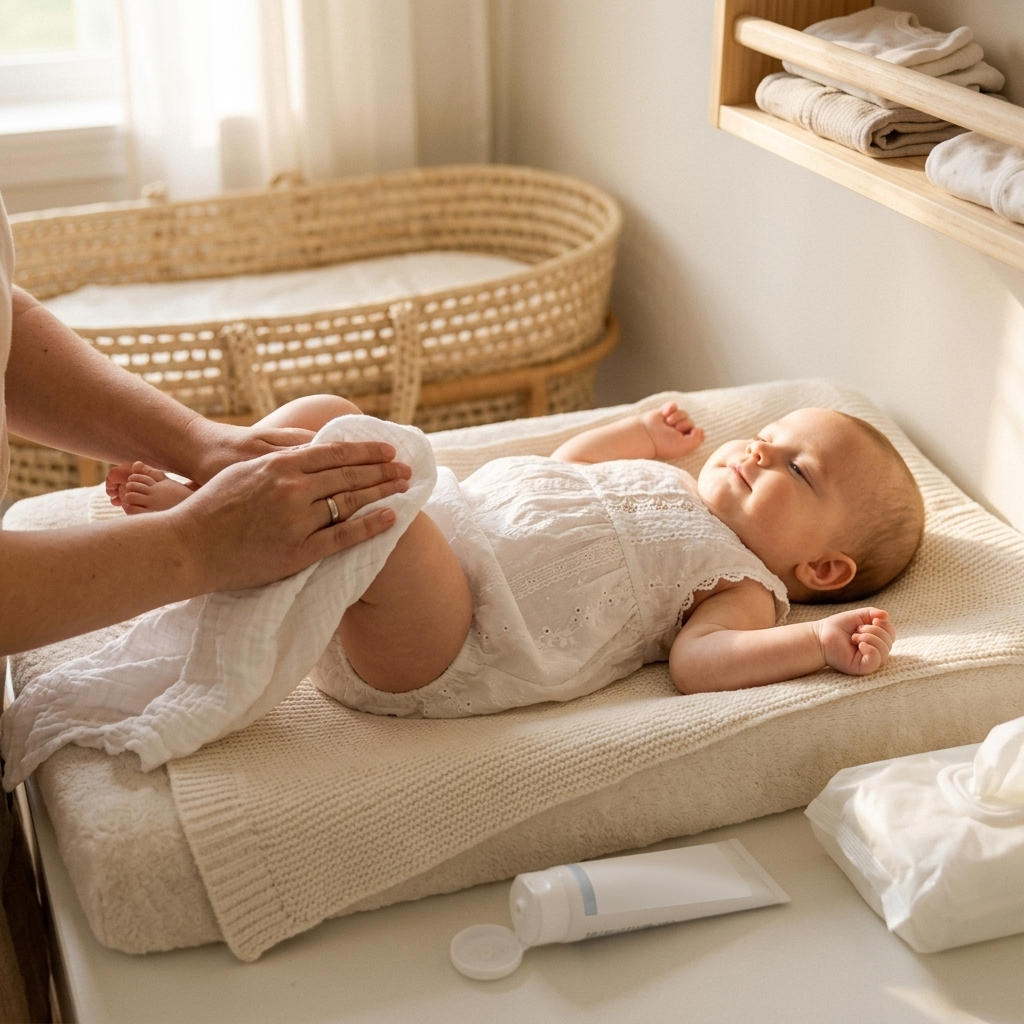
What Causes Diaper Rash
Most diaper rash is irritant contact dermatitis — the skin reacting to prolonged contact with moisture and friction. The usual culprits:
- Wetness and prolonged contact: A wet or soiled nappy left on too long is the single biggest cause. Urine and stool break down the skin's protective barrier, and enzymes in stool are particularly irritating.
- Friction: A nappy rubbing against the skin, especially if it's a little too tight or the baby is very active.
- New foods: Starting solids changes the content and acidity of stool, which is why rashes often flare during the weaning transition. New foods can also increase stool frequency.
- Irritants: Fragranced wipes, certain soaps, or detergents can irritate sensitive skin.
- Antibiotics: If baby (or a breastfeeding mother) is on antibiotics, they can disrupt the balance of bacteria and lead to rash, sometimes including yeast.
The Different Types (Because Treatment Differs)
- Simple irritant rash: Red, sometimes shiny patches on the areas that touch the nappy (bottom, genitals, thighs) — typically sparing the skin folds. The most common type and the one home care resolves.
- Yeast (candidal) infection: A rash that's bright red, often with small satellite spots spreading outward, and that characteristically does get into the skin creases and folds. It tends not to respond to standard barrier creams and needs an antifungal — a sign to see your doctor or pharmacist.
- Bacterial infection: Less common; may show as yellowish crusting, pus, blisters, or worsening redness, sometimes with fever. Needs medical assessment.
How to Treat Diaper Rash: The Core Routine
The AAP's guidance for the everyday irritant rash boils down to a memorable principle — keep the area clean, dry, and protected:
- Change frequently: Check and change nappies often — the moment they're wet or soiled. During a rash, that may mean every couple of hours, including a night change if needed.
- Clean gently: Use warm water and a soft cloth, or fragrance-free, alcohol-free wipes. During a flare, plain water is gentlest. Pat — don't rub.
- Dry thoroughly: Let the skin air-dry fully or pat completely dry before the next nappy. Trapped moisture is the enemy.
- Apply a barrier cream: A thick layer of a zinc oxide or petrolatum-based barrier cream at every change protects the skin from moisture while it heals. Apply it like icing a cake — thickly — and don't scrub the old layer off at the next change; just clean gently around it.
- Give nappy-free time: Letting the skin breathe, free of any nappy, for stretches during the day is one of the most effective healing measures. Lay baby on a waterproof mat or towel and let the air do its work.

Preventing Diaper Rash
- Frequent changes: The number-one preventive measure. Minimise the time skin spends against wetness.
- The right fit: A nappy that's snug but not tight reduces friction and leaks. Too tight traps moisture and rubs; too loose leaks.
- A thin layer of barrier cream as routine: For rash-prone babies, a light protective layer at each change heads off problems before they start.
- Gentle, fragrance-free products: Choose wipes and washes without fragrance or alcohol.
- Breathable clothing: Air circulation helps, so avoid sealing the nappy area under tight, non-breathable layers all day. Loose-fitting, breathable cotton over the nappy lets heat and moisture escape rather than trapping it against the skin — natural fibres genuinely help keep the area drier. Wash baby clothes in a fragrance-free, non-bio detergent and skip fabric softener, whose residue can irritate.
When to See a Doctor
Most diaper rash improves within 2–3 days of diligent home care. Check with your pediatrician or pharmacist if the rash: doesn't improve after about 3 days of the clean-dry-protect routine; is bright red and spreading into the skin folds with satellite spots (suggesting yeast, which needs an antifungal); shows blisters, pus, yellow crusting, or open sores (possible bacterial infection); is accompanied by fever; or seems to be causing significant pain. These point to something beyond simple irritation that may need a prescribed cream — nothing alarming, just the right tool for the job.
For the bigger picture of caring for delicate baby skin, see our baby skincare guide and, for the overlap with sensitive skin conditions, our baby eczema guide.