


If you're expecting or have a newborn, you've probably heard that loose blankets in the crib are unsafe. Sleep sacks — also called wearable blankets — are the recommended alternative. But walk into any baby store or browse online and you'll find a dizzying number of options: different TOG ratings, different fabrics, different leg designs, convertible features, split-leg styles.
Here's everything you need to know to choose the right sleep sack for your baby's age, season, and sleeping style.
Why Sleep Sacks Instead of Blankets?
The American Academy of Pediatrics (AAP) recommends a bare sleep surface for babies under 12 months. No loose blankets, pillows, bumpers, or soft objects. This is because loose bedding can shift over a baby's face during sleep and pose a suffocation risk.
A sleep sack solves this problem elegantly: it keeps baby warm without introducing anything loose into the crib. It zips or snaps onto baby, stays in place all night, and allows leg movement — which is important as baby becomes more mobile.
Most pediatricians recommend continuing with sleep sacks well beyond 12 months, until the child is old enough and large enough to use a regular blanket safely — typically around 18 months to 2 years.
Understanding TOG Ratings
TOG stands for Thermal Overall Grade — it's a measurement of thermal resistance, or how well a fabric insulates. The higher the TOG, the warmer the sleep sack.
- 0.5 TOG: Very lightweight. For warm weather or heated rooms (above 75°F / 24°C). Summer essential.
- 1.0 TOG: Light to medium weight. For room temperatures between 68–75°F (20–24°C). Year-round use in well-regulated nurseries.
- 2.5 TOG: Medium-warm. For cooler rooms between 61–68°F (16–20°C). Autumn and winter standard.
- 3.5 TOG: Warmest. For cold rooms below 61°F (16°C). Deep winter or unheated nurseries.
Quick rule: check the room temperature before bed and match the TOG to the guideline above. Then dress baby in a bodysuit underneath — short-sleeve for warmer rooms, long-sleeve for cooler ones.
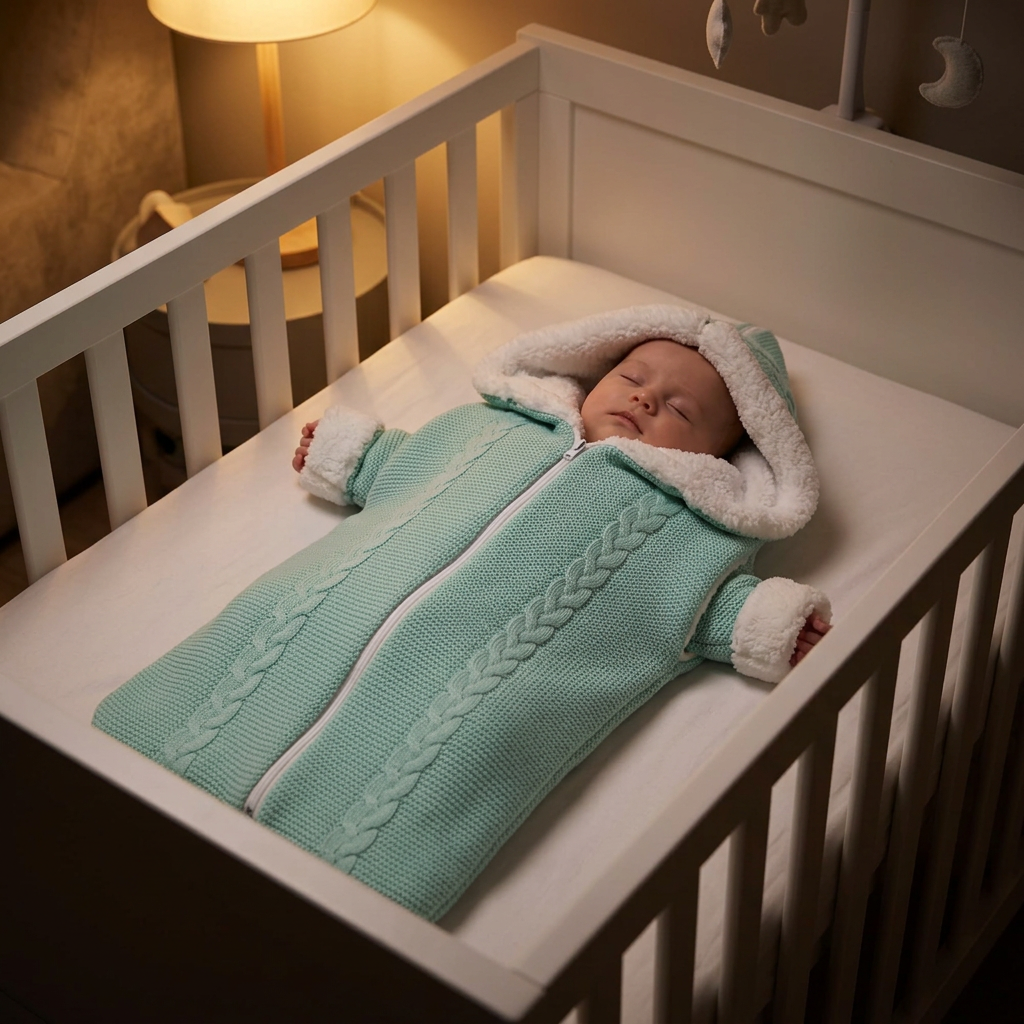
Types of Sleep Sacks: What's the Difference?
Standard Sleep Sack
The classic design: a sleeveless or short-sleeve body with a closed bottom. Baby's legs are enclosed in a single sack. Best for newborns and young infants who aren't yet mobile. Simple, safe, and widely available across all TOG ratings.
Split-Leg Sleep Sack
Has individual leg compartments instead of a single closed sack. Allows much greater freedom of movement — baby can roll, kick, and eventually attempt to stand more easily. Ideal from around 4–6 months when baby becomes more active during sleep. Some split-leg designs also zip open at the base to function as a stroller blanket.
Convertible Sleep Sack
Designed to transition between uses — functions as a crib sleep sack, can convert to a stroller-ready blanket, and sometimes features removable sleeves or adjustable leg options. Excellent value if you want one piece that works across multiple scenarios. Look for velvet-lined options for extra coziness in cooler months.
Swaddle Sack
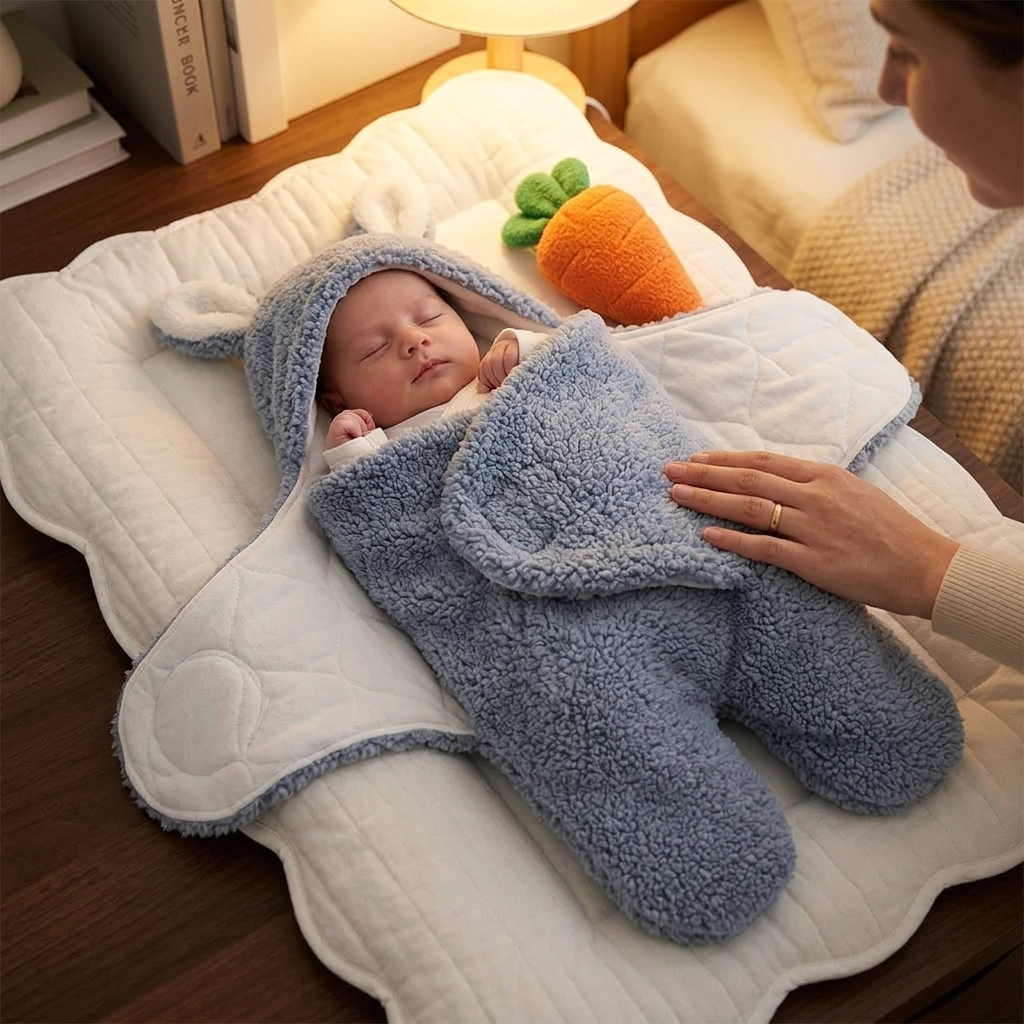
For very young newborns who benefit from the snug, contained feeling of a swaddle. Has wing closures that wrap around baby's arms to mimic swaddling. Should be discontinued as soon as baby shows any signs of rolling — typically around 2–4 months.
Which Sleep Sack for Which Stage?
- Newborn (0–3M): Swaddle sack or standard sleep sack over a bodysuit. Lamb velvet or soft velvet construction for the coziest newborn sleep.
- 3–6M: Transition from swaddle to standard sleep sack. If baby is starting to roll, move to a split-leg design that won't restrict movement.
- 6–12M: Split-leg or convertible sleep sack. Baby is increasingly mobile and needs full leg freedom for safe sleep transitions.
- 12M+: Continue with a sleep sack in a larger size. Many brands offer toddler sleep sacks up to 3–4 years.
What to Look for When Buying a Sleep Sack
- Two-way zipper: Opens from the bottom for nighttime diaper changes without fully waking baby or removing the sleep sack.
- Correct TOG for your climate: Don't buy on look alone — check the TOG and match it to your nursery temperature range.
- Breathable, skin-safe fabric: Organic cotton, bamboo, or velvet blends tested for skin safety. Avoid heavily synthetic fills that don't breathe.
- Correct sizing: Sleep sacks size by weight, not just age. A too-large sleep sack can slip up over baby's face. Too small restricts hip movement. Check weight ranges on every brand.
- Hip-healthy design: Look for sleep sacks that are roomy at the bottom — hips need to be able to spread naturally in the "frog leg" position, especially in the early months.
- Machine washable: It will be washed constantly. Everything needs to hold up.
How Many Sleep Sacks Do You Need?
At minimum, two per size per season: one on baby, one clean and ready. Many parents prefer three — one on, one in the wash, one spare. Sleep sacks go through the machine frequently, so having a rotation makes life significantly easier.
If you live in a climate with strong seasonal temperature swings, consider one summer-weight (0.5 TOG) and one winter-weight (2.5 TOG) per size. A 1.0 TOG can often bridge the transitions.
Shop Sleep Sacks at Mimou Babywear
Our sleep sack collection is designed to cover every stage and season: lamb velvet split-leg sacks for the earliest newborn weeks, convertible velvet-lined designs that transition from crib to stroller, and TOG ratings matched to real-world nursery temperatures.
Every Mimou sleep sack features a two-way zipper, hip-healthy roomy bottom, and fabric tested for sensitive baby skin. Browse the full sleep collection and find the right sack for your baby's best night's sleep.