


Layering baby clothes sounds straightforward until you're standing in the nursery at 6am wondering if three layers is too many or not enough for a 58°F morning that will become 74°F by noon. Temperature management is genuinely one of the trickier parts of dressing a baby — because unlike adults, they can't tell you they're too hot, and their bodies are less efficient at self-regulating.
Here's the season-by-season guide to layering baby clothes correctly — with the principles that make it intuitive once you understand how they work.
Why Layering Matters More for Babies Than Adults
Two reasons make layering more critical for babies:
- Limited thermoregulation: Babies — especially under 6 months — can't sweat effectively and can't shiver to generate heat. They depend almost entirely on their environment and clothing to maintain body temperature.
- Temperature volatility in daily life: A typical day involves moving between a warm house, a cool car, a heated shop, an outdoor street, and back again. Each transition is a layering challenge that an adult handles unconsciously but that requires active management for baby.
The goal of layering isn't to make baby as warm as possible — it's to give yourself the ability to adjust quickly as conditions change.
The Layering System: Three Zones
Think of baby's outfit in three functional zones:
- Base layer: Against the skin. Manages moisture, provides a comfortable foundation. Always organic cotton or a natural fiber. A short or long-sleeve bodysuit depending on the season.
- Mid layer: Insulation. Traps body heat. A soft knit top, a fleece vest, a light cardigan, or a thicker second bodysuit in very cold weather.
- Outer layer: Protection from wind, cold, rain. A hooded jacket, a thick zip-up suit, or a structured outdoor layer. Goes on over everything for outdoor transitions, comes off immediately indoors.
Not every outing requires all three layers. The key is knowing which ones to add based on the conditions.
Spring Layering (50–70°F)
Spring is the most layering-intensive season because temperatures can swing 20°F+ in a single day.
The spring formula:
- Base: Long-sleeve cotton bodysuit
- Mid: A light romper, dress, or soft pants + coordinated top over the bodysuit
- Outer: A lightweight zip cardigan or knit jacket — easy to remove as the day warms
- Hat: A cotton beanie for morning, a sun hat for afternoon
The outer layer does most of the work in spring. Choose one that goes on and comes off in under 10 seconds — a front zip beats buttons every time. A fruit print dress with a coordinating cardigan is a classic spring layered look: beautiful, functional, and easy to adjust on the fly.

Summer Layering (75°F+)
Summer is where most parents under-layer rather than over-layer — which is the right instinct outdoors, but the wrong one indoors.
The summer formula:
- Base: Short-sleeve bodysuit or nothing but a diaper in very high heat
- Outfit: A single lightweight layer — romper, linen dress, or a loose cotton set
- "Reverse layer" for AC: A muslin swaddle or a light cotton cardigan that lives in the bag for restaurants, shops, and cars with aggressive air conditioning
The summer layering trick most parents learn the hard way: going from 95°F outside to 68°F inside a restaurant is a bigger temperature change than most autumn days. Always have a light layer accessible, even in July.
Autumn Layering (45–65°F)
Autumn mirrors spring in its variability but trends colder. The layer you're most likely to need quickly is a warm outer layer — and the layer you need to remove quickly is everything underneath it when you come inside.
The autumn formula:
- Base: Long-sleeve organic cotton bodysuit
- Mid: Soft knit pants + a warm long-sleeve top, or a thicker romper
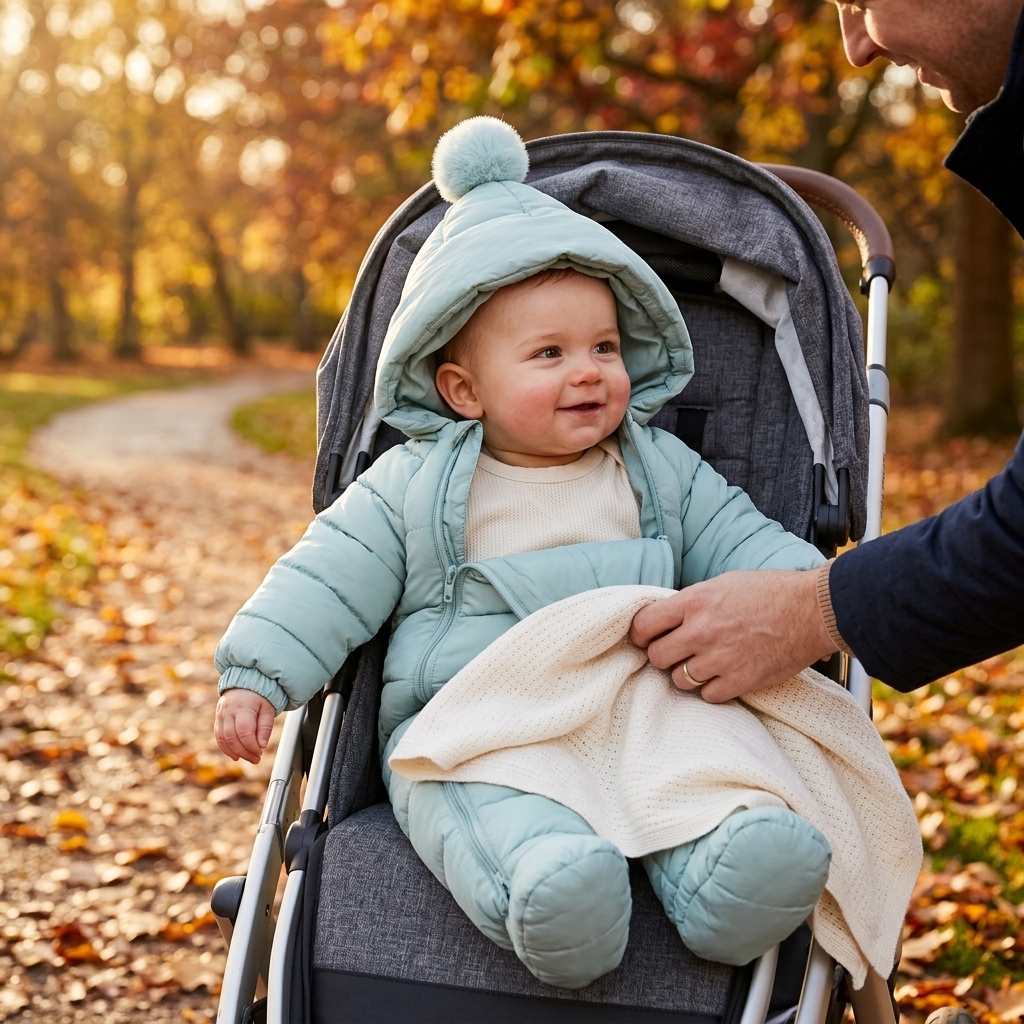
- Outer: A hooded zip jacket or a structured outdoor jumpsuit for cooler days
- Accessories: Soft hat, light booties
For outdoor-heavy autumn days — walks, farmers markets, playground visits — a thick hooded outdoor jumpsuit worn over a simple bodysuit is the most efficient autumn outfit. One zip and baby is ready for anything outside. Unzip and they're comfortable inside within seconds.
Winter Layering (Below 45°F)
Winter is the season where layering mistakes are most consequential — both over-dressing (overheating risk) and under-dressing (cold stress risk) are real concerns.
The winter formula:
- Base: Long-sleeve thermal or fleece bodysuit
- Mid: A warm knit or fleece all-in-one, OR soft pants + a thick top
- Outer: A structured padded or fleece outer layer for outdoors
- Accessories: Warm hat (not in car seat), mittens for older babies, warm booties
The car seat rule: Never put baby in the car seat wearing a puffy winter coat. The padding compresses in a crash, making the harness effectively loose. Instead, dress in thin warm layers, buckle the harness snugly, then place a blanket over the top of the harness.
The Quick Temperature Check
Not sure if baby is dressed correctly? The most reliable indicator is the back of the neck or the chest (not the hands or feet — these are naturally cooler and aren't a reliable guide).
- Warm and dry: Just right
- Hot and damp: Remove a layer immediately
- Cool: Add a layer
Do this check every 30–45 minutes during outdoor time and every time you transition between indoor and outdoor environments.
Shop Layering Essentials at Mimou Babywear
Great layering starts with great base pieces. Our organic cotton bodysuits, lightweight rompers, soft knit mid-layers, and structured outdoor jumpsuits are all designed to work together across every season — so you can mix, match, and adjust without ever starting from scratch.
Browse the full Mimou collection and build a layering wardrobe that works year-round.