


You've washed your own clothes a thousand times without thinking twice. Then a tiny onesie shows up and suddenly you're wondering: what temperature? Which detergent? Do I need to pre-wash before baby wears it?
Baby clothes do need a bit more care than adult laundry — not because it's complicated, but because newborn skin is more sensitive, fabrics are more delicate, and the sheer volume of daily washes means you want to protect every piece from the start. Here's everything you need to know.
Should You Wash Baby Clothes Before the First Wear?
Yes — always. New clothing, even from trusted brands, can carry manufacturing residues, dust from warehousing, or finishing chemicals used to keep fabric crisp during shipping. None of these are good for a newborn's skin.
Pre-washing applies to everything: bodysuits, sleepers, swaddles, hats, socks. Wash before first use, no exceptions. The same goes for secondhand items, which may have been stored with fabric softeners or other products your baby could react to.
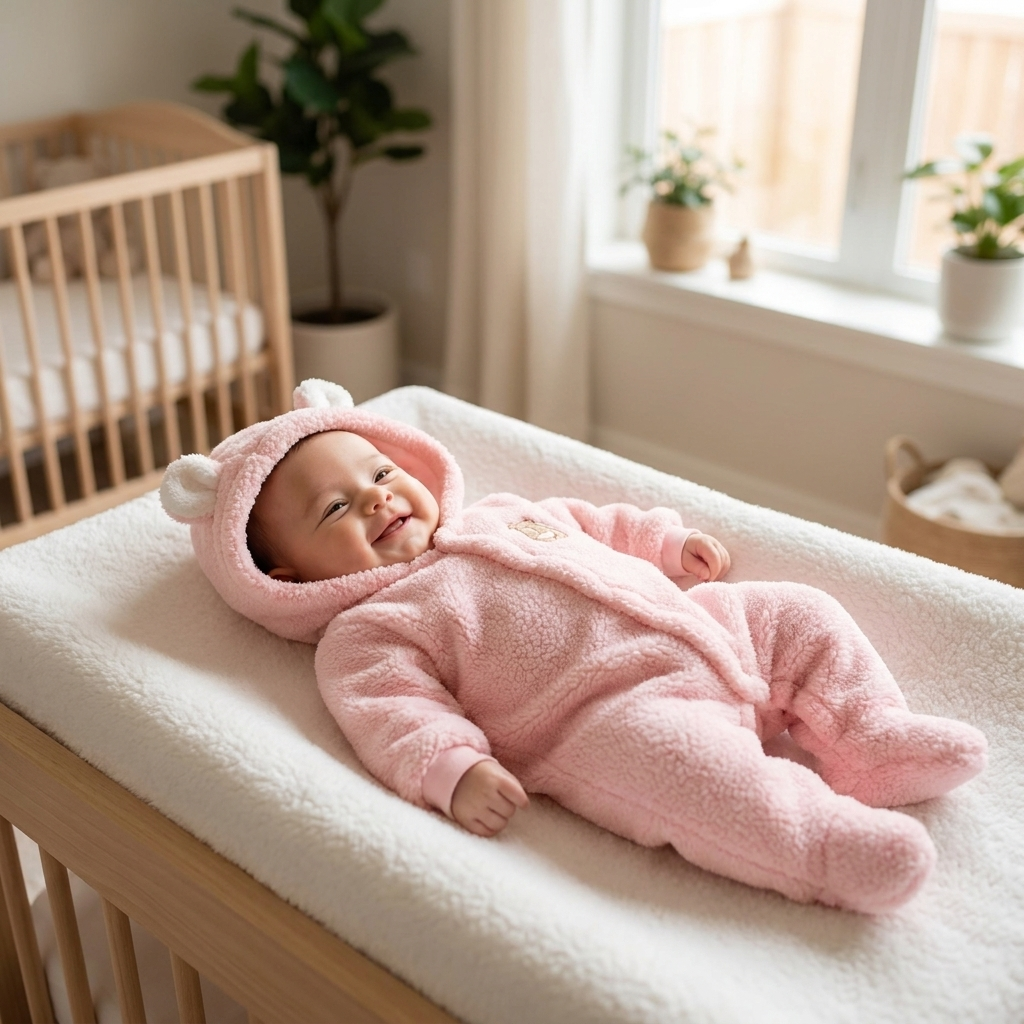
The Best Detergent for Baby Clothes
This is where most parents overthink it — and where it genuinely matters. Look for:
- Fragrance-free — Synthetic fragrances are one of the most common causes of baby skin irritation. Skip anything that smells strongly, even if it smells nice.
- Dye-free — Artificial dyes add no cleaning power and are an unnecessary irritant.
- Hypoallergenic formula — Designed for sensitive skin, fewer harsh surfactants.
- Free of optical brighteners — These UV-reactive chemicals make white clothes glow but can irritate skin exposed to sunlight.
Popular choices among US parents include Dreft Stage 1, Seventh Generation Free & Clear, and All Free & Clear. You don't need a specialized "baby" detergent — any fragrance-free, dye-free formula works.
Skip fabric softener entirely. It coats fibers with a waxy residue that reduces absorbency, can irritate sensitive skin, and actually breaks down the flame-retardant properties of certain sleepwear fabrics.
Water Temperature: What Actually Works
- Cold water (60–80°F / 15–27°C) — Best for everyday washing. Protects colors, prevents shrinkage, energy-efficient, and effective at removing most stains when combined with a good detergent.
- Warm water (90–110°F / 32–43°C) — Use for heavily soiled items or when you want extra sanitizing power after illness.
- Hot water (120°F+ / 49°C+) — Reserve for cloth diapers or items that need true sanitizing. Too hot for most baby clothing — will shrink organic cotton and fade prints over time.
For organic cotton and linen-blend pieces especially, cold is always the safer bet. These natural fibers are more prone to shrinkage than synthetic blends.
Cycle Settings and Machine Care
- Delicate or gentle cycle — The right setting for most baby clothing. Less mechanical agitation means fabric holds its shape and softness longer.
- Normal cycle — Fine for thicker pieces like fleece suits, hooded jumpsuits, or anything with more structure.
- Turn items inside out — Protects prints and embroidery from fading with each wash.
- Use a mesh laundry bag — For tiny socks, hats, and anything with snaps that could catch on other items.
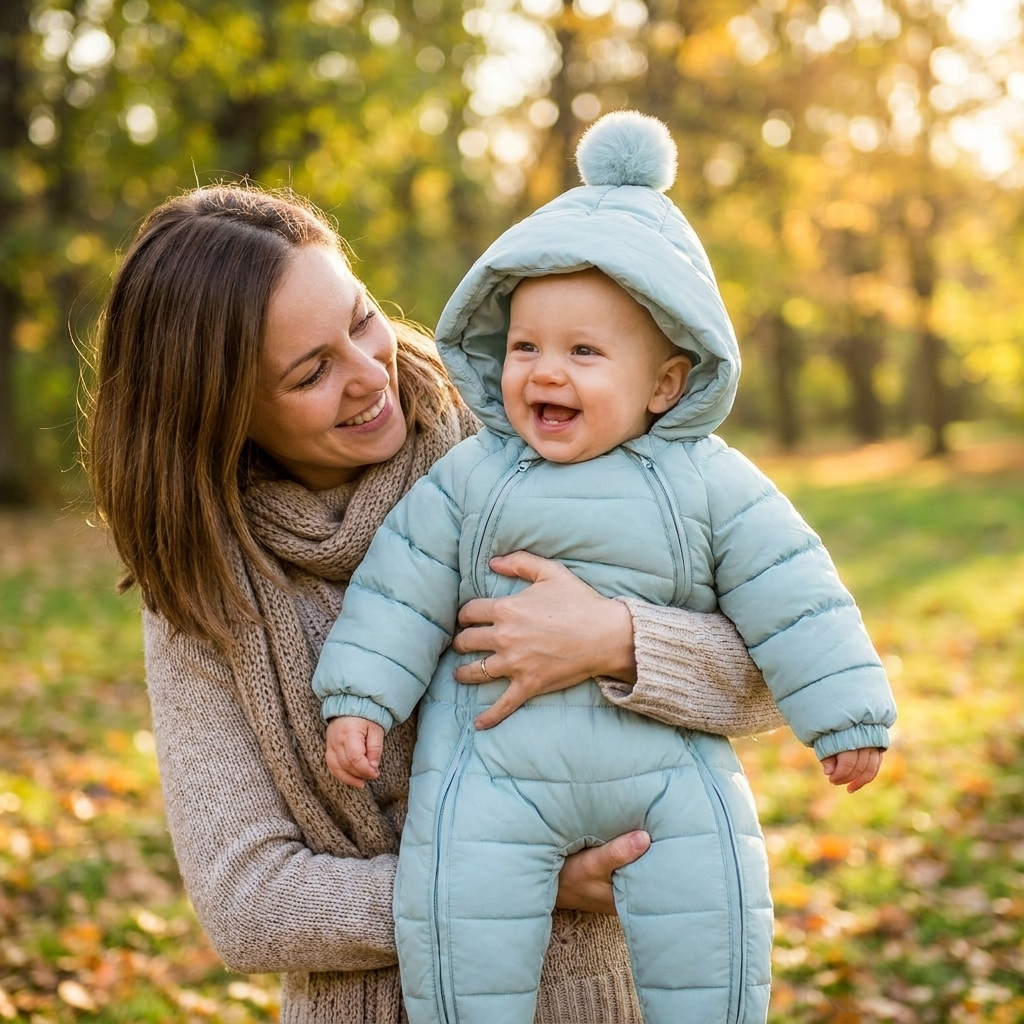
Drying Baby Clothes: Air Dry vs. Tumble Dry
Air drying is always gentler — on the fabric, on the environment, and on the elasticity of waistbands and snap closures. If you have outdoor space, hanging in the sun naturally sanitizes and whitens without chemicals.
If you use a dryer:
- Use the low heat setting — high heat shrinks natural fibers and degrades elastic over time.
- Remove items while still slightly damp and let them finish air drying — prevents over-drying and pilling.
- Clean the lint trap every load — baby clothes shed more microfibers than you'd expect.
Dealing with Stains (Because There Will Be Stains)
Act fast — the sooner you treat a stain, the better your chances of full removal.
- Breast milk or formula — Rinse with cold water immediately. Warm or hot water sets protein stains. Apply a small amount of fragrance-free dish soap, let sit 5 minutes, then wash as normal.
- Blowouts — Rinse with cold water, then soak in cold water with a baby-safe stain remover for 30 minutes before washing.
- Food (once solids start) — Scrape off solids, then treat with a paste of baking soda and cold water. Rinse, then wash.
- Sunscreen — Tricky one. Pre-treat with a small amount of dish soap before washing, and avoid hot water which sets oil-based stains.
Avoid bleach on baby items — even diluted, it can leave chemical residues and damage natural fibers significantly.
How Often Should You Wash Baby Clothes?
After every wear — always. Unlike adult clothes that can be worn a few times before washing, baby clothes come into contact with skin constantly and pick up milk, drool, and diaper residue even when they look clean. In the newborn stage especially, daily washing is standard.
The good news: if you have enough pieces in rotation (7–10 bodysuits, 4–5 sleepers), you can batch wash every 1–2 days rather than running the machine daily.
Keeping Baby Clothes Lasting Longer
- Store clean, completely dry clothes — any residual moisture leads to mildew smell.
- Store by size in labeled bins or zip bags — makes passing them on or reselling much easier.
- Don't iron directly on prints or screen graphics — use a pressing cloth or iron inside out.
- For organic cotton pieces, the more you wash them the softer they get — no special treatment needed.
Mimou Babywear Is Built to Be Washed
Every piece we make is designed knowing it will be washed dozens — sometimes hundreds — of times. Our certified organic cotton, linen blends, and fleece pieces are tested for colorfastness, shrinkage, and softness retention across repeated washes.
Shop the full Mimou collection and invest in pieces that hold up as well on wash number fifty as they did on day one.