


If you've been shopping for baby clothes recently, you've probably noticed the words "linen blend" popping up everywhere. And for good reason. More parents — especially in warmer climates across the US — are making the switch to linen baby clothes, and once you understand why, it's hard to go back.
Here's an honest look at what linen actually offers, when it makes sense, and what to look for when buying.
What Makes Linen Different?
Linen is a natural fiber made from the flax plant. It's one of the oldest textiles in the world, and for good reason — it has a unique combination of properties that most synthetic and even cotton fabrics can't match:
- Exceptional breathability — Linen has a natural hollow fiber structure that allows air to circulate freely. It keeps babies cooler in warm weather than almost any other fabric.
- Moisture-wicking — Linen absorbs moisture and dries quickly, reducing discomfort during hot days or after a feeding.
- Gets softer with every wash — Unlike many fabrics that degrade, linen actually improves over time. The more you wash it, the softer it becomes.
- Naturally hypoallergenic — Linen is gentle on sensitive skin and less likely to cause irritation than synthetic alternatives.
- Durable — Linen is one of the strongest natural fibers. Baby clothes that survive the wash cycle repeatedly without losing shape or softness.
Is Pure Linen or Linen Blend Better for Babies?
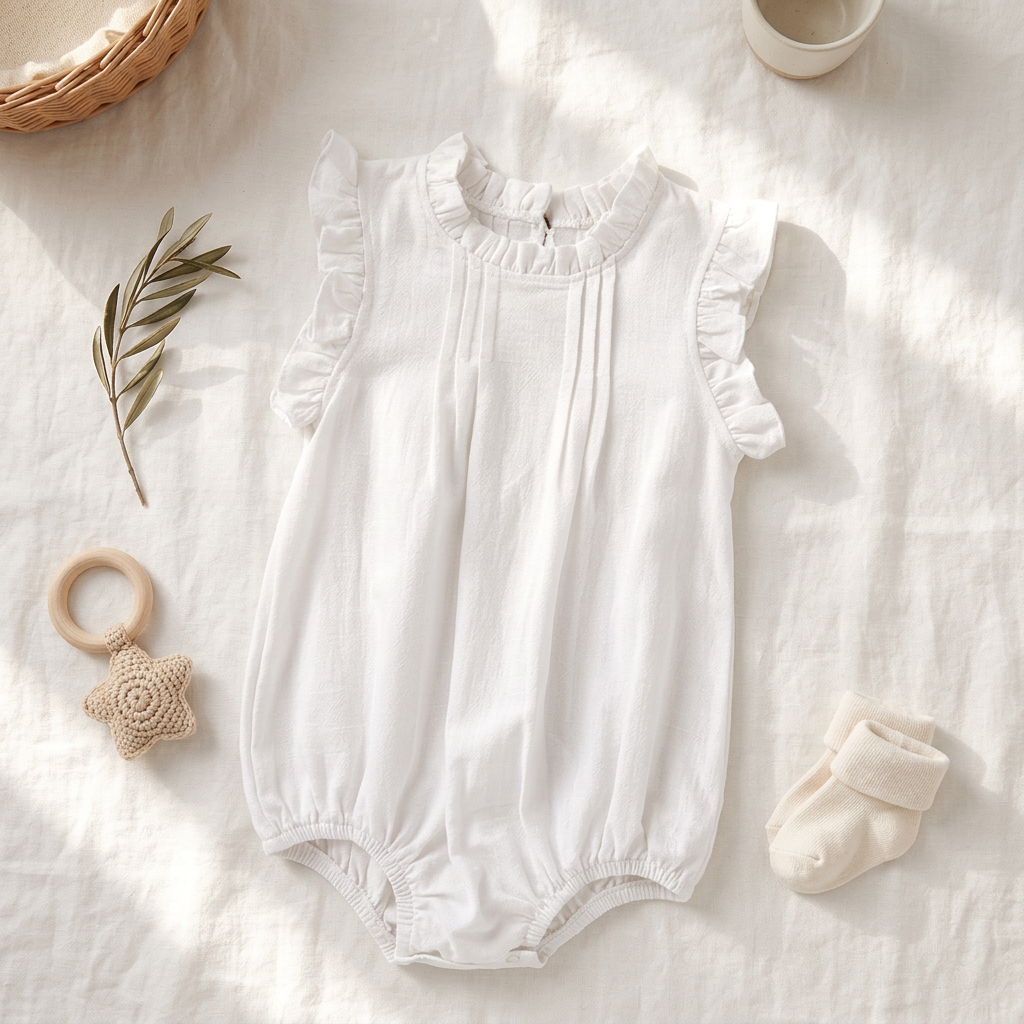
Pure linen can feel slightly stiff out of the package, especially before the first few washes. For babies — particularly newborns with sensitive skin — a linen-cotton blend is often the better starting point. It combines linen's breathability and durability with cotton's natural softness and stretch, giving you the best of both worlds.
As baby grows and the fabric softens with washing, pure linen pieces become increasingly comfortable and are a great choice for toddlers from 6 months onward.
When Is Linen Especially Useful?
- Summer and warm climates — If you're in the South, Southwest, or anywhere that gets warm from spring through fall, linen is a genuine game-changer for keeping baby comfortable.
- Babies who run warm — Some babies simply overheat more easily. Linen helps regulate temperature naturally.
- Daytime outfits and outerwear — Rompers, shortalls, and dresses in linen look beautiful and hold their shape well.
How to Wash Linen Baby Clothes
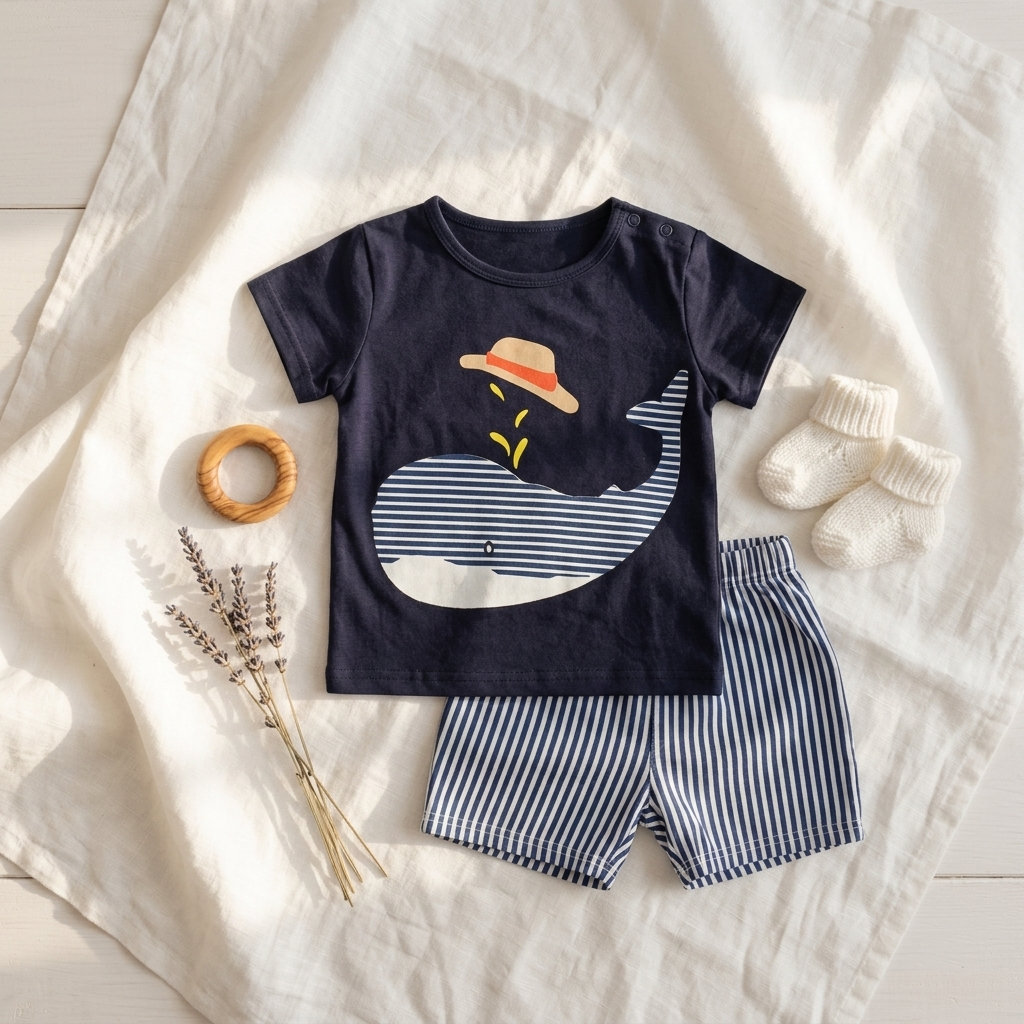
Linen is easy to care for with a few simple rules:
- Machine wash on a gentle or delicate cycle in cool or warm water
- Use a mild, fragrance-free detergent — especially for newborn skin
- Tumble dry on low or air dry flat to maintain shape
- A little wrinkling is normal and part of the fabric's character — it relaxes quickly once worn
- Avoid bleach, which weakens the fibers over time
What to Look for When Buying Linen Baby Clothes
- Linen-cotton blend for younger babies — Ensures softness from day one without sacrificing breathability.
- Pre-washed or stonewashed options — These are already softened and won't surprise you with shrinkage after the first wash.
- Flat seams — Seams that lie flat against the skin reduce irritation, especially for sensitive newborns.
- Snap or zip closures — Make dressing and diaper changes faster and less stressful.
Shop Linen Baby Clothes at Mimou Babywear
Our linen blend pieces are designed for real life — breathable enough for warm days, soft enough for newborn skin, and beautiful enough to be the outfit you reach for first. Explore the Mimou collection and find your new favorite.
Join the Mimou Family
Parenting tips, new arrivals & members-only offers — straight to your inbox.