


There's a particular trap almost every first-time parent falls into: standing in a shop (or scrolling a website) holding the tiniest, most heart-meltingly small outfits imaginable, and buying far too many of them. Three months later, most of those newborn pieces have been worn once or twice — if at all — before the baby outgrew them. Building a newborn wardrobe (a “layette”) is less about quantity and more about buying the right things in the right amounts. Here's a realistic checklist of what a newborn actually needs, how many of each, and where not to overspend.
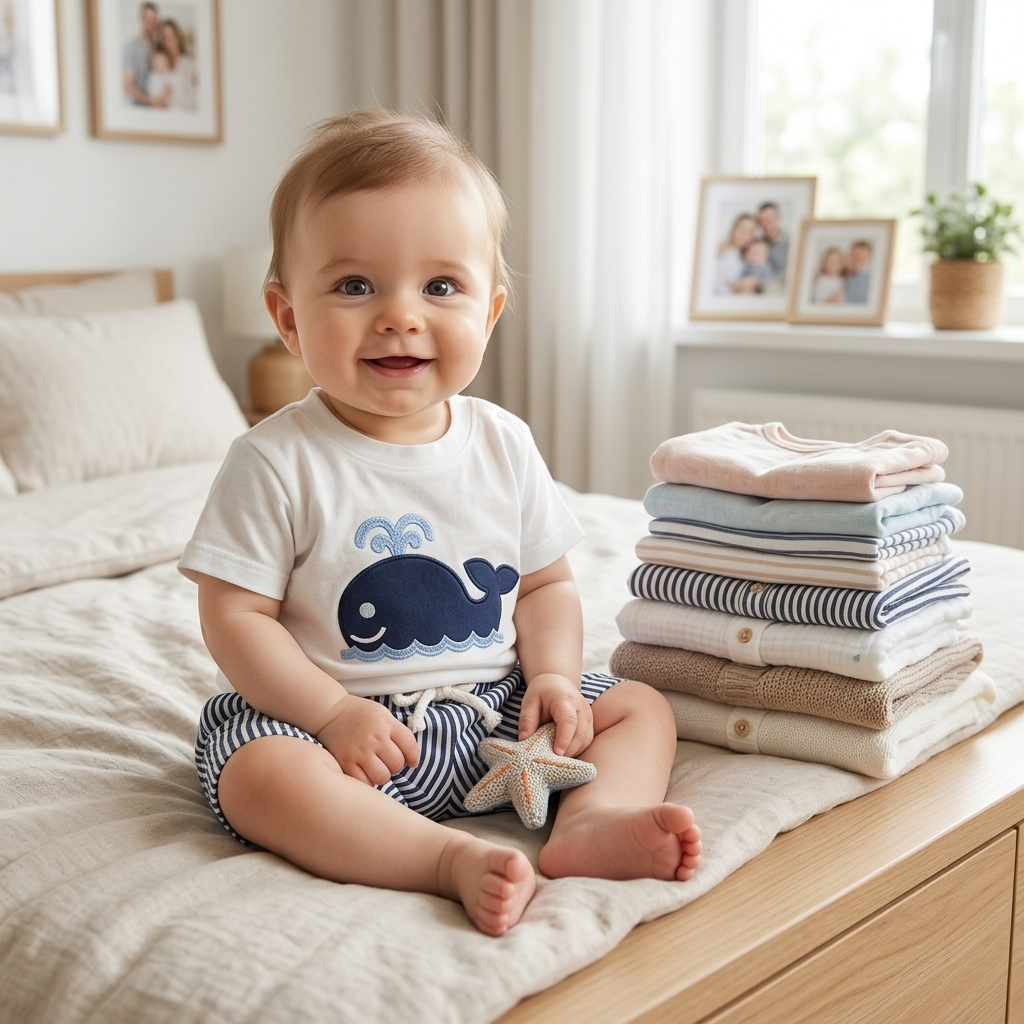
First, the Golden Rule: Don’t Overbuy the Smallest Sizes
Newborn and 0–3 month sizes are outgrown faster than any others — some babies skip newborn size almost entirely, especially if they arrive on the larger side. Buy a modest number of the smallest sizes, keep tags on and receipts handy, and invest a bit more in the 3–6 and 6–9 month sizes that get worn for longer. You can always buy more newborn pieces once your baby has arrived and you know their size; you can't un-buy a drawer full of outfits they never wore.
The Newborn Clothing Checklist (and How Many of Each)
These quantities assume you'll do laundry roughly every 2–3 days. Adjust up if you want to wash less often, or for a summer vs winter baby.
| Item | How many | Why |
|---|---|---|
| Bodysuits / onesies | 6–8 | The everyday base layer; you'll go through several a day with spit-up and nappy leaks |
| Sleepsuits / footed rompers | 6–8 | Newborns essentially live in these day and night; the most-used item |
| Cardigans / knit layers | 2–3 | For adjusting warmth in layers |
| Hats (soft) | 2–3 | A sun hat for summer; a soft warm hat for cooler weather |
| Socks / booties | 4–5 pairs | They vanish constantly; footed sleepsuits reduce how many you need |
| Scratch mittens | 2–3 pairs | To stop newborns scratching their face (many sleepsuits have fold-over cuffs instead) |
| Swaddles / muslins | 4–6 | The multitaskers — swaddling, burping, sun shade, mopping up |
| Sleep sack / wearable blanket | 2 | Safe warmth for sleep without loose blankets (one in the wash, one in use) |
| Going-out / special outfit | 1–2 | For the coming-home outfit and occasions — just don't overdo it |
| Pram suit / warm outer layer | 1 | Winter babies only — for outings (not for the car seat; see below) |
Prioritise Function Over Cuteness
It's tempting to fill the wardrobe with adorable little outfits with buttons, bows, and fiddly details. In the newborn reality of round-the-clock nappy changes and frequent outfit changes, the pieces you'll actually reach for are the practical ones:
- Easy fastenings: Front poppers and zips you can do one-handed at 3am beat anything that goes over the head or buttons up the back. Wide envelope necklines make dressing far easier.
- Easy nappy access: Poppers along the legs and crotch mean you're not undressing the whole baby for every change.
- Soft, breathable fabric: Natural cotton against delicate skin, with no scratchy seams or labels. See our organic cotton guide.
- Machine washable, no special care: Newborn clothes get dirty constantly. Anything “hand wash only” will sit unused.
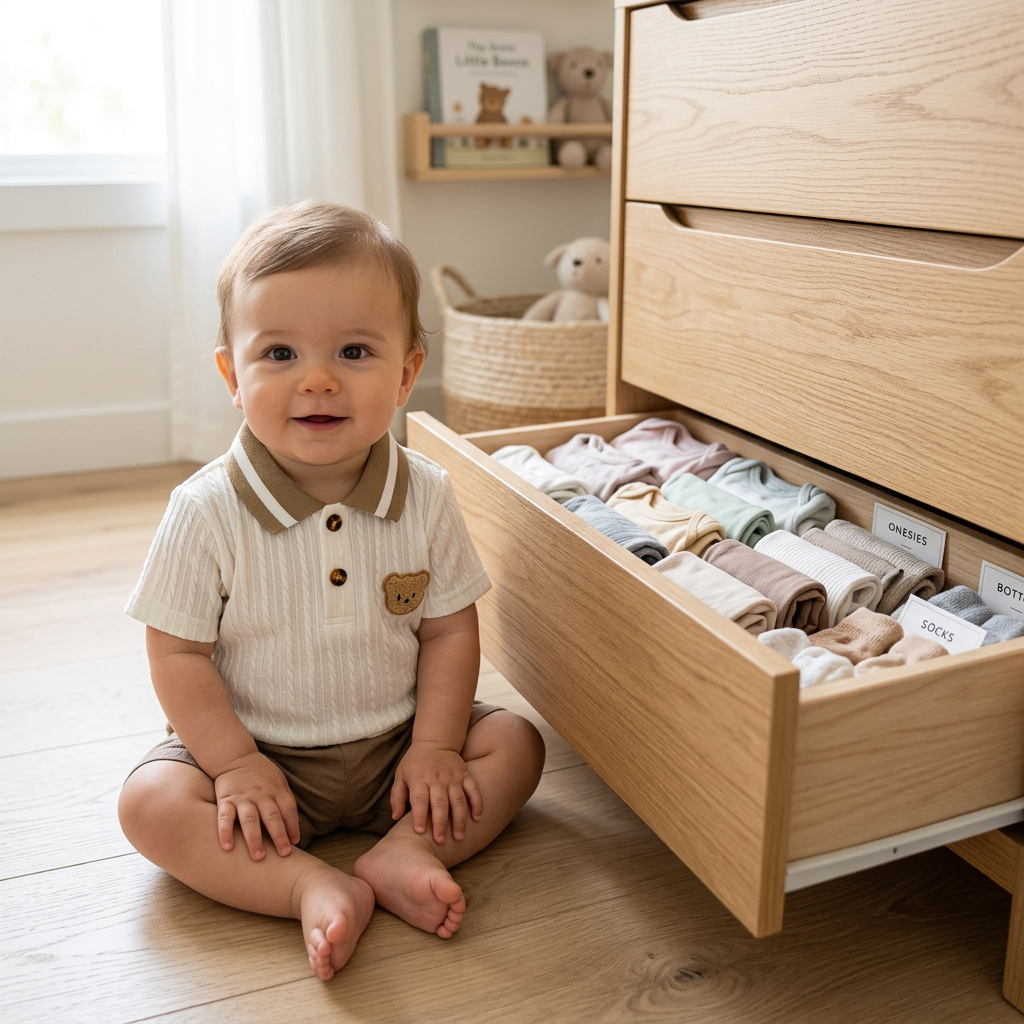
A Safety Note: The Car Seat and Bulky Clothing
One important point that catches many new parents out: babies should not wear thick, bulky clothing or snowsuits under the car seat harness. Bulky padding compresses in a crash, leaving the harness dangerously loose. The safe approach is thin, warm layers with the harness snug against the body, then a blanket or coat placed over the buckled harness for warmth. Keep the puffy pram suit for the pram, not the car seat.
What You Can Skip (or Buy Later)
- Newborn shoes: Adorable but completely unnecessary — non-walking babies don't need shoes, just warm socks or booties. (More in our first walker shoes guide.)
- Too many “outfits”: Coordinated two-pieces with separate tops and bottoms are fiddly on a newborn; one-piece sleepsuits win in the early weeks.
- Anything in bulk before baby arrives: Beyond the basics, wait. You'll quickly learn what works for your baby and your routine.
A Sensible Approach
Buy a core set of practical basics in newborn and 0–3 months before the birth, weighted toward sleepsuits and bodysuits, plus a few pieces in the next size up. Keep receipts, leave tags on until needed, and resist the urge to fill every drawer. Babies are gifted a lot of clothing too — so leaving room (and budget) for what arrives after the birth is the smart move. A focused, functional layette beats an overflowing one every time.
For sizing across every age, see our baby clothes size chart, and browse practical everyday basics in our collections.