

Choosing the right pajamas for toddlers is so much more than picking out a cute pattern. It’s about wrapping your little one in comfort and safety, helping them drift off into a truly restful night. The best pajamas are made from soft, breathable fabrics with a safety-conscious snug fit—the perfect recipe for sweet dreams.
Your Guide to Cozy and Safe Toddler Sleepwear
Welcome to the wonderful, sometimes wild, world of toddler sleep! If picking out pajamas feels like one more overwhelming decision on your plate, please know you're not alone. Think of this guide as a warm chat with a friend who’s been there and is here to share what really works.
We’re going to walk through everything you need to know, focusing on the three things that truly matter for your toddler's sleepwear:
- Unmatched Comfort: We'll dive into why soft, breathable fabrics are the secret ingredient for a peaceful night.
- Essential Safety: You'll learn how to easily spot the safety features that keep your little one secure while they sleep.
- Everyday Practicality: Let’s find PJs that are not just adorable but can also stand up to real life with a toddler.
My goal is to help you feel confident and clear-headed the next time you're shopping. By the end of this, choosing the perfect pajamas for your toddler will feel like a breeze.
Why Toddler Pajamas Matter So Much
As a parent, your to-do list is a mile long. It's easy to think, "They're just pajamas, right?" But what your toddler wears to bed plays a surprisingly big role in their well-being, influencing everything from how well they sleep to their overall safety.
The focus on high-quality sleepwear has grown so much that the global market for baby pajamas was valued at $37.2 billion in 2022. It’s set to grow even more as parents like us put comfort first. You can discover more insights about the baby sleepwear market to see just how big this trend is.
This isn't just about trends, though; it's about your child's needs. A toddler’s skin is far more delicate than ours, and their little bodies are still learning how to regulate their temperature. Pajamas that are scratchy, too warm, or too loose can cause irritation, restless nights, and even create safety hazards.
Choosing the right pajamas is a simple yet powerful way to support your toddler's sleep routine. It’s a small detail that makes a big difference in their comfort and your peace of mind.
This guide is here to take the guesswork out of it all. We’ll break down the essentials, from what those fabric labels really mean to why "snug fit" is more than just a suggestion. Let's make bedtime the coziest, safest part of their day.
It can be a lot to remember, especially when you're in the store with a tired toddler in tow. To make it easier, I’ve put together a quick checklist you can reference anytime.
Toddler Pajama Shopping Checklist
Use this quick reference table to remember the most important factors when buying pajamas for toddlers, helping you make confident choices at a glance.
| Feature | Why It Matters for Your Toddler | What to Look For |
|---|---|---|
| Breathable Fabric | Toddlers can't regulate body temperature well. Breathable materials like cotton or bamboo prevent overheating. | Look for 100% organic cotton, bamboo viscose, or modal. Feel the fabric—it should be soft and light. |
| Snug Fit | Loose-fitting pajamas are a fire hazard. A close fit reduces this risk without needing chemical flame retardants. | A yellow tag that says, "For child's safety, garment should fit snugly." The PJs should hug the body without being tight. |
| Non-Slip Feet | New walkers and active toddlers need grip to prevent falls, especially on hardwood or tile floors. | Check for textured, rubberized grips on the soles of footed pajamas. |
| Easy On & Off | Diaper changes and potty training demand PJs that are easy to manage, even in the middle of the night. | Two-way zippers on one-pieces, or simple two-piece sets that pull on and off easily. |
| Tagless & Flat Seams | Scratchy tags and bulky seams can irritate a toddler's sensitive skin and disrupt sleep. | Look for a printed label on the back of the neck and check that seams lie flat against the fabric. |
Keep these key points in mind, and you'll be well on your way to choosing pajamas that both you and your toddler will love.
Choosing the Softest and Safest Fabrics
We've all been there: a fussy toddler who just can't seem to settle down for the night. Sometimes, the secret to a peaceful sleep isn't a magic lullaby but something much simpler—the fabric of their pajamas.
Think of their PJs as a gentle hug that lasts all night long. A soft, breathable material is more than just a luxury; it’s a non-negotiable for keeping your little one comfy and helping them sleep soundly. Scratchy, stuffy fabrics can lead to irritated skin and overheating, turning dreamland into a nightmare.
So, let's walk through the best fabrics out there, focusing on the ones that deliver on both coziness and safety.
The All-Star Fabrics for Toddler Pajamas
When you start browsing for toddler pajamas, you'll quickly notice a few materials pop up again and again. There's a good reason for that! These parent-approved fabrics have earned their spot at the top.
Here’s a quick look at the best contenders:
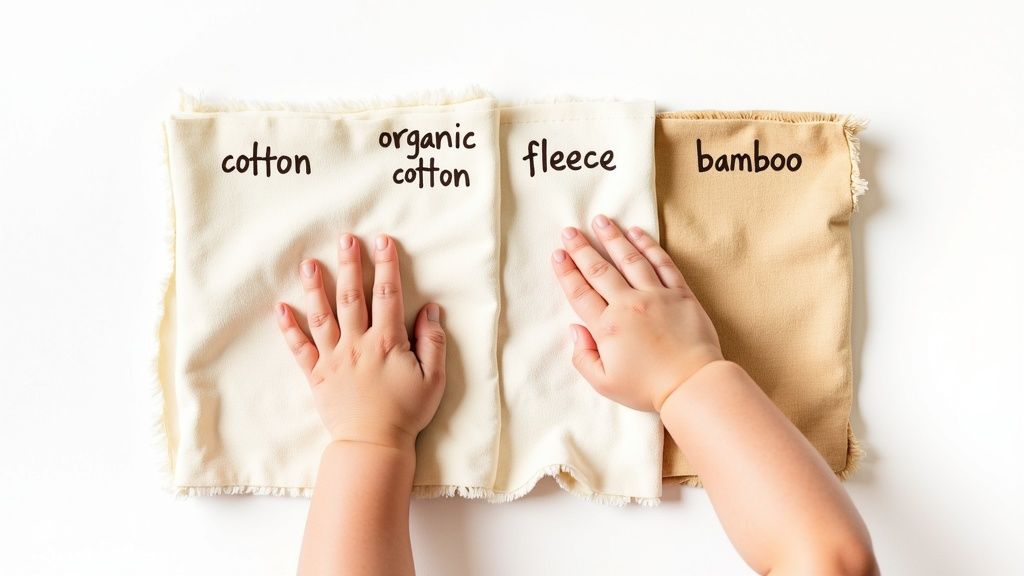
- Classic Cotton: The tried-and-true champion of kid's clothing. Cotton is soft, lets skin breathe, and is generally kind to all skin types, making it a fantastic all-rounder for any season.
- Bamboo Viscose: If you’ve ever touched bamboo PJs, you know that buttery-soft feeling. It’s incredibly gentle, making it a dream for toddlers with sensitive skin. Plus, it’s thermo-regulating, which is just a fancy way of saying it helps keep them cool in the summer and cozy in the winter.
- Fleece: When the temperature really drops, fleece is your best friend for locking in warmth. Just remember to use it as a single cozy layer on the coldest nights to avoid overheating.
These fabrics are all great choices, but cotton's reliability has made it a clear favorite for generations. It’s so popular, in fact, that the cotton sleepwear market is expected to be worth $26.2 billion by 2030. You can read the full research on the baby sleepwear market to see what's driving these trends.
Why Organic Cotton Is a Game-Changer
While classic cotton is a wonderful starting point, organic cotton is in a league of its own—especially for toddlers with eczema or easily irritated skin. The magic is in how it's made.
Organic cotton is grown completely free of harsh synthetic pesticides and fertilizers. This cleaner, gentler process results in a fabric that is unbelievably pure and soft, which significantly lowers the chances of it triggering a skin reaction.
For a little one with delicate skin, choosing organic cotton isn't just a preference—it's a real solution. It gives you the peace of mind that you're wrapping them in something truly pure and gentle.
By going organic, you're not only being kinder to your toddler's skin but also to the planet. It’s a simple swap that can make a huge difference in their nightly comfort. If you want to dive deeper, you can learn more about organic cotton baby pajamas in our article and see why so many parents are making the switch.
A Parent's Guide to Sleepwear Safety
As a parent, your child's safety is always top of mind, and that doesn't stop when you tuck them into bed. Choosing the right pajamas for your toddler is about more than just cute patterns; it's about understanding the safety features designed to protect them while they dream. It might sound a bit technical, but it’s actually pretty straightforward once you know what to look for.
The single most important safety rule for children's sleepwear is that it must be snug-fitting. This isn't just a style choice—it's a critical fire-safety regulation from the Consumer Product Safety Commission (CPSC). For pajamas made from natural fibers like cotton or bamboo, a close fit is a non-negotiable legal requirement.
Why Does a Snug Fit Matter So Much?
So, why the big deal about a snug fit? Imagine a loose-fitting sleeve. When there's a lot of air between the fabric and your child's skin, it can unfortunately fuel a fire, helping it spread much faster.
By choosing pajamas that fit snugly, you eliminate that extra air pocket. This simple design choice dramatically reduces the fabric's flammability without having to treat it with chemical flame retardants. It’s why you’ll see that bright yellow tag on cotton PJs reminding you: "For child's safety, garment should fit snugly. This garment is not flame resistant. Loose-fitting garment is more likely to catch fire."
Don't let that tag alarm you—it's there to empower you. Choosing snug pajamas is a simple, chemical-free way to keep your toddler safe.
A good fit means the pajamas gently hug your toddler's body, arms, and legs without being constricting. Your little one should still have plenty of room to wiggle, stretch, and move comfortably. As a bonus, a proper fit also helps regulate body temperature and prevent overheating. If you're ever worried about your child being too warm, you can learn how to tell if your baby is too hot with a few easy checks.
Other Safety Details to Keep an Eye On
Beyond the fit, a few other features add an extra layer of protection, especially for toddlers who are mastering the art of walking (and tumbling!).
Here are a couple of key things to look for:
- Non-Slip Soles: For footed pajamas, grippy soles are a must-have. Those little textured, rubberized dots provide essential traction on hardwood floors or tiles, helping prevent slips and falls as your little one makes their pre-bedtime dash.
- Secure Fastenings: Zippers should always have a "zipper garage"—that little fabric tab at the top that protects your toddler's delicate chin from getting pinched. If the pajamas have snaps, give them a gentle tug to make sure they're attached securely.
Keeping these simple safety checks in mind will help you pick out pajamas that are not only soft and cozy but, most importantly, designed to keep your little one perfectly safe through the night.
Finding the Right Pajama Style for Your Toddler
Walking down the kids' sleepwear aisle can feel a bit overwhelming with so many choices. But honestly, it all boils down to three main players: the classic one-piece, the practical two-piece set, and the super-cozy sleep sack. Let's figure out which one is the perfect match for where your toddler is right now.
No matter which style you lean towards, remember that a safe fit is non-negotiable.
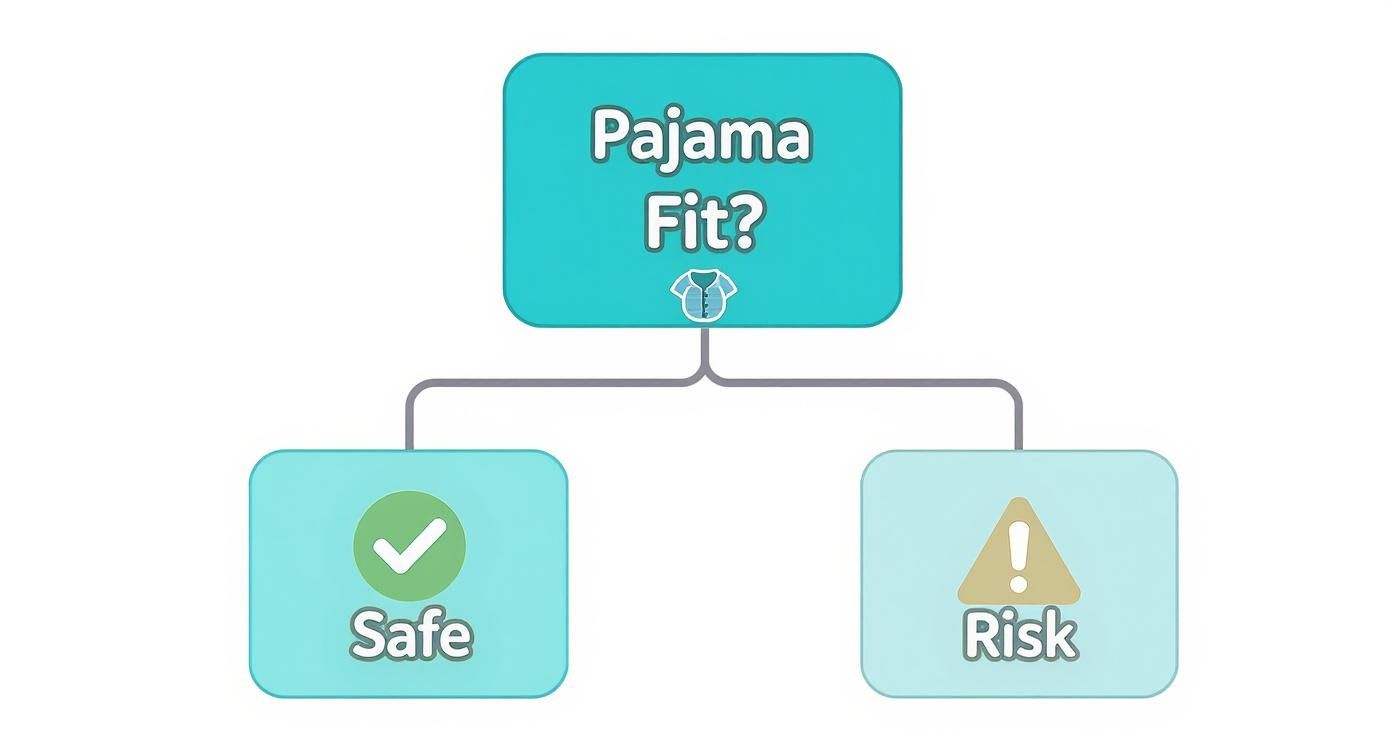
As the graphic shows, a snug fit is always the safest choice. It’s the golden rule of toddler PJs.
To help you decide, let's take a closer look at the big three and see how they stack up.
| Pajama Style | Best For | Pros | Cons |
|---|---|---|---|
| One-Piece | Younger toddlers & active sleepers. | Full-body warmth (no chilly backs!); prevents blanket kicking; easy changes with a two-way zipper. | Can be tricky for potty training; might be outgrown in length faster than separates. |
| Two-Piece | Toddlers who are potty training or close to it. | Promotes independence for bathroom trips; you can mix and match tops and bottoms. | Tops can ride up on very active sleepers, leaving their tummy exposed to the cold. |
| Sleep Sack | Toddlers still in a crib who kick off blankets. | A safe alternative to loose blankets; provides consistent, all-night warmth; easy to use. | Not ideal for toddlers who are walking and need their feet free in the morning. |
Each style really has its moment to shine. It’s all about matching the PJs to your child's developmental stage and sleeping habits.
One-Piece Pajamas: The All-in-One Wonder
There’s a reason one-piece footie pajamas are a staple for younger toddlers. They offer amazing head-to-toe coziness, making sure no little bellies or backs get exposed to a midnight chill. They're a lifesaver for those little kickers who can't seem to keep a blanket on for more than five minutes.
Practical Tip: Look for a two-way zipper. This isn't just a gimmick; it's a game-changer for 3 a.m. diaper changes. You can zip up from the bottom without having to fully undress your sleepy baby, keeping them warm and making your job a whole lot easier.
Two-Piece Pajamas: For Growing Independence
Once your toddler starts getting the hang of potty training (or even just showing interest), two-piece sets become your best friend. They give your little one the freedom they need to pull their pants down on their own for those nighttime bathroom runs.
These sets are also great for mixing and matching—if one piece gets a stain, you don't have to toss the whole outfit. It's no wonder the kids' pajama market is booming. It was valued at $4.55 billion in 2024 and is on track to nearly double by 2035!
Sleep Sacks: The Wearable Blanket
For toddlers still in a crib, sleep sacks (or wearable blankets) are a fantastic and safe alternative to loose blankets. They wrap your child in warmth without any of the risks of a blanket covering their face.
Think of a sleep sack as your toddler's personal, portable comforter. It moves with them, so they get consistent warmth and a feeling of security no matter how much they toss and turn.
It's the ultimate way to ensure they stay safely covered all night long. If this sounds like the perfect solution for you, you can check out our guide on the best baby sleep sacks to find the right one for your little dreamer.
How to Handle Sizing and Growth Spurts
Just when you think you’ve nailed their size, your toddler shoots up another inch overnight. It’s the classic parenting story, right? Finding pajamas that fit can feel like trying to hit a moving target, but getting it right is crucial for their comfort and, more importantly, their safety.
I know it’s tempting to buy a size up, hoping to get a few extra months of wear out of them. We’ve all been there. But PJs that are too big can actually be a safety hazard. Baggy fabric can get twisted and tangled as they toss and turn, and extra-long sleeves or pant legs are a serious trip hazard for those wobbly first steps (and even for seasoned runners!).
The goal is to find that perfect sweet spot: a fit that's snug enough to be safe but with just enough room to accommodate that next inevitable growth spurt.
Decoding Size Charts and Finding the Perfect Fit
You’ve probably noticed that a “2T” from one brand fits completely differently than a “2T” from another. It’s maddening! This is exactly why knowing your child's actual measurements is your secret weapon. Don't worry, it's easier than it sounds.
Just grab a soft measuring tape and jot down their current height and weight. This gives you a solid, reliable baseline to compare against any brand’s specific size chart.
Once you have the PJs in hand, here are a few simple at-home checks to ensure the fit is just right:
- Check the Length: The cuffs on the arms and legs should sit right at the wrists and ankles. You don't want them pulling up high or bunching up in a big pile.
- The Hug Test: The pajamas should gently "hug" their body. You should be able to pinch a small bit of fabric, but not a giant handful. Think cozy, not baggy.
- Look for Stretch: This is a game-changer. Fabrics that blend cotton or bamboo with a little bit of spandex (around 5%) offer a forgiving stretch that moves with your toddler and easily adapts to those small-but-sudden growth spurts.
Remember, the ideal fit is cozy but never restrictive. Your little one should have a full range of motion to wiggle, stretch, and get those pre-bedtime crazies out without the fabric pulling or holding them back.
This constant cycle of outgrowing clothes is what makes the toddler apparel market so massive. The global market, which includes all those tiny pajamas, was valued at a whopping $62.8 billion in 2024 and is only expected to get bigger. If you're curious, you can read the full research about the toddler wear market to see just how much this industry is booming. By focusing on a great fit every time, you’re making sure every pair you buy is both safe and super comfy.
Keeping Toddler Pajamas Soft and Cozy
You’ve found them! The perfect pair of pajamas—they’re soft, safe, and just ridiculously cute. So, how do you make sure they stay that way after the inevitable cycle of wear, wash, repeat? The good news is that keeping them feeling brand-new is way simpler than you might think.
A little bit of TLC on laundry day goes a long way in protecting delicate fabrics, keeping colors bright, and making sure every bedtime is as cozy as the very first. It all boils down to being gentle.
The Gentle Wash Cycle
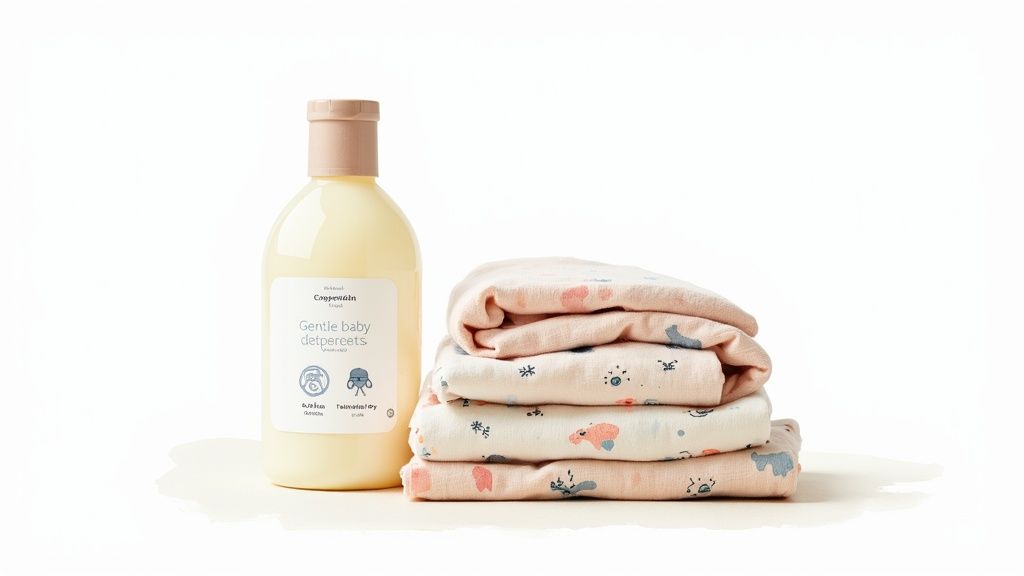
First things first: the detergent. Your toddler's skin is still so sensitive, so it's best to stick with a gentle, baby-safe, and fragrance-free detergent. These are made to clean up messes without leaving behind any harsh chemicals that could irritate their skin.
Once you’ve got the right soap, the washing part is easy:
- Go with Cool Water: Always wash pajamas in cold water on a gentle cycle. Hot water is notorious for shrinking natural fibers like cotton and bamboo, and it can make those vibrant prints look tired and faded way too soon.
- Tumble Dry on Low: High heat is the number one enemy of soft fabrics. Tumble dry on the lowest possible setting. Better yet, if you have the time, let them air dry. This is the ultimate way to prevent pilling and keep the material feeling perfect.
Here’s a little secret: skip the fabric softener. It seems like it would help, but the waxy chemicals can actually build up on the fibers, which reduces the fabric's natural breathability. It can also irritate sensitive skin and even interfere with the flame-resistant qualities of certain sleepwear.
By sticking to this simple low-and-slow routine, you’ll help those beloved pajamas for toddlers stay wonderfully soft and ready for many more nights of sweet dreams.
Your Top Toddler Pajama Questions, Answered
Let's be honest, the toddler years are full of questions, and what they wear to bed is definitely one of them. We get it. So, we've put together some straight-to-the-point answers to the questions we hear most often from parents just like you.
One of the big ones is: "How many pairs of pajamas do I really need?" While there's no perfect number, having five to seven pairs in the drawer is a great starting point. This little stash means you're not doing laundry every single day and you've always got a backup ready for those unexpected leaks or spills.
What Should My Toddler Wear Under Pajamas?
This really comes down to the temperature in your home. The golden rule is to keep them comfortable and avoid overheating, which can disrupt sleep.
- Warm Nights: When it's warm, a single layer of light, breathable pajamas is usually perfect. On really hot nights, don't be afraid to pare it back to just a simple onesie or even just their diaper.
- Cool Nights: For chilly evenings, you can add a thin layer underneath, like a short-sleeved bodysuit. Just be sure to avoid anything too thick or bulky that could make them sweaty.
Pro Tip: The best way to check if your toddler is comfortable is to feel the back of their neck. If it’s a little sweaty, they’re too warm. If it feels cool, an extra light layer might be a good idea.
When Is It Time to Ditch the Sleep Sack?
Ah, the great sleep sack graduation! You'll know it's time when your little one starts getting more mobile and needs their feet free for action—or for their first attempts at climbing out of the crib. This typically happens somewhere between 18 and 24 months.
When you're ready to make the switch, a soft two-piece set is a fantastic next step into the world of "big kid" pajamas. You'll also notice more and more PJs are being made with amazing, eco-friendly fabrics like organic cotton. It's a wonderful shift in the industry as more parents look for gentle, sustainable options for their kids. If you're curious, you can discover more insights about the kids' pajamas market and this move toward more thoughtful materials.
Here at Mimou Babywear, we’re all about creating the softest, safest start to a good night’s sleep. Our entire collection is designed with your little one's comfort in mind, using breathable fabrics that are gentle on their skin. Ready for a better bedtime? Shop our gentle toddler pajamas today.