


“Is my baby ready for solid food?” It's a question that arrives with a surprising amount of pressure — from well-meaning relatives, from the baby down the street who started at four months, from your own eagerness to reach this exciting milestone. Here's the grounding truth: starting solids is about developmental readiness, not a date on the calendar, and the signs that a baby is ready are clear and physical. Getting the timing right matters — for safety, for nutrition, and for making the whole experience a happy one. Here's exactly what to look for and how to begin.
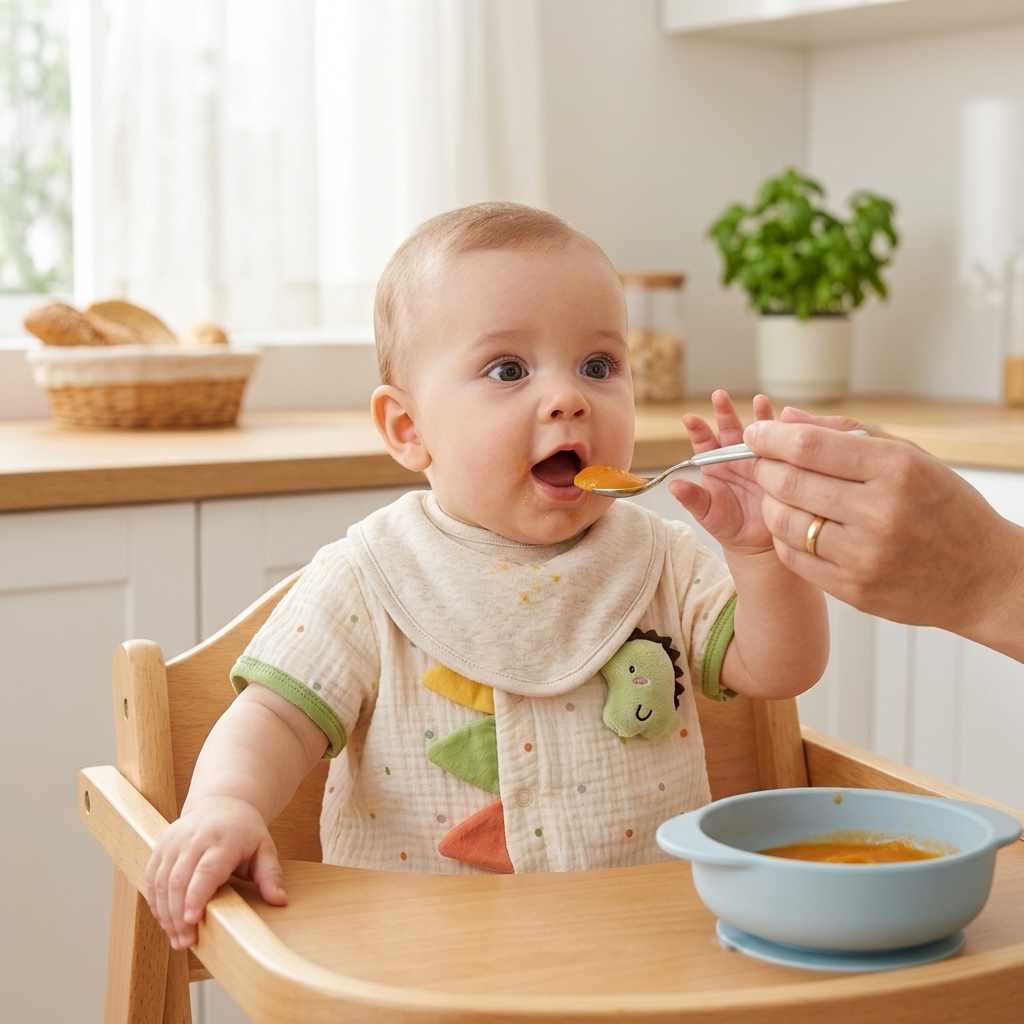
When to Start: What the Guidance Says
The major health bodies are aligned on this. The World Health Organization recommends exclusive breastfeeding for around the first 6 months, with solids introduced at about 6 months alongside continued milk feeds. The American Academy of Pediatrics similarly advises starting solids around 6 months — and importantly, not before 4 months.
Why not earlier? Before about 4 months, a baby's digestive system and swallowing coordination simply aren't ready, and early solids are associated with increased choking risk and offer no benefit. The window most experts converge on is around 6 months, by which point most babies have developed the physical skills that make eating safe and productive — and their iron stores, present from birth, begin to need topping up from food.
The Signs of Readiness (All Three Should Be Present)
Rather than watching the calendar, watch the baby. The three core signs of readiness, which the NHS and pediatric guidance emphasise should appear together, are:
- Sitting up with good head and neck control: Baby can sit upright (with minimal support) and hold their head steady. This is essential for safe swallowing — a baby who can't hold their head steady can't manage food safely.
- Loss of the tongue-thrust reflex: Young babies automatically push objects out of their mouth with their tongue (a protective reflex). When this fades, food can be moved to the back of the mouth and swallowed rather than pushed straight back out.
- Coordinated reaching and mouthing: Baby can look at food, pick it up (or guide a spoon), and bring it to their mouth — the hand-eye-mouth coordination that signals genuine readiness.
A few things that are often mistaken for readiness but aren't: waking more at night, watching you eat with interest, chewing fists, or wanting extra milk feeds. These are normal and usually reflect growth spurts or development — not a need for solids. Wait for the real three.
How to Start
- Pick a calm, unhurried moment: Offer first foods when baby is content and only mildly hungry — milk still comes first at this stage, so a full meltdown of hunger isn't the moment to experiment. Many families offer solids after a partial milk feed.
- Start once a day: One small “meal” a day to begin, building up gradually as baby shows interest. There's no rush — early eating is about learning, not calories.
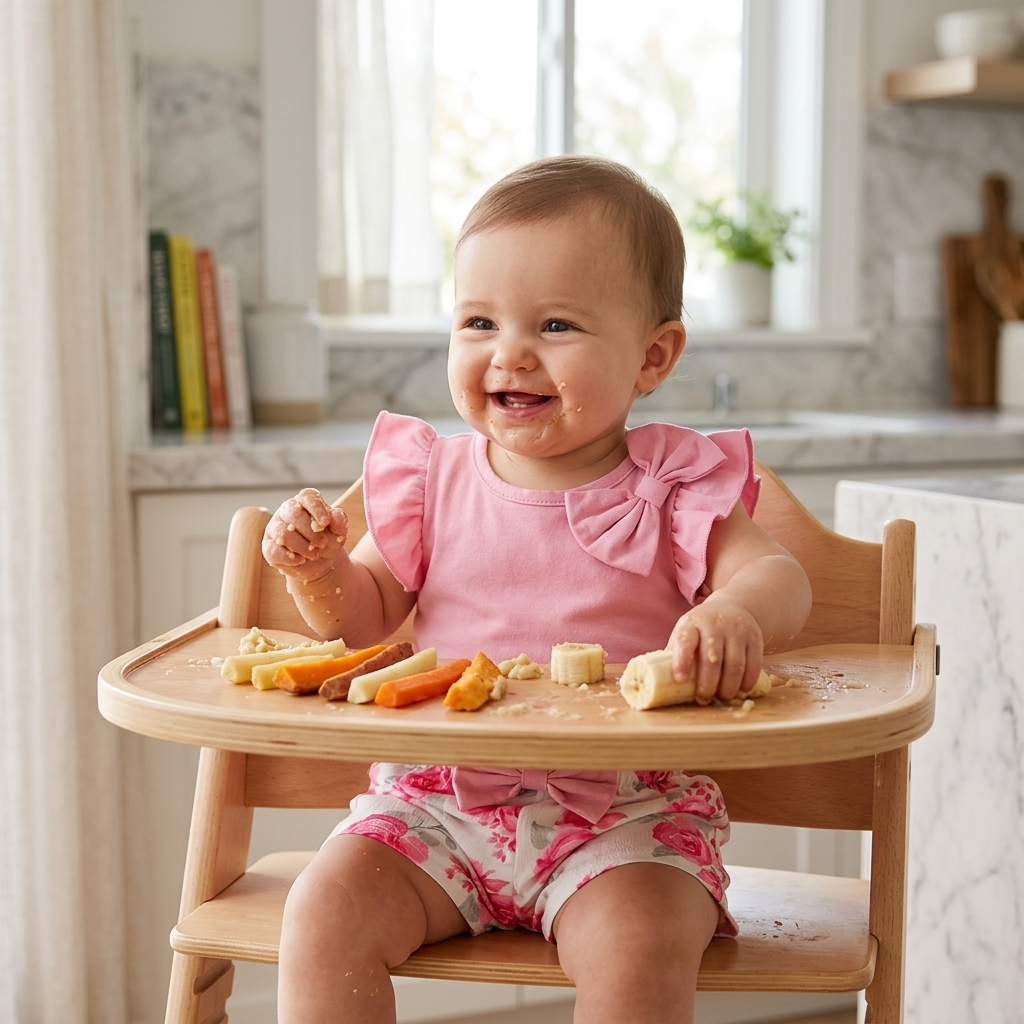
- Purees, baby-led weaning, or both: You can start with smooth purees on a spoon, offer soft finger foods for baby to self-feed (baby-led weaning), or combine the two. All are valid; the “right” one is whatever suits your baby and family. Our finger foods guide covers self-feeding safely.
- First foods: Iron-rich foods are a smart early focus (iron-fortified cereal, pureed meat, lentils), alongside vegetables and fruit. Single-ingredient foods at first make it easier to spot any reactions.
- Introduce allergens early and one at a time: Current evidence — including the landmark LEAP study on peanut — shows that introducing common allergens (peanut, egg) from around 6 months, rather than delaying, may actually reduce allergy risk. Introduce them one at a time, a few days apart. Our allergen introduction guide covers this in detail.
Safety Essentials
- Always supervise: Never leave a baby alone with food, ever.
- Baby sits upright to eat: Always in an upright position in a high chair, never reclined or moving around.
- Know choking hazards: Avoid whole grapes (quarter them lengthways), whole nuts, popcorn, hard raw vegetables, chunks of hard fruit, and anything round and firm. Cut food into appropriate shapes and sizes.
- Learn the difference between gagging and choking: Gagging (noisy, baby pushing food forward) is a normal, protective part of learning to eat. Choking (silent, unable to breathe) is an emergency. An infant first-aid course is genuinely worthwhile before starting solids.
- No salt, no honey, no whole cow's milk as a drink under 1: Salt strains immature kidneys, honey carries a botulism risk under 12 months, and cow's milk isn't suitable as a main drink before one (though small amounts in cooking are fine).
Keep Milk as the Main Event (for Now)
An important reassurance: in the early weeks of solids, breast milk or formula remains your baby's main source of nutrition. “Food before one is just for fun” is an oversimplification — those early meals are building crucial skills and introducing iron and allergens — but it captures the truth that you shouldn't stress about quantities at first. Some food will be worn rather than eaten. That's completely normal and part of the process.
And expect mess — lots of it. Wipeable, easy-change outfits (or a good coverall bib) save a great deal of laundry in these months. For what comes next, see our finger foods guide and baby food recipes.