


Welcome to one of the most exciting times of your life! Bringing your new baby home is a moment you'll cherish forever. To help you feel calm and truly prepared, let's cut through the noise and focus on what you really need from day one. It all boils down to four core areas: safe sleep, feeding, diapering, and comfortable clothing.
This guide is not about filling your house with gear; it's about having the right, comforting essentials ready to go, so you can focus on what truly matters—snuggling your new baby.
Starting Your Journey with the Absolute Essentials
Feeling a little overwhelmed by all the baby "stuff" out there? It's completely normal. The endless online checklists can make preparing for your baby feel like a monumental task. Let's take a deep breath and simplify things together.
Think of this guide as a warm hug from a friend who's been there. We're not building a massive shopping list. Instead, we're creating a small, thoughtful collection of the must-haves for your baby’s comfort and safety in those first precious days.
The Four Pillars of Newborn Care
When you get right down to it, a newborn's world is beautifully simple. Their life revolves around four key things: eating, sleeping, diaper changes, and staying warm and cozy. If you’ve got those four pillars covered, you're setting the stage for a peaceful environment where you can soak in every moment with your little one.
This simple chart breaks down the main categories to think about.
Use this as your mental map. It's a gentle reminder to concentrate your energy on these fundamentals first.
Prioritizing Safety and Comfort Above All
As you start picking out items, especially clothing and sleepwear, always think soft, gentle, and breathable. Fabrics like organic cotton will be your best friend. A newborn’s skin is incredibly delicate—in fact, it's up to 30% thinner than our own—so it’s much more sensitive to scratchy materials or harsh chemicals.
You'll also quickly appreciate parent-friendly designs. Look for sleepsuits with two-way zippers (a true lifesaver during 3 a.m. diaper changes!) or bodysuits with envelope necklines that make dressing a squirmy baby so much easier.
Keeping your baby at a comfortable temperature is also a top priority. A good rule of thumb is to layer lightweight fabrics rather than relying on one heavy blanket. If you're ever worried about overheating, our guide on how to tell if your baby is too hot has simple, practical tips to give you peace of mind.
To make it even easier, here's a quick-reference table with just the non-negotiables to get you through that first week.
Your Day One Newborn Essentials Checklist
| Category | Must-Have Items | Key Feature to Look For |
|---|---|---|
| Clothing | 4-6 bodysuits & 4-6 sleepsuits | Soft, breathable fabric (like organic cotton), easy-access snaps or zippers. |
| Sleeping | A safe sleep space (bassinet or crib), 2-3 swaddles or sleep sacks | A firm, flat mattress with a fitted sheet. No loose bedding. |
| Diapering | Diapers (newborn size), wipes, a waterproof changing pad, diaper cream | Unscented and hypoallergenic products to protect sensitive skin. |
| Feeding | Bottles & formula OR nursing supplies (pads, nipple cream), 8-10 burp cloths | A slow-flow nipple for bottles; comfortable and supportive nursing gear. |
This small list is your foundation for a confident start.
Remember, the goal isn't to buy everything in the baby aisle. It’s to thoughtfully choose high-quality, safe, and practical essentials that will support both you and your baby during this tender, wonderful new beginning.
Dressing Your Newborn for Comfort and Ease
Dressing a tiny, wiggly newborn can feel like a challenge, especially during those first sleep-deprived weeks. But here's a little secret: your baby’s wardrobe doesn't need to be complicated. The goal is always comfort, practicality, and ease—for both of you.
Think of your baby's clothes as their second skin. Since their skin is so new and impossibly delicate, choosing the right fabrics is one of the kindest things you can do. Stick with ultra-soft, breathable materials like organic cotton or bamboo. These natural fibers are incredibly gentle and help regulate your baby’s temperature, keeping them perfectly cozy.
The Core Three Clothing Items You'll Need
When you start shopping, a few key items will pop up again and again. These are the true workhorses of a baby's wardrobe, and you'll reach for them daily.
- Bodysuits (or Onesies): These are the t-shirts of the baby world. They have snaps at the crotch, which is brilliant for keeping them from riding up and helps hold the diaper securely in place. They’re the perfect starting layer for any outfit.
- Sleepsuits (or Footie Pajamas): A sleepsuit is a fantastic all-in-one outfit that covers your baby from neck to tiny toes. They’re just as good for playtime as they are for sleep, keeping your little one snug without the need for any loose blankets.
- Gowns: Newborn gowns are a lifesaver for middle-of-the-night diaper changes. They have an open bottom, so there are no snaps or zippers to fumble with when you’re half asleep. You just lift the gown, change the diaper, and you’re both back to bed in record time.
For a more detailed breakdown, our complete clothes for newborns checklist gives you a great visual guide on how many of each to get, so you feel prepared without going overboard.
Parent-Friendly Features That Make a Difference
Beyond the fabric, a few clever design features can make your life as a new parent so much easier. When you're comparing clothes, keep an eye out for these little details. They might seem small, but at 3 a.m., they feel like pure genius.
One of the best innovations is the two-way zipper. This lets you zip up from the bottom for a diaper change, keeping your baby's chest and arms warm and covered the whole time. It's a simple trick that prevents a full undressing and a fussy, cold baby.
Another lifesaver is the envelope neckline you see on most bodysuits. Those overlapping shoulder flaps aren't just for looks—they're designed so you can pull the bodysuit down over your baby’s shoulders and body. This is a game-changer for those inevitable diaper blowouts, as it avoids pulling a mess right over your baby’s head.
Layering for Every Season
Newborns haven't quite mastered regulating their own body temperature yet, so layering is your best friend. A good rule of thumb is to dress your baby in one more light layer than what you're comfortably wearing.
In cooler weather, a soft cotton bodysuit under a cozy sleepsuit is a perfect combination. For warmer days, a single, lightweight bodysuit might be all your baby needs. You can always add a light muslin swaddle for a little extra covering during naps.
By focusing on these versatile basics made from soft, breathable fabrics, you’ll build a simple and effective wardrobe. This approach not only keeps your baby comfortable but also makes your day-to-day just a little bit smoother, leaving more time for what really matters: all the wonderful snuggles.
Your Guide to a Safe and Soothing Sleep Space for Your Baby
There's nothing quite like the peace of mind that comes from knowing your new baby is sleeping safely and soundly. As you get ready for their arrival, setting up a soothing sleep space is one of the most important things on your to-do list. Let's walk through how to create an environment that follows expert safety guidelines so you can rest a little easier, too.

The foundation of safe sleep is wonderfully simple. Just remember the ABCs: Alone, on their Back, in a Crib (or bassinet). This means your baby should always have their own separate sleep space, totally free from any loose items.
The Golden Rule: Keep It Simple
The most critical rule is to keep the sleep area completely clear. It's tempting to add plush blankets, soft bumpers, and cute stuffed animals to make it look cozy, but these items pose a serious risk in a newborn’s sleep space. All your baby needs is a firm, flat mattress with a snug-fitting sheet. That’s it.
The American Academy of Pediatrics strongly advises against using any soft bedding in an infant's sleep area to reduce the risk of Sudden Infant Death Syndrome (SIDS) and accidental suffocation. A bare crib is the safest crib.
This "less is more" approach not only keeps your baby safe but also simplifies your shopping list. You can focus on finding a high-quality crib or bassinet that meets current safety standards and a few sets of soft, breathable fitted sheets.
Creating a Secure and Cozy Vibe
Just because the crib is bare doesn't mean your baby can't feel snug and secure. This is where swaddles and sleep sacks come in. These wearable blankets are designed to give your newborn that comforting, womb-like feeling of being held, which can help calm their startle reflex and encourage longer stretches of sleep.
- Swaddles: These are perfect for the first few months. Many modern swaddles have easy-to-use wings with Velcro or zippers, taking the guesswork out of getting that perfect, snug wrap every time.
- Sleep Sacks: Once your baby starts showing signs of rolling over, it's time to graduate from the swaddle. Sleep sacks provide a safe way for your little one to stay warm without the dangers of loose blankets.
Choosing the right wearable blanket is key to your baby's comfort. You can explore a variety of options in our guide to the best baby sleep sacks, which breaks down different styles and fabrics for every season.
A Little Help From Technology
Modern baby monitors can be a fantastic tool, but it's easy to get overwhelmed by all the features. For most new parents, the features that truly matter are a clear picture (especially with night vision) and a reliable audio feed.
Neonatal care technology has made huge strides, with the global market for devices like these projected to hit USD 3 billion in 2025. While hospitals have advanced equipment, parents at home can use simple items like a breathable sleep sack to mimic some of that protective technology—studies even show they can help reduce SIDS risk. It's also understandable why parents find reassurance in monitors that track vitals, especially when you consider that around 10% of births require some form of intervention. A great starting point for most families is a reliable wireless baby monitor and a high-quality sleep sack, a combination used by over 70% of U.S. parents. You can read more about these advancements in neonatal care at Gminsights.com.
Ultimately, the goal is to create a sleep environment that's as safe as it is serene. By sticking to these core principles—a bare crib, a wearable blanket, and a simple monitor—you can build a soothing space that gives both you and your baby the gift of restful sleep.
Navigating Diaper Duty & Bathtime Bliss
Welcome to two of the most frequent activities you’ll be doing with your newborn: changing diapers and giving baths. At first, they might seem a little daunting, but with a bit of prep, these moments can become some of the sweetest bonding times you'll share. Let's get you set up for a calm, confident routine for both.
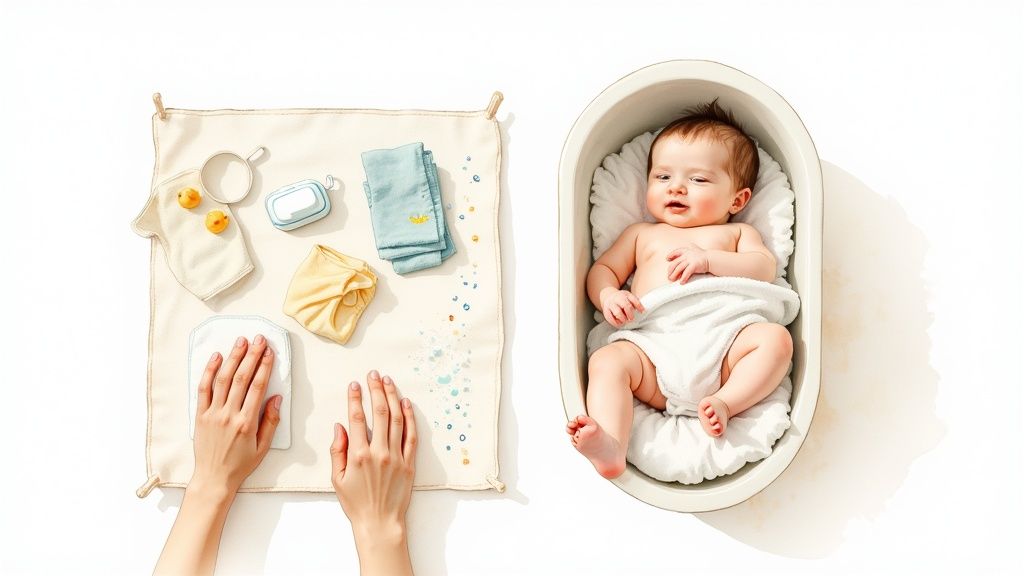
The secret is to set up dedicated, well-stocked stations for each task. When everything you need is within arm's reach, you'll never have to leave your baby's side and can keep your full focus on them. It’s a total game-changer.
Your Diaper Changing Command Center
Get ready, because you're going to be changing a lot of diapers—somewhere between 8 to 12 a day in the first month alone! An organized changing station isn't a luxury; it's a sanity-saver. It doesn't need to be fancy—a simple dresser with a changing pad on top works perfectly.
The goal here is efficiency. Keep these essentials in a basket or drawer right next to your changing pad:
- Diapers: Start with one or two large boxes of newborn-sized diapers. You'll quickly get a feel for how fast your little one is growing.
- Wipes: Opt for wipes that are unscented and hypoallergenic. A newborn's skin is incredibly sensitive, so gentler is always better.
- Diaper Rash Cream: Have a good zinc-oxide-based cream on hand to create a barrier and prevent irritation before it starts.
- Diaper Pail: A dedicated pail with a lid is your best friend for containing odors and keeping the nursery smelling fresh.
This simple setup turns a potentially chaotic task into a smooth process, making those frequent changes much less of a scramble.
Disposable vs. Cloth Diapers
The great diaper debate! Honestly, the choice between disposable and cloth is a personal one. Disposable diapers offer unbeatable convenience—you just toss them and you're done. They're also super absorbent, which is fantastic for overnight.
Cloth diapers, on the other hand, have a higher upfront cost but can save money in the long run. They're an eco-friendly choice and are often made from soft, natural fibers. Modern cloth diapers are surprisingly easy to use, with simple snaps and waterproof covers.
Don't feel pressured to choose one and stick with it forever. Many families use a hybrid approach—disposable for outings and nighttime, and cloth while at home. It’s all about finding what works for your lifestyle.
The global baby care market is massive—the diaper segment alone helps drive its USD 254.8 billion valuation. This means you have endless options, but it also means quality matters. To protect your baby’s delicate skin, always choose diapers that are hypoallergenic and free from fragrances. This is especially important when you consider that over 50% of newborns can experience diaper dermatitis if their skin is exposed to harsh materials. You can discover more about the baby care market at Researchnester.com.
Creating a Safe and Sweet Bathtime Ritual
For many babies, a warm bath is incredibly soothing and a wonderful way to wind down before bed. Those first few baths might feel a little nerve-wracking, but you'll be a pro in no time. The number one priority is always safety.
First, gather everything you need before you bring your baby to the bath. Never, ever leave your baby unattended in the water, not even for a second.
Here’s your bathtime toolkit:
- Infant Tub: A small, supportive infant tub makes bathing a wiggly newborn much easier and safer. Look for one with a non-slip surface and a comfortable incline.
- Soft Washcloths: Have a few gentle washcloths ready—one for washing and another to drape over your baby's tummy to keep them warm.
- Tear-Free Baby Wash & Shampoo: Use a mild, fragrance-free soap designed specifically for babies to avoid drying out their skin or irritating their eyes.
- Hooded Towel: A soft, absorbent hooded towel is perfect for wrapping your baby up snugly and keeping their head warm the moment they're out of the water.
By turning diapering and bathing into predictable, gentle routines, you’re doing more than just keeping your baby clean—you’re building trust and creating beautiful memories, one splash at a time.
Your Baby's Feeding Journey: What You'll Really Need
Every parent and baby has their own unique feeding story. Whether you're planning to breastfeed, formula-feed, or do a little of both, having the right gear ready can make all the difference in feeling calm and prepared. This is a judgment-free zone—the goal is a happy, fed baby and a confident, supported parent.
Feeding your newborn is one of the very first ways you'll bond. Let's walk through the essentials that can help you, no matter which path you take.
For Breastfeeding Families
If breastfeeding is your plan, your comfort is just as important as your baby's. When you feel relaxed and supported, it can make a world of difference. Think of these items as your support system.
- A Solid Nursing Pillow: A good, C-shaped nursing pillow wraps around your body, bringing your baby up to the right height. This simple tool saves you from hunching over, which is a lifesaver for your back, neck, and shoulders.
- Soothing Nipple Cream: The first few weeks of breastfeeding can be intense. A high-quality, lanolin-free nipple cream made from natural, baby-safe ingredients is essential for soothing sore skin. Look for one you don’t have to wipe off before every feed.
- Breast Pads (Disposable or Reusable): Leaking is a totally normal part of the journey. Breast pads—whether disposable or soft, reusable fabric ones—will keep your clothes dry and make you feel much more comfortable.
A Quick Word on Breast Pumps
A breast pump can be an incredibly useful tool, whether you're heading back to work, want your partner to share in feeding, or need to boost your milk supply. It's always worth checking with your insurance provider, as many plans cover the cost of a personal pump!
A hospital-grade pump is the most powerful and is often available for rent. The most common choice for home use is an electric double pump, which lets you pump both sides at once for efficiency. For occasional use, a simple and portable manual pump is a great, affordable option.
A Gentle Reminder: Your feeding journey is exactly that—yours. Don't compare it to someone else's. Whether you breastfeed for a week or a year, or choose formula from day one, you are making the best decision for you and your family.
Setting Up for Formula Feeding
For families using formula, the key is creating a system that makes preparing bottles simple and stress-free. It helps to have a clean, dedicated space on your counter with all your supplies within arm's reach.
Here’s what you’ll want to have ready:
- Bottles and Nipples: You can't go wrong starting with 4-6 bottles (the 4-ounce size is perfect for newborns). It’s not a bad idea to try a couple of different brands, because some babies can be picky. Always start with a slow-flow nipple for newborns to control the pace.
- Formula: Your pediatrician is your best resource here. They can help you choose the right formula for your little one.
- Sterilizer and Bottle Brush: Keeping everything clean is non-negotiable. An electric sterilizer or microwave steam bags make this job much faster and easier. A dedicated bottle brush is also a must-have for getting into every nook and cranny.
The Universal Must-Haves: Bibs and Burp Cloths
No matter how your baby eats, one thing is certain: spit-up happens! Having a good stash of bibs and burp cloths is a must. We recommend having at least 8-10 of each.
Look for soft, super-absorbent fabrics like cotton or muslin. They'll do a fantastic job of protecting your clothes and wiping up messes, making feeding time feel a little less chaotic and a lot more about connection.
Your Newborn Health and Grooming Toolkit
When you bring your baby home, having a few key health and grooming items on hand can make all the difference. It’s not about having a mini-pharmacy in your nursery, but more about creating a simple, effective toolkit that gives you confidence for those everyday moments.
A newborn’s world is all about gentle touches. Their skin is so delicate, their hair is whisper-soft, and even their tiny fingernails need special care. Every tool in your kit should be designed with their sensitivity in mind.
Simple Grooming Essentials
You can skip an entire aisle of baby products at the store. Honestly, you only need a handful of well-chosen items to handle just about everything in the first few months.
Here’s what to put in your grooming caddy:
- A Soft-Bristle Brush: This is wonderful for gently styling that baby-fine hair, and it's also a great tool for dealing with cradle cap. The soft bristles feel like a gentle massage on your baby's scalp.
- Safe Nail Clippers or a File: Newborn nails are paper-thin, but they can be surprisingly sharp! Look for clippers that have a safety guard or an electric nail file designed for infants. This way, you can avoid accidentally nicking their delicate skin.
- A Nasal Aspirator: Babies are "obligate nose breathers," which means they haven't figured out how to breathe through their mouths yet. A simple bulb syringe is a lifesaver for clearing out a stuffy nose, which makes feeding and sleeping so much easier for everyone.
Health Must-Haves for Peace of Mind
On the health side of things, keeping it simple is still the way to go. Your most important tool will be a good, reliable digital thermometer. When you’re up in the middle of the night wondering if your baby feels warm, you’ll want a quick, accurate reading you can trust. For infants, a rectal thermometer is still considered the gold standard by pediatricians.
Remember, your job isn't to play doctor, but to gather clear information for your actual pediatrician. An accurate temperature is one of the very first things they’ll ask for if you call them with concerns.
Nurturing Your Baby’s Delicate Skin
Newborn skin is just as soft and beautiful as it looks, but it’s also incredibly sensitive. In fact, it's about 30% thinner than adult skin and can lose moisture much faster. This is why picking the right skincare is crucial for keeping them comfortable. The global baby skincare market is even expected to hit USD 17.87 billion by 2025, which shows how much parents are focusing on gentle, protective products.
With common issues like eczema affecting up to 20% of infants, it’s easy to see why 70% of parents are now looking for hypoallergenic and paraben-free options. Start with a simple, fragrance-free lotion and have a high-quality diaper rash cream ready to go. These two things will do wonders to protect their natural skin barrier. You can always explore the latest baby skincare market trends on Precedenceresearch.com to see what’s new.
Putting this simple toolkit together ahead of time will help you feel calm and ready to handle those little moments with all the love and care in the world.
Answering Your Top Newborn Shopping Questions
It’s totally normal for a few last-minute questions to pop into your head as your due date gets closer. Even with the most detailed lists, some things just leave you wondering. This last section is all about clearing up those common little uncertainties we hear from parents all the time.
Our hope is to help you feel totally confident in what you’ve chosen, so you can swap any lingering stress for excitement. Let’s tackle these practical questions together.
How Many Clothes Do I Really Need in Each Size?
This is the million-dollar question! For those first two sizes, newborn and 0-3 months, a good rule of thumb is to have 7-10 bodysuits and 5-7 sleepsuits on hand. Newborns grow at lightning speed, but they’re also pros at spit-up and diaper blowouts. Having a decent stash means you won't be chained to the washing machine every day.
Think of it as creating a simple, rotating wardrobe for your baby. This amount ensures there’s always a fresh, cozy outfit ready for the next change. You can hold off on buying too much in the bigger sizes until you get a feel for how quickly your little one is growing.
Should I Buy a Lot of Newborn-Sized Items?
Honestly, it depends. If your doctor is hinting at an average or smaller baby, then having about a week's worth of newborn-sized clothes will be a lifesaver. That said, lots of babies are only in that size for a few short weeks, and some bigger babies might skip it altogether!
A practical approach is to have a few special newborn outfits ready for the trip home from the hospital and those first precious photos. From there, you can focus the rest of your clothing budget on the 0-3 month size, which you'll get a lot more use out of.
Parent Tip: Don't take the tags off all your newborn clothes at once! Keep some pristine so you can easily return or exchange them if your baby makes a bigger-than-expected debut.
What Is One Item Parents Often Forget to Buy?
You’d be surprised how often a good, quick-read digital thermometer gets missed on the shopping list. It’s one of those things you don't think you need until you really need it. When you're worried about a potential fever in the middle of the night, you will be so thankful to have one ready to go.
Another little hero that often gets overlooked is a simple nasal aspirator. Tiny babies get stuffy noses all the time, and since they can’t breathe through their mouths yet, helping them clear their little nasal passages is a game-changer for happy feeding and peaceful sleep.
Here at Mimou Babywear, we believe that getting ready for your baby should be one of the most exciting times of your life, not a source of stress. We’ve poured our hearts into designing collections of soft, breathable essentials to give you one less thing to worry about. Take a peek at our newborn bundles—they’re curated to bring you comfort, quality, and complete peace of mind.