


It's one of those purchases that feels exciting way before it's actually necessary: tiny shoes. They're impossibly cute. And the question of when do babies actually need them is one pediatricians answer constantly — because the answer isn't when most parents think.
Here's what the research and the doctors actually say, plus a practical guide to choosing the right first pair when the time comes.
The Short Answer: Not as Early as You Might Think
Babies don't need shoes until they're walking independently on outdoor surfaces. Before that point — whether your baby is a newborn, rolling, crawling, or even pulling to stand — shoes are optional at best and potentially counterproductive at worst.
The American Academy of Pediatrics is clear on this: bare feet are best for early development. The sensory feedback from the ground helps babies develop balance, coordination, and spatial awareness. Shoes interrupt that feedback loop.
Stage by Stage: What Your Baby's Feet Actually Need
- 0–6 months — No shoes needed. Soft socks or booties for warmth, nothing more. Feet need freedom of movement to develop properly.
- 6–12 months — Still no shoes required. If you want footwear for warmth or photos, choose soft-sole options with no rigid structure. The foot is still forming.
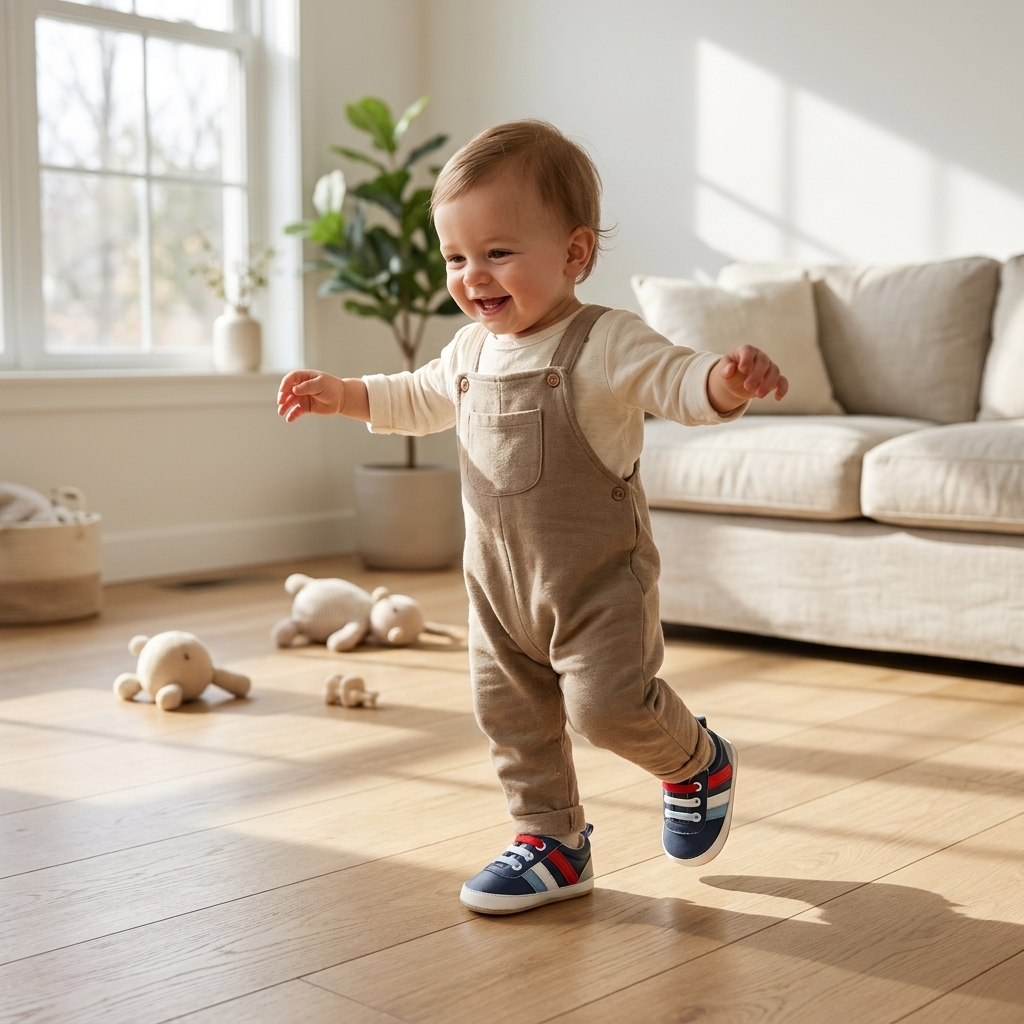
- 12–15 months — Most babies take their first independent steps in this window. Indoors, bare feet remain ideal. For outdoor surfaces, a first pair of shoes becomes appropriate.
- 15–24 months — Active walking. Now shoes serve a real protective function, especially outside. This is when fit and structure start to matter.
What to Look for in a First Pair of Baby Shoes
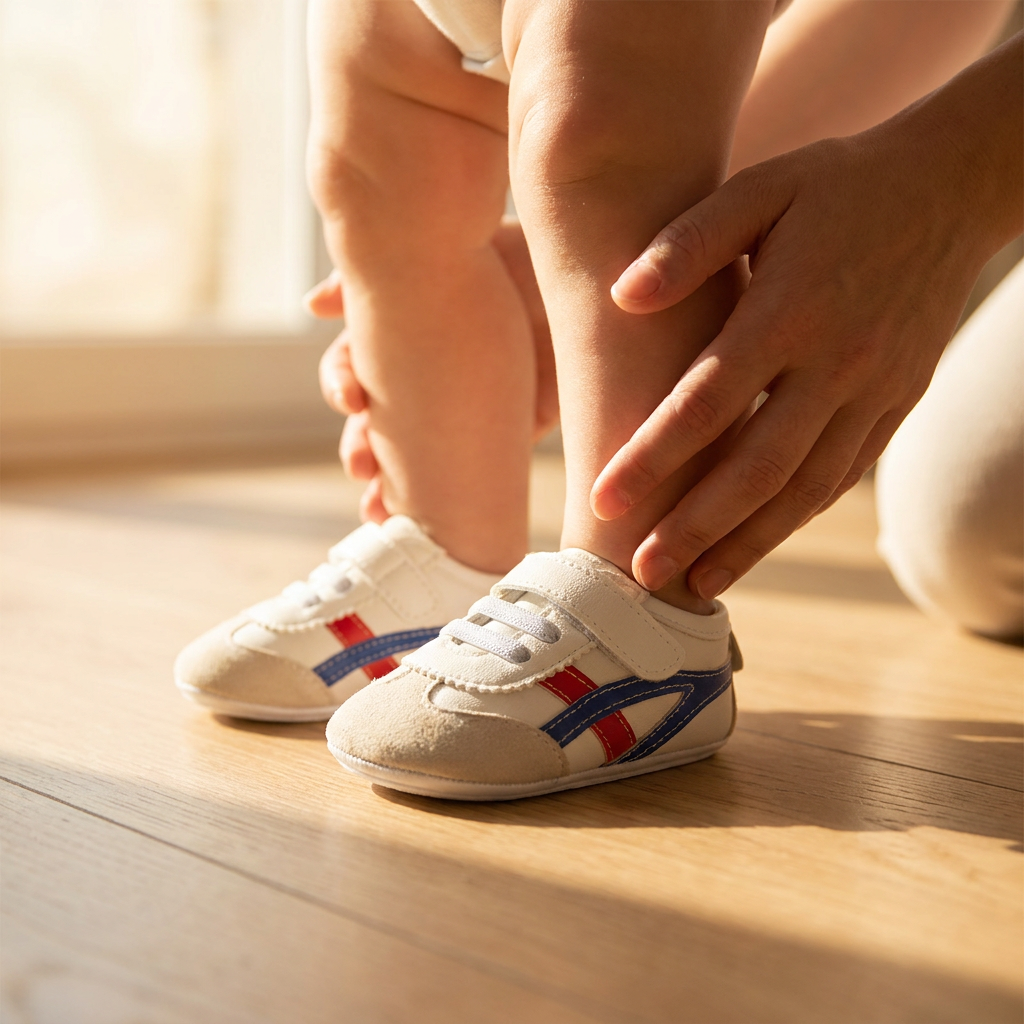
- Flexible sole — The sole should bend easily when you fold it. A rigid sole prevents the natural rolling motion of a baby's foot and can interfere with balance development.
- Wide toe box — Babies' feet are widest at the toes. Narrow toe boxes compress toes and disrupt natural splay.
- Lightweight — Heavy shoes fatigue little legs quickly. A first shoe should feel barely there.
- Non-slip sole — Especially important for indoor walking on smooth floors. Grip without rigid construction.
- Secure closure — Velcro or elastic works better than laces at this age.
- Breathable materials — Canvas, soft leather, and mesh allow airflow. Avoid synthetic uppers that trap heat and moisture.
Indoor vs. Outdoor Shoes: Do You Need Both?
- Indoors: Anti-slip socks or soft indoor step shoes are ideal. They provide grip on smooth floors without the weight of outdoor shoes, keeping sensory feedback more intact.
- Outdoors: A slightly more structured sole offers protection from uneven terrain without being rigid.
Many parents get through the first year with one versatile soft-sole shoe that works for both. The key is a non-slip sole durable enough for light outdoor use.
How to Measure Baby's Feet for the Right Fit
Baby feet grow fast — roughly half a size every 2–3 months in the first year of walking.
- Place baby's foot flat on paper with weight bearing (standing or held upright).
- Trace the outline of the foot.
- Measure heel to longest toe, and widest point.
- Add about 0.5 inches (1.3 cm) for growing room.
- Compare to the brand's size chart — sizing varies significantly between brands.
Check fit every 6–8 weeks. A thumb's width of space at the toe is the standard guide.
Signs a Shoe Fits Well
- You can pinch a little fabric at the toe — not tight, not flopping off
- The shoe stays on without excessive tightening
- Baby walks naturally — no tripping, no toe-curling, no changed gait
- No red marks or pressure points after wearing
Shop First Walkers at Mimou Babywear
Our footwear range is built around one principle: support healthy foot development without restricting natural movement. From soft-sole walkers for the earliest steps to anti-slip indoor shoes for confident movers, every pair is lightweight, breathable, and designed for the first walking months.
Browse the full Mimou footwear collection and find the right fit for wherever your baby is in their journey.