


Few things melt a parent's heart like watching their baby reach for a soft little bunny at nap time. A well-loved comfort object — often called a “lovey” — can become a trusted companion that helps little ones feel calm and secure. But there's an important question every parent should ask before tucking one into the crib: when is it actually safe?
Here's a clear, practical guide to when a baby can sleep with a lovey, how to introduce one, and how to choose a comfort object that's as safe as it is snuggly.
What exactly is a “lovey”?
A lovey is a small comfort object — usually a soft square of fabric, sometimes with a little animal head or knotted corners — that a baby forms an attachment to. Pediatric sleep experts call these transitional objects, because they help a child bridge the gap between being with a caregiver and settling on their own. That familiar texture and scent can signal it's time to rest, making naps, bedtime, and separations a little easier.
The safe-sleep rule you can't skip
For the first year, the sleep space should stay bare. Leading pediatric guidance, including the American Academy of Pediatrics, recommends keeping soft objects, loose blankets, pillows, and stuffed toys out of the crib for babies under 12 months, to reduce the risk of suffocation and SIDS. That means — as tempting as it is — a lovey should not be left in the crib with a baby younger than one.
The good news: you can start building the bond long before your baby ever sleeps with it.
So when can a baby sleep with a lovey?
Most experts agree that around 12 months is the earliest it's generally considered safe to introduce a small, breathable comfort object into the crib — and many families wait until closer to 18 months for extra peace of mind. Every baby is different, so it's always worth a quick chat with your pediatrician, especially if your little one was born premature or has any health considerations.
How to choose a safe comfort object
Not all loveys are created equal. When you're picking one, look for:
- Small and lightweight — big enough to cuddle, small enough not to crowd the sleep space.
- Breathable fabric — soft muslin or cotton allows airflow, unlike dense, heavily stuffed plush.
- No loose or removable parts — avoid button eyes, beads, ribbons, or anything that could detach.
- Machine washable — because it will be loved, dropped, and drooled on daily.
- One simple piece — a flat, knotted muslin design gives little hands something to grip without bulk.
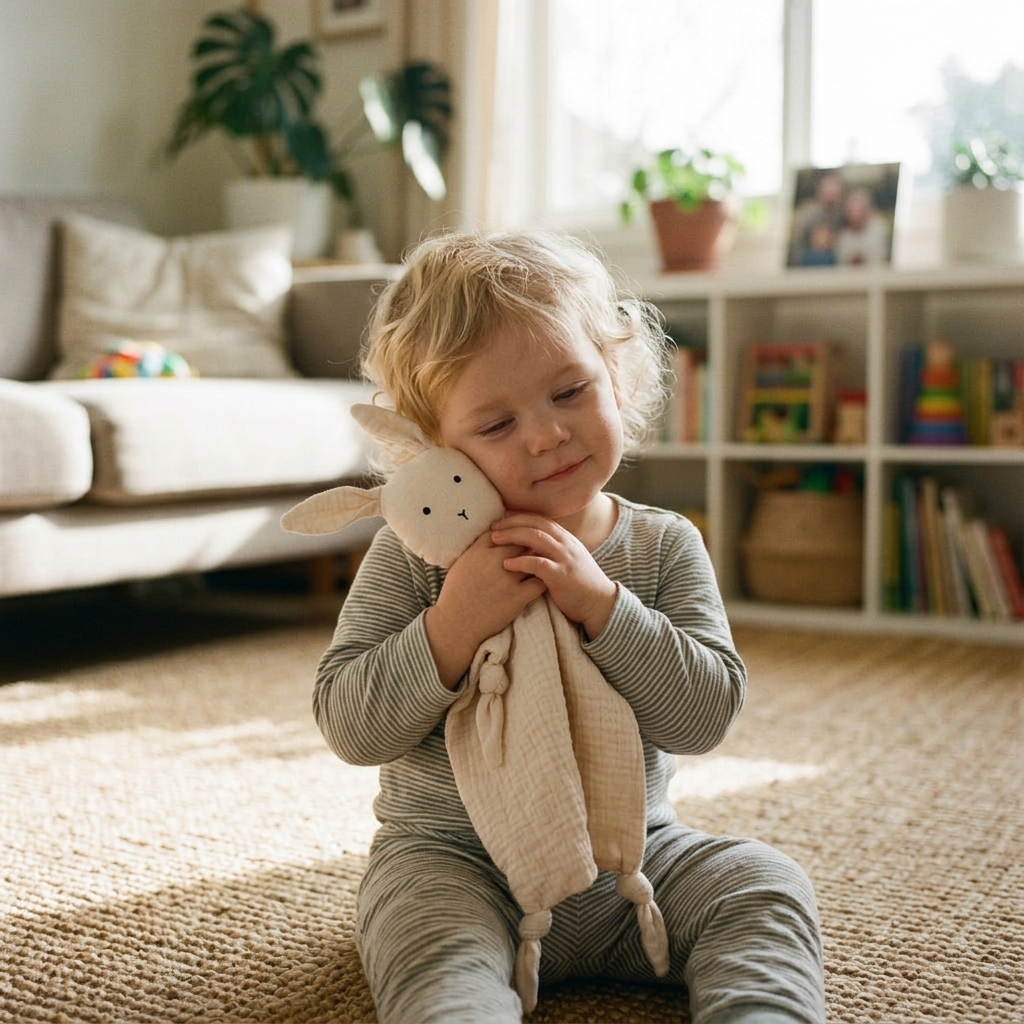
Our Bunny Muslin Comfort Lovey was designed with exactly these features in mind: a single, lightweight piece of breathable cotton muslin with soft knotted corners for tiny hands to hold, and no small parts to worry about. It's gentle enough to introduce during supervised cuddles early on, and ready to become a crib companion once your baby reaches the right age.
How to help your baby bond with a lovey
- Introduce it during awake, supervised time — cuddles, feeds, and play let your baby get familiar with it safely, even before the first birthday.
- Add your scent — keep the lovey close to you for a little while, or hold it during feeds, so it carries a comforting, familiar smell.
- Keep it consistent — offer the same lovey at every nap and bedtime so it becomes part of the routine.
- Buy two if you can — an identical backup is a lifesaver on laundry day, and if one ever goes missing.
For babies under one: comfort comes from routine
If your little one isn't old enough for a crib lovey yet, you can still create that soothing, secure feeling through a calm, predictable sleep routine — and through the right sleepwear and bedding, used correctly. A breathable muslin swaddle, for example, gives newborns that snug, held sensation safely, without loose fabric left in the sleep space.
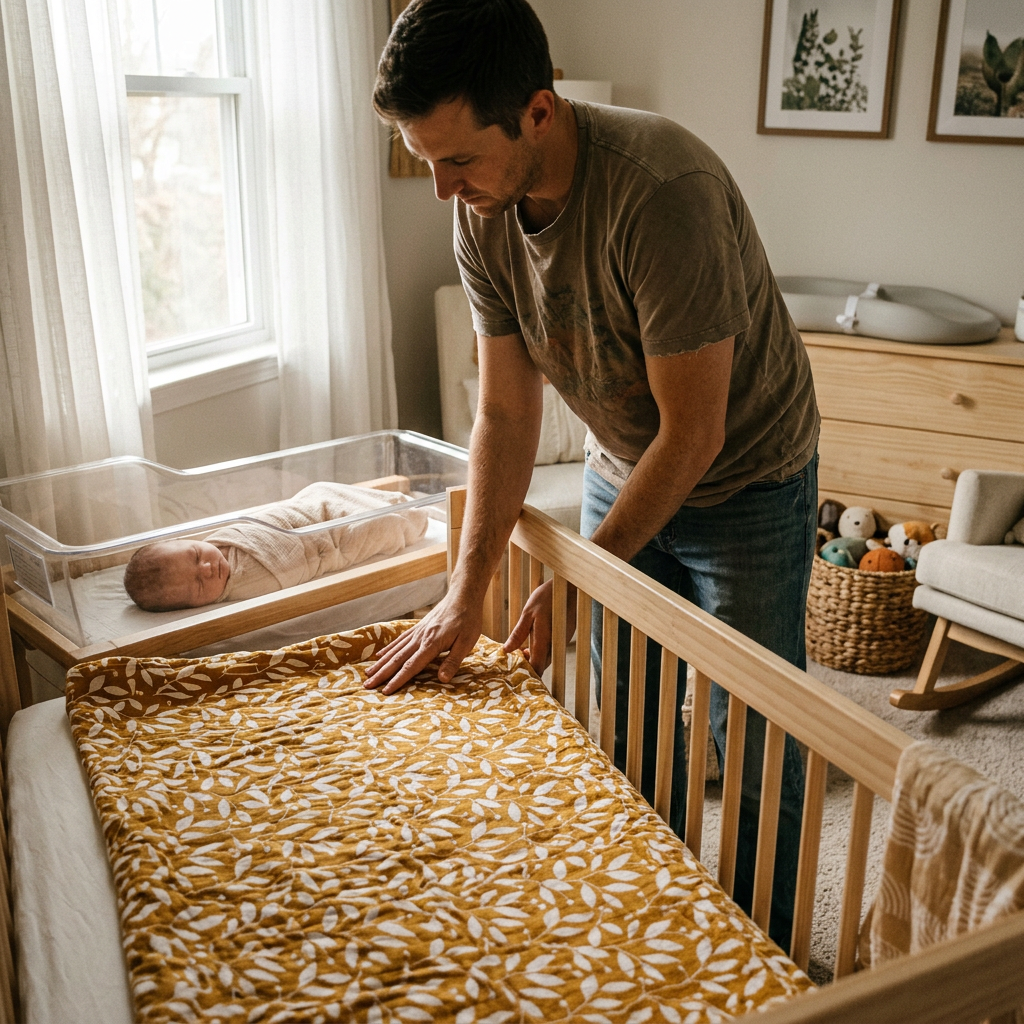
Our Botanical Print Muslin Swaddle Blanket is made from 100% cotton double gauze, so it's light and breathable for wrapping a newborn snugly during those early months. Used for supervised swaddling in the early weeks, it's a safe way to give that comforting closeness before your baby is ready for a lovey.
Caring for a well-loved lovey
A comfort object gets a lot of use, so wash it regularly in a gentle, fragrance-free detergent and let it air dry to keep the fabric soft. Rotating between two identical loveys keeps one always clean and ready — and keeps the scent consistent, which matters more to your baby than you'd think.
The bottom line
A lovey can be a wonderful source of comfort — at the right time. Keep the crib clear for the first 12 months, build the bond through daytime cuddles and scent, and choose a small, breathable, one-piece design when your baby is ready. Do that, and you'll give your little one a safe, snuggly companion for years of sweet dreams ahead.
Always follow your pediatrician's guidance on safe sleep for your individual child.