


Choosing the first few outfits for your baby is one of the most exciting parts of preparing for their arrival. But let's be honest, figuring out the world of baby clothes 0–3 years can feel surprisingly complicated. My goal here is simple: to help you dress your little one in clothes that are safe, comfortable, and practical for every single stage, from those first sleepy days to their first wobbly steps.
Welcome to Your Baby's First Wardrobe
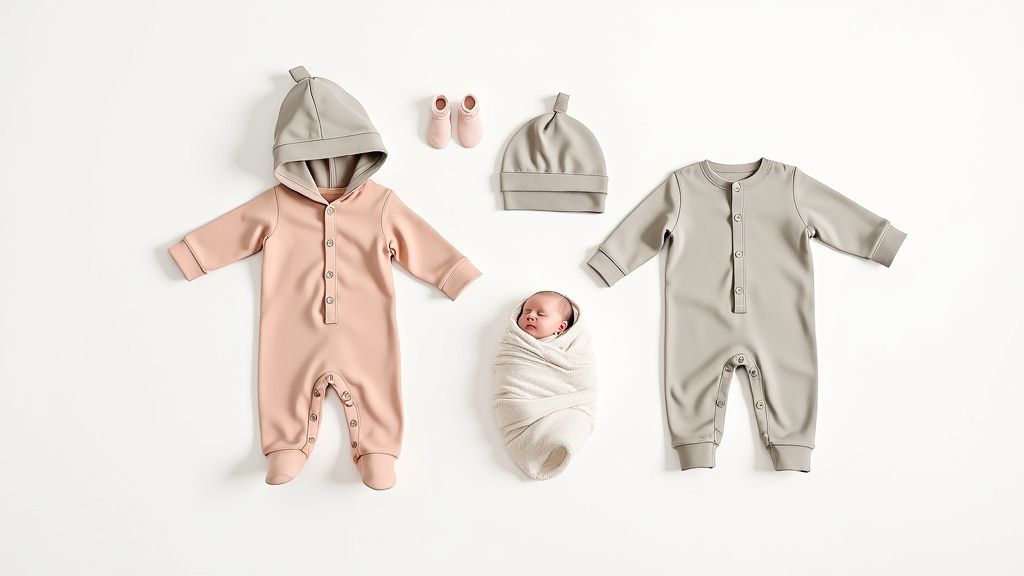
Stepping into a baby store for the first time can feel like entering a whole new world. The sizes seem impossibly tiny, the options are endless, and everything is adorable. If you're feeling a bit lost, you're not alone—every parent has been there.
This guide is meant to cut through the confusion and help you keep your little one safe, comfy, and happy without all the stress. We’ll walk through the essentials together, from the snuggly newborn phase all the way to the action-packed toddler years.
Your Practical Guide to Baby Clothing
Think of this as your friendly roadmap to building a baby wardrobe that actually works. We're going to focus on a more minimalist approach, because a smaller, well-chosen collection of clothes saves you time, money, and a mountain of laundry.
It really all comes down to a few core ideas:
- Safety First: Knowing what makes an outfit safe for both sleep and play.
- Comfort is Key: Choosing soft, breathable fabrics that won’t irritate delicate skin.
- Practicality for Parents: Making sure clothes have easy-access snaps or zippers for those inevitable quick changes.
- Growth-Friendly Fit: Finding pieces that can handle sudden growth spurts.
This shift toward quality and comfort isn't just a hunch; parents everywhere are catching on. The global market for baby clothes (ages 0-3) is growing fast as more families look for safe, stylish, and sustainable options. It's expected to jump from USD 52.08 billion in 2025 to USD 66.48 billion by 2030. You can learn more about the baby apparel market trends if you're curious!
Building a Wardrobe That Grows with Them
From cozy sleepsuits that help everyone get a little more rest to durable outfits ready for crawling adventures, every piece of clothing has a job to do. We’re here to help you choose the right ones.
A thoughtfully curated wardrobe isn't about having more clothes; it's about having the right clothes. It simplifies your daily routine so you can spend less time stressing about outfits and more time soaking up all those precious moments.
Ready to build a simple, beautiful, and truly functional first wardrobe? Let’s get started.
How to Decode Baby Clothes Sizes and Fit
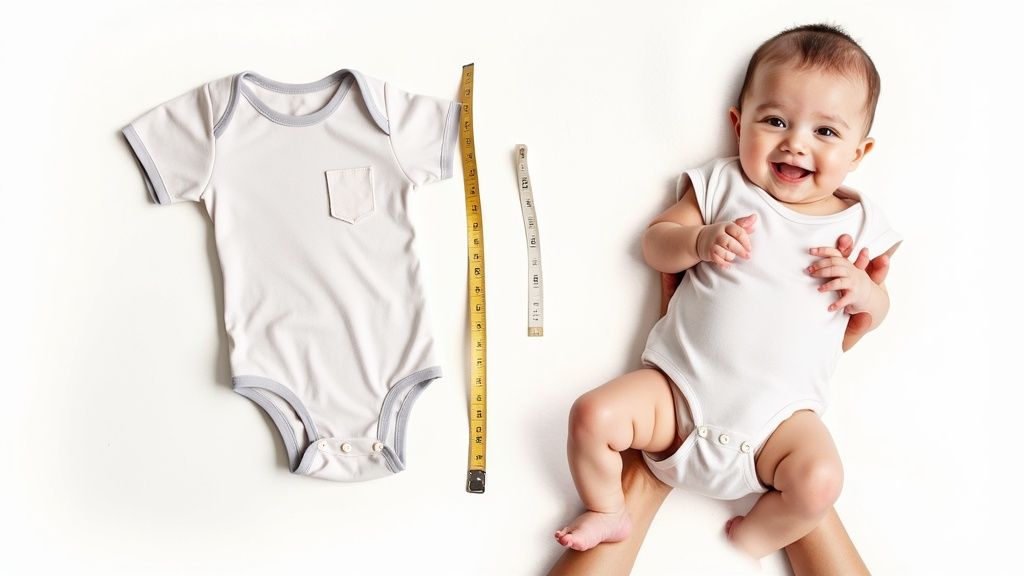
If you're staring at a pile of baby clothes wondering how your three-month-old is already bursting out of their "3-6 month" outfits, you're not alone. Welcome to the slightly baffling world of baby clothes sizing! It can feel like a guessing game, but I promise, there’s a method to the madness.
Let's get one thing straight: the age on the tag is more of a guideline than a rule. Brands base these sizes on the "average" baby, but we all know there's no such thing. Every little one grows on their own beautiful, unique schedule.
The real secret to getting it right is to shop by your baby’s current weight and length, not just their age. Once you make that mental switch, finding comfortable, well-fitting baby clothes from 0–3 years becomes a whole lot easier.
Finding the Perfect Fit at Every Stage
A great fit is about more than just looking adorable. It’s about making sure your baby is safe and comfortable. Clothes that are too tight can pinch and restrict their wiggles, while anything too loose can become a hazard, especially during naptime.
Here’s a quick checklist for a good fit:
- Neckline: You should be able to slide two fingers between the fabric and your baby’s neck. No gaps, no pressing.
- Sleeves & Cuffs: The fabric should end right at their wrists and ankles. If you're rolling up sleeves more than once, it’s probably too big.
- Diaper Duty: Make sure there's enough room for a full diaper without the snaps straining. A little extra space is key!
Parent Tip: When in doubt, always size up. This is probably the best piece of advice you'll get. Babies grow at the speed of light, and a slightly bigger outfit will be ready for their next growth spurt, giving you more bang for your buck.
Common Fit Challenges as They Grow
From a sleepy newborn to a toddler on the move, your baby's shape and needs change fast. Let's walk through what to expect.
Newborn (0-3 Months)
Newborns are all about that curled-up, precious stage. You’ll want super soft, stretchy fabrics that are gentle on their delicate skin. Onesies with envelope necklines are an absolute game-changer—they let you pull the outfit down over their body, which is a lifesaver during those inevitable messy diaper blowouts.
Infant (3-12 Months)
This is when the action starts! As your little one begins rolling, sitting, and crawling, their clothes need to keep up. Look for pieces that offer plenty of room to move. A good tip is to find tops that are long enough to keep their tummy covered as they reach and explore. We dive deeper into this stage in our guide to 3 to 6 months baby clothes.
Toddler (1-3 Years)
Once they're up and running, durability becomes your new best friend. Look for sturdy, quality fabrics that can handle trips to the park and endless playtime. Two-piece sets also become way more practical than onesies around this age, especially as you start thinking about potty training.
To help you out, we’ve put together a handy sizing chart. It's a great starting point for matching your baby's measurements to the right size.
Quick Guide to Baby Clothes Sizing by Age and Weight
This table is a great reference to have on hand when you're shopping. It's designed to give you a solid idea of where to start, but remember to trust your eyes—you know your baby best!
| Label Size | Typical Age Range | Average Weight (lbs / kg) | Average Height (in / cm) |
|---|---|---|---|
| Preemie | Up to birth | Up to 6 lbs / 2.7 kg | Up to 17 in / 43 cm |
| Newborn | 0–3 Months | 6–12 lbs / 2.7–5.4 kg | 17–24 in / 43–61 cm |
| 3–6 Months | 3–6 Months | 12–17 lbs / 5.4–7.7 kg | 24–27 in / 61–69 cm |
| 6–12 Months | 6–12 Months | 17–22 lbs / 7.7–10 kg | 27–29 in / 69–74 cm |
| 12–18 Months | 12–18 Months | 22–27 lbs / 10–12.2 kg | 29–31 in / 74–79 cm |
| 18–24 Months | 18–24 Months | 27–30 lbs / 12.2–13.6 kg | 31–33 in / 79–84 cm |
| 2T (Toddler) | 2–3 Years | 30–33 lbs / 13.6–15 kg | 33–36 in / 84–91 cm |
| 3T (Toddler) | 3–4 Years | 33–36 lbs / 15–16.3 kg | 36–39 in / 91–99 cm |
At the end of the day, this chart is just a tool. If an outfit looks too snug or way too baggy on your little one, it probably is—no matter what the label says. Trust your instincts.
Choosing the Best Fabrics for Your Baby's Skin
When you’re picking out clothes for your little one, how they feel is just as important as how they fit. A baby’s skin is brand new to the world and up to 30% thinner than our own, making it super sensitive to everything it touches. This is why the fabric you choose is about so much more than cute patterns—it’s about protecting their delicate skin and keeping them cozy and happy.
Think of the fabric as a second skin. It needs to be gentle, breathable, and free from anything that could cause irritation. This is where natural fibers really shine. They work with your baby’s body, not against it, helping them stay comfortable whether it's naptime or playtime.
Why Natural and Breathable Fabrics Matter
The absolute best materials for baby clothes 0–3 years are the ones that let your baby's skin breathe. Fabrics that trap heat and moisture can quickly lead to an overheated, grumpy baby and can even trigger skin problems like heat rash or eczema.
Here are the top picks that get the parent-approved seal for happy baby skin:
- Organic Cotton: This is the gold standard, and for good reason! It’s grown without harsh pesticides and processed without nasty chemicals, so it’s incredibly soft and gentle. Plus, it’s super breathable, which helps keep your baby cool when it's warm and cozy when it's chilly. You can dive deeper into why we love it in our guide to the best organic cotton baby clothes.
- Bamboo Rayon: Known for feeling silky-smooth, bamboo is another wonderful choice. It's naturally hypoallergenic and a champion at moisture-wicking, pulling sweat away from the skin so your little one stays dry and comfortable.
- Merino Wool: Don't let the word "wool" fool you into thinking "itchy." Merino wool is made of incredibly fine fibers that feel soft and gentle against the skin. It’s a brilliant natural temperature regulator, making it perfect for layering in colder weather without any risk of overheating.
On the flip side, it’s a good idea to steer clear of synthetic fabrics like polyester and nylon for everyday clothes. While they can be durable, they just don't breathe well. They tend to trap heat and moisture right against the skin, which is exactly what we want to avoid.
How to Read the Labels: GOTS and OEKO-TEX
You’ve probably seen labels like GOTS or OEKO-TEX on clothing tags and wondered what they actually mean. Think of them as a little nod of reassurance—a stamp of approval that tells you the clothes have been thoroughly checked for safety and quality.
GOTS (Global Organic Textile Standard): When you see this label, it means the fabric is certified organic from the farm all the way to the finished outfit. It's a guarantee that the cotton was grown without toxic pesticides and that any dyes used are safe for even the most sensitive skin.
OEKO-TEX Standard 100: This certification means that every single part of the garment—from the thread to the snaps—has been tested for harmful substances and passed with flying colors. It’s an extra layer of peace of mind for you.
This shift toward safe, sustainable materials is something we’re seeing more and more. In North America, which accounts for 33.6% of the global baby apparel market, parents are leading the charge. In fact, organic fabrics now make up over 20% of sales in the region! It’s a clear sign that parents are putting health and sustainability first. You can discover more insights about the baby apparel market on imarcgroup.com.
Here's one last simple tip that makes a world of difference: always wash new clothes before the first wear. A quick spin in a gentle, baby-safe detergent washes away any dust or residue from the factory, making sure the fabric that touches your baby's skin is perfectly clean and soft right from that very first cuddle.
Building a Practical Wardrobe for Every Stage
Dressing your little one can feel like preparing for a tiny, adorable expedition. The secret isn't to buy everything, but to have the right essentials on hand for each new adventure. A 'capsule wardrobe' approach—focusing on fewer, high-quality, mix-and-match pieces—is a lifesaver. It simplifies your daily routine, cuts down on clutter, and honestly, it saves you money in the long run.
This is all about choosing versatile clothes that support your baby’s comfort and movement. You'll quickly see that certain pieces, like bodysuits, PJs, and cardigans, become the foundation of their wardrobe. In fact, "outerwear" is the powerhouse of the baby clothing market, claiming the largest share in 2024 as parents (like us!) prioritize items that work for both cozy indoor days and outdoor exploration. You can discover more insights about baby clothing trends on technavio.com.
Let's break down the must-have baby clothes for 0–3 years for each beautiful stage.
The Newborn Layette (0-3 Months)
In those first three months, your entire world shrinks down to sleep, feeding, and endless cuddles. Your baby’s wardrobe should reflect this beautiful simplicity. Comfort and ease are everything.
Forget complicated outfits with a million tiny buttons. The true stars of the newborn layette are sleepsuits (or footie pajamas) and bodysuits (often called onesies). Look for clever features like two-way zippers—a lifesaver for middle-of-the-night diaper changes—and envelope necklines that let you pull a messy bodysuit down over your baby’s body instead of up over their head. Genius!
Seasonal Checklist (0-3 Months)
-
Year-Round Essentials:
- 5-7 Sleepsuits: These all-in-one outfits are perfect for both snoozing and daytime lounging.
- 5-7 Bodysuits (long and short-sleeved): The ultimate layering piece.
- 3-4 Pairs of Soft Pants/Leggings: So easy to pull on over a bodysuit.
- 4-6 Pairs of Socks or Booties: Newborns lose heat easily through their feet, so keeping those tiny toes warm is key.
- 2-3 Swaddles or Sleep Sacks: A safe and cozy way to help your baby sleep more soundly.
-
Winter Additions:
- 2-3 Soft Hats or Beanies: Essential for holding in warmth when you venture outside.
- 1-2 Cardigans or Fleece Jackets: For an easy extra layer of warmth.
-
Summer Additions:
- 1 Sun Hat: A wide-brimmed hat is crucial for protecting that delicate skin from the sun.
Remember, a newborn's skin is incredibly sensitive. The chart below shows which fabrics are your best friends.
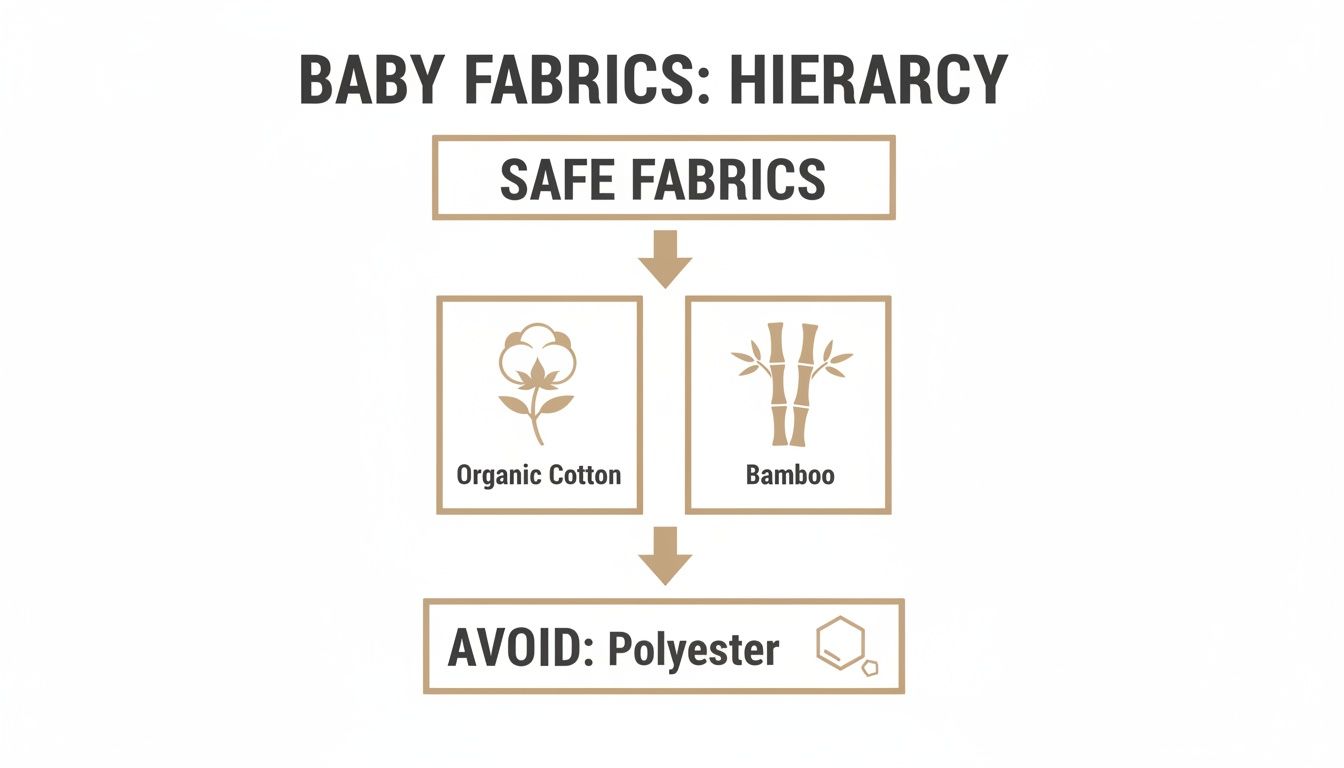
As you can see, sticking with soft, breathable materials like organic cotton and bamboo is always the safest and kindest choice for your baby's skin.
The Active Infant (4-12 Months)
Once your baby starts rolling, sitting up, and crawling, their clothing needs to move with them. This is the stage of pure discovery, and their outfits should support every wiggle and stretch without getting in the way.
Now is a great time to introduce more separates, like T-shirts and leggings. Pants with reinforced knees can be a brilliant find for active crawlers! Soft-soled shoes are also great for protecting their feet when you’re out and about, though going barefoot indoors is best for their development.
Seasonal Checklist (4-12 Months)
-
Year-Round Essentials:
- 5-7 Bodysuits or T-shirts: You might start to prefer T-shirts as your baby becomes a little acrobat.
- 5-7 Pairs of Pants, Leggings, or Shorts: Look for stretchy waistbands that are gentle on their little tummy.
- 4-5 Sleepsuits or 2-Piece Pajama Sets: Some parents find separates easier at this stage.
- 1-2 Sweaters or Hoodies: Perfect for layering on cooler days.
-
Winter Additions:
- 1 Warm Jacket or a Snowsuit/Bunting: If you live somewhere cold, a one-piece bunting is fantastic for keeping them toasty from head to toe.
- Hats and Mittens: Choose mittens that are easy to pull on and actually stay put.
-
Summer Additions:
- 1-2 Swimsuits or Rash Guards: Look for fabrics with UPF protection for sunny days.
- 1 Sun Hat: A non-negotiable for any outdoor playtime.
Parent Tip: This is a great time to explore baby bundle sets. They often include perfectly coordinated bodysuits, pants, and accessories, which makes creating cute outfits completely effortless when you're short on time and sleep.
The Exploring Toddler (1-3 Years)
Welcome to the toddler years! This stage is all about independence, constant motion, and a whole lot of mess. Durability suddenly becomes just as important as comfort. Their clothes need to survive playground adventures, finger painting masterpieces, and the art of self-feeding.
Two-piece outfits become much more practical, especially as you start to think about potty training. Look for clothes with soft, elastic waistbands that are easy for them to pull up and down on their own—it’s a great way to encourage their budding independence. Choosing durable pieces that can be passed down is a smart move for your budget and the planet.
Seasonal Checklist (1-3 Years)
-
Year-Round Essentials:
- 6-8 T-shirts (long and short-sleeved): The real workhorse of any toddler's wardrobe.
- 5-7 Pairs of Pants, Jeans, or Leggings: Sturdy materials like denim or thick cotton are great for withstanding tumbles.
- 4-5 Pajama Sets: Cozy PJs are a must for a good night's sleep after a busy day of exploring.
- 2-3 Sweaters or Sweatshirts: Easy to throw on for a bit of extra warmth.
-
Winter Additions:
- 1 Warm, Waterproof Coat: Absolutely essential for outdoor play.
- 1 Pair of Snow Pants and Waterproof Boots: If you expect snow, these are a must.
- Waterproof Mittens and a Warm Hat: To keep them dry, warm, and happy.
-
Summer Additions:
- 4-5 Pairs of Shorts: For warm, sunny days at the park.
- 1-2 Dresses or Rompers: Easy, breezy options for playtime.
- 1 Sun Hat and Swimwear: To stay safe and have fun at the pool or beach.
By focusing on these core essentials for each stage, you can build a wardrobe that's practical, beautiful, and highly functional, making sure your little one is comfortable and ready for every precious milestone.
Keeping Those Tiny Clothes Soft and Safe
We all have our laundry routine, but a pile of tiny, delicate baby clothes can make you second-guess everything. Suddenly, laundry feels a little more high-stakes, right? A baby’s skin is brand new and super sensitive, so the goal here is a gentle touch—washing their clothes to be wonderfully soft, completely safe, and free from any pesky stains.
The single most important change you can make is switching your detergent. Your go-to brand is likely packed with fragrances, dyes, and other chemicals that can linger on fabrics and irritate a baby’s delicate skin. Your best bet is to find a fragrance-free, hypoallergenic detergent made specifically for sensitive skin. It’s a simple swap that makes all the difference.
A Parent’s Guide to Baby Laundry
Don’t worry, you don’t need a whole new system for baby laundry. A few small adjustments to your current routine are all it takes to protect those soft fabrics and your little one's skin. The secret? Act fast on stains and keep things gentle.
Here’s a simple process that works every time:
- Tackle Stains ASAP: Spit-up, diaper blowouts, and a smear of pureed peas are just part of the deal. Scrape off any solids, then immediately rinse the spot with cold water. For extra power, you can apply a little paste of baking soda and water or a dab of your baby-safe detergent before washing.
- Turn Down the Heat: Wash most baby clothes in cold or warm water, never hot. Hot water can be harsh on soft fabrics like organic cotton—it can cause shrinking and fading. A gentle, cool cycle is almost always enough to get them perfectly clean.
- Add an Extra Rinse: This is a fantastic little laundry hack. Using the "extra rinse" setting on your machine helps wash away every last trace of detergent. This is a game-changer for preventing skin irritation from any leftover soap residue.
Conquering the Toughest Baby Stains
Let's be honest: those adorable little outfits are basically magnets for mess. Spit-up and diaper leaks are notoriously difficult because they’re protein stains, and they have one major weakness.
Pro Tip: Always, always start with cold water for stains like milk, formula, or spit-up. Hot water will actually "cook" the protein into the fabric fibers, setting the stain for good. A quick soak in cold water before the main wash is your best friend.
For oily spots from baby oil or diaper cream, a little dish soap works wonders to break down the grease before it goes into the machine. A bit of pre-wash care goes a long way in keeping those sweet baby clothes for 0–3 years looking brand new.
And finally, when you can, let mother nature do the drying. Hanging clothes out in the sun is a natural disinfectant and brightener. It’s also much kinder to the fabric than a hot tumble dryer, ensuring everything stays softer for longer.
Answering Your Top Questions About Baby Clothes
Even after you've made your lists and checked them twice, it's totally normal to have a few more questions pop up. When it comes to dressing your tiny human, you want to feel confident you're making the right choices. So, let’s clear up some of the most common questions we hear from parents.
How Many Outfits Do I Really Need for a Newborn?
It’s so easy to get carried away buying adorable newborn outfits! But trust me, you don't need a mountain of them. A good rule of thumb is to start with 5-7 sleepsuits and 5-7 bodysuits. Newborns are notorious for spit-ups and diaper blowouts, often needing 2-3 changes a day, so this amount gets you through a few days without constantly running the washing machine.
Beyond that, a few other key pieces will see you through. Think 2-3 swaddles or sleep sacks, a couple of pairs of soft socks, and two little hats. Remember, babies grow astonishingly fast in those first three months, so it’s much smarter to begin with a small, curated collection of high-quality basics you can add to later.
Zippers or Snaps? The Great Baby Clothes Debate
Ah, the age-old question! Honestly, there’s no right or wrong answer here—it’s all about what works best for you and when.
Parent Tip: Zippers are a game-changer for those bleary-eyed 3 AM diaper changes. They're quick, easy, and get the job done with minimal fuss. The only must-have is a fabric tab at the top to protect your baby's delicate chin from getting pinched.
Snaps, on the other hand, are quieter and sometimes offer a bit more wiggle room for a custom fit around chunky thighs. Most parents find a mix is the sweet spot: zippers for nighttime PJs and snaps for daytime rompers and bodysuits.
What Are the Most Important Safety Features to Look For?
Above all else, safety comes first. When you’re shopping for baby clothes from 0–3 years, the simplest designs are often the safest.
Here’s what to keep an eye out for:
- No Choking Hazards: Steer clear of clothes with loose buttons, bows, or any little add-ons that a baby could pull off and put in their mouth.
- Snug-Fitting Sleepwear: Pajamas should fit snugly. This is a critical safety guideline to reduce risks associated with loose fabric. The fit should come from the fabric's natural stretch, not from any added chemicals.
- Smooth Seams: Always feel the inside of a garment. The seams should be flat and smooth to prevent irritation on your baby’s super-sensitive skin.
- No Drawstrings: Clothes with drawstrings around the neck or waist are a definite no-go. They pose a serious strangulation risk and should be avoided entirely.
When Should My Baby Start Wearing Shoes?
Pediatricians are all on the same page with this one: hold off on hard-soled shoes until your toddler is walking confidently on their own, especially outdoors. Being barefoot indoors is actually fantastic for their development! It helps them feel the ground beneath them, which strengthens the muscles in their feet and improves their balance.
For little ones who aren't walking yet, soft-soled booties or non-slip socks are perfect for keeping their feet warm when you're out and about. Once they're toddling around outside, look for shoes that are lightweight and flexible with a good grip to support their first big adventures.
We hope this guide helps you feel excited and ready to put together a wardrobe for your little one that’s as practical as it is adorable. Here at Mimou Babywear, we’re all about creating pieces that are soft, safe, and designed for both your baby’s comfort and your peace of mind.
Ready to get started? Explore our collections of gentle, breathable essentials today.