


A congested baby is a uniquely stressful thing to listen to. The snuffly, snorting, rattly breathing — especially at night, especially during feeds — sounds far worse than it usually is, and it triggers every parental alarm bell. The reassuring news first: most baby congestion is harmless, self-limiting, and manageable at home with a few simple, gentle techniques. The important news second: babies are obligate nose-breathers in the early months, so a blocked nose genuinely interferes with feeding and sleeping in a way it wouldn't for an adult. That's why it matters, and why knowing how to clear it helps.
Why Babies Get So Congested
Newborn nasal passages are tiny — a small amount of mucus or swelling blocks a large proportion of the airway. Babies also can't blow their noses or clear mucus by sniffing, so it simply accumulates. Add to this that they breathe primarily through the nose for the first few months (which is what lets them breathe and feed simultaneously), and you have a recipe for noisy, snuffly breathing that's mostly mechanical rather than a sign of illness.
Common causes range from completely benign to needing attention:
- Newborn nasal congestion: Many newborns are snuffly in the first weeks simply from residual amniotic fluid and the adjustment to breathing air. Harmless.
- The common cold: The most frequent cause beyond the newborn stage. Babies average 6–8 colds a year as their immune system builds.
- Dry air: Central heating and air conditioning dry the nasal passages, thickening mucus.
- Irritants: Dust, smoke, strong fragrances, and pet dander can all cause nasal inflammation.
- Allergies: Less common in young babies but possible in older infants.
Normal Snuffles vs. Something That Needs a Doctor
| Usually fine to manage at home | Call the doctor |
|---|---|
| Snuffly, snorting breathing but feeding well | Difficulty breathing — fast breathing, flaring nostrils, chest sucking in between/under ribs |
| Clear or white nasal mucus | Congestion with a fever (especially under 3 months — see our fever guide) |
| Mild cough, settles with position | Wheezing, grunting, or a persistent worsening cough |
| Still feeding and producing wet nappies | Refusing feeds or significantly fewer wet nappies (dehydration) |
| Generally content between bouts | Lethargy, blue tinge around lips, or breathing that looks like hard work |
Any breathing that looks genuinely laboured — a baby working hard to breathe, with the skin pulling in around the ribs or at the base of the neck — is an urgent sign and warrants immediate medical attention, not home management. For fever alongside congestion, especially in young babies, see our baby fever guide.
How to Relieve Baby Congestion at Home
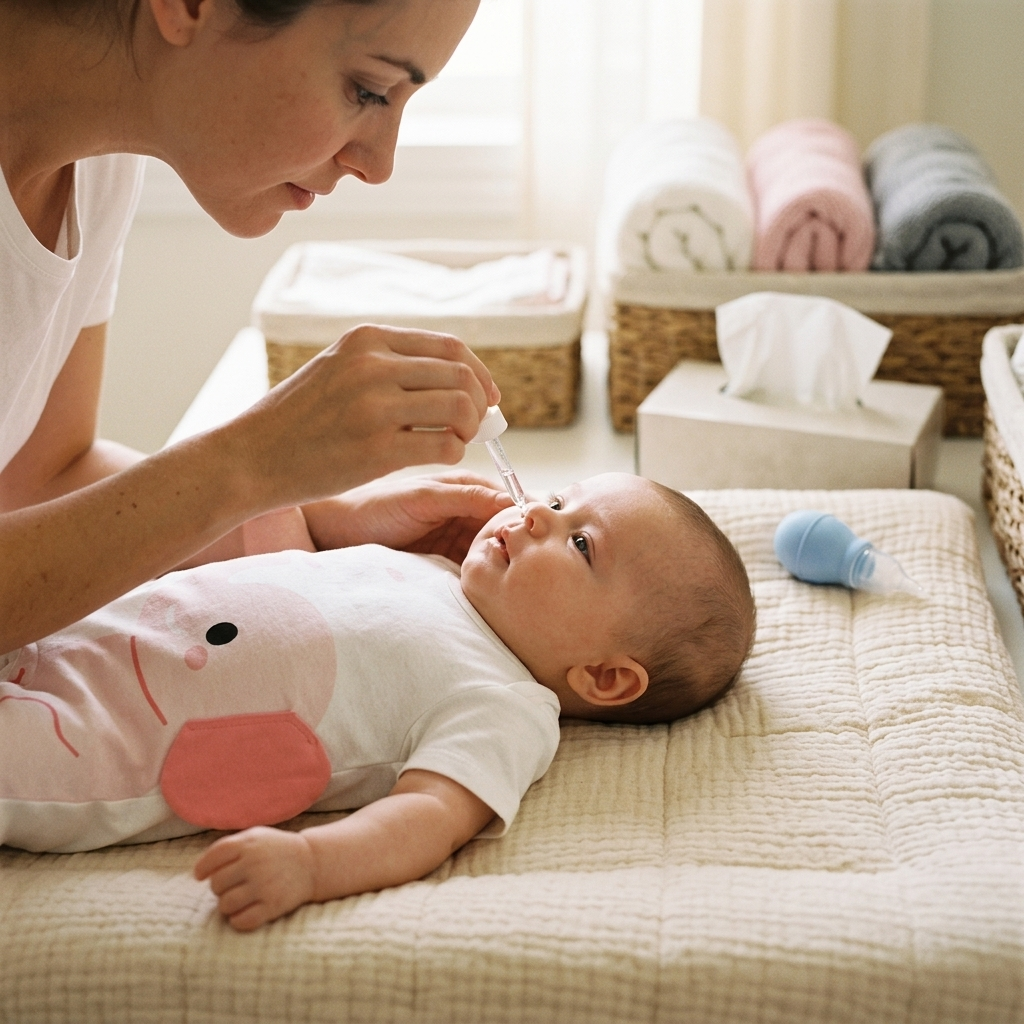
Saline Drops + Gentle Suction (the Gold Standard)
This is the most effective home treatment, recommended by the AAP, and the one worth getting confident with:
- Lay baby on their back, head slightly tilted
- Put 2–3 drops of saline (sterile saltwater — over-the-counter or homemade per a pharmacist's recipe) into each nostril
- Wait about 30–60 seconds to let it loosen the mucus
- Use a bulb syringe or, more effectively, a parent-powered suction aspirator to gently remove the loosened mucus
- Do this before feeds and before sleep, when a clear nose helps most — not more than 3–4 times a day, as over-suctioning irritates the lining
Saline is safe, drug-free, and can be used from birth. It's the single most useful tool for a congested baby.
Humidify the Air
A cool-mist humidifier in the room where baby sleeps adds moisture that keeps nasal passages from drying and helps thin mucus. Clean it regularly to prevent mould. A steamy bathroom (sit with baby while a hot shower runs) achieves a similar short-term effect.

Keep Baby Hydrated
Frequent breast or formula feeds keep mucus thinner and replace fluids. For babies over 6 months on solids, small amounts of water help too. Congested babies sometimes feed in shorter, more frequent bursts because they need to pause to breathe — that's fine.
Elevate (Safely) and Position
Never put pillows or wedges in the cot — the sleep surface stays flat and bare for safe sleep. But holding baby more upright during the day, and upright for a while after feeds, helps drainage. A short period of upright cuddling before sleep can ease settling.
What NOT to Do
- No over-the-counter cough and cold medicines: These are not recommended for children under 4–6 years and carry real risks for babies with no proven benefit. The FDA is explicit on this.
- No decongestant rubs with menthol/camphor on babies: Products containing camphor and menthol are not recommended for infants and can cause breathing problems. Check the age guidance on any chest rub.
- No honey under 12 months: Sometimes suggested for cough, but honey is unsafe before one year due to botulism risk.
- No propping the mattress or adding pillows: Raises the risk associated with unsafe sleep surfaces. Keep the cot flat.
- Don't over-suction: More than a few times a day irritates and swells the nasal lining, making congestion worse.
The Comfort Factor
A congested baby is often an uncomfortable, poorly sleeping baby, and the disrupted nights are hard on everyone. Beyond the practical steps, plenty of upright cuddles, calm, and a comfortable sleep environment all help. Keeping baby in soft, breathable layers avoids overheating, which thickens mucus and adds to the discomfort — light natural-fibre clothing lets a snuffly baby rest more easily. Most congestion passes within a week to ten days as a cold runs its course.
For related illness guidance, see our baby fever guide, and for keeping the sleep environment right see our sleep sack guide.