

The tiny shoes are almost irresistible — miniature trainers, little boots, doll-sized sandals. But here's what most new parents don't realise: for most of the first year, your baby's feet are better off in no shoes at all. Knowing when your baby actually needs shoes, and what kind, saves you money on adorable footwear they shouldn't be wearing yet — and, more importantly, protects their developing feet. Here's when to buy baby's first shoes and how to choose them.
Babies Don’t Need Shoes Until They Walk
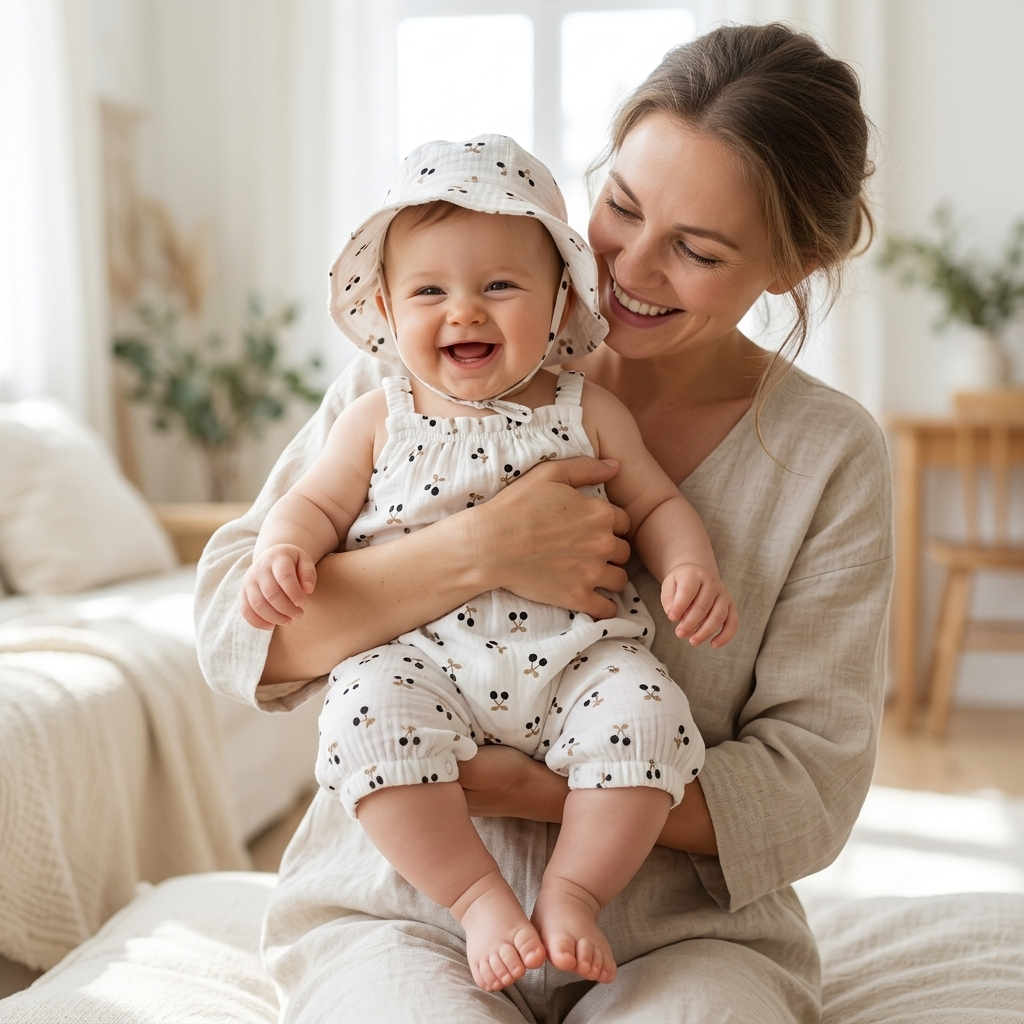
This is the key point: shoes serve no developmental purpose before a baby is walking. For non-walking babies, feet develop best barefoot — it lets them feel surfaces, build strength, and develop balance and the muscles of the foot. Before walking, footwear is purely decorative or for warmth. So while pre-walking “shoes” and booties are cute (and fine for a photo or keeping feet warm), they're not doing anything for the foot, and shouldn't be tight or restrictive.
When First Shoes Actually Matter: Walking Outdoors
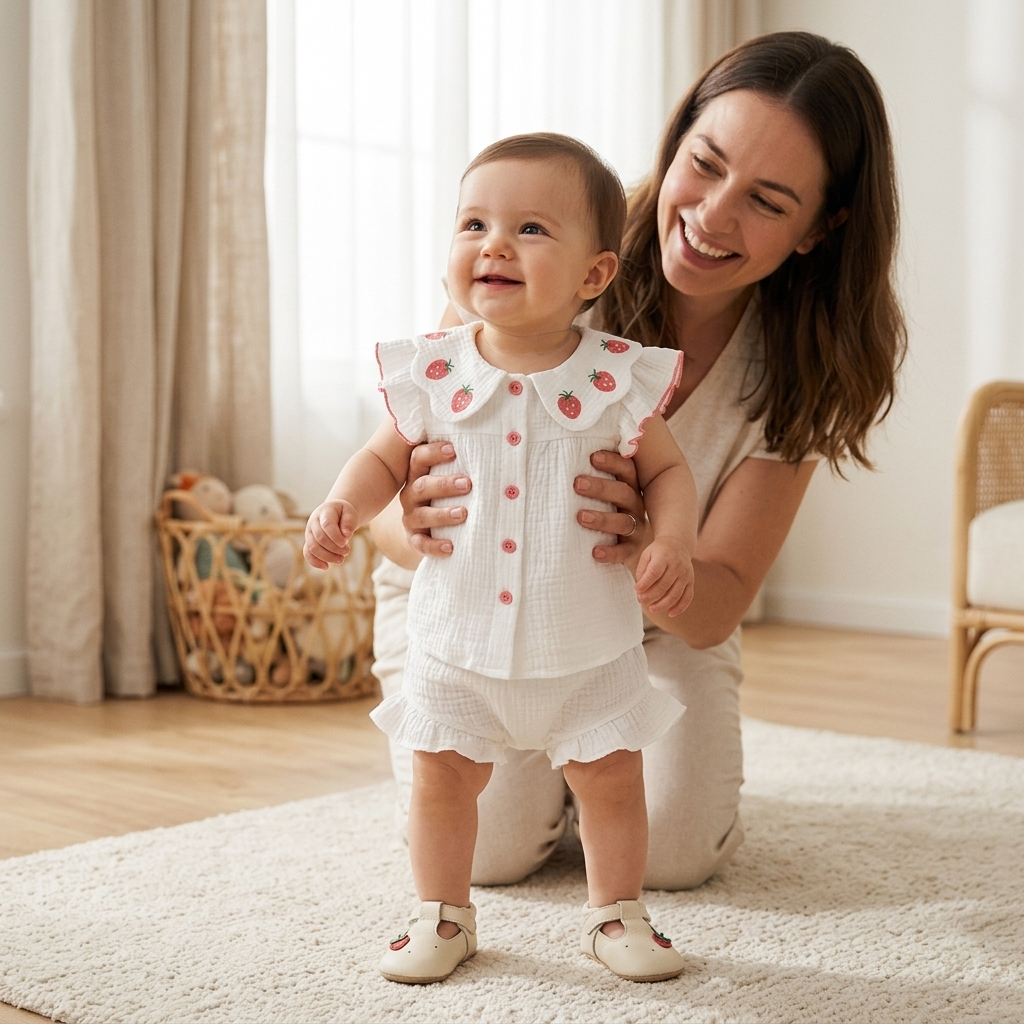
Your baby needs their first real shoes when they start walking outside, on surfaces where bare feet aren't safe — pavements, playgrounds, rough ground. Indoors, even a confident walker is better off barefoot or in grippy socks, which lets their feet keep developing naturally. First walking usually happens somewhere between 9 and 18 months, but as always it's the milestone, not the age, that matters (see our first walker shoes guide).
What to Look for in First Shoes
When your baby is ready, the goal is a shoe that protects the foot while interfering with it as little as possible:
- Soft and flexible sole. You should be able to bend and twist it easily — a stiff sole stops the foot moving naturally. This is the most important feature.
- Lightweight. Heavy shoes tire little legs and disrupt a new walker's balance.
- Wide, rounded toe box. Toes need room to spread and grip; a narrow shoe cramps them.
- Breathable, soft material. Cotton, soft leather, or breathable fabric over stiff synthetics.
- Secure but gentle fastening. Velcro or elastic that holds the shoe on without squeezing.
- Grippy, non-slip sole for confidence on smooth floors.
The principle: the best first shoe is as close to barefoot as a shoe can get — protection without restriction. Our Cartoon Character Sock Shoes are built on exactly this — a soft non-slip sole that flexes with the foot, for early standers and first walkers.
Getting the Fit Right
- Measure, don't guess. Baby feet grow fast and unpredictably — measure length and width rather than sizing up from age (see our shoe sizing guide).
- Leave a little growing room — about a thumb's width at the toe — but not so much that the shoe slips.
- Check often. Feet can grow out of a size in weeks at this stage; re-check every 6–8 weeks.
- Both feet — they're often slightly different; fit the larger.
- Fit late in the day, when feet are at their largest.
Don’t Overbuy
Because feet grow so fast and first shoes get little wear indoors, resist buying several pairs ahead. One well-fitting, flexible pair for outdoor walking is all a new walker needs — you'll be sizing up before a second pair would ever wear out. Save the money for the next size (see our guide to moving up a size).
The Bottom Line
Babies don't need shoes until they're walking outdoors — before that, bare feet and grippy socks are best for developing feet, and cute booties are just for warmth or photos. When your baby does start walking outside, choose a soft, flexible, lightweight shoe with a wide toe box, fit it by measuring rather than guessing, and check the size often. One good pair, not a collection — and their feet will thank you.
Shop our soft-sole first-walker shoes, see our shoe sizing guide for measuring, and browse the collections for the rest. This article is general information, not medical advice — speak to a professional about your baby's foot development if you have concerns.