


Buying baby shoes sounds simple until you're faced with a wall of tiny shoes labelled with numbers that seem to follow no logic at all — a “size 3” here, a “19” there, an “0–6 months” somewhere else — and a baby who can't tell you whether anything fits. Getting baby shoe sizing right matters more than it might seem: a baby's foot is soft, still forming, and easily affected by shoes that are too small. This guide explains how baby shoe sizing works, how to measure your baby's feet accurately at home, and a clear size chart to take the guesswork out of it.
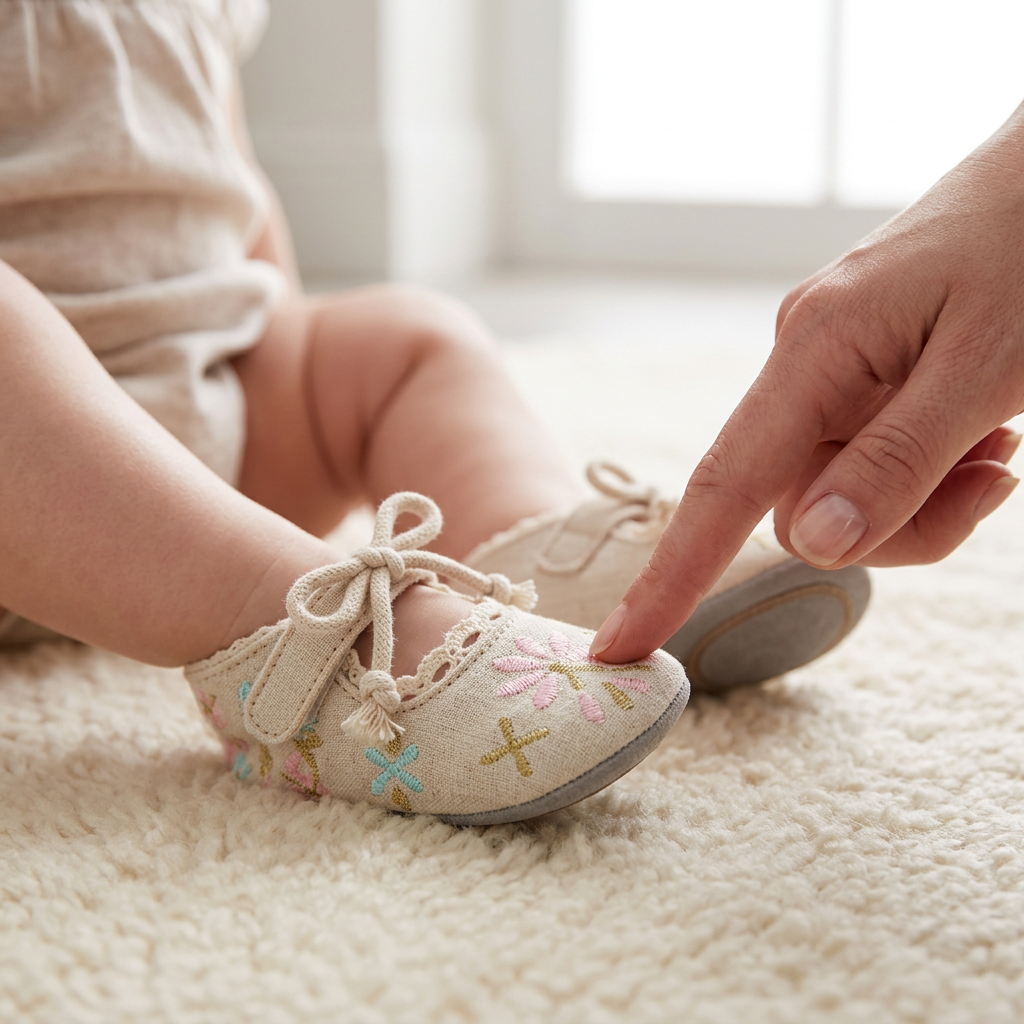
First: Does Your Baby Even Need Shoes?
Before sizing anything, the honest answer for most babies is: not yet. Before walking, babies don't need shoes at all — bare feet (or soft socks/booties for warmth) are best for foot development. Shoes become genuinely necessary once a baby is walking outdoors and needs protection from cold and rough ground. For the full picture, see our guides on first walker shoes and when babies start wearing shoes. If you're buying soft pre-walker shoes or first proper shoes, read on.
How Baby Shoe Sizing Works
The confusion is real, because several systems coexist:
- EU sizing: A single continuous number scale (e.g. 16, 17, 18, 19…) used across Europe and by many brands internationally. Generally the most consistent.
- UK sizing: Starts at 0 and counts up (UK 0, 1, 2, 3…) for babies.
- US sizing: Also starts around 0–1 for infants and counts up, but is offset from UK by roughly half a size.
- Age-based labels: Some brands simply label by age (0–6 months, 6–12 months). Convenient but the least precise — because, just as with clothing, babies' feet vary hugely at any given age.
The takeaway: wherever possible, go by the actual foot length in centimetres, which most brands map to their sizes. That's the one measurement that travels reliably across all the systems.
How to Measure Your Baby’s Feet at Home
- Measure when feet are largest: Late in the day, as feet swell slightly through the day.
- Measure both feet: They're often slightly different — always fit to the larger foot.
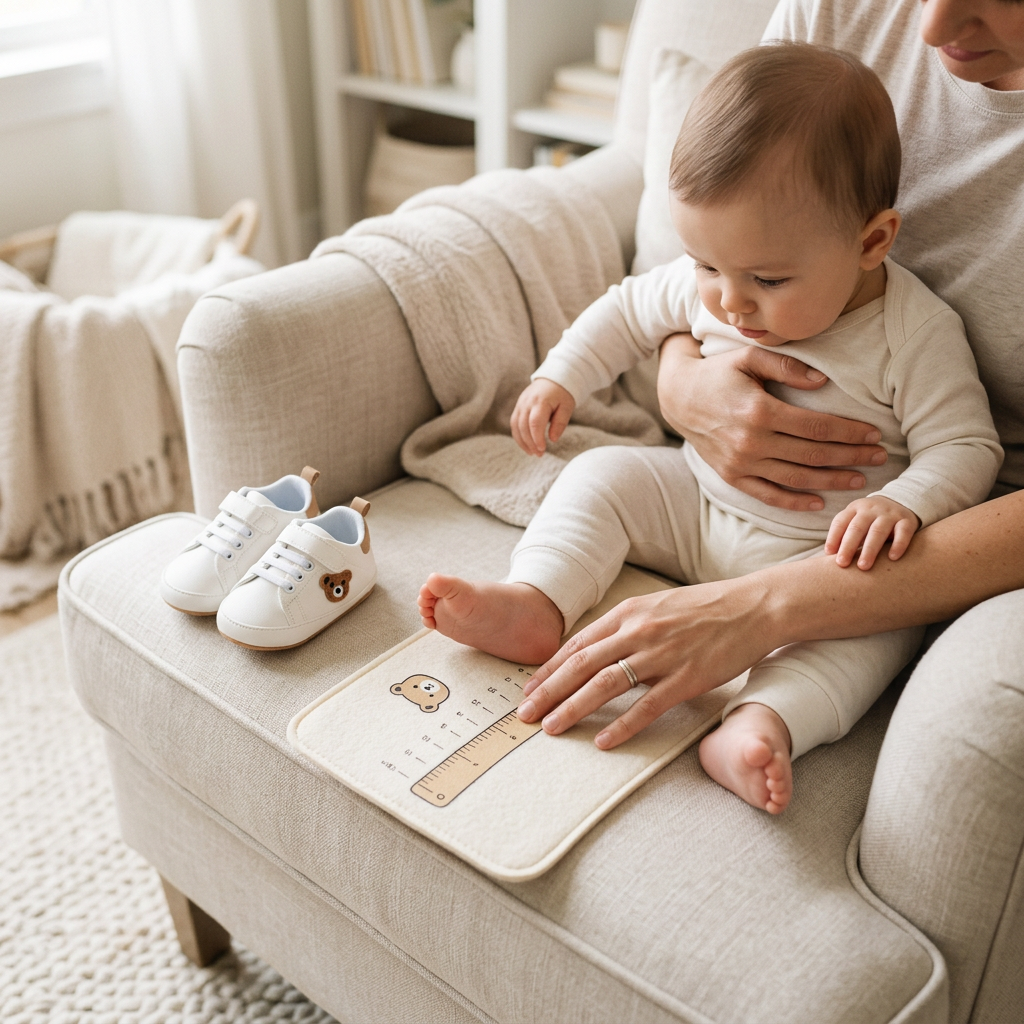
- Stand or weight-bear if possible: For babies who can stand, measure with weight on the foot, as it lengthens and spreads. For younger babies, gently hold the foot flat.
- Heel to longest toe: Place the heel against a wall (or the end of a ruler) and measure to the tip of the longest toe — which isn't always the big toe.
- Add growing room: Add roughly 0.5–1 cm to the measured length when choosing a size — enough room to grow and for the foot to move, but not so much that the shoe slips.
A simple method: trace around the foot on paper, mark heel and longest toe, and measure the distance. Do it every 6–8 weeks, because baby feet grow remarkably fast.
Baby Shoe Size Chart (Approximate)
Foot length is the reliable anchor — match your measurement to the size, and always check the specific brand's chart too:
| Approx. age | Foot length | EU | UK | US |
|---|---|---|---|---|
| 0–3 months | ~9–10 cm | 16–17 | 0–1 | 1–2 |
| 3–6 months | ~10–11 cm | 17–18 | 1–2 | 2–3 |
| 6–9 months | ~11–11.5 cm | 18–19 | 2–3 | 3–4 |
| 9–12 months | ~11.5–12.5 cm | 19–20 | 3–4 | 4–5 |
| 12–18 months | ~12.5–13.5 cm | 20–21 | 4–5 | 5–6 |
| 18–24 months | ~13.5–14.5 cm | 21–23 | 5–6 | 6–7 |
How to Tell If the Shoe Fits
- A thumb's width of room (about 1–1.5 cm) between the longest toe and the end of the shoe — the simplest check
- Width matters too: The shoe should be snug but not pressing on the sides; baby feet are wide, so a too-narrow shoe is as bad as a too-short one
- The heel stays on without slipping when baby moves
- No red marks or indentations on the foot when the shoe comes off
- Baby isn't curling or scrunching their toes inside
When to Size Up
Baby feet grow astonishingly fast — often up to two whole sizes a year in the early years — so check the fit every 6–8 weeks, not just when shoes look worn. A shoe that's become too small can affect the developing foot, and because babies rarely complain about tight shoes, the responsibility is entirely on the regular check. When in doubt, measure again.
For choosing the right kind of first shoe (flexible, lightweight, wide-toed), see our first walker shoes guide, and browse our current styles in the collections.