


Baby led weaning has shifted from a niche parenting philosophy to a mainstream approach to introducing solid foods — and for good reason. The evidence base has strengthened significantly in the past decade, and the core insight — that babies can feed themselves age-appropriate foods from the very beginning of solids — is both practically useful and developmentally sound. Here's what BLW actually is, how to do it safely, and what the research shows.
What Is Baby Led Weaning?
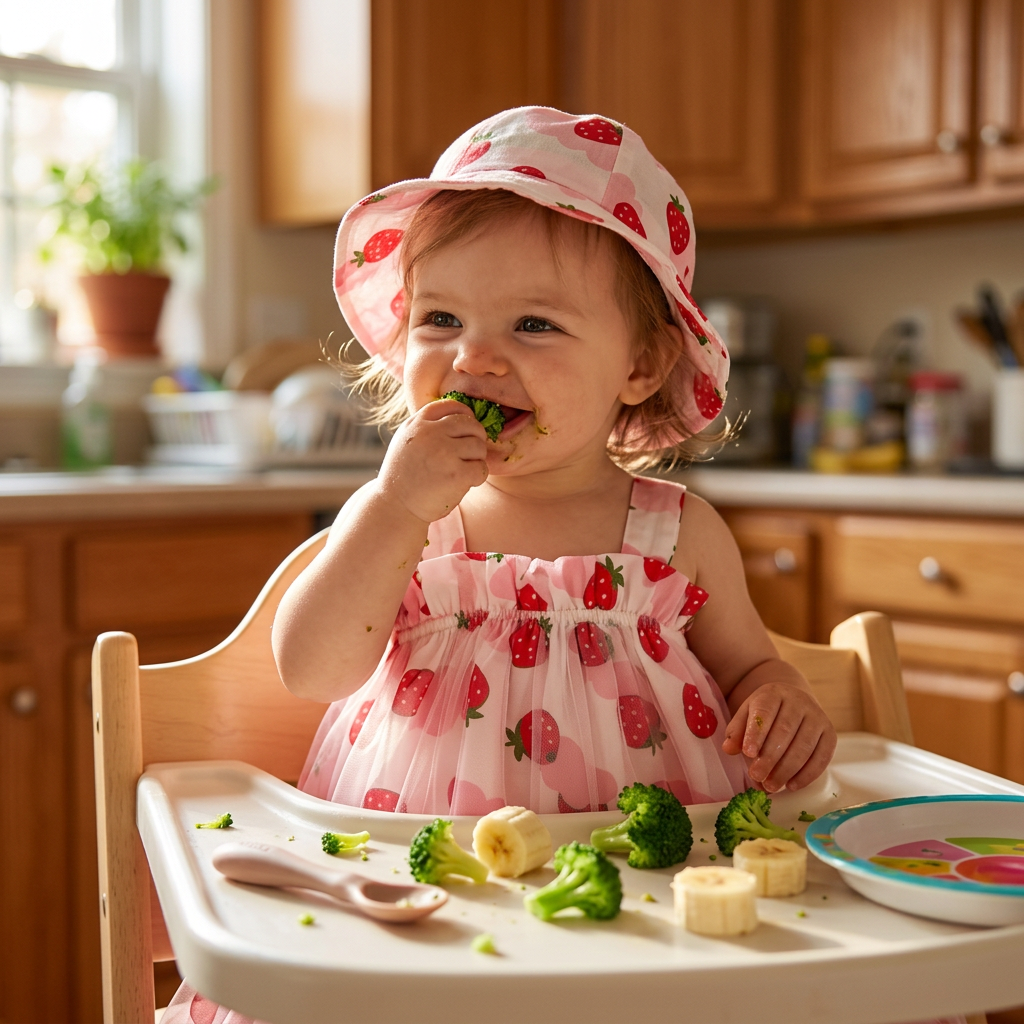
Baby led weaning (BLW) is an approach to introducing solid foods in which the baby feeds themselves from the start, rather than being spoon-fed purees by a caregiver. Instead of smooth, blended foods offered on a spoon, babies are offered soft, age-appropriate pieces of food that they pick up and eat independently.
The term "weaning" in this context is British English usage, meaning the process of introducing foods alongside milk — not weaning off breastfeeding. The "baby led" part refers to the baby controlling what they eat, how much, and at what pace.
BLW was popularized by midwife Gill Rapley in the early 2000s, based on the observation that babies developmentally ready for solids (around 6 months) have the motor skills to self-feed, and that allowing them to do so supports better eating behaviors and texture tolerance long-term.
BLW vs. Traditional Purees: Key Differences
| Aspect | Baby Led Weaning | Traditional Purees |
|---|---|---|
| Who controls feeding | Baby self-feeds | Caregiver spoon-feeds |
| Food form | Soft finger food pieces | Blended or smooth purees |
| Start age | ~6 months (readiness-dependent) | 4–6 months |
| Texture progression | Immediate variety of textures | Graduated from smooth to lumpy |
| Quantity control | Baby regulates entirely | Caregiver can influence intake |
| Mess level | Significantly higher | Moderate |
The Evidence for Baby Led Weaning
The research on BLW has grown substantially since 2010. Key findings:
- Texture acceptance: BLW babies show better acceptance of a variety of textures at 6 and 12 months compared to spoon-fed peers, with lower rates of food fussiness in some studies.
- Appetite regulation: Self-feeding may better preserve the baby's innate hunger and satiety cues. Some studies show lower rates of obesity in BLW children, though this is difficult to isolate from other variables.
- Choking risk: When properly implemented with age-appropriate foods, BLW does not increase choking risk compared to spoon-feeding. This is the most important evidence for parents considering BLW who are concerned about safety.
- Iron intake: One genuine concern is iron. BLW babies may get less iron if iron-rich foods are not deliberately prioritized, since they eat less total volume initially. This is addressable with intentional food choices.
BLW Readiness: When to Start
BLW requires the same developmental readiness as any solids introduction — but because food pieces rather than purees are offered, the motor skills requirements are slightly higher:
- Sitting independently (not just propped) — essential for safe swallowing posture
- Good head and neck control
- Palmar grasp developing (picking up food in the whole hand)
- Loss of tongue-thrust reflex
- Interest in food
These typically converge around 6 months. Starting BLW before 6 months is not appropriate.
The BLW Food Safety Framework
The single most important safety principle in BLW is the two-finger smash test: any food offered to a baby must be soft enough to be completely mashed between your thumb and index finger with light pressure. If it takes effort to smash — it's too hard and a choking hazard.
Safe Shape and Size Guidelines
- 6–8 months: Long, thin strips ("chip" shape) that baby can hold in a fist with one end sticking out. Length of your index finger. Baby bites off the exposed end and the rest stays in their hand.
- 8–10 months: As pincer grasp develops, smaller pieces work. Quarter-inch cubes, small florets, soft shredded meat.
- 10+ months: Approaching family table foods with soft textures.
Good First BLW Foods by Texture
- Naturally soft: Ripe banana, ripe avocado (in strips), steamed broccoli florets, soft cooked sweet potato
- Cooked to softness: Steamed carrot sticks, cooked green beans, soft roasted squash, cooked pasta
- Protein: Soft scrambled egg, flaked salmon, chicken thigh (shredded or in a large piece baby can gnaw), soft cooked chickpeas (halved)
- Grains: Toast strips with nut butter spread thin (once allergens are introduced), soft oatmeal served on a preloaded spoon
Foods to Avoid at Any Stage of BLW
- Whole grapes, cherry tomatoes, blueberries — always halve or quarter
- Raw carrot, raw apple — too hard
- Whole nuts — even ground nut pastes spread thin are fine; whole nuts are not
- Honey — no form until 12 months
- Added salt or sugar
Gagging vs. Choking: Understanding the Difference
Gagging is normal and expected in BLW — it's a protective reflex that babies use frequently as they learn to manage new textures. Gagging looks dramatic (retching sounds, red face, food coming forward in the mouth) but typically resolves within a few seconds. Babies have a very active gag reflex positioned much further forward on the tongue than adults.
Choking is silent, involves no noise, a panicked expression, blue tinge, and requires immediate intervention (back blows).
Learning infant first aid, including back blows for choking, is strongly recommended before starting BLW — and indeed before starting any solid foods.
Combination Feeding: BLW and Purees Together
Many families use a combination approach — offering both finger foods and preloaded spoons with puree at the same meal. This is sometimes called "modified BLW" or "combination feeding." It captures the self-feeding and texture benefits of BLW while giving parents more control over specific foods (particularly allergens and iron-rich foods) through purees. Most pediatric dietitians support this approach.
For the complete context on when and how to start solids, see our guide on when babies start eating baby food. For feeding schedule context in the wider first year, see our newborn feeding schedule guide.