


Baby milestones in the first year arrive faster than most parents expect — and each one changes daily life in ways you can't fully anticipate until you're in them. Understanding the general timeline helps you know what's coming, what to watch for, and when to celebrate. This guide covers the key developmental milestones week by week and month by month through the first year.
The First 4 Weeks: Newborn Reflexes
In the first month, baby's milestones are reflex-based rather than learned:
- Rooting reflex: Turns head toward touch on cheek. Present from birth, fades around 4 months.
- Startle reflex (Moro): Arms fling outward in response to sudden sound or movement. Normal until around 3–4 months.
- Grasp reflex: Fingers curl around anything placed in the palm. Powerful and involuntary.
- Tracking light: Can follow a slow-moving light or face within 8–12 inches.
- Crying as communication: The only tool available for expressing hunger, discomfort, and overstimulation.
4–8 Weeks: Social Smiling
The social smile — a real smile in response to a face or voice, distinct from the reflexive newborn smile — typically appears between 4 and 8 weeks. This is one of the most emotionally significant milestones for parents. Baby is now actively responding to you.
- Begins to hold gaze for longer periods
- Responds to familiar voices by stilling or turning
- Brief head lifts during tummy time
2 Months: Communication Begins
- Cooing: Soft vowel sounds appear, often in response to talking. The beginning of pre-verbal communication.
- Head control improving: Can hold head at 45° during tummy time for short periods.
- Tracking: Eyes follow a moving object across the midline.
- Hands to mouth: Brings hands to face, beginning hand exploration.
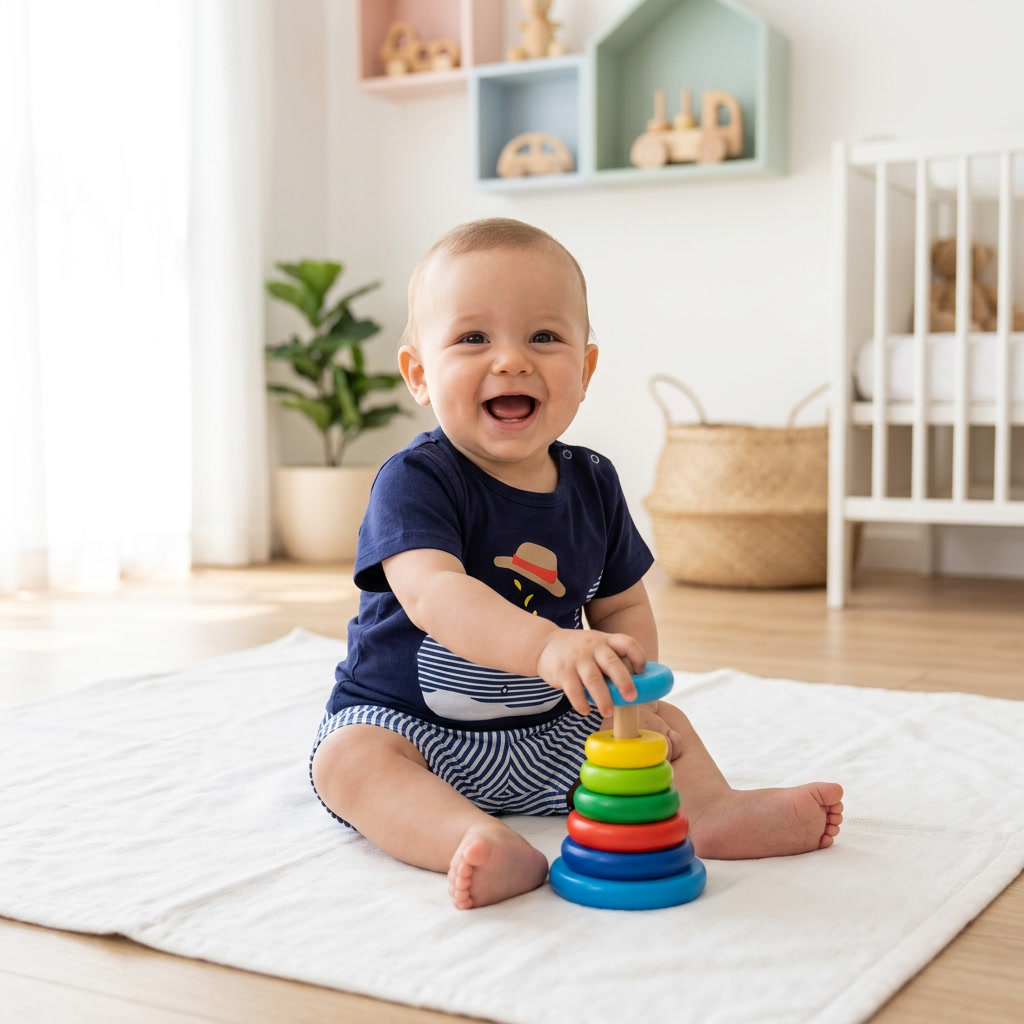
3 Months: The Interactive Baby
- Laughing: First real laughs and giggles appear around 3–4 months.
- Head control at 90°: Can hold head up fully during tummy time.
- Batting at objects: Reaches toward hanging toys, beginning intentional arm movement.
- Recognizes faces: Lights up at familiar faces, quiets to familiar voices.
4–5 Months: Rolling
- Rolling front to back: Usually appears first, often as a surprise during tummy time around 3–5 months.
- Rolling back to front: Follows a few weeks later, typically around 4–6 months.
- Grasping objects intentionally: Reaches and holds rattles, soft toys.
- Babbling starts: Consonant sounds begin: ba, ma, ga.
6 Months: Sitting and Solids
- Sitting with support: Can sit propped with hands or in a Bumbo around 4–5 months; sits independently by 6–7 months for most babies.
- Starting solids: Most pediatricians recommend introducing pureed foods around 6 months.
- Full name recognition: Consistently turns toward their name.
- Separation anxiety begins: May fuss when primary caregiver leaves the room.
7–9 Months: Crawling and Object Permanence
- Crawling: Most babies begin some form of crawling between 7 and 10 months. Some skip crawling entirely — this is normal.
- Object permanence: Understanding that hidden objects still exist. Peek-a-boo becomes genuinely exciting.
- Pincer grasp developing: Begins using thumb and forefinger to pick up small objects.
- Pulling to stand: Uses furniture to pull themselves upright.
9–12 Months: Cruising Toward Walking
- Cruising: Walking sideways while holding furniture.
- First words: Mama and dada with meaning typically appear around 10–12 months.
- Clapping and waving: Social gestures develop around 9–12 months.
- First steps: Walking independently typically happens between 9 and 15 months. A wide range is completely normal.
For specific milestones in detail, see our guides on when babies hold their head up and when babies start wearing shoes.
A Note on Milestone Ranges
Every baby develops at their own pace. The ranges above represent the typical window, not a strict deadline. If you have concerns about your baby's development, your pediatrician is the right first point of contact — early intervention, if needed, is always most effective when started early.
What to Dress Baby in at Each Milestone
Each milestone changes what works best outfit-wise: tummy time means no front buttons, rolling means nothing that can twist, crawling means durable knees and flat waistbands. See our guide on what to wear at each baby milestone for outfit recommendations by stage.