


Tiny feet grow astonishingly fast — a baby can go up two shoe sizes in their first year alone. Getting the size right matters for more than comfort: soft, growing feet need room to develop, and a too-tight shoe can do real harm. The good news is you can measure your baby's feet accurately at home in a couple of minutes. Here's how, plus a size chart by age and how a baby shoe should fit.
Does your baby even need shoes yet?
Before walking, babies don't need structured shoes at all — bare feet and soft socks or booties are best for developing balance and strength. Soft-soled first walkers are lovely for warmth and cruising, and proper shoes only really come in once your baby is walking outside. If you're weighing this up, our guides to when to buy baby's first shoes and socks and booties before walking are a good place to start.
How to measure your baby's feet at home
All you need is paper, a pen, and a ruler:
- Trace or mark each foot. Stand or hold your baby with their foot flat on a piece of paper and mark the tip of the longest toe and the back of the heel. (Longest toe isn't always the big toe.)
- Measure heel to toe. Measure the distance in millimeters or inches between your two marks.
- Measure both feet. They're often slightly different — always go by the larger one.
- Measure late in the day. Feet swell a little, so an afternoon measurement gives the most reliable fit.
- Add a little growing room. Leave roughly a finger's width (about 1–1.5 cm) beyond the longest toe so there's room to grow and wiggle.
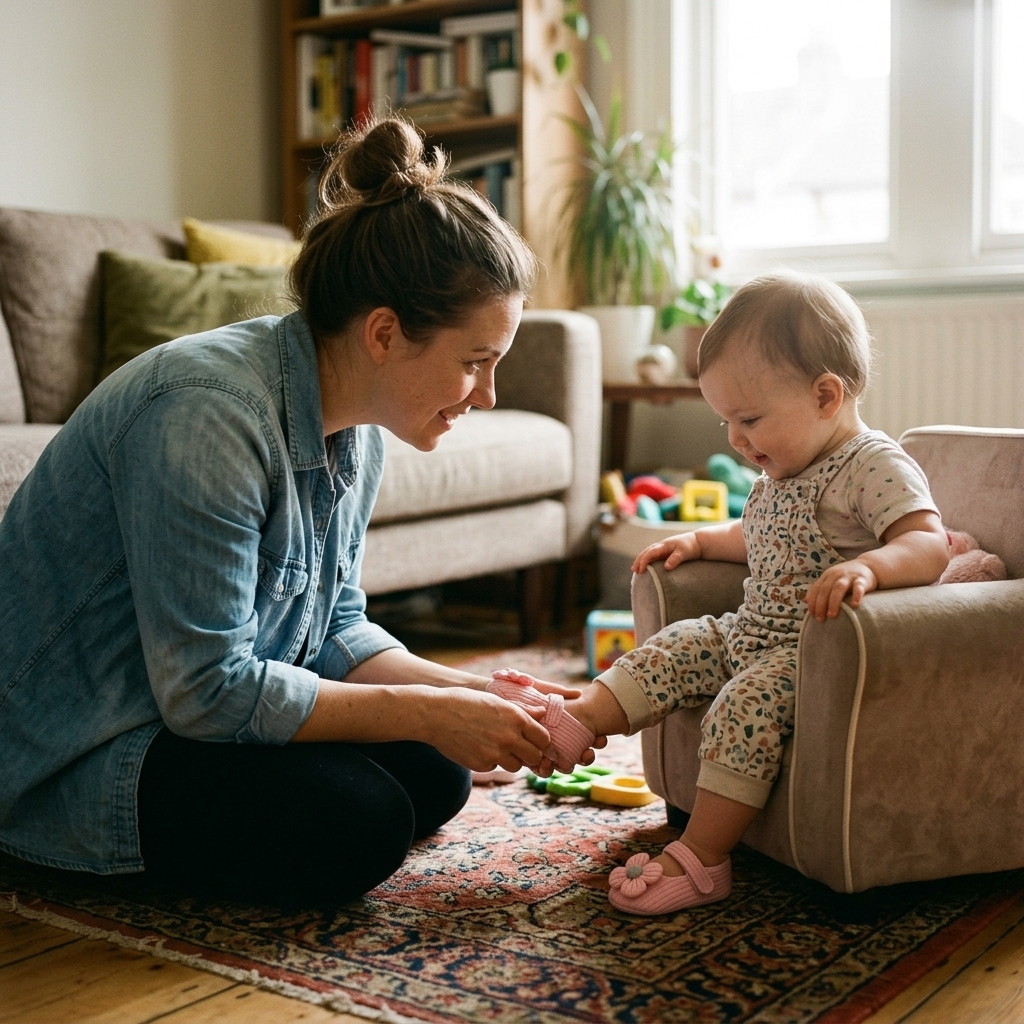
For those early cruising months, a soft, flexible shoe is ideal. Our Soft Cotton First Walkers have a soft, breathable sole that lets little feet move naturally while offering a bit of protection indoors and out.
Baby shoe size chart by age
Every baby grows differently, so treat this as a rough guide and always measure rather than assume by age. Approximate US sizes:
| Age | Foot length | US size (approx.) |
|---|---|---|
| 0–3 months | ~9 cm (3.5") | 0–1 |
| 3–6 months | ~10 cm (4") | 1–2 |
| 6–12 months | ~11.5 cm (4.5") | 2–3 |
| 12–18 months | ~12.5–13.5 cm (5") | 4–5 |
| 18–24 months | ~14 cm (5.5") | 5–6 |
How a baby shoe should fit
A well-fitting baby shoe should have:
- A little wiggle room — about a finger's width between the longest toe and the end of the shoe.
- Enough width — baby feet are chubby; the shoe shouldn't pinch across the top or sides.
- A secure but gentle hold — snug at the heel without rubbing, with an adjustable strap or laces.
- A soft, flexible sole — you should be able to bend it easily; stiff soles hinder natural foot movement.
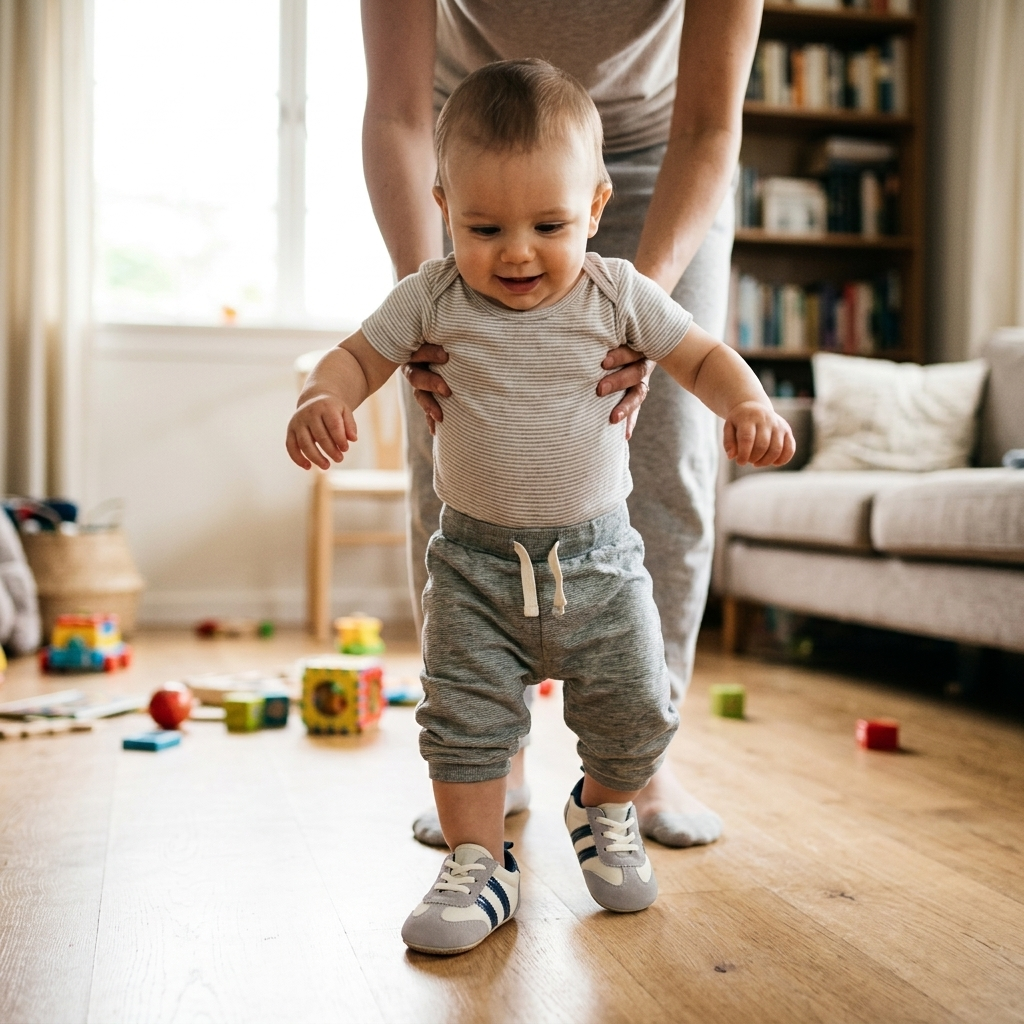
Once your baby is up and toddling, a lightweight, flexible sneaker is a great everyday choice. Our First Steps Casual Sneakers have a soft, non-slip sole that bends with the foot — supportive enough for first steps, flexible enough to let feet develop naturally.
How often should you check the size?
Because babies' feet grow so quickly, check the fit every 6–8 weeks in the first two years. A quick test: press gently on the toe of the shoe — if there's no room beyond the longest toe, it's time to size up. Watch for red marks, curled toes, or your baby pulling shoes off, which often signal they've grown out of them.
Frequently asked questions
How much room should I leave to grow? About a finger's width (1–1.5 cm) beyond the longest toe — enough to grow into, but not so much that the shoe slips.
How often do babies go up a shoe size? Often every couple of months in the first year, so measure regularly rather than relying on age alone.
Are soft soles or hard soles better? Soft, flexible soles are best for developing feet — save firmer soles for confident older walkers.
The bottom line
Measure both feet, go by the larger one, leave a finger's width of growing room, and recheck every 6–8 weeks. Choose soft, flexible, correctly-sized shoes and you'll keep those little feet comfortable and free to grow exactly as they should — through cruising, first steps, and every wobbly adventure after.