


A baby's skin is thin, delicate, and far more vulnerable to the sun than an adult's — and because sunscreen isn't recommended for the youngest babies, clothing and shade do much of the protective work. Getting sun-safe dressing right matters: sunburn in childhood is linked to greater skin-cancer risk later in life, and babies can overheat quickly. The good news is that protecting your baby from the sun is mostly about a few simple, breathable clothing choices. Here's how to dress a baby for sun safety through the warmest months.
Why Clothing Is the First Line of Sun Defence
Major paediatric guidance (including the American Academy of Pediatrics) advises keeping babies under 6 months out of direct sunlight, relying on shade and clothing rather than sunscreen over large areas. For older babies, sunscreen helps on small exposed areas — but clothing remains the most reliable, fuss-free protection because it covers continuously, never wears off, and never needs reapplying. The goal is light, breathable coverage that protects without overheating.
What to Look for in Sun-Protective Baby Clothing
- Coverage that still breathes: Lightweight long sleeves and long legs in thin, loose-weave cotton can protect more skin than bare arms — counter-intuitively cooler than sunburnt skin, as long as the fabric is light and airy.
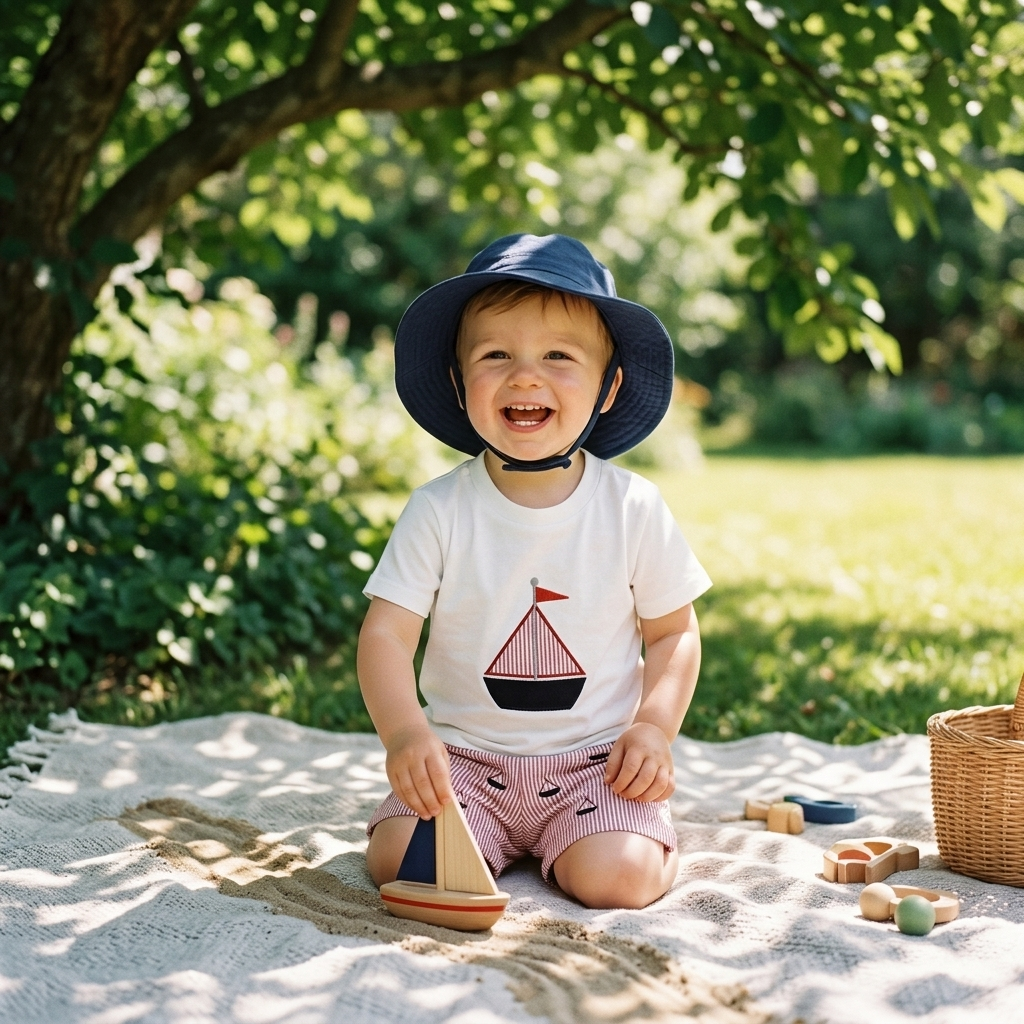
- A wide-brim sun hat: The single most useful item — it shades the face, ears, and the back of the neck, all easily-missed burn spots. A brim beats a peaked cap, which leaves ears and neck exposed.
- Light colours and close weaves: Tightly woven fabrics block more UV than loose ones; hold fabric to the light — less light through means more protection. (Very dark colours absorb more heat, so balance protection with staying cool.)
- UPF-rated pieces for strong sun: Some clothing carries a UPF (Ultraviolet Protection Factor) rating — UPF 50+ blocks the large majority of UV. Useful for beach or pool days, though ordinary close-weave cotton also provides good everyday protection.
- Loose, comfortable fit: Roomy clothing shades skin while letting air circulate to prevent overheating.
Beyond Clothing: The Rest of Sun Safety
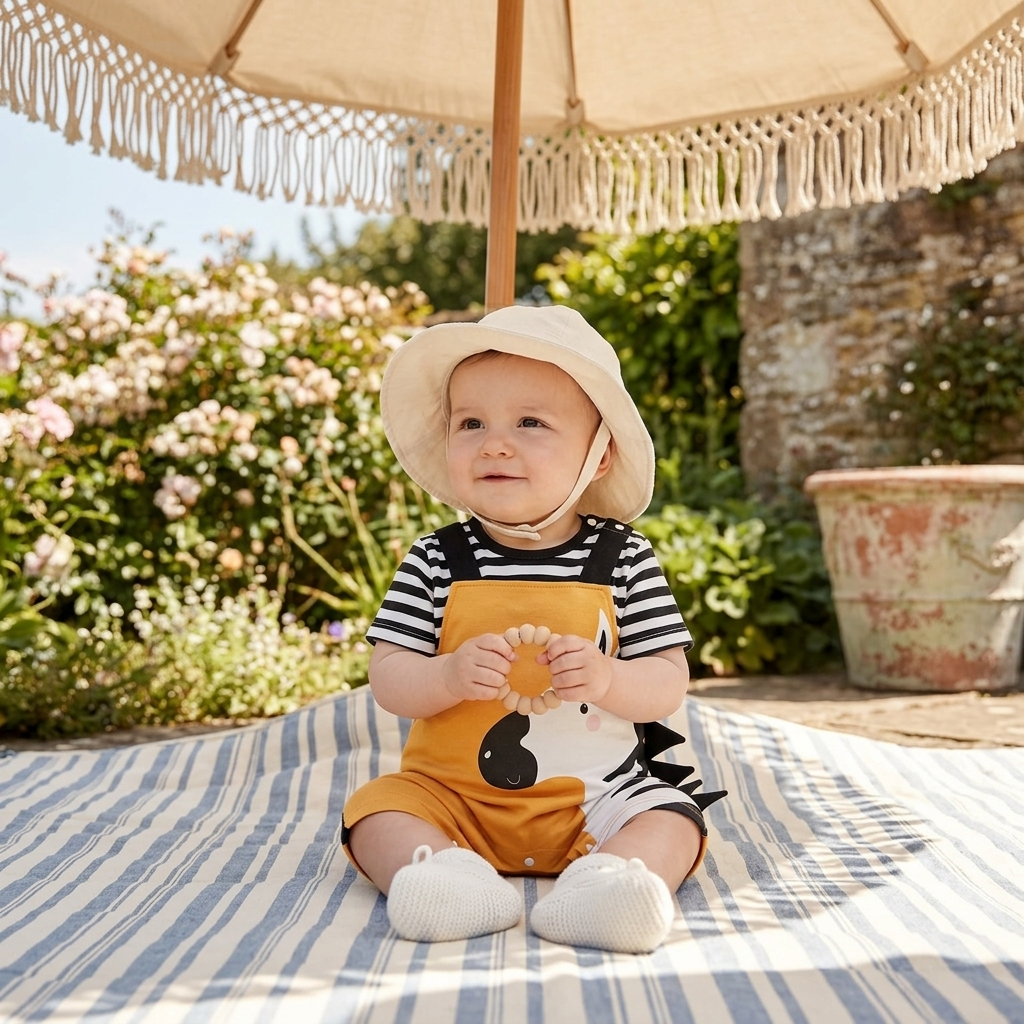
- Seek shade, especially 10am–4pm: When the sun is strongest, keep babies in the shade — under a tree, parasol, or canopy.
- Use a pram shade with airflow: A clip-on shade or parasol protects without trapping heat. Never drape a blanket over the pram — it dangerously raises the temperature inside and restricts air.
- Sunglasses for older babies: Baby-safe, UV-blocking sunglasses protect developing eyes if your baby will tolerate them.
- Sunscreen, used correctly: For babies over 6 months, a baby-safe broad-spectrum SPF 30+ on small areas clothing can't cover (hands, feet, face). For under-6-months, ask your paediatrician — shade and clothing come first.
- Watch for overheating and dehydration: Offer more frequent feeds in hot weather, and check the back of the neck for warmth (see our summer dressing guide).
A Simple Sun-Safe Formula
Put together, sun safety for a baby is refreshingly simple: shade first, then a wide-brim hat, then light breathable clothing that covers, with sunscreen filling the small gaps for older babies. Keep the youngest babies out of direct sun altogether, plan outings for cooler hours, and keep everything light enough to avoid overheating. None of it is complicated — and together it protects your baby's delicate skin through every sunny day.
Browse our lightweight, breathable summer pieces in the collections, and see our how to dress a baby in summer guide for keeping cool in the heat. This article is general information, not medical advice — follow your paediatrician's guidance for your baby.