


A hot summer day brings a particular worry for parents of babies: little ones can't tell you they're too warm, they can't cool themselves as effectively as adults, and they're more vulnerable to heat. Dressing a baby for summer is a balance — light enough to stay cool, but with skin protected from the sun. Get it right and your baby stays comfortable and safe through the warmest months. Here's how to dress a baby in summer, what fabrics work, and the heat-safety points that matter most.
The Golden Rule: One Light Layer
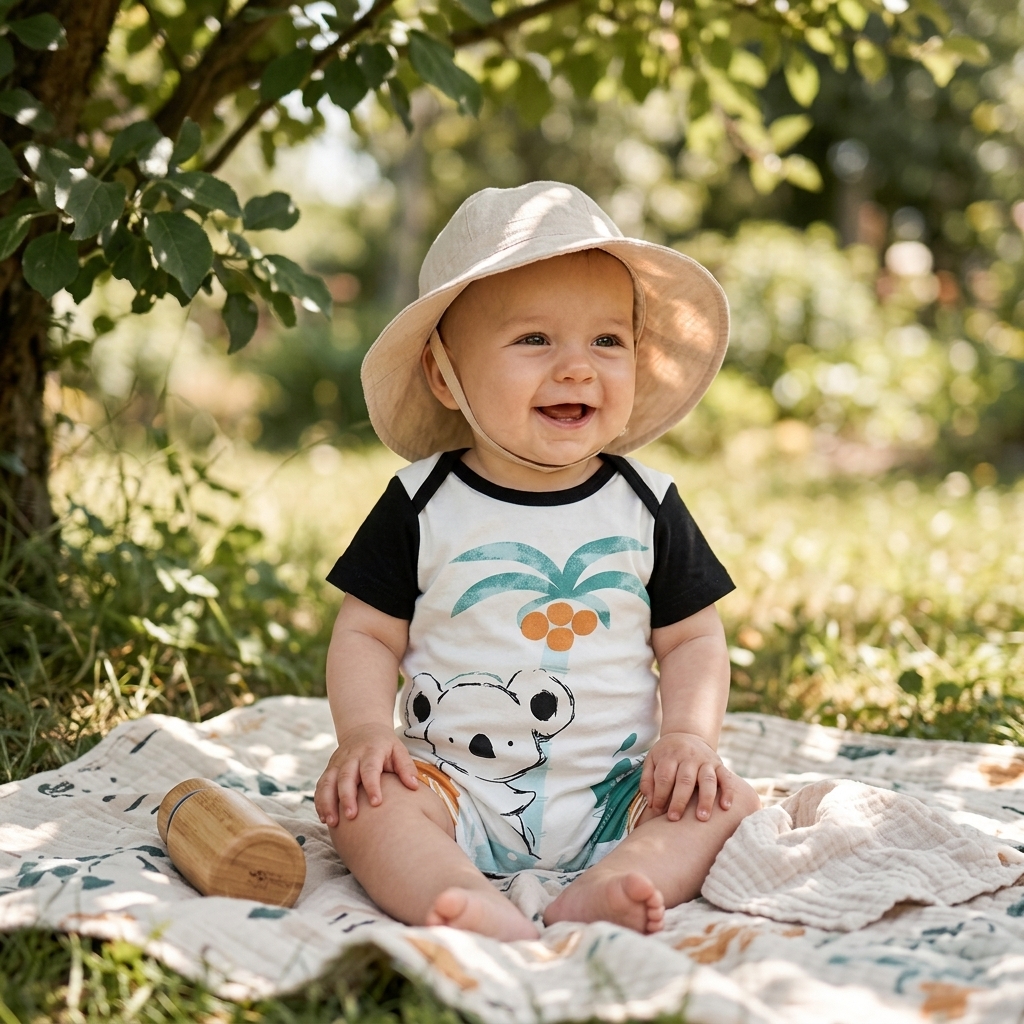
On a warm day, a baby generally needs just one light layer — a short-sleeve cotton bodysuit or a lightweight romper is plenty. A useful guideline: dress your baby in a similar amount to what you'd find comfortable in the same conditions, and remember that in very hot weather, a single thin layer protects the skin while letting heat escape. Indoors on a hot night, a nappy and a thin bodysuit (or just a nappy in extreme heat) may be all that's needed.
Choose the Right Summer Fabrics
- Lightweight, breathable cotton: The summer champion — it's soft, absorbs sweat, and lets skin breathe. Loose-weave cottons and muslin are especially cooling.
- Loose-fitting styles: Air circulating around the skin keeps baby cooler than tight clothing. Relaxed rompers and floaty styles beat anything clingy.
- Light colours: Pale shades reflect heat rather than absorbing it like dark colours do.
- Avoid synthetics in heat: Polyester and nylon trap heat and sweat and don't breathe — uncomfortable and potentially overheating in summer.
For why natural fabric matters most for delicate skin, see our organic cotton guide.
Sun Protection Is Part of Dressing
Babies' skin is thin and especially vulnerable to sun damage, and major paediatric guidance (including the American Academy of Pediatrics) advises keeping babies under 6 months out of direct sunlight altogether, relying on shade and clothing rather than sunscreen on large areas. Practical sun protection:
- A wide-brim sun hat: Shades the face, ears, and neck — one of the most useful summer items.
- Lightweight long sleeves and legs for strong sun: Counter-intuitively, a thin long-sleeve layer can protect more skin than bare arms in intense sun — choose loose and light.
- Seek shade, especially between 10am and 4pm when the sun is strongest.
- Pram shades with airflow: Use a clip-on shade or parasol; never drape a thick blanket over the pram, which traps heat dangerously.
- Sunscreen: For babies over 6 months, a baby-safe sunscreen on small exposed areas — but shade and clothing come first. For under-6-months, ask your paediatrician.
Watch for Overheating
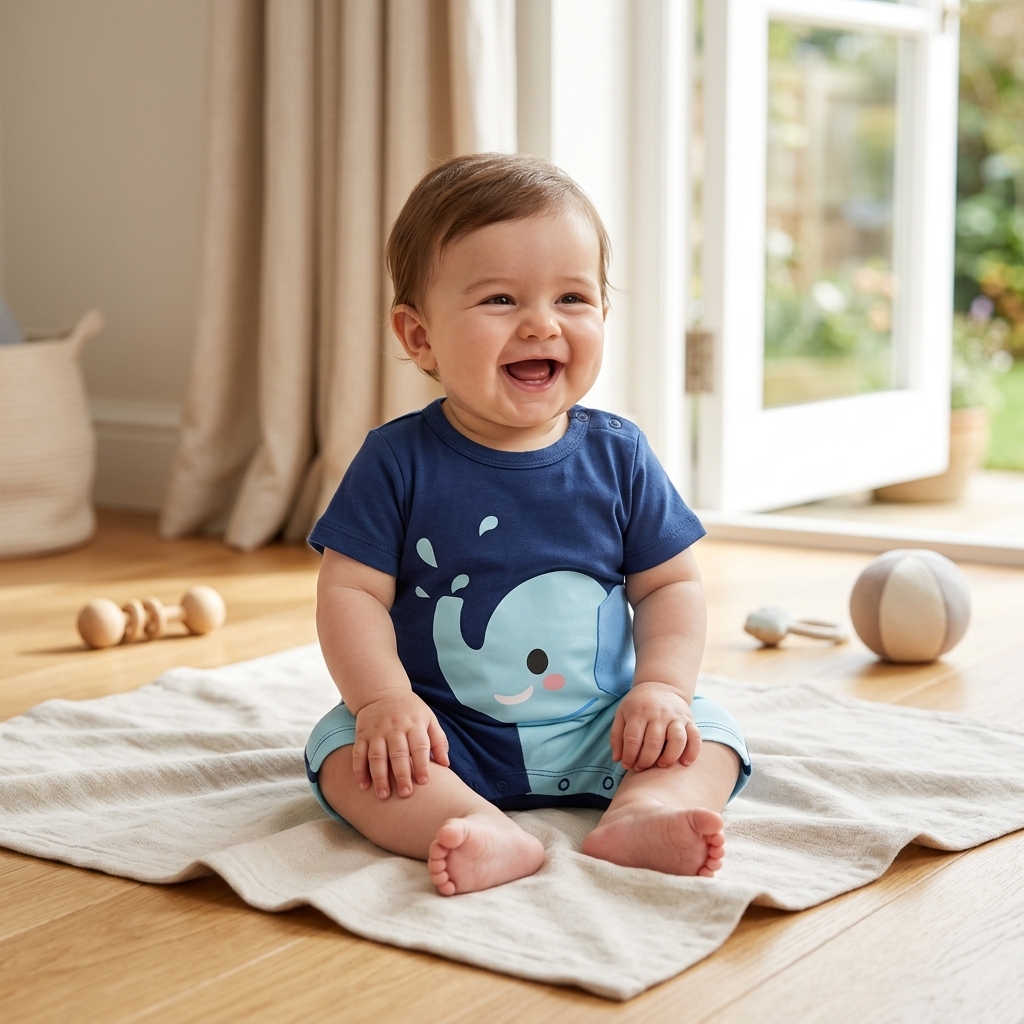
Because babies can't regulate their temperature well, knowing the signs of overheating is essential. Check the back of the neck or chest — not hands and feet, which run cool. Signs a baby is too hot include damp hair or sweating, flushed cheeks, rapid breathing, restlessness or unusual fussiness, and warm skin. If you spot these, move to a cooler, shaded spot, remove a layer, and offer extra feeds. In hot weather, breastfed babies may want to feed more often, and formula-fed babies may need cooled boiled water — check current guidance for your baby's age.
Keeping Baby Cool: Quick Tips
- Offer more frequent feeds to keep babies hydrated in the heat
- Keep the room cool for sleep — use a fan for air circulation (not pointed directly at baby), and dress lighter for sleep on hot nights
- A cool (not cold) bath before bed can help on very warm evenings
- Plan outings for the cooler morning and evening hours
- Never leave a baby in a parked car, even briefly — temperatures rise dangerously fast
The Bottom Line
Dressing a baby for summer comes down to one light, loose, breathable cotton layer, a wide-brim sun hat, shade over sun, and a careful eye for overheating. Keep it simple and natural, prioritise shade and hydration, and your baby can stay cool, protected, and comfortable all summer long.
Browse our lightweight summer rompers and sets in the collections, and for night-time dressing in the heat see our baby sleepwear guide. This article is general information, not medical advice — follow your paediatrician's guidance for your baby.