


“Is my baby too hot? Too cold? Should I add a blanket?” — few questions keep new parents awake (literally) as much as what their baby should wear to sleep. It matters for comfort, but it matters even more for safety: overheating is a recognised risk factor for sudden infant death syndrome (SIDS), while a baby who's too cold won't settle. The good news is that safe, comfortable sleep dressing follows a few clear principles. This guide explains what to dress your baby in for sleep across temperatures and seasons — and the safety rules that underpin it all.
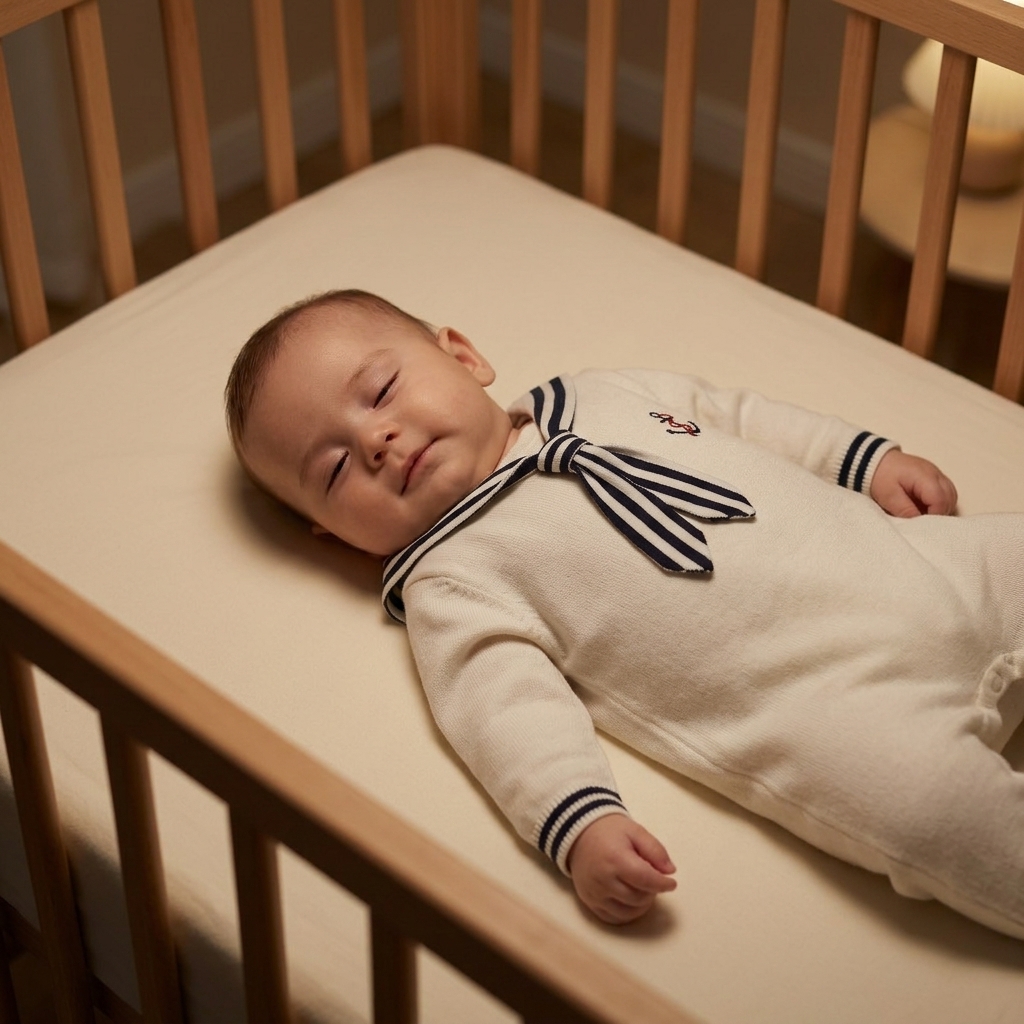
The Two Rules That Underpin Everything
Before the what-to-wear specifics, two safe-sleep principles from paediatric guidance (including the American Academy of Pediatrics) shape every choice:
- No loose blankets, pillows, or bumpers in the sleep space for babies under 12 months. Loose bedding is a suffocation risk. This is exactly why wearable warmth — sleepsuits and sleep sacks — exists: it keeps a baby warm without anything loose.
- Don't let baby overheat. A baby who is too warm is at greater risk during sleep. Dress for warmth, not heat, and check regularly. Signs of overheating include sweating, damp hair, flushed cheeks, and rapid breathing.
How to Check If Baby Is the Right Temperature
Babies' hands and feet naturally run cooler and aren't a reliable guide. Instead, feel the back of the neck or the chest — it should feel comfortably warm, neither sweaty nor cool. If in doubt, a baby is generally more comfortable a touch cooler than too warm.
What to Dress Baby In, by Room Temperature
The most reliable approach combines a base layer with a sleep sack of an appropriate TOG rating (a measure of thermal warmth — higher TOG means warmer). A rough guide:
| Room temp | What to wear |
|---|---|
| 24–27°C / warm | Just a short-sleeve bodysuit, or a nappy and light muslin — a 0.5 TOG sack if needed |
| 20–24°C / comfortable | Short- or long-sleeve bodysuit + 1.0 TOG sleep sack |
| 16–20°C / cool | Long-sleeve sleepsuit + 2.5 TOG sleep sack |
| Below 16°C / cold | Bodysuit + long-sleeve sleepsuit + 2.5 TOG sack; consider warmer fabrics |
The ideal room temperature for baby sleep is often cited as around 16–20°C (about 68–72°F). Use the table as a starting point and adjust to your baby and home.
Choosing the Right Sleepwear Fabric
- Breathable natural cotton: The best choice for most of the year — it regulates temperature, lets skin breathe, and reduces overheating risk. See our organic cotton guide.
- Soft, non-restrictive fit: Sleepwear should allow free movement of the hips and legs (important for healthy hip development) and never be tight around the chest.
- Footed sleepsuits: Keep feet warm without loose socks that can slip off — ideal for cooler nights.
- Flat seams, no scratchy labels: For comfort against the skin through the night.
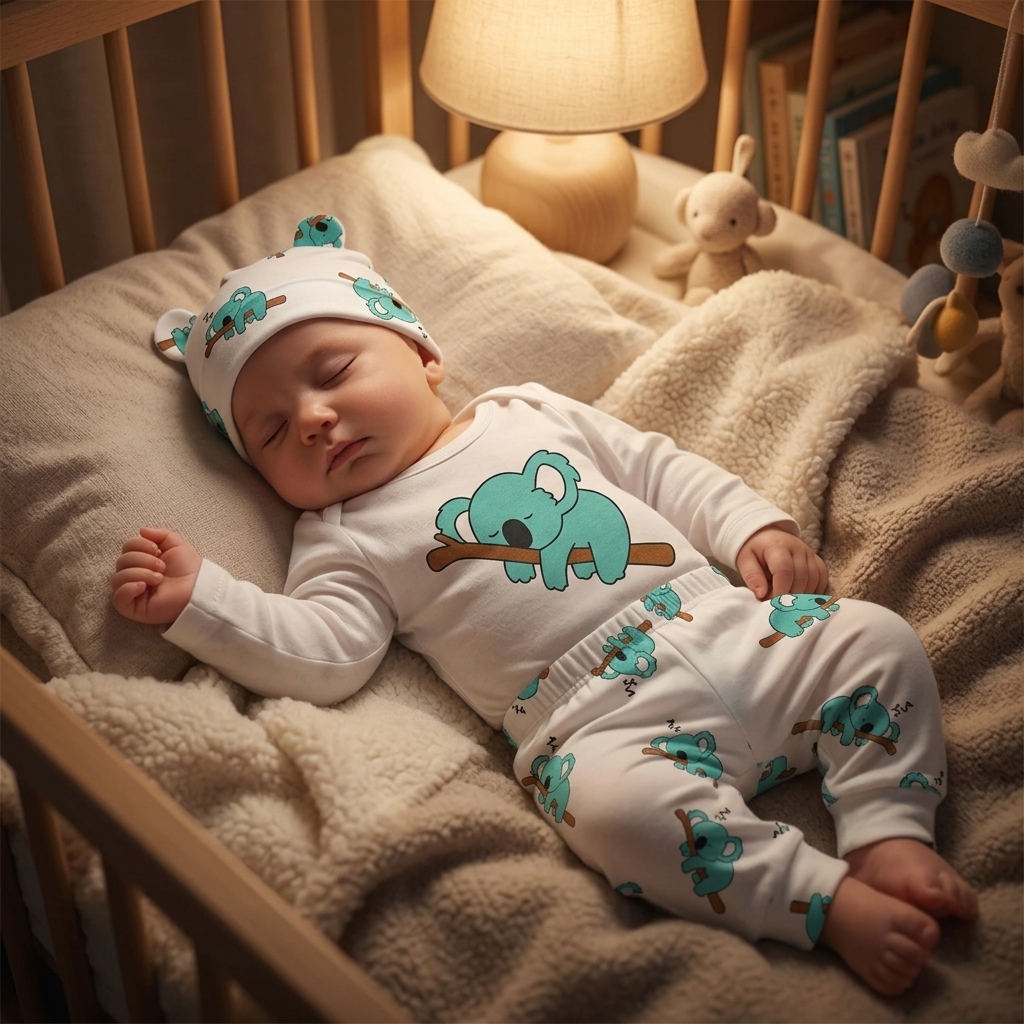
- Avoid hats for sleep: Babies regulate temperature partly through their heads; indoor sleep hats can cause overheating and are not recommended for safe sleep.
Swaddling and the Transition Out of It
For newborns, a snug swaddle (using a thin, breathable muslin or a purpose-made swaddle) can help them feel secure and reduce the startle reflex. Two safety points: swaddle firmly around the arms but leave room at the hips for movement, and stop swaddling as soon as baby shows signs of rolling — usually around 8 weeks — switching to a sleep sack instead. Always place a swaddled baby on their back.
The Bottom Line
For safe, comfortable baby sleep: dress in breathable layers suited to the room temperature, use a wearable sleep sack of the right TOG rather than loose blankets, skip the hat indoors, check warmth at the back of the neck, and err slightly cooler rather than too warm. Get those basics right and you remove a major source of night-time worry — and give everyone a better chance of sleep.
For more on the sleep environment, see our sleep sack guide, and browse soft cotton sleep-friendly pieces in our collections. This article is general information, not medical advice — follow your paediatrician's guidance for your baby.