


Baby skin is thin, delicate, and burns far more easily than ours — which makes sun protection one of the most important parts of any warm-weather outing. The best defense isn't sunscreen alone; it's a simple combination of shade, clothing, and timing. Here's a practical guide to keeping your little one safe and comfortable in the sun.
A quick note: this is general guidance, not medical advice. For sun care and sunscreen specific to your baby, always follow your pediatrician.
First, the golden rule for young babies
Babies under 6 months should be kept out of direct sunlight whenever possible. Their skin is too delicate for much sun exposure, and sunscreen use is limited at this age. For the youngest babies, shade and clothing are your main tools — not sunscreen.
Cover up with lightweight clothing
Clothing is a baby's simplest, most reliable sun barrier — but in summer it needs to protect and keep them cool. Look for:
- Lightweight, breathable fabrics like cotton and muslin that shield skin without trapping heat.
- A comfortable, slightly loose fit that covers more skin while letting air circulate.
- Light colors that reflect rather than absorb heat.
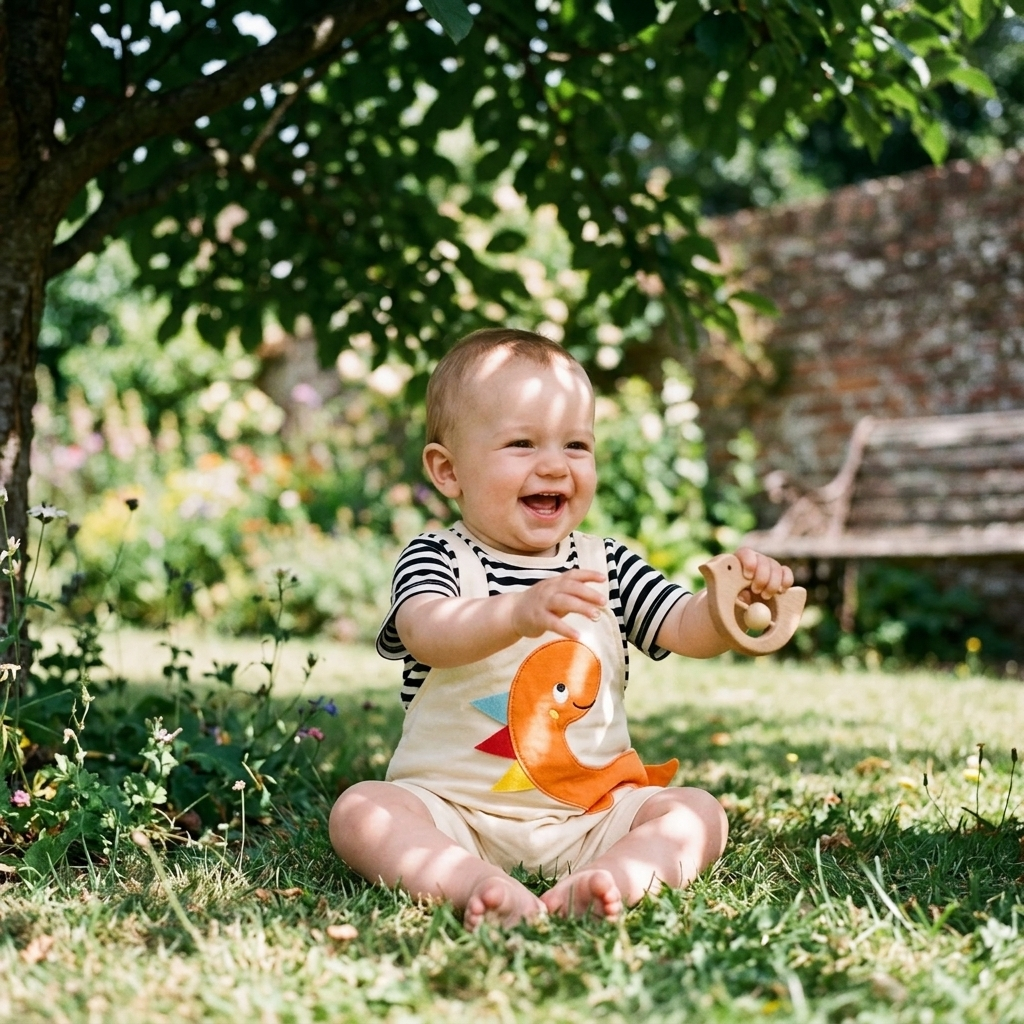
A breezy piece like our Lightweight Cartoon Summer Romper is ideal for hot days — soft, airy cotton that keeps your baby cool and comfortable in the shade. Muslin is another summer hero for its breathability; here's why muslin works so well for babies.
Don't forget a wide-brim hat
A good sun hat protects the places clothing can't — the face, ears, and back of the neck. Look for a wide brim or a legionnaire-style flap, in a breathable fabric with a chin tie so it stays put. A hat is one of the easiest wins in sun safety.
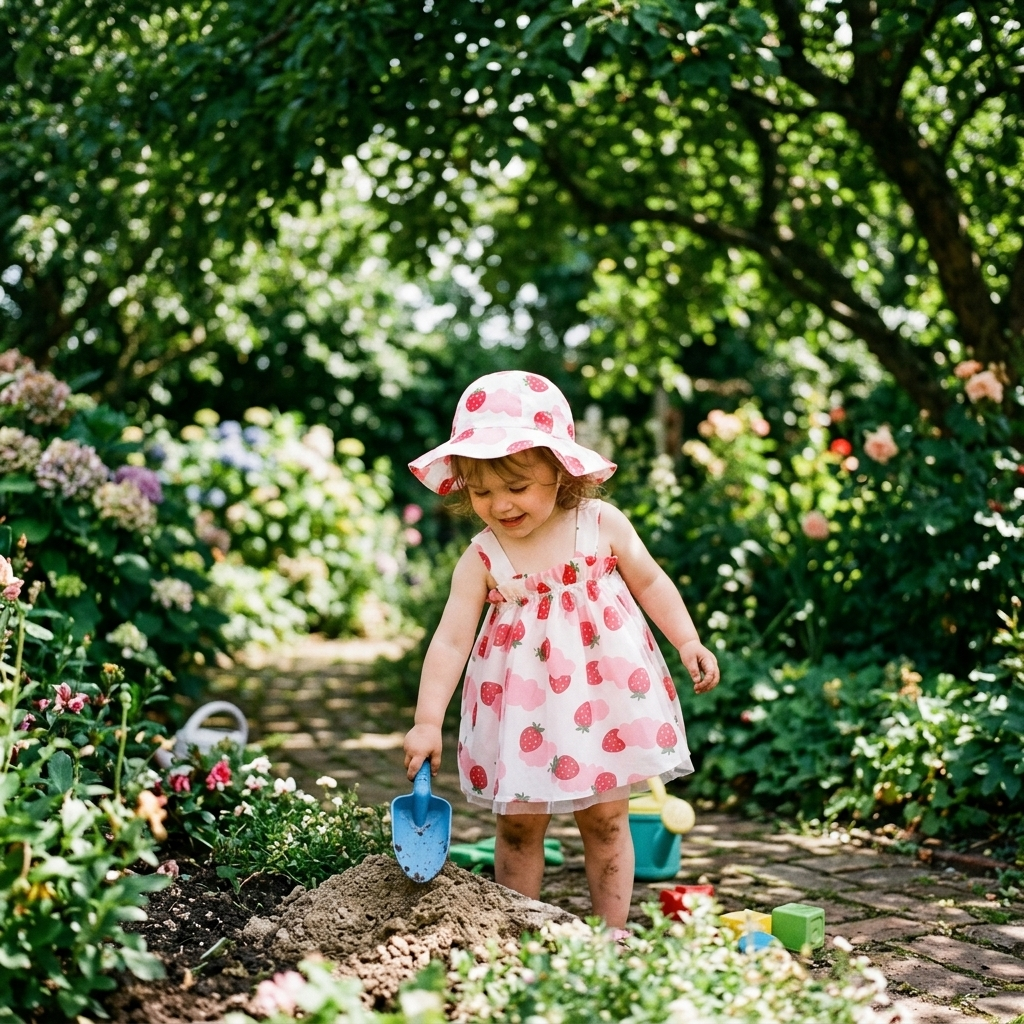
A set that comes with a matching hat, like our Fruit Print Dress & Hat Set, makes sun-smart dressing effortless — a light, airy outfit with sun coverage built in.
Seek shade and time it right
The sun is strongest between roughly 10 a.m. and 4 p.m., so plan outings for early morning or late afternoon when you can. When you're out, stick to shade — under a tree, an umbrella, or a stroller canopy — and remember that shade plus clothing plus a hat, layered together, is far more effective than any one on its own.
What about sunscreen?
Sunscreen guidance depends on age:
- Under 6 months: keep out of direct sun and rely on shade and clothing. If a small area (like the face or backs of hands) can't be covered, a minimal amount of baby-safe sunscreen may be used — check with your pediatrician first.
- 6 months and older: use a broad-spectrum, water-resistant baby sunscreen of SPF 30 or higher on exposed skin, and reapply regularly — especially after water or sweating.
Keep an eye on overheating
Sun safety and heat safety go hand in hand. Babies overheat quickly, so offer extra feeds or fluids (as age-appropriate), watch for flushed skin, fussiness, or rapid breathing, and head somewhere cool if you see them. Dressing in breathable layers helps here too — and if your baby has sensitive skin, our guide to the best fabrics for delicate skin is worth a read.
Your quick sun-safety checklist
- Keep babies under 6 months out of direct sun.
- Dress in lightweight, breathable clothing that covers skin.
- Add a wide-brim sun hat.
- Seek shade and avoid peak sun (10 a.m.–4 p.m.).
- Use baby-safe SPF 30+ on exposed skin for babies 6 months and up.
- Watch for overheating and keep fluids up.
Frequently asked questions
Can I put sunscreen on a newborn? Generally sunscreen is limited under 6 months — rely on shade and clothing, and ask your pediatrician before applying any to small areas.
What SPF should baby sunscreen be? For babies 6 months and older, choose broad-spectrum, water-resistant SPF 30 or higher.
How do I keep my baby cool in the sun? Light, breathable clothing, plenty of shade, cooler times of day, and regular fluids all help prevent overheating.
The bottom line
Protecting your baby from the sun comes down to layering your defenses: keep the youngest babies out of direct sun, dress them in lightweight clothing that covers and breathes, add a wide-brim hat, stick to shade, and use age-appropriate sunscreen on older babies. Do that, and you can enjoy sunny days together while keeping that delicate skin safe.