


Picking out clothes for your new baby is one of the first ways you'll care for them, and it's about so much more than cute styles. It's about keeping them safe, comfortable, and happy. That's why breathable baby outfits are a true game-changer for new parents. Think of them as a personal climate-control system for your little one, helping to regulate their body temperature, prevent overheating, and protect their delicate skin.
Why Breathable Outfits Are a Parent's Best Friend
Welcome to the beautiful, whirlwind world of parenthood! As you get to know your tiny human, you’ll quickly find that their comfort is your top priority. One of the first things you'll learn is that babies, especially newborns, aren't very good at managing their own body temperature. Their internal thermostat is still developing, which means they can get too hot or too cold in a flash.
This is where the magic of breathable fabrics comes in. Unlike synthetic materials that can trap heat and sweat, breathable fabrics allow air to flow freely. Imagine a soft, gentle breeze on a warm day—that’s the kind of comfort these fabrics provide for your baby's skin.
The Science of Comfort and Safety
Just like us, babies sweat to cool down. But if that moisture gets trapped against their skin by non-breathable clothing, it can lead to a sticky, clammy feeling and even a painful heat rash. Breathable fabrics solve this by wicking moisture away from the skin, allowing it to evaporate.
This simple function makes a huge difference in your baby’s well-being. Keeping them dry and comfortable doesn't just prevent common skin irritations; it's also a key part of creating a safer sleep environment. Health experts consistently highlight overheating as a risk factor, and dressing your baby in lightweight, breathable layers is one of the most practical steps you can take.
A well-dressed baby isn't about fashion—it's about function. The right outfit is your baby's first line of defense, helping them stay comfortably regulated through naps, playtime, and all the sweet moments in between.
Choosing breathable clothing offers some much-needed peace of mind. Here’s what you can count on:
- Prevents Overheating: Air circulation allows excess body heat to escape, which is incredibly important for newborns and infants.
- Reduces Skin Irritation: By keeping your baby's delicate skin dry, you significantly lower the risk of heat rash, eczema flare-ups, and other discomforts.
- Promotes Safer Sleep: A comfortable body temperature is essential for helping your baby sleep more safely and soundly.
- Enhances All-Day Comfort: A happy baby is a comfortable baby! The right clothes ensure they're content whether they're cuddling, crawling, or just discovering their toes.
At the end of the day, picking breathable fabrics is a small choice that has a big impact. It’s one of the most loving and reassuring things you can do to support your baby’s health and happiness from day one.
What Are the Softest and Safest Fabrics for Your Baby?
Walking into the baby section for the first time can feel a bit overwhelming. The racks are filled with tiny outfits made from cotton, bamboo, muslin, and fabrics you might not have even heard of. As a new parent, all you really want to know is: which ones are truly the best and safest for my baby’s brand-new, sensitive skin?
Let's cut through the noise together. Think of this as learning the language of clothing labels so you can pick out every onesie and sleeper with total confidence, knowing it’s designed for pure, gentle comfort. The goal isn’t just to find fabrics that are soft to the touch, but materials that actively work to keep your little one happy and healthy.
Unpacking the Top Fabric Choices
There’s a reason certain fabrics have become superstars in the world of breathable baby outfits. They offer that perfect mix of softness, safety, and practicality that parents have relied on for generations. Here are the top contenders you’ll want to get to know.
- Organic Cotton: This is the classic, gentle hug of fabrics. It's incredibly soft, surprisingly durable, and grown without the harsh chemicals and pesticides used in conventional farming. That makes it a fantastic, worry-free choice, especially for babies with extra sensitive skin or eczema.
- Bamboo Rayon: If you could dress your baby in a cloud, it would feel like bamboo. This fabric is famous for its silky-smooth texture that just glides over the skin. It's also amazingly breathable and moisture-wicking, pulling sweat away to keep your baby cool and dry on warmer days. As a bonus, it has naturally hypoallergenic properties.
- Muslin: Light, airy, and beautifully simple. Muslin is a loosely woven cotton fabric that has the lovely quality of getting even softer with every wash. Its open weave allows for incredible airflow, which is why it’s a go-to for swaddles, lightweight blankets, and summer rompers.
These fabrics are the foundation of a comfortable, practical baby wardrobe. By choosing them, you’re wrapping your little one in a gentle barrier that makes every cuddle and nap as peaceful as possible.
The mind map below brings home the core benefits of breathable materials, highlighting how they boost safety, comfort, and your baby's overall health.
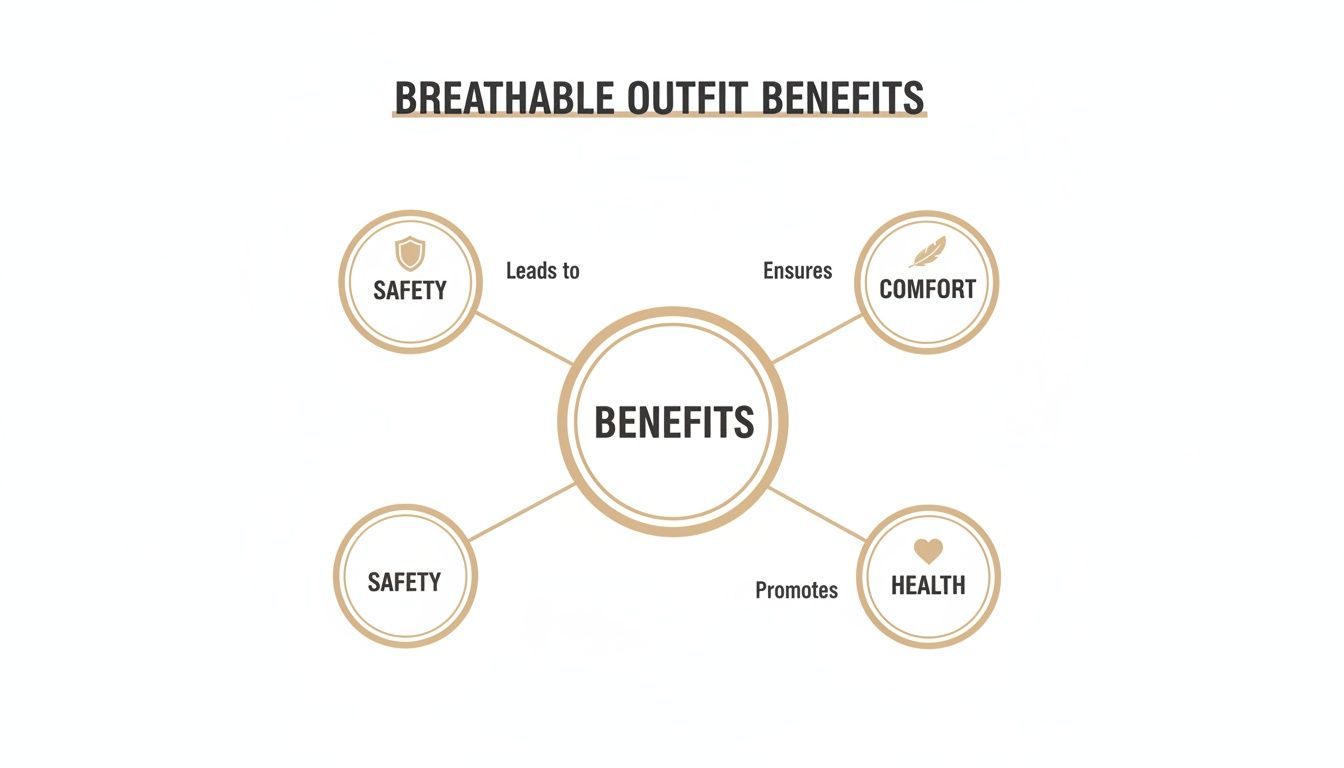
As you can see, these perks are all connected. The fabric you choose directly impacts your baby's daily well-being.
Why Cotton Is Still a Parent Favorite
While newer materials like bamboo are fantastic, cotton remains the undisputed champion in the baby world. It’s a classic for a reason—it’s reliable, comfortable, and just works.
In fact, its popularity is huge. Cotton is the go-to material for breathable baby clothes across the globe, capturing a massive 58.7% market share in 2024. Parents everywhere trust its natural softness, breathability, and hypoallergenic qualities to protect their baby’s delicate skin. It’s a smart choice that helps avoid heat-trapping fabrics that can lead to irritation or rashes.
For parents building that first wardrobe, starting with trusted cotton basics is always a solid move.
What Do "Hypoallergenic" and "Moisture-Wicking" Actually Mean?
You’ll see these terms on clothing tags all the time, but what do they really mean for your baby? Let’s break it down in simple terms.
Hypoallergenic is just a way of saying a material is very unlikely to cause an allergic reaction. This is a big deal for babies, whose new immune systems and skin are still developing. Fabrics like organic cotton and bamboo are naturally gentle and are processed with fewer of the chemicals that can act as irritants.
Moisture-wicking is another game-changer. Think of it as a smart fabric. Instead of just soaking up sweat or drool like a sponge, it actively pulls moisture away from your baby's skin and spreads it out across the fabric's surface so it can evaporate quickly.
This double-duty performance—being both incredibly soft and functional—is what makes these fabrics so special. They don't just feel good; they do an important job. For a deeper dive, check out our complete guide to choosing soft baby clothing. It’s this thoughtful combination that turns a simple outfit into an essential tool for your baby’s comfort.
How the Right Outfits Support Better Sleep and Play
A comfortable baby is a happy baby—we’ve all heard it, and it's never more true than during sleep and playtime. As a new parent, you quickly learn that your little one's entire world revolves around their comfort. The right breathable baby outfits are so much more than just cute; they're essential tools that help your baby sleep more safely and play more happily.
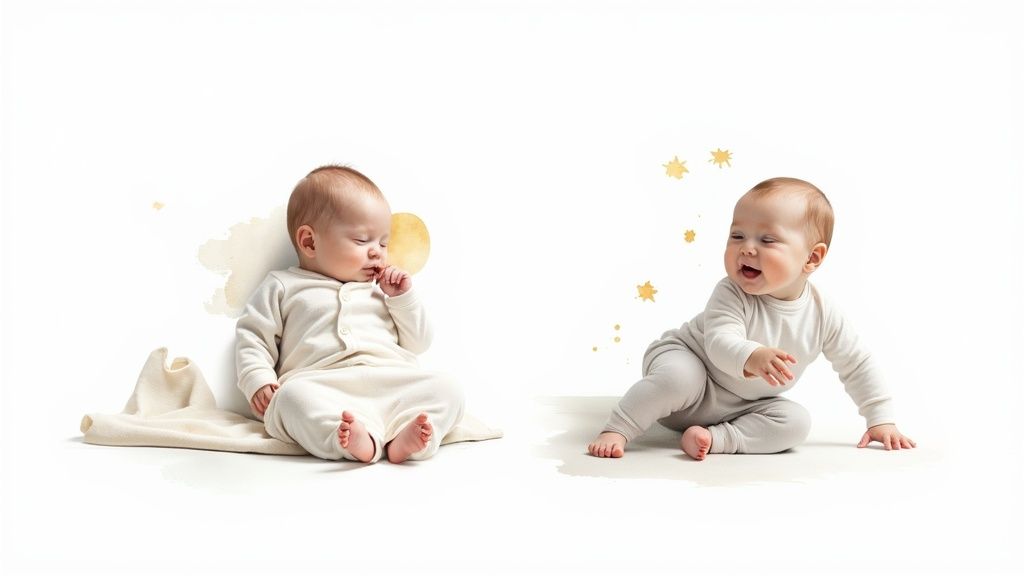
Let's connect the dots between that soft little onesie and your baby’s well-being. When an outfit lets air move freely, it helps your baby maintain a stable body temperature instead of becoming a fussy, sweaty little one. This simple choice directly impacts their mood, their energy, and their ability to get that precious rest they need.
Creating a Foundation for Safer Sleep
One of our biggest jobs as parents is creating a safe sleep environment, and clothing plays a huge part in that. You’ve probably heard that overheating is a recognized risk factor for Sudden Infant Death Syndrome (SIDS). This is exactly why breathable sleepwear isn't just a nice-to-have—it's a critical safety measure.
Imagine a warm summer night. If a baby is bundled in a heavy, synthetic sleeper, their body heat gets trapped, and they can get too hot very quickly. A lightweight bamboo or cotton sleep sack, on the other hand, acts like a personal thermostat.
It allows excess heat and moisture to escape, keeping your baby comfortably cool and significantly reducing the risk of overheating. It’s a simple swap that helps everyone rest a little easier.
This focus on temperature regulation is a big deal. The global market for baby clothes, valued at around USD 50 billion in 2023, is seeing a major shift driven by tech-forward fabrics like bamboo. These materials directly address parents' concerns about overheating by boosting airflow, which is especially needed in warmer climates. You can dig into the numbers in the full report on the global baby clothes market.
For a deeper dive into choosing the perfect sleepwear, our guide on the best baby sleep sacks has practical tips for every season.
Fueling Curious Minds Through Comfortable Play
When your baby is awake, their job is to play, explore, and learn about the world. Any outfit that’s stiff, tight, or stuffy just gets in the way of that important work. When a baby is comfortable, they’re free to focus on discovery.
Just imagine your little one trying to master their first roll from back to tummy. A flexible, stretchy cotton onesie moves right along with them. A crawler on a mission is another great example—soft, breathable pants won't chafe their knees or make them overheat while they’re busy building those little muscles.
Here’s how breathable outfits help your baby hit those milestones:
- Encourages Movement: Soft, stretchy fabrics allow for a full range of motion, making it easier to practice rolling, sitting up, and crawling.
- Reduces Distractions: When a baby isn’t distracted by feeling too hot or itchy, they can pour all their energy into playing and learning.
- Supports Sensory Exploration: Gentle materials that feel good against the skin provide positive sensory input, helping them stay happy and regulated.
Choosing breathable outfits is a loving, practical way to support your baby around the clock. You're not just dressing them; you’re giving them a comfortable foundation to sleep more safely, play more freely, and happily reach all those exciting milestones.
Dressing Your Baby for Every Season
Figuring out how to dress your baby for the weather can feel like a daily pop quiz you didn't study for. One look at the forecast, and the questions start—is a long-sleeved onesie enough? Does she need a hat? You're not alone in this; every parent has stood in front of their baby's closet, feeling puzzled.
The secret isn’t memorizing complicated rules. It's about understanding one simple, game-changing concept: breathable layering. Think of it as creating a cozy, adaptable bubble for your baby that keeps them perfectly comfortable—not too hot, not too cold.
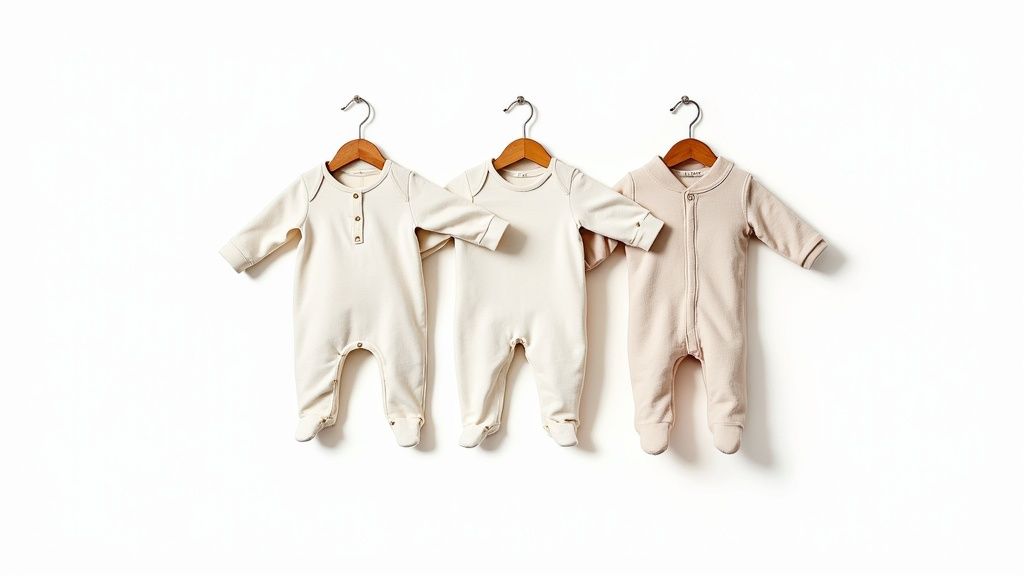
Using multiple lightweight, breathable pieces you can easily add or remove is much smarter than a single bulky layer, which can easily trap heat and leave your baby feeling sweaty and unhappy.
The Golden Rule of Baby Layering
If you remember just one thing, let it be this simple, parent-tested guideline.
Dress your baby in one more layer of clothing than you are comfortably wearing. If you feel great in a t-shirt, your baby will likely be just right in a t-shirt and a light blanket or a long-sleeved onesie. This little rule of thumb is a fantastic starting point for any weather.
This works so well because babies, especially newborns who aren't moving around much, lose heat more quickly than we do. That extra thin layer provides the perfect touch of warmth without risking overheating.
Dressing for Warmer Weather
When the sun is shining, the goal is to keep your baby cool and protected. Little ones can get warm fast, so light and airy is the only way to go.
- Go for a single layer. A simple cotton onesie or a breezy bamboo romper is often all your baby needs for a warm day indoors.
- Choose the right fabrics. Lightweight muslin, bamboo, and organic cotton are your best friends. These materials let air flow freely and wick away sweat.
- Don't forget sun protection. If you're heading outside, a wide-brimmed hat is an absolute must to shield your baby's delicate face and scalp.
A perfect summer day outfit, for example, might be a loose-fitting breathable baby outfit like a sleeveless muslin romper. It gives them maximum airflow and total freedom for all those little kicks and wiggles.
Dressing for Cooler Weather
As the air turns chilly, layering becomes your superpower. The trick is to create warmth without bulk by trapping air between thin layers, which acts as a natural insulator.
- Start with a soft base. Begin with a snug, long-sleeved cotton bodysuit. This first layer should be soft and breathable to manage any moisture right against the skin.
- Add a cozy middle layer. Over the base, you can add footed pajamas or a soft sweater and pants. Fleece or merino wool are great options here.
- Finish with an outer layer. For outdoor adventures, top it all off with a jacket or a bunting suit. Just remember to remove this heavy outer layer as soon as you get back inside to prevent overheating.
Most importantly, always check on your baby. A quick touch to the back of their neck is the best way to gauge their temperature—if it’s sweaty, they're too warm; if it’s cool, they might need another layer. This simple check will turn you into a confident, all-season dressing pro.
Seasonal Outfit Guide for Babies
To make things even easier, here’s a quick-glance guide to help you build the perfect breathable wardrobe for every time of year.
| Season | Recommended Fabrics | Example Outfits |
|---|---|---|
| Spring | Cotton, Bamboo, Light Blends | Long-sleeve bodysuit, light pants, and a light cardigan or muslin swaddle for naps. |
| Summer | Muslin, Lightweight Cotton, Bamboo | Sleeveless romper, short-sleeve onesie, or just a diaper indoors on very hot days. Wide-brimmed hat for outdoors. |
| Autumn | Cotton Blends, Light Fleece | Long-sleeve bodysuit, pants, socks, and a light jacket or sweater for outings. |
| Winter | Layered Cotton, Fleece, Merino Wool | Cotton bodysuit base, footed pajamas or fleece pants/sweater, plus a warm bunting or snowsuit for outside. Hat and mittens are a must. |
Ultimately, these are just starting points. You'll quickly get to know your baby's unique comfort zone and become an expert at keeping them cozy and content.
Little Details That Make a Big Difference: A Safety Checklist
Now that you're an expert on picking the best breathable fabrics, let's zoom in on the small details that are crucial for your baby's safety. The way a garment is made is just as important as the material itself. Think of it like becoming a friendly inspector for your baby's wardrobe—it's a simple habit that brings so much peace of mind.
You don't need to be an expert to know what to look for. It’s just about checking for a few key things that could cause trouble for a tiny person who loves to grab, pull, and explore everything with their mouth.
Spotting Common Hazards
Before any new outfit is worn, give it a quick once-over. A 30-second check can prevent a problem before it starts.
Here’s a quick mental checklist to run through:
- Buttons, Snaps, and Bling: Give any buttons or decorative bits a gentle tug. They should feel secure. Anything loose is a serious choking hazard.
- Strings and Ties: It's best to avoid clothes with long drawstrings or ribbons, especially around the neck. They can pose a strangulation risk. Snaps and zippers are much safer alternatives.
- Seams and Threads: Run your hand along the inside seams. They should feel smooth and flat so they don't irritate your baby's skin. Snip off any long, loose threads that could get tangled around tiny fingers or toes.
This little inspection habit quickly becomes second nature and helps you feel confident that every outfit is safe.
Why Fit Matters for Sleepwear
When it's time for bed, the fit of your baby’s PJs is a critical piece of the safety puzzle. Experts agree that sleepwear, from footed pajamas to sleep sacks, should always be snug-fitting.
This doesn't mean tight or uncomfortable. A snug fit simply ensures there's no extra, baggy fabric that could ride up and cover your baby's face while they sleep, which helps reduce the risk of suffocation.
Knowing the signs of overheating is just as important as choosing the right pajamas. Learning how to tell if your baby is too hot is an essential skill for any parent. A breathable, snug sleeper is the dream team for a safer night's sleep.
What Do Those Chemical Safety Labels Actually Mean?
Ever spotted a tag that says OEKO-TEX STANDARD 100 and felt like you were reading another language? It sounds technical, but what it stands for is simple and incredibly reassuring.
This label is a certification from an independent group, and it means every single part of the clothing—from the fabric and thread to the zipper and buttons—has been tested for a long list of harmful substances and proven to be safe.
Simply put, it’s a guarantee that the outfit is gentle enough to be right up against your baby’s skin. No harsh dyes, no harmful chemicals, no worries. Seeing that label is like getting a big thumbs-up for safety.
Choosing Sustainable and Eco-Friendly Outfits
When you become a parent, you naturally start thinking more about the future. Choosing your baby's clothes is one of those simple, everyday moments where you can make a choice that’s kind to the planet. This isn’t about adding another task to your list; it’s about seeing how sustainable fabrics go hand-in-hand with what’s best for your baby.
It turns out that many of the most breathable fabrics are also eco-friendly. Materials like organic cotton and bamboo are grown with a lighter touch, using less water and skipping the harsh chemicals. So when you pick these options, you’re not just wrapping your baby in pure softness—you’re also supporting a healthier earth.
More Than Just a Cute Outfit
Opting for high-quality, durable pieces is another wonderfully practical way to be more conscious. A well-made outfit can stand up to countless washes and all sorts of baby adventures. That means it can be passed down to a sibling or a friend, which cuts down on waste and supports a more mindful way of living. It’s a small shift that adds up over time.
This move toward sustainable choices is something parents everywhere are getting behind. The demand for eco-friendly, breathable baby outfits is a huge reason for the industry's growth, as more of us look for materials that are gentle on both our baby's skin and the planet.
Choosing eco-friendly clothing becomes another meaningful way to care for your baby and the world they’ll grow up in. It turns a simple purchase into a thoughtful act.
The numbers back this up, too. The global baby apparel market was valued at a huge USD 67.47 billion in 2024 and is expected to climb to USD 107.95 billion by 2032. A major driver for this is parents choosing natural materials to help reduce allergy risks. You can dive deeper into these market trends in the full baby apparel report.
Simple Ways to Shop Sustainably
Making eco-friendly choices for your baby’s wardrobe is easier than you might think. Here are a few simple tips to guide you:
- Look for Certifications: Keep an eye out for labels like GOTS (Global Organic Textile Standard) or OEKO-TEX. These are your shortcuts to knowing a garment meets strict environmental and safety standards.
- Invest in Quality: It pays to choose pieces that are built to last. A well-constructed bamboo sleeper will keep its shape and softness for so much longer than a fast-fashion alternative.
- Embrace a Minimalist Wardrobe: Try focusing on versatile, mix-and-match basics. You’ll often find that a smaller collection of high-quality essentials is far more practical and sustainable.
Your Top Questions, Answered
Becoming a parent opens up a whole new world of questions, and that's completely normal! When it comes to your baby’s comfort and safety, you want to get every detail right. We understand completely.
This little Q&A is here to clear up some of the most common worries we hear from parents about dressing their babies. Let's turn that uncertainty into confidence.
How Do I Know If My Baby Is Too Hot or Cold?
This is the number one question for new parents. Forget guessing—there's an easy and reliable way to check. Simply feel the back of your baby's neck or their tummy. This gives you a true reading of their core body temperature.
If their neck feels sweaty or hot, they're probably too warm. If it feels cool to the touch, they might appreciate an extra light layer. A quick tip: don't use their hands or feet as a guide. It's totally normal for them to feel cooler than the rest of their body.
How Many Layers Does My Newborn Really Need?
Here's a simple rule of thumb that works wonders: dress your baby in one more thin layer than what you're comfortably wearing yourself.
So, if you're feeling good in a t-shirt indoors, your baby will likely be perfectly comfortable in a long-sleeved cotton bodysuit. It’s a straightforward way to keep them snug without the risk of overheating.
Are Breathable Fabrics Still Important in Winter?
Yes, absolutely! Breathability is a year-round essential. During colder months, it's all about smart layering with fabrics like cotton or even merino wool.
These materials are brilliant because they trap air to create warmth, but they don't trap moisture. If your baby gets a little sweaty, the fabric lets that moisture evaporate. This is key to preventing them from getting a chill from damp clothes, keeping them both warm and dry.
At Mimou Babywear, our mission is to create essentials that support you and your little one through every season. We pour so much care into crafting our collections from the softest, most breathable materials because we believe your baby's safety and comfort should always come first.
Shop our collection of soft, breathable baby essentials at mimoubabywear.com