


Choosing the right soft baby clothing is one of the first, most loving things you do for your new baby. It goes far beyond finding cute outfits; it’s about wrapping your little one in pure comfort, safety, and warmth from their very first day.
Why Your Baby’s Comfort Starts with Soft Clothing
Welcome to parenthood! You’re starting a wonderful journey filled with tiny moments and some big decisions. Choosing your baby's first wardrobe is one of the more special ones. A newborn's skin is incredibly delicate—in fact, it's up to 30% thinner than our own. This makes them much more sensitive to scratchy fabrics, harsh chemicals, and even small shifts in temperature.
Imagine their skin is like a brand-new, soft flower petal. It needs the gentlest touch to stay protected and healthy. This is why focusing on soft baby clothing isn't just a nice extra; it's a huge part of their daily comfort and well-being. The right clothes do so much more than just cover them up.
The Gentle Essentials Your Baby Needs
Picking out soft materials directly impacts your baby's happiness and health. Think about it: rough seams, stiff fabrics, or annoying tags can easily lead to a fussy baby, skin rashes, and a restless night's sleep for everyone. On the other hand, a silky-soft onesie or a breathable sleeper can make all the difference.
Here’s what truly soft fabrics bring to your little one:
- Skin Protection: Gentle materials like organic cotton or bamboo viscose are your best allies in preventing irritation, chafing, and allergic reactions.
- Better Temperature Regulation: Breathable fabrics help your baby stay just right—not too hot, not too cold. This is so important, especially for reducing the risk of overheating during sleep.
- Freedom to Move: Soft, stretchy clothes let your baby wiggle, kick, and discover their world without feeling restricted, which is wonderful for their physical development.
A well-chosen wardrobe becomes a second skin for your baby, giving them a constant feeling of comfort and security. When a baby feels physically comfortable, they are much more likely to be calm, happy, and sleep more soundly.
Building this foundation of comfort is a beautiful way to nurture them from day one. As you start this exciting new chapter, knowing what to look for can make all the difference. For a simple, practical list, our guide on the essential clothes for newborns checklist will help you feel prepared and confident.
What Are the Softest and Safest Fabrics for Babies?
Walking down the baby aisle can feel like learning a new language. You're surrounded by tags with terms like "organic," "viscose," and "GOTS-certified," and all you really want to know is: what will feel best on my baby's skin? Let's break down what makes soft baby clothing truly soft and, more importantly, safe.
A baby's skin is brand new, highly absorbent, and far more sensitive than ours. That's why the fabrics we choose matter so much—they're in constant contact with our little ones. The goal is to wrap them in materials that are not only cloud-soft but also pure, breathable, and free from anything that could cause irritation.
The Champions of Softness: Organic Cotton and Bamboo
When it comes to baby clothes, two fabrics consistently win for softness and safety: GOTS-certified organic cotton and bamboo viscose. They both feel amazing, and each brings something special to your baby's wardrobe.
-
GOTS-Certified Organic Cotton: This isn't your average cotton. The Global Organic Textile Standard (GOTS) is a promise that the cotton was grown without synthetic pesticides or harsh fertilizers. It’s naturally hypoallergenic and wonderfully breathable, which is key to helping your baby stay comfortable and not overheat. Think of it as a cozy, reliable hug for everyday wear.
-
Bamboo Viscose: Known for its silky, buttery feel, bamboo viscose is unbelievably smooth. One of its best features is its ability to regulate temperature, keeping your baby cool when it's warm and cozy when it's chilly. It's also fantastic at wicking moisture away from the skin, making it a go-to choice for preventing heat rash.
It's easy to see how these simple fabric choices play a huge role in your baby's overall happiness.
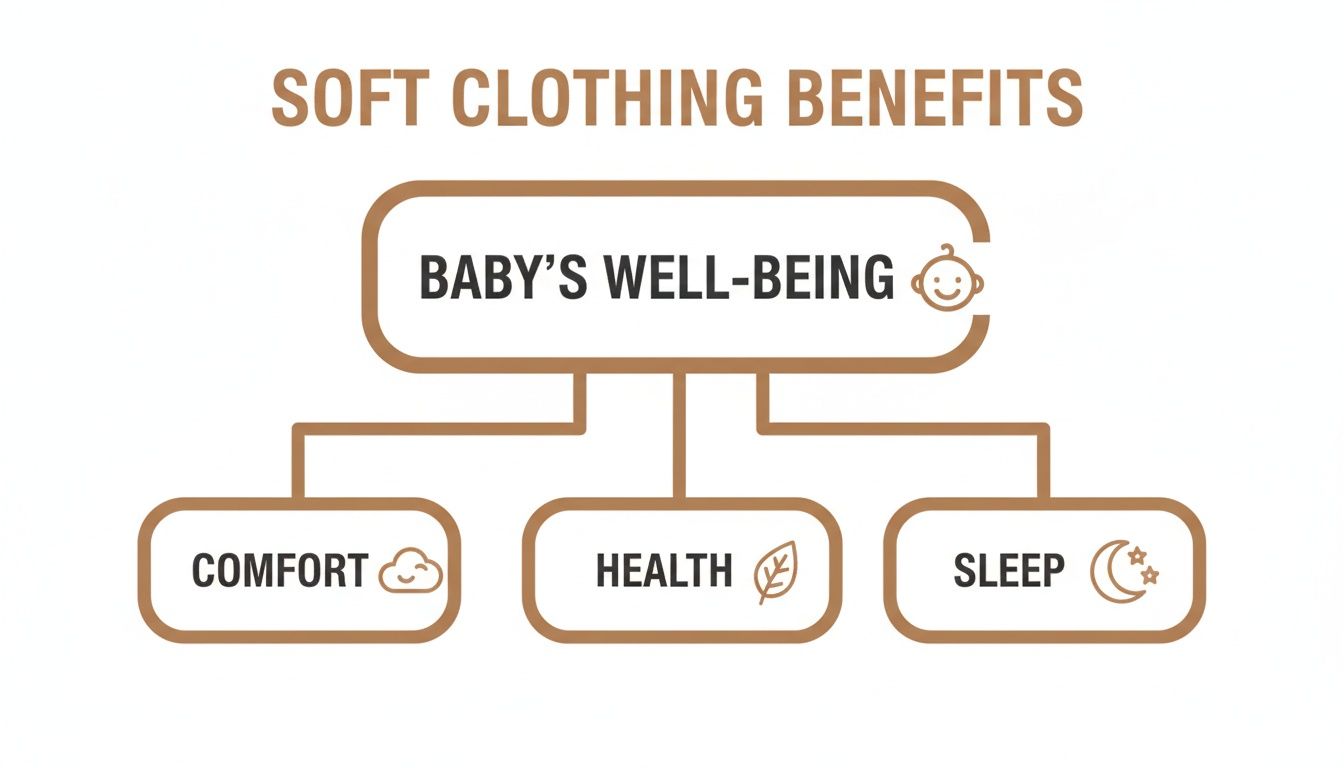
As the diagram shows, the right materials are the foundation for good health, sound sleep, and all-around comfort, letting your baby focus on the important business of growing and exploring.
Making Sense of Fabric Certifications
When you see a certification on a clothing label, think of it as a safety seal you can trust. It means an independent organization has tested the fabric to make sure it’s safe and made responsibly.
One of the most important ones to look for is OEKO-TEX STANDARD 100.
If a piece of clothing has the OEKO-TEX STANDARD 100 label, it means every single part of it—from the thread to the snaps—has been tested and proven to be free from a long list of harmful substances. It’s a powerful dose of peace of mind.
This certification takes the guesswork out of shopping. Instead of worrying about chemicals from dyes or finishing processes, you know the garment has met some of the strictest safety standards in the world. For parents of babies with sensitive or eczema-prone skin, this label is a game-changer.
A Quick Guide to Baby-Friendly Soft Fabrics
Choosing between these wonderful materials doesn't have to be complicated. To make it easier, here’s a simple table that breaks down the best fabrics and what they’re great for.
| Fabric Type | Key Benefit | Best For | Care Notes |
|---|---|---|---|
| GOTS Organic Cotton | Exceptionally breathable and hypoallergenic. | Everyday wear, layering, and babies with very sensitive skin. | Machine washable; gets softer with each wash. |
| Bamboo Viscose | Silky-smooth texture and temperature-regulating. | Sleepwear, warm weather outfits, and active little ones. | Best washed in cold water on a gentle cycle to maintain softness. |
| Cotton Muslin | Lightweight, airy, and very absorbent. | Swaddles, burp cloths, and summer blankets. | Becomes crinkly and even softer after washing. |
| Fleece (Cotton-Based) | Warm, cozy, and insulating without being heavy. | Cold weather, outerwear, and cozy sleep sacks. | Wash inside out to minimize pilling and maintain texture. |
Each fabric offers something unique, so you can pick the perfect one for the occasion.
Ultimately, the best soft baby clothing lets your little one feel comfortable, safe, and free to wiggle, crawl, and discover their world. Whether you prefer the classic purity of organic cotton or the silky touch of bamboo, you're making a choice rooted in love.
To see how these fabrics make a difference at bedtime, take a look at our guide on the benefits of organic cotton baby pajamas.
So, What's the Big Deal About Softness Anyway?
Choosing soft clothes for your baby isn't just about that lovely, cozy feeling. It's one of the simplest, most powerful things you can do to support their health, happiness, and even their development. Think of it as wrapping them in a gentle, protective bubble. When a baby is truly comfortable, everything else—from sleeping soundly to happy playtime—falls into place.
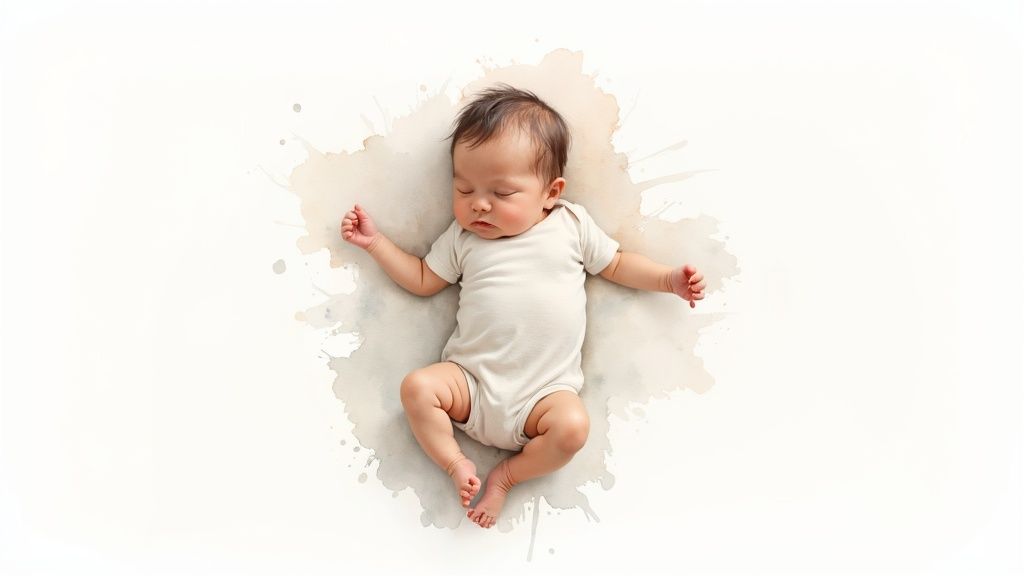
This one simple choice can have a ripple effect on their entire day. A baby snuggled in a silky-soft sleeper isn’t distracted by an itchy seam or a stiff collar. Instead, they can put all their energy into the really important work: growing, learning, and feeling secure.
It All Starts With Protecting Their Delicate Skin
A newborn's skin is unbelievably sensitive and prone to irritation. It's their first line of defense against the world, but it's still learning how to do its job. This is where soft baby clothing becomes a parent's best friend.
Stiff, synthetic, or scratchy fabrics can easily cause chafing and redness. For many little ones, this can trigger common skin conditions that leave them feeling fussy and uncomfortable.
Gentle, breathable fabrics act like a calm, soothing second skin. They wick away moisture and let air circulate, which helps maintain a healthy skin barrier and prevents the heat and sweat buildup that often leads to rashes.
This proactive approach to their comfort can make a huge difference, especially for babies with very sensitive or eczema-prone skin.
The Undeniable Link Between Comfort and Sleep
Every new parent knows that sleep is golden. A baby who is physically comfortable is far more likely to fall asleep faster and stay asleep longer. An annoying tag, a restrictive seam, or a fabric that traps heat can be just enough to jolt them awake.
Imagine trying to get a good night's rest in stiff, scratchy pajamas. You’d be tossing and turning all night. It’s the same for your baby. Soft, seamless sleepwear creates a peaceful environment that encourages deep, restorative sleep. And a well-rested baby often means a more rested and relaxed parent, too.
Here’s how soft fabrics help with a better night's sleep:
- Temperature Control: Materials like bamboo viscose and organic cotton are naturally breathable. This helps prevent your baby from overheating, a key factor for comfort and safe sleep.
- Keeps Them Dry: These amazing fabrics pull moisture away from the skin, keeping your little one dry and comfy, even on warmer nights.
- Room to Wiggle: Soft, stretchy sleepsuits let your baby move naturally in their sleep without feeling constricted.
Focusing on their comfort at night can help you establish healthier sleep patterns right from the start.
Helping Them Hit Milestones Without a Fight
From the tiniest newborn wiggles to their first attempts at rolling over, your baby is constantly learning about their body. The clothes they wear can either help or hinder this incredible journey of discovery.
Clothing made from stiff, restrictive fabrics can make it harder for them to kick their legs, bring their hands to their mouth, or push up during tummy time. These aren't just cute movements; they're essential for building muscle strength, coordination, and body awareness.
Soft, stretchy clothes are designed to move with your baby, giving them the freedom they need to explore. This allows them to hit those big developmental milestones without having to fight their outfit. By choosing comfort, you’re actively supporting their physical growth and encouraging their natural curiosity.
How to Shop for Soft Baby Clothing Like a Pro
Ready to start building that tiny wardrobe? This is one of the most exciting parts of getting ready for your baby. Let’s get into the practical details of finding the perfect soft baby clothing—pieces that are just as practical as they are adorable.
Think of this as your go-to guide. We'll cover smart sizing strategies, parent-approved design features that will save your sanity, and a simple seasonal guide to keep your baby cozy no matter the weather. Let’s make every shopping trip a success.
Finding the Perfect Fit for a Growing Baby
Let's talk about one of the biggest puzzles for new parents: baby sizes. They grow so fast. What fits perfectly one week is suddenly snug the next. The trick is to find that sweet spot between a safe fit and enough room to grow.
A great strategy is to buy a few essential items in the newborn size (usually for babies 5-8 lbs), but then stock up on the 0-3 month size. This way, you’re set for those first few weeks but have larger outfits ready for that inevitable growth spurt.
Here are a few tips to get the sizing just right:
- Trust Weight and Height More Than Age: Most brands list weight and height guides on their tags. Since every baby grows differently, these numbers are more reliable than the "months" label.
- Use the Two-Finger Rule: You should be able to slide two fingers comfortably between the fabric and your baby’s skin at the neck and cuffs. This little check ensures nothing is too tight.
- Look for Stretch: Fabrics with a little give, like bamboo viscose or cotton blends, are a new parent's best friend. They offer a more forgiving fit and move with your baby.
Parenting Pro-Tip: When in doubt, size up. A slightly looser outfit is much safer and comfier than one that’s too tight. They’ll grow into it before you know it.
Smart Designs That Make a Parent’s Life Easier
Those tiny, elaborate outfits are adorable for photos, but for day-to-day life, practicality is everything. The best soft baby clothing combines comfort for the baby with features that make your life easier. Anything that simplifies a 3 a.m. diaper change is a massive win.
Keep an eye out for these parent-approved features:
- Two-Way Zippers: This is a game-changer on sleepsuits. A zipper that opens from the bottom means you can change a diaper without completely undressing your baby, keeping them warm and less fussy.
- Envelope Necklines: Those overlapping flaps on the shoulders of a bodysuit aren't just for looks. They’re designed so you can pull the garment down over your baby's body instead of up over their head—a lifesaver during a messy blowout.
- Snap Closures: Look for snaps along the inseam of pants and one-pieces. They give you quick access for diaper changes and are often more secure than fiddly buttons.
These simple details can make a huge difference in your daily routine, saving you time and frustration.
Dressing Your Baby for the Seasons
Babies aren't great at regulating their own body temperature, so dressing them for the weather is key. The golden rule is to dress your baby in one more thin layer than you would wear to be comfortable yourself.
Here’s a quick guide to layering with soft, breathable fabrics:
For Cooler Months (Autumn/Winter):
- Base Layer: Start with a soft, long-sleeved bodysuit made from something breathable like organic cotton.
- Middle Layer: Add a pair of soft footed pants or a cozy cardigan. A fleece sleepsuit over the top works great, too.
- Outer Layer: When heading outside, a pram suit or warm bunting is perfect. And don’t forget a soft hat and mittens!
For Warmer Months (Spring/Summer):
- Keep it Light: Often, a single layer is all they need. Think a short-sleeved bodysuit or a lightweight romper made from breezy bamboo viscose or muslin.
- Sun Protection: A wide-brimmed sun hat is a must for any time spent outdoors.
- Cool Nights: Even summer evenings can get chilly. It’s always smart to have a lightweight, long-sleeved sleepsuit or a muslin swaddle blanket ready for bedtime.
Once you master the art of layering with soft, breathable fabrics, shopping for soft baby clothing becomes much easier. You’ll know exactly what to look for to keep your little one happy, comfortable, and safe.
Keeping Your Baby’s Clothes Soft and Cuddly, Wash After Wash
You’ve found the most perfect, gentle outfits for your little one. Now, how do you keep that incredible softness from fading after the inevitable cycle of wear, spit-up, and wash? It’s easier than you think. With a few simple tweaks to your laundry routine, you can protect those delicate fabrics and keep every piece of soft baby clothing as cozy as the day you bought it.
The laundry basket fills up at lightning speed with a baby in the house. The goal here isn't to add complicated steps to your busy day. It’s about making small adjustments that protect the fabric, your baby’s skin, and the investment you've made in their comfort.
Choosing the Right Detergent
Long-lasting softness starts with your detergent. A baby’s skin is sensitive and absorbent, so it's best to avoid the harsh chemicals, dyes, and strong perfumes in many standard detergents. These ingredients can damage delicate fabrics and, more importantly, can irritate your baby's skin.
Instead, look for detergents that are:
- Hypoallergenic and Fragrance-Free: These are designed to be kind to sensitive skin.
- Plant-Based: Many plant-derived formulas clean clothes effectively without relying on harsh, synthetic chemicals.
- Labeled 'Free & Clear': This is a reliable sign that the product is free from common irritants like dyes and scents.
A gentle detergent gets the job done on messes while preserving the soft feel of materials like organic cotton and bamboo.
The Gentle Cycle Is Your Best Friend
It can be tempting to use a heavy-duty cycle, especially after a messy day. But that intense agitation is tough on delicate fibers, causing them to wear down and lose their soft texture over time. A gentler touch is always better.
For the softest results, make a cold water wash on the delicate or gentle cycle your default. Cold water is less abrasive on fabric, helps prevent shrinking and fading, and works just as well on everyday grime when you're using the right detergent.
For an extra layer of protection, pop delicate items into a mesh laundry bag. This simple trick stops them from getting snagged on zippers or snaps from other clothes in the wash, keeping them looking new for longer.
Tackling Stains Without Harsh Chemicals
Spit-up and diaper blowouts are rites of passage in babydom. Before you reach for a conventional stain remover, try a gentler approach first. You’ll be surprised how well it works.
For most common stains, a simple pre-treatment is all you need. Mix a small amount of your baby-safe detergent with a little water to form a paste. Gently work it into the stain and let it sit for 15-30 minutes before washing. For stubborn spots, a quick soak in cold water can help loosen the stain before it sets. It's a simple, effective method that's much kinder to the fabric and your baby's skin.
Choosing Sustainable Fabrics for Your Baby and the Planet
As a new parent, you're constantly making choices to build a beautiful future for your little one. This extends to the tiny clothes they wear. Choosing sustainable, soft baby clothing is a simple act of love that nurtures both your baby and the planet they'll grow up in.
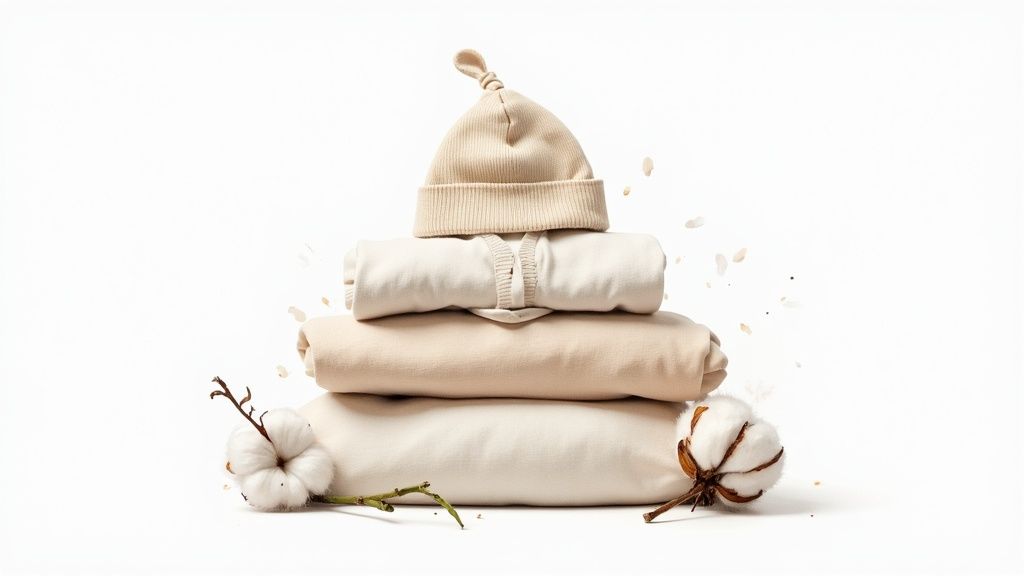
This idea of conscious parenting is growing. More parents are looking for healthier, more responsible options, and the demand for organic and eco-friendly fabrics is rising because of it. You can see just how much this is changing things in these baby clothing statistics.
What Makes a Fabric Sustainable?
"Sustainable" might sound like a big word, but it boils down to simple, kind ideas. It’s about choosing fabrics grown and made with respect for the earth and its resources.
Here’s what that means:
- Eco-Friendly Farming: Materials like organic cotton are grown without synthetic pesticides or fertilizers, which is better for the soil, water, and farmers.
- Water Conservation: Many sustainable practices use much less water. Bamboo, for instance, grows incredibly fast and requires very little irrigation.
- Safe and Responsible Manufacturing: This is about making textiles without harmful chemicals. It often involves "closed-loop" systems where water and solvents are recycled instead of being dumped into the environment.
Picking fabrics made this way is a small but powerful vote for a healthier planet.
When you choose a GOTS-certified organic cotton onesie, you’re not just buying a piece of clothing. You’re supporting a system that prioritizes clean water, healthy soil, and safe working conditions for farmers.
Your Choices Create a Ripple Effect
Every time you choose a sustainable outfit, you’re starting a positive ripple effect. It may seem small, but you’re helping to reduce the clothing industry’s environmental footprint and sending a clear message that parents value quality and accountability. It's an investment in a cleaner world for all our children.
By making these thoughtful choices, you can be sure the soft baby clothing touching your little one’s skin is pure, gentle, and made with care. If you want to dive deeper, check out our guide on finding the best organic baby clothes brands.
One soft, thoughtfully made outfit at a time, you're helping build the kind of future we all want for our kids.
Answering Your Top Questions About Soft Baby Clothes
Stepping into parenthood means having a million new questions. That's totally normal! When it comes to picking out the best soft baby clothing, you deserve clear, simple answers so you can feel confident in your choices. We've rounded up some of the most common questions we hear from parents just like you.
How Can I Tell if a Fabric Is Truly Soft When Shopping Online?
This is a tricky one! Since you can't touch the material, the secret is to become a label detective. Look for specific descriptions like "100% GOTS-certified organic cotton" or "95% bamboo viscose." Those aren't just buzzwords; they're your best clue that you're looking at a high-quality, gentle fabric.
Your next best friend is customer reviews. Search for keywords like "soft," "texture," "gentle," or even "wash." You'll find honest feedback from other parents on how the clothes felt and—just as important—how they held up in the laundry.
Is Organic Baby Clothing Really Worth the Extra Cost?
For many families, the answer is a big yes. That slightly higher price isn't just for a label; it’s for the peace of mind that comes from knowing the fabric was made without harsh chemicals, pesticides, or synthetic fertilizers. This is so important for a baby’s delicate skin, especially if your little one is prone to eczema or irritation.
Think of it as an investment in your baby's daily comfort. Plus, organic clothes are often more durable and stay soft wash after wash. They're built to last, making them perfect to pass down to siblings or friends.
What Is the Best Soft Fabric for Hot Weather?
When the weather gets warm, it's all about breathability. For hot, sticky days, bamboo viscose is an absolute star. It's naturally temperature-regulating and does an incredible job of wicking moisture away from the skin, which helps prevent heat rash.
Lightweight organic cotton, especially in an airy muslin weave, is another fantastic choice. It lets air flow right through, keeping your baby from feeling clammy. As a general rule, try to avoid synthetics like polyester, which can trap heat and make your little one sweat.
Your baby's comfort in different climates often comes down to the fabric's ability to breathe. Natural fibers like bamboo and cotton are designed by nature to help regulate temperature, making them reliable choices for any season.
How Many Soft Outfits Does a Newborn Really Need?
Newborns are tiny mess-making machines! Between spit-up and diaper leaks, you'll be surprised how many outfits you go through in a day. You don't need a huge wardrobe, but having a good rotation will save you a lot of stress.
Here’s a practical starting point:
- 5-7 soft sleepsuits: Ones with two-way zippers are a lifesaver for night changes.
- 5-7 soft bodysuits: These are the workhorse of a baby's wardrobe—perfect for layering.
- A few pairs of soft pants: Easy to pull on and off for quick changes.
- A couple of cozy cardigans or sweaters: For when you need one more layer of warmth.
This amount means you’ll always have a fresh, clean, and soft outfit ready to go without constantly doing laundry.
At Mimou Babywear, we believe every baby deserves to be wrapped in the softest, safest materials from day one. Our collection is thoughtfully designed to bring comfort to your little one and peace of mind to you. Come explore our timeless, cozy pieces at https://mimoubabywear.com.