


Autumn is one of the trickiest seasons to dress a baby for: crisp mornings, mild afternoons, cool evenings, and heated indoors, often all in one day. The secret isn't a wardrobe full of heavy coats — it's smart layering you can add and remove as the temperature swings. Here's how to dress your baby for fall so they stay comfortable from the morning walk to the evening wind-down.
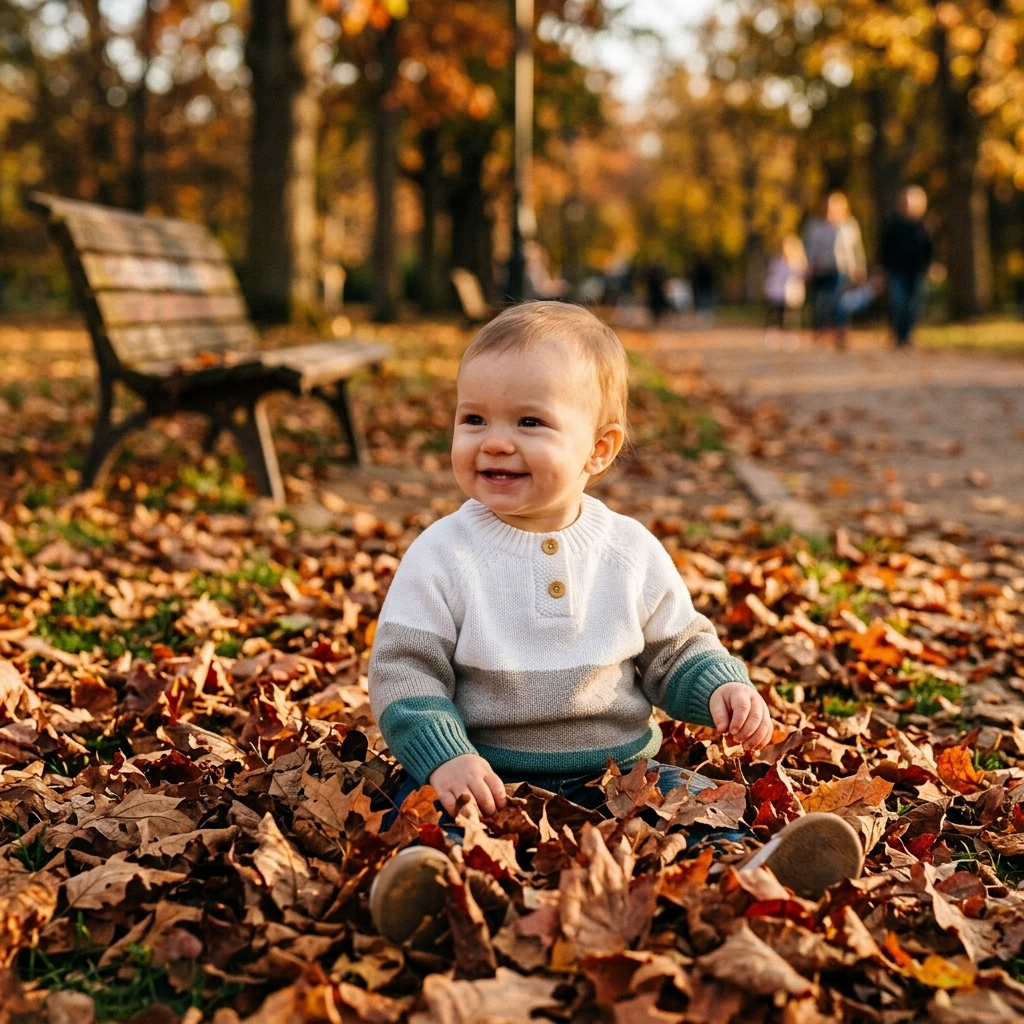
The golden rule: dress in layers
Rather than one thick garment, use two or three thinner ones. Layers trap warmth more effectively and — crucially — let you adjust as the day changes: peel one off in a warm shop or heated car, add it back for the walk home. A good rule of thumb is to dress your baby in one more light layer than you're wearing.
Start with a soft base layer
The layer against your baby's skin should be soft and breathable — a cotton bodysuit or onesie is ideal. Breathability matters even in cool weather, because it wicks moisture and helps prevent overheating when you move between cold outdoors and warm indoors. Natural fibres are your friend here; our organic cotton baby clothes and breathable muslin both make excellent base layers.
Add a cozy mid layer
This is the heart of a fall outfit: a soft knit sweater, pullover, or cardigan that adds warmth and is easy to take on and off. Cardigans and front-open styles are especially practical because you can remove them without a full outfit change.
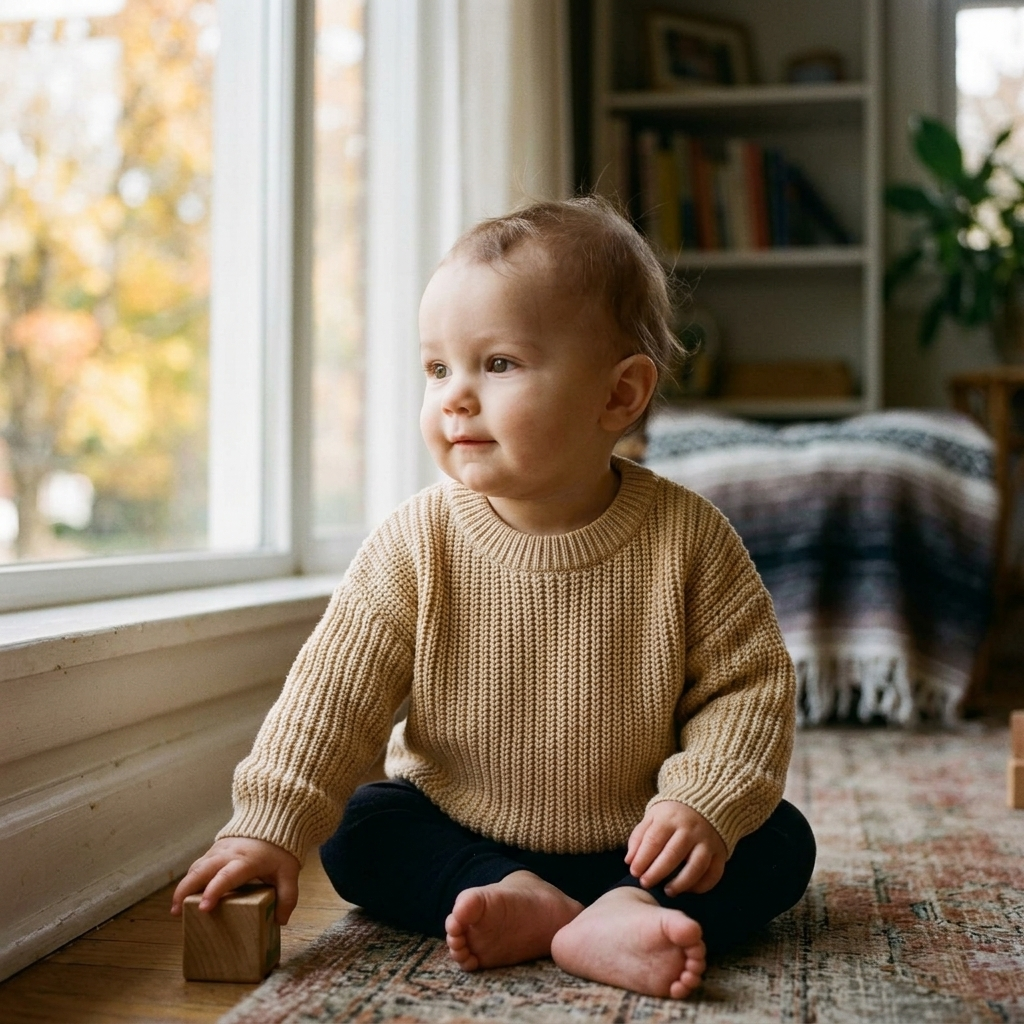
Soft knits like our Modern Color-Block Pullover and Premium Everyday Knit Sweater are exactly the kind of cozy, easy mid-layer autumn calls for — warm enough for cool days, light enough to layer without bulk.
Top with an outer layer when it's cold
For chilly mornings, wind, or light rain, add a light jacket or pramsuit over the top. Keep it easy to remove, since your baby won't need it indoors or in the car — which brings us to an important safety note.
Don't forget the extremities
Babies lose heat quickly through their head, hands, and feet. A soft hat, warm socks, and booties or pram shoes make a big difference on cold days — often more than another bulky layer on the body.
The overheating balance
Layering cuts both ways: it's just as important not to over-bundle. Overheating is a real risk, especially indoors and during sleep. Check your baby's temperature by feeling the back of the neck or chest (not hands and feet, which are naturally cooler), and remove a layer if they feel warm or damp. For sleep, never over-layer — follow safe-sleep guidance and use a suitable sleep sack rather than piling on blankets (see our baby clothes safety guide).
A quick word on car seats
Bulky coats and snowsuits shouldn't be worn under car seat straps — they compress in a crash and leave the harness too loose. Dress your baby in thinner layers, buckle them in, then tuck a blanket or the coat over the top for warmth.
How many fall pieces do you need?
Fewer than you'd think — a handful of base layers, two or three knits, one good jacket, and warm accessories will cover most of the season. Babies grow fast, so resist over-buying (our guide to how many baby clothes you really need helps).
Frequently asked questions
How do I know if my baby is too hot or cold? Feel the back of the neck or chest — warm and dry is just right, sweaty means too hot, cool means add a layer. Hands and feet are naturally cooler and aren't a reliable guide.
How many layers should a baby wear in fall? Generally one more light layer than an adult would wear in the same conditions, adjusted up or down as the day changes.
What should my baby wear for autumn naps? A base layer plus an appropriate-tog sleep sack is usually ideal — avoid loose blankets and over-layering.
The bottom line
Dressing your baby for fall is all about flexible layers: a soft, breathable base, a cozy knit mid-layer, and an outer layer for the cold — plus a hat and warm feet, and a careful eye on overheating. Get the layering right and your baby stays comfortable through every one of autumn's mood swings, without a closet full of heavy coats.