


Baby clothes are made to be adorable — but a few design details are about more than looks. Small parts, drawstrings, and the wrong fit can carry real safety risks for babies. The good news is that once you know what to look for, safe shopping becomes second nature. Here's a practical guide to what to choose and what to avoid.
Watch for choking hazards
Anything small enough to come loose and reach a baby's mouth is a concern. When you're checking a garment:
- Avoid loose or decorative small parts — buttons, beads, sequins, pom-poms, and appliqués that could detach.
- Tug-test fastenings — snaps and buttons should be firmly attached with no wobble.
- Snip stray threads — loose threads can wrap tiny fingers and toes.
- Skip anything with tiny embellishments on newborn pieces, where simpler is safer.
Say no to cords, ties, and drawstrings
Drawstrings around the neck or hood are a strangulation risk and are best avoided entirely on baby clothes — safety guidelines specifically warn against them. Give long ribbon ties, waist cords, and anything that could wrap or catch a miss too. If a piece you love has a decorative cord, remove it before your baby wears it.
Choose safe, simple fastenings
The easiest fastenings are also the safest. Snaps and smooth zips let you dress and change your baby without tugging anything over their head, and they keep everything secure. Look for zips with a chin guard at the top to protect delicate skin, and snap plackets that line up cleanly.
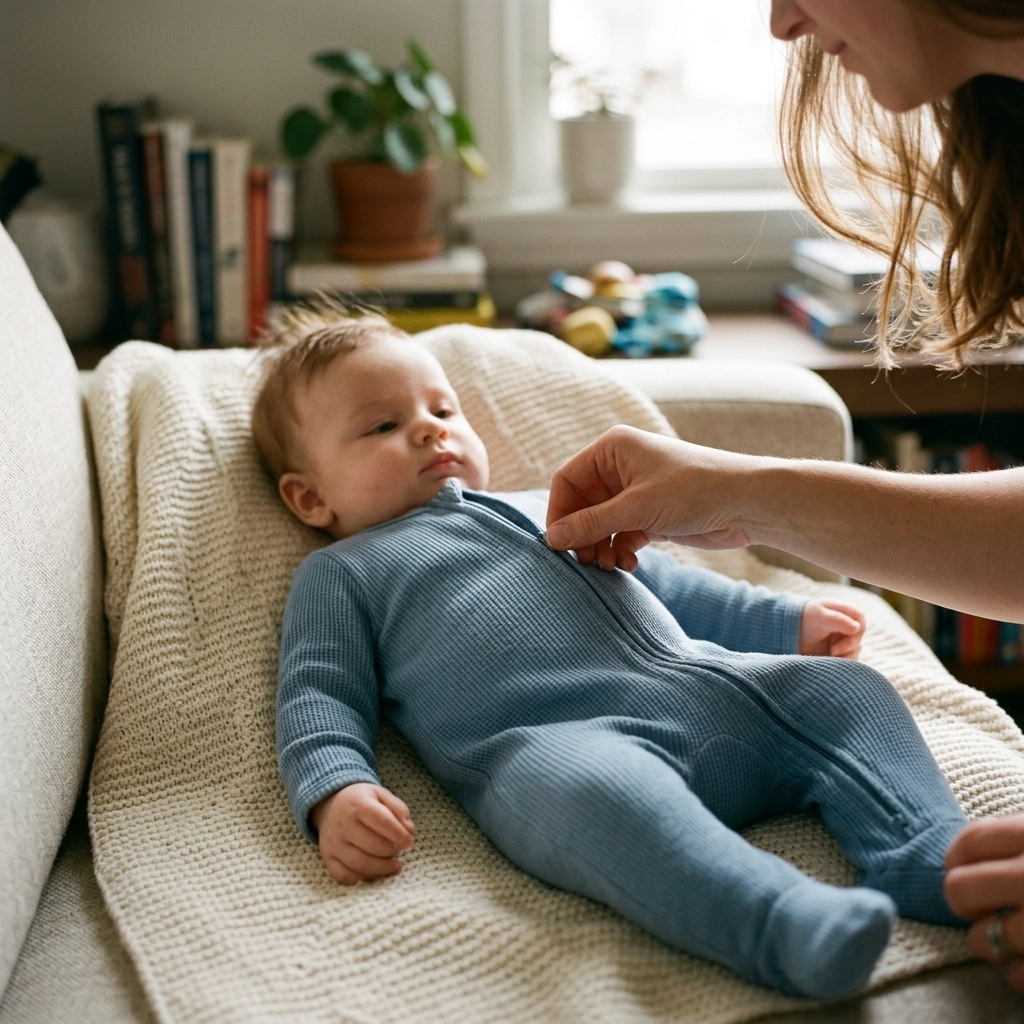
A footed sleepsuit with a smooth two-way zip, like our Organic Waffle Zip-Up Sleepsuit, is a lovely example of safe, simple design — no small parts, easy to fasten, and quick for those middle-of-the-night changes.
Get the fit right — especially for sleep
Fit matters for safety, not just comfort. Clothes that are too big can bunch up near a baby's face; clothes that are too tight restrict movement and circulation. For sleepwear in particular, a snug (not tight) fit is safest, and loose blankets, hoods, and bulky layers should stay out of the crib for young babies. If you're weighing sleepwear options, our guide to footed pajamas vs sleep sacks breaks it down.
Think about fabric and skin
Safe clothing is also gentle clothing. Choose soft, breathable natural fabrics that won't overheat or irritate delicate skin, avoid rough seams and scratchy tags, and always wash new clothes before the first wear to remove any manufacturing residue. For more on this, see our guide to the best baby clothes for sensitive skin.

Our Feather-Soft Cotton Sleepsuit is a simple, gentle choice — soft breathable cotton with easy snap fastening and nothing to irritate or catch.
A note on comfort objects and toys
Soft toys and loveys are wonderful, but they shouldn't share the crib with babies under 12 months. For the safe age and how to introduce one, see our guide to when your baby can safely sleep with a lovey.
Your quick baby-clothes safety checklist
- No loose small parts — buttons, beads, bows, or appliqués that could detach.
- No neck or hood drawstrings, and no long ties.
- Firmly attached snaps and smooth zips with a chin guard.
- A snug (not tight) fit, especially for sleepwear.
- Soft, breathable fabric with flat seams and no scratchy tags.
- Washed before the first wear.
Frequently asked questions
Are buttons safe on baby clothes? Only if firmly attached — snaps are generally safer, and loose or decorative buttons are best avoided on the youngest babies.
Are drawstrings allowed on baby clothes? Neck and hood drawstrings should be avoided entirely due to strangulation risk; remove any decorative cords before wear.
Should baby sleepwear be tight? It should be snug but not tight — close-fitting sleepwear is safest, without bunching fabric that could cover the face.
The bottom line
Safe baby clothes come down to a few simple habits: skip small loose parts and drawstrings, choose secure snaps and smooth zips, get the fit snug but comfortable, and pick soft, breathable fabrics you wash before wearing. Keep those in mind and you can shop for adorable outfits with total peace of mind.