


Dressing a baby for cold weather brings a knot of competing worries: too cold and they're miserable and unsettled, too warm and you've created the overheating risk that safe-sleep guidance warns about. Add a car seat to the mix — where the wrong winter clothing is genuinely unsafe — and a simple question (“what do I put on the baby?”) gets surprisingly layered. The good news: a few clear principles make winter dressing straightforward and safe. Here's how to keep your baby warm, comfortable, and protected through the cold months.
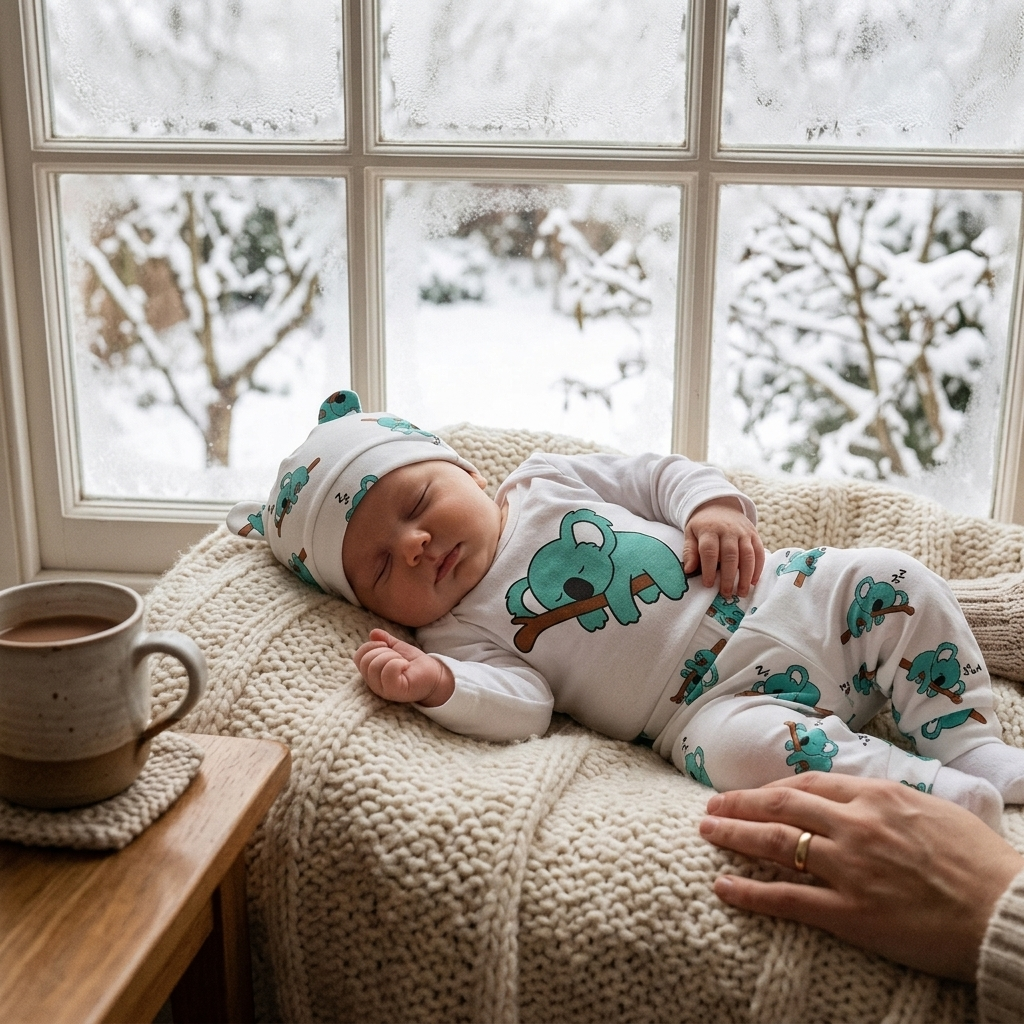
The Golden Rule: Layers, Not Bulk
The single most useful principle for winter is layering. Several thin layers trap warm air between them and, crucially, can be added or removed as you move between a cold outdoors and a heated indoors, shop, or car. A baby who's bundled into one thick snowsuit can't be adjusted — and goes from cold to overheated the moment you step inside. A practical layering approach:
- Base layer: A soft cotton bodysuit or long-sleeve vest against the skin.
- Mid layer: A long-sleeve sleepsuit, romper, or a top and trousers.
- Warm layer: A cardigan, knit, or fleece for added warmth.
- Outer layer: A coat, pramsuit, or jacket for outdoors — removed once inside.
A useful rule of thumb: dress your baby in one more layer than you're comfortable wearing in the same conditions.
Don’t Forget the Extremities
Babies lose a lot of heat through their head, hands, and feet, and these need particular attention in the cold:
- Hat: A soft, warm hat that covers the ears for outdoors (but remove it indoors and for sleep to avoid overheating).
- Mittens: To keep little hands warm — scratch mittens or proper warm mittens depending on age.
- Warm socks or footed sleepsuits: Footed designs keep feet covered without socks slipping off.
- A pram footmuff or blanket: For outings in the pram (not the car seat — see below).
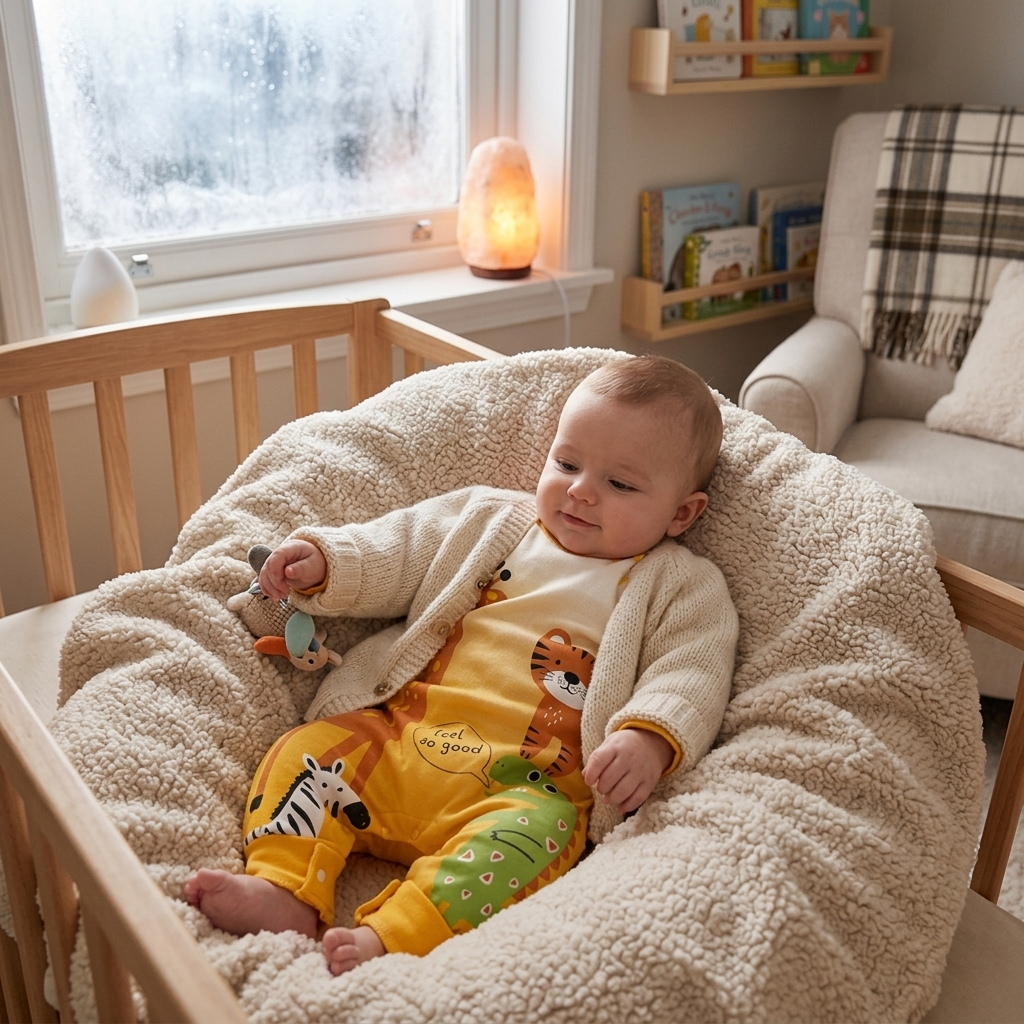
The Car Seat Rule Every Parent Must Know
This is the most important winter safety point, and it's counter-intuitive: a baby should never wear a thick coat, snowsuit, or bulky padding under the car seat harness. In a crash, that bulky padding compresses instantly, leaving the harness far too loose to restrain the baby safely — a serious, well-documented risk. The safe method:
- Dress baby in thin, warm layers (e.g. a sleepsuit and a thin fleece).
- Buckle the harness snugly against the body — you shouldn't be able to pinch slack at the shoulder.
- Add warmth over the buckled harness — a coat put on backwards over the straps, a blanket, or a car-seat-specific cover that doesn't go under the back or straps.
Keep the puffy snowsuit and footmuff for the pram, never the car seat.
How to Check If Baby Is Warm Enough
Hands and feet naturally run cool and aren't a reliable guide. Instead, feel the back of the neck or the chest — it should be comfortably warm, not sweaty or cold. Signs a baby is too hot include damp hair, sweating, and flushed cheeks; if you spot these, remove a layer. Because you can adjust layers, it's easy to get right — which is exactly why layering beats one thick suit.
Indoors and Sleep in Winter
- Indoors: Heated homes are warm — baby usually needs no more than you'd wear, often just a bodysuit and a layer. Remove hats and coats inside.
- Sleep: Keep the room at a comfortable 16–20°C, use a sleep sack of an appropriate TOG rating rather than loose blankets, and don't over-layer. Our baby sleepwear guide covers winter sleep dressing in detail.
The Bottom Line
Winter dressing comes down to adjustable layers rather than bulk, warm extremities for outdoors, thin layers plus a snug harness (warmth over the top) in the car seat, and a regular warmth check at the back of the neck. Master those and your baby stays cozy, comfortable, and safe all winter — indoors and out.
For the warm cotton base layers every winter wardrobe starts with, browse our collections, and see our sleepwear guide for safe winter sleep. This article is general information, not medical advice — follow your paediatrician's guidance for your baby.