


You've spent weeks establishing breastfeeding, and now — because of returning to work, a night out, sharing feeds with a partner, or simply wanting the option — you need your baby to take a bottle. So you offer one, full of your own expressed milk, expecting mild interest. Instead your baby looks at the bottle teat as though you've offered them something deeply offensive, clamps their mouth shut, and turns away. Welcome to one of the most common and underestimated challenges of the feeding journey: the breastfed baby who refuses the bottle. The good news is that with the right timing and approach, the large majority get there. Here's how.
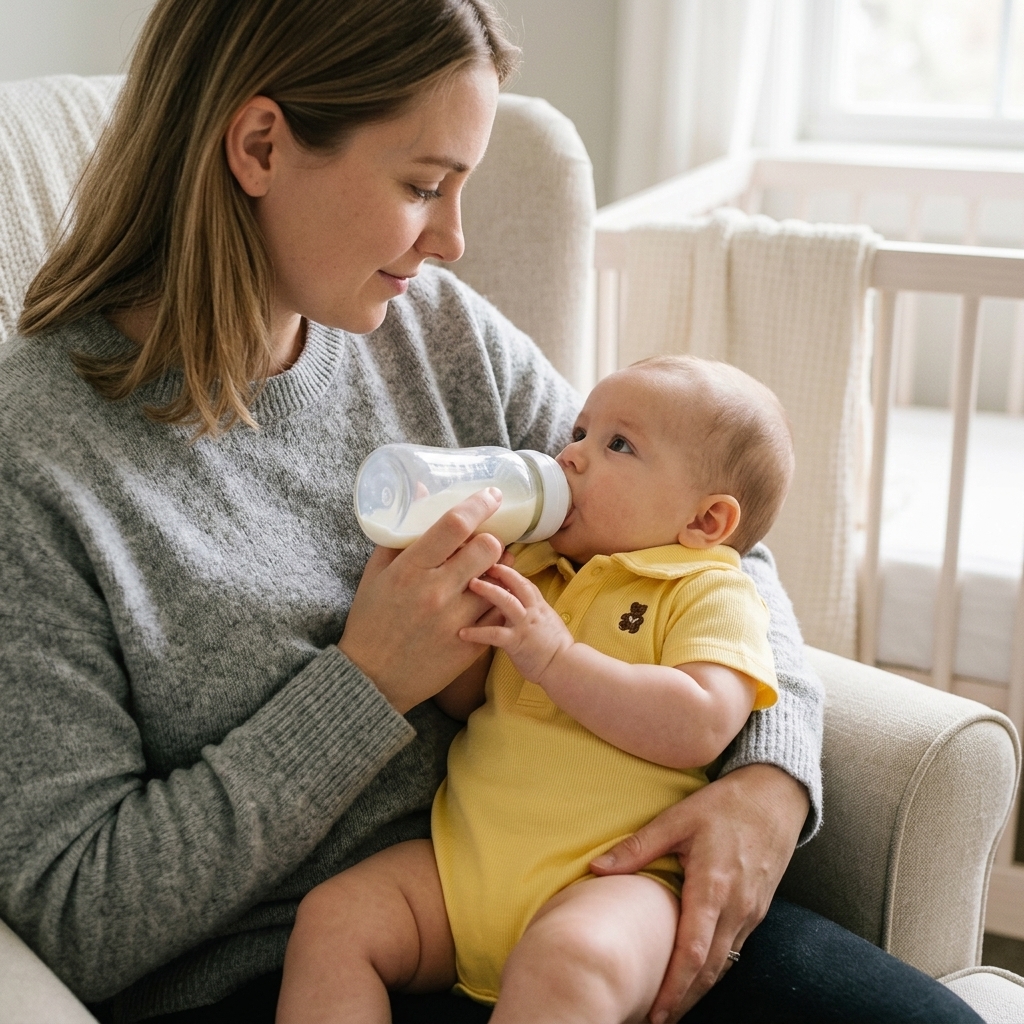
The Most Important Factor: Timing
Get the timing right and much of the rest follows. There's a window that works best for introducing a bottle to a breastfed baby:
- Not too early: Most lactation experts suggest waiting until breastfeeding is well established — usually around 3–4 weeks — so that latch and supply are solid and a bottle won't undermine them.
- Not too late: This is the trap many families fall into. Babies become more set in their preferences as they get older, and a baby introduced to a bottle for the first time at, say, 3–4 months can be far more resistant than one who had occasional bottles from 4–6 weeks. If you know you'll need bottles eventually (for work, for example), introducing them in the 4–6 week window and keeping them in regular rotation prevents later refusal.
- The sweet spot: Establish breastfeeding first, then introduce a bottle around 4–6 weeks, offering one a few times a week to keep the skill alive.
Who Should Offer the First Bottle?
Here's a counterintuitive tip that helps enormously: have someone other than the breastfeeding parent offer the bottle, at least at first. Babies associate their breastfeeding parent with the breast — they can often smell the milk — and may flatly refuse a bottle from them while accepting one from a partner, grandparent, or carer. It often helps if the breastfeeding parent is out of the room, or ideally out of the house entirely, for early attempts.
Step by Step: Introducing the Bottle
- Choose a calm, happy moment: Offer the bottle when baby is content and only mildly hungry — not frantic. A starving, upset baby won't experiment with a new skill. Catch them in a good mood, perhaps an hour after a feed.
- Use a slow-flow teat: Start with the slowest-flow teat to mimic the effort of breastfeeding and prevent overwhelming the baby with fast milk. A flow that's too fast can cause gulping, gagging, and refusal.
- Warm the milk to body temperature: Breast milk comes out warm. Offering it at body temperature (around 37°C) makes the bottle more familiar and acceptable.
- Try paced bottle feeding: Hold baby in a more upright, semi-reclined position and keep the bottle close to horizontal so milk flows only when baby actively sucks. This mimics breastfeeding, prevents overfeeding, and keeps baby in control of the pace.
- Let baby draw the teat in: Touch the teat to their lips and let them open and take it in themselves rather than pushing it in — just as they root and latch at the breast.
- Don't force it: If baby gets upset, stop, comfort them, and try again later. Forcing the bottle creates negative associations that make future attempts harder. Patience beats pressure every time.
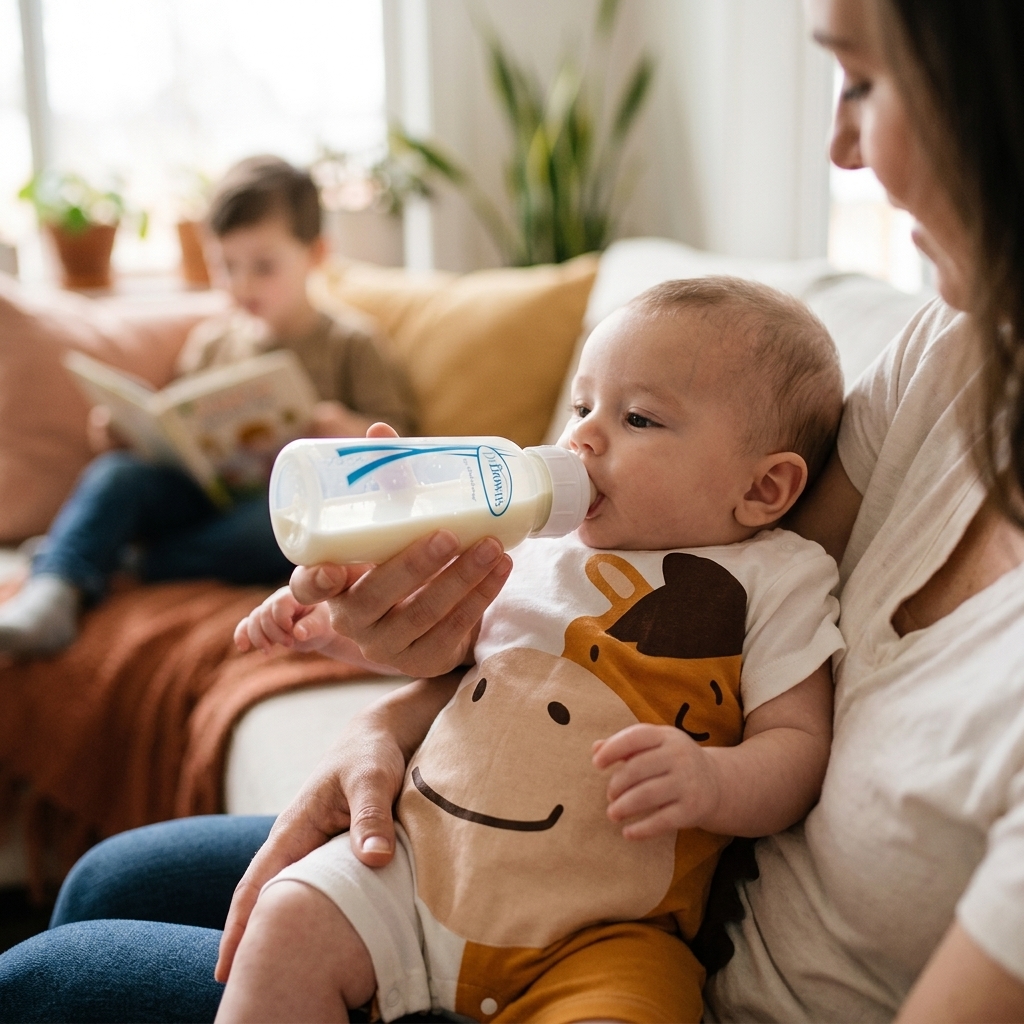
If Baby Still Refuses: Troubleshooting
- Experiment with teats: Babies have preferences. If one teat is rejected, another shape or material (silicone vs latex, wider vs narrower base) may be accepted. It can take trying two or three.
- Try different positions: Some babies take a bottle better when held facing outward, or while gently rocking or walking, rather than in the cradle position they associate with breastfeeding.
- Offer when drowsy: A baby who's relaxed and half-asleep — just waking from a nap, for instance — may accept a bottle they'd refuse when fully alert and opinionated.
- Try the milk temperature warmer or cooler: A few babies (especially when teething) prefer slightly cooler milk.
- Don't offer for too long in one go: Repeated long battles entrench refusal. Short, low-pressure attempts a couple of times a day work better than one long stressful session.
- Be patient over days, not hours: It can take a week or two of gentle daily attempts. Consistency without pressure is the formula.
A Note on Nipple Confusion
The long-standing worry about "nipple confusion" — that a bottle will make a baby reject the breast — is more nuanced than once thought. While it's sensible to wait until breastfeeding is established before introducing a bottle, many babies switch comfortably between breast and bottle without issue. Paced bottle feeding with a slow-flow teat (as above) reduces any risk by keeping the bottle experience closer to breastfeeding in effort and pace. If you have concerns specific to your baby, a lactation consultant is the best resource.
Keeping Both Going
Once your baby accepts a bottle, keep the skill alive by offering one regularly — a few times a week — even if you don't strictly need to. Babies who go weeks without a bottle often "forget" and refuse again, which is a particularly stressful discovery the week before returning to work. A little maintenance prevents that.
This is also a key part of preparing for childcare — if your baby will be starting daycare, having bottle-feeding well established beforehand removes a major source of first-week stress. Our daycare readiness guide covers the wider transition, and for supply questions while combining breast and bottle, see our milk supply guide.