


The first daycare drop-off is one of those parenting milestones nobody quite prepares you for emotionally. You've toured the rooms, packed the bag, labelled everything — and then you're standing at the door handing over the small person you've barely been apart from, trying to keep your face composed while a carer you met twice gently takes them. Whether your baby cries or doesn't, whether you cry or don't, it lands harder than expected. Here's an honest look at when babies start daycare, how to know they're ready, and how to make the transition as smooth as it can be — for both of you.

When Do Babies Typically Start Daycare?
There's no single right age — it depends almost entirely on family circumstances, particularly the length of parental leave, which varies enormously between countries. In practice, the common starting points are:
- Around 3 months: In countries with shorter parental leave (the US in particular), many babies start around the 12-week mark when leave ends. Infant rooms are set up for this age.
- 6–12 months: A very common window as longer leave periods end. Babies are more interactive but separation anxiety is building (more on that below).
- 12 months+: Where leave or family arrangements allow, some families wait until after the first year.
There is no developmental requirement that a baby reach a certain age before daycare — quality infant care supports babies from very young. The "right" age is the one that fits your family's situation.
The Separation Anxiety Factor
One genuinely useful piece of developmental timing to understand: separation anxiety typically emerges around 6–8 months and peaks between 8 and 18 months. This is the period when babies have developed object permanence — they understand you still exist when you leave, and they protest it.
This doesn't mean you can't or shouldn't start daycare during this window — millions of families do, successfully. But it helps to know that a baby starting at, say, 9 months may show more distress at drop-off than one who started at 4 months, simply because of where they are developmentally. It's not a sign you've done something wrong or chosen the wrong place. Our separation anxiety guide explains the why and how to ease it.
Signs of Readiness (Yours and Theirs)
Babies don't show "readiness" for daycare the way they show readiness for solids — they adapt to good care at almost any age. The readiness that matters most is practical and emotional preparation:
- A feeding rhythm the daycare can support: Whether breast, bottle, or starting solids, having a feeding pattern the carers can continue helps. If introducing a bottle to a breastfed baby, start well before the first day.
- Some predictability to naps: Daycare can work with any schedule, but a baby with a rough nap rhythm settles more easily into the day's flow. Our nap schedule guide helps here.
- You've visited and trust the place: Your own confidence transmits to your baby. Babies read parental emotion acutely — a calm, confident goodbye is one of the most powerful tools you have.
How to Make the Transition Smoother
Before the First Day
- Do a phased start if possible: Many good daycares offer settling-in sessions — an hour together, then a short solo stretch, building up over a week or two. This graduated exposure is the single most effective way to ease the transition.
- Practice short separations at home: Leaving baby with a grandparent or friend for short, positive stretches builds the experience that you always come back.
- Send something familiar: A comfort object or a muslin that smells of home (where the daycare's safe-sleep policy allows) can be reassuring for older babies.
The Goodbye Itself
- Always say goodbye — never sneak out: Slipping away while baby is distracted seems kinder but teaches them you can vanish without warning, which increases anxiety. A brief, warm, confident goodbye ritual is better, even if it prompts tears.
- Keep it short and consistent: A long, anguished goodbye amplifies distress. The same quick ritual each day — a kiss, a phrase, a wave — gives predictability.
- Trust the carers and leave: Most babies settle within minutes of the parent leaving. Lingering prolongs it. It's completely fine to ask the daycare to text you once they've settled — good ones expect this.
What to Pack for Daycare
- Enough nappies and wipes for the day (plus a few extra)
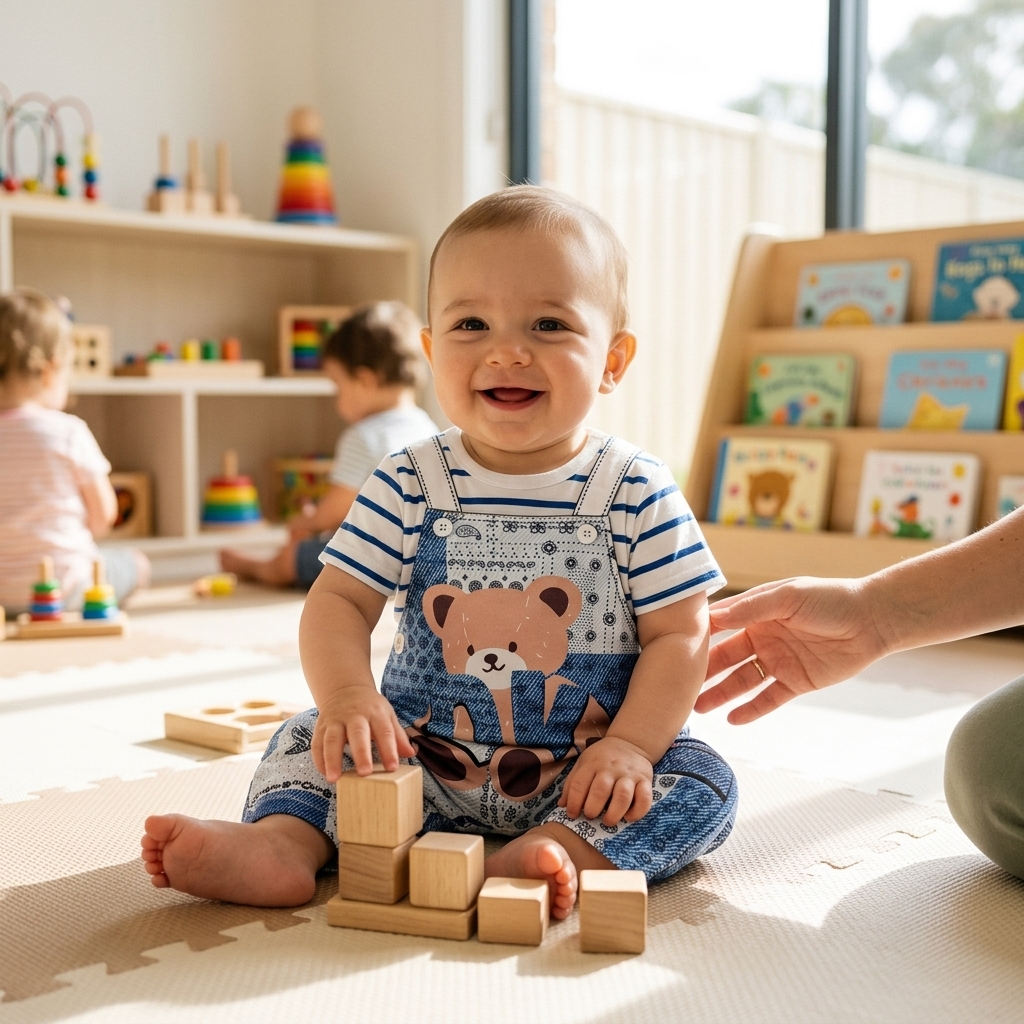
- At least two full changes of clothes — daycare days mean meals, messes, and play. Easy-on, easy-off outfits with simple fastenings save carers time and baby fuss
- Labelled bottles and any expressed milk or formula, per the daycare's storage rules
- A labelled comfort item if used
- Spare muslins, a sun hat in summer, and any weather-appropriate layers
- Everything labelled with baby's name — lost-property bins at daycares are legendary
Practical, washable, comfortable clothing makes daycare days easier — outfits that move with an active baby and survive repeated washing at higher temperatures. Save the delicate or fiddly pieces for home; daycare is for clothes that work as hard as the baby does. See our washing guide for keeping everyday pieces in rotation.
Looking After Yourself Too
The guilt and worry of the early daycare weeks are real and widely felt — and they almost always ease. Babies in quality care develop social skills, resilience, and rich stimulation, and the research on good-quality childcare is broadly reassuring. The tears at drop-off (theirs and yours) typically fade within the first couple of weeks as the new routine becomes familiar and your baby builds a bond with their carers. Be gentle with yourself through the adjustment; it's a transition for the whole family, not just the baby.
For the developmental context around this age, see our guides on separation anxiety and first-year milestones.