


Baby clothes have a way of taking over. Between gifts, hand-me-downs, and the sheer number of sizes a baby cycles through in a year, drawers overflow fast — and half the time you can't find the right size in the right season when you need it at 3am. A little organisation turns that chaos into a system that saves you time, money, and stress. Here's how to organise and store baby clothes so everything's easy to find and nothing gets wasted.
Start by Sorting Everything by Size
The single most useful thing you can do is group all baby clothes by size. Babies move through sizes so quickly that a drawer mixing newborn, 0–3, and 3–6 month pieces is a recipe for frustration — and for finding lovely outfits only after they no longer fit. Sort everything into size groups first, then store the current size within easy reach and the next sizes up labelled and put away (see our size chart to know what's what).
The Best Ways to Store Baby Clothes
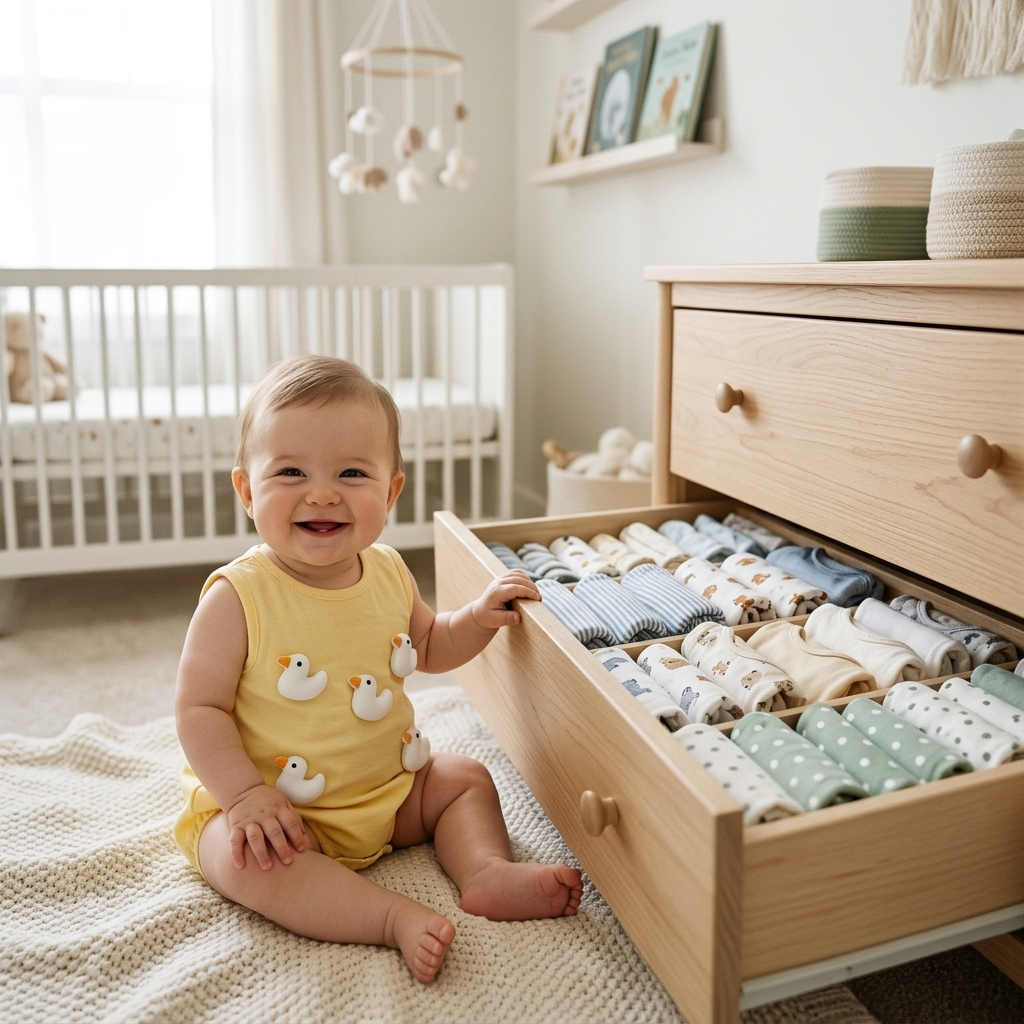
- File-fold in drawers: Fold items into small rectangles and stand them upright in rows rather than stacking. You see every piece at a glance and pull one out without unravelling the pile — a game-changer for baby drawers.
- Drawer dividers: Separate bodysuits, sleepsuits, trousers, and accessories into their own sections so everything has a home.
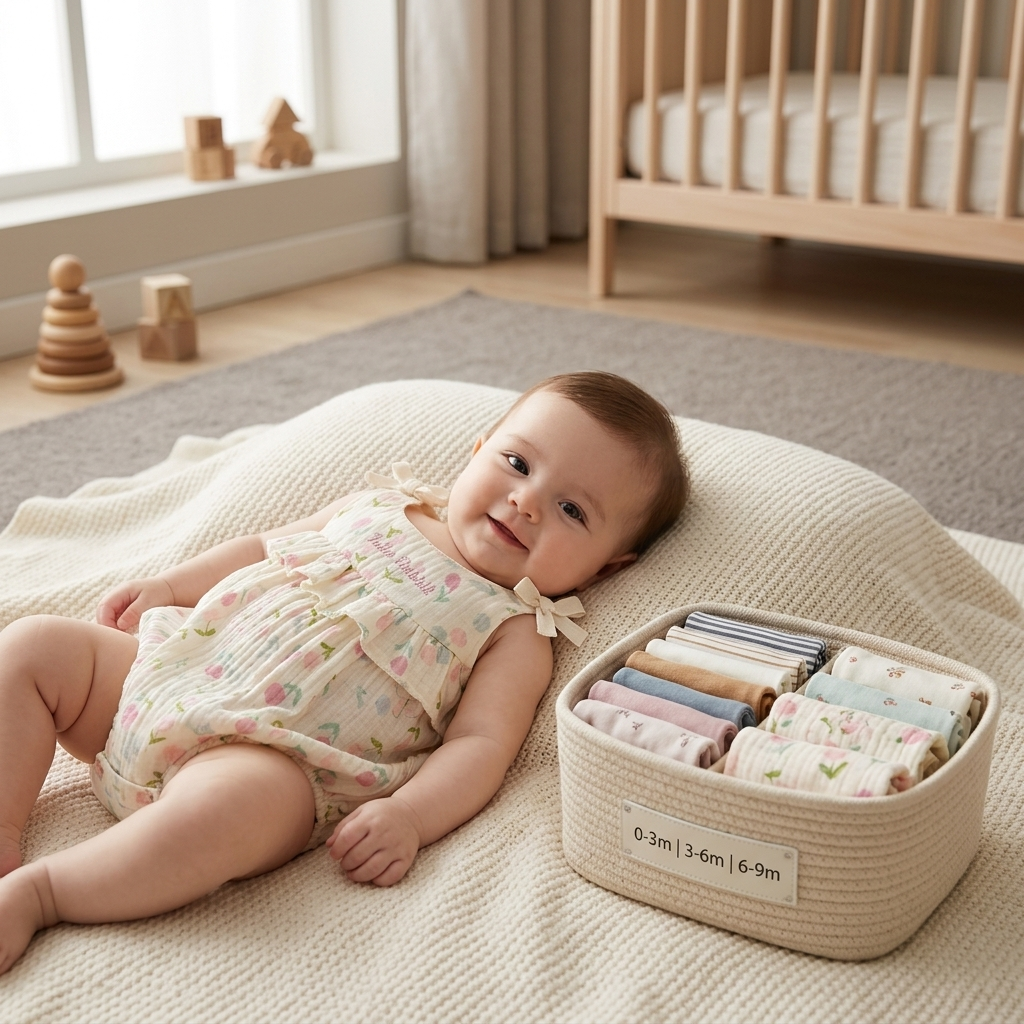
- Labelled boxes or baskets for other sizes: Store sizes your baby hasn't reached (or has outgrown) in clearly labelled bins — by size and ideally season.
- Hang the special pieces: Occasion outfits and anything that creases hang best; baby hangers take little space.
- Keep daily essentials at changing height: Bodysuits, sleepsuits, and the current nappy-change basics belong exactly where you change your baby.
Sort by Season as Well as Size
A 6–9 month summer romper is no use if your baby will be that size in December. As you sort by size, note which season each size will fall in and store accordingly — keep the season-appropriate current size accessible and box the rest. This is especially useful for hand-me-downs and gifts bought ahead (see our hand-me-downs guide).
Build a “Grow-Into” and “Grown-Out-Of” System
- Grow-into box: One labelled bin per upcoming size. When something no longer fits the current rotation because it's too big, it goes here — ready to promote when your baby grows.
- Grown-out-of box: As soon as a piece is outgrown, it leaves the drawer for a “store or pass on” bin — so precious drawer space isn't wasted on clothes that no longer fit.
- Do a quick monthly sort: Babies grow fast; a five-minute monthly pass keeps the system current far better than a big seasonal overhaul.
Storing Clothes for the Next Baby
If you're keeping quality pieces for a future child (a smart move with well-made basics), store them properly: wash before storing, make sure they're fully dry, use breathable containers or bags rather than sealed plastic where possible, add a cedar block or similar to deter moths, and label clearly by size and season. Good storage now means barely-worn clothes ready to use again in a year or two (see our washing guide for pre-storage care).
Keep It Manageable: Own Less
The easiest wardrobe to organise is a smaller one. If drawers overflow no matter how you sort, the real fix may be owning fewer, more versatile pieces. A capsule approach — a compact set of mix-and-match basics per size — makes storage effortless because there's simply less to store (see our baby capsule wardrobe guide).
The Bottom Line
Organising baby clothes comes down to a simple system: sort by size (and season), file-fold the current size where you can see it, label boxes for the sizes above and below, and do a quick monthly refresh as your baby grows. Store quality pieces properly for the next child, and keep the whole thing manageable by owning fewer, better clothes. Do that and you'll always find the right outfit in the right size — even at 3am.
For versatile, easy-to-store basics, browse our collections, and see our capsule wardrobe guide to keep the whole system simple.