


Ask any experienced parent for the one baby item they'd buy again without hesitation, and a surprising number will say the same humble thing: muslin cloths. These large, lightweight, loosely woven cotton squares are the quiet workhorses of early parenthood — swaddle, burp cloth, sun shade, play mat, nursing cover, and comforter, all in one. But not all muslins are equal, and the differences in size, weave, and fabric genuinely matter. Here's what to look for when buying muslin swaddle blankets, and how to get the most from them.
Why Muslin Is So Useful
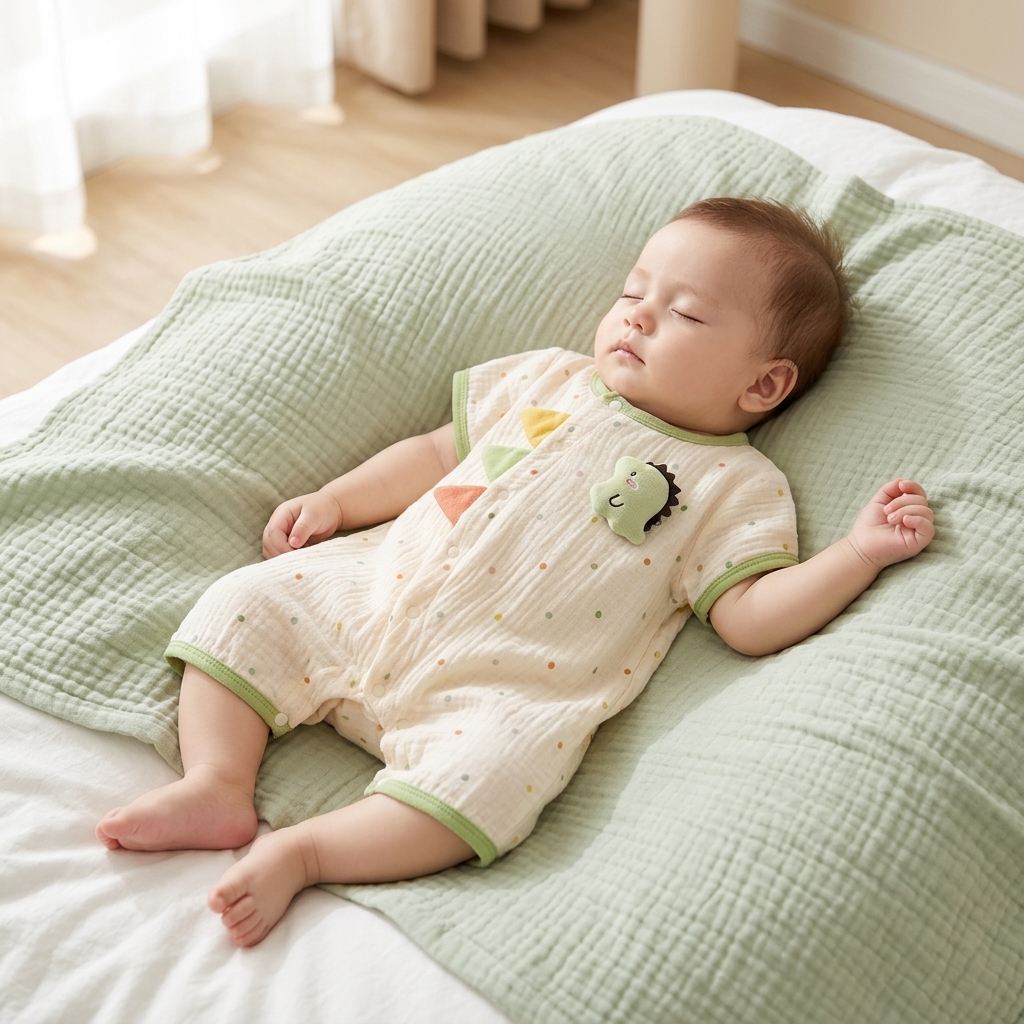
Muslin's magic is in its loose, open weave. That structure makes it exceptionally breathable — which is why it's the preferred fabric for swaddling, especially in warmer weather, since it reduces the overheating risk associated with heavier wraps. It's also lightweight, quick-drying, and gets softer with every wash. One cloth genuinely does the work of several products:
- Swaddling: Breathable, stretchy enough to wrap snugly, the classic use.
- Burp cloth: Absorbent and washable, over the shoulder.
- Sun shade: Draped over a pram, it shades without trapping heat the way a thick blanket would (leave airflow and don't fully cover — see safety note).
- Play mat or changing surface: A clean layer anywhere you need one.
- Comforter: Many babies bond with a familiar-smelling muslin as a soothing object (for supervised, awake use in young babies).
- Nursing cover or mopping up: The endless miscellaneous uses.
What to Look For When Buying
- Size: Bigger is better for swaddling. Look for large squares (around 110×110cm / 47×47in) — small muslins are fine as burp cloths but frustrating for wrapping a growing baby.
- Fabric: 100% cotton is the classic; cotton-bamboo blends are prized for extra softness and absorbency. Either way, prioritise a soft, breathable natural fibre. Organic, certified cotton is gentlest for sensitive skin (see our organic cotton guide).
- Weave quality: A good muslin is loosely woven enough to be breathable but tight enough not to snag or develop holes quickly. Cheaper muslins can pill or thin out fast.
- Softness: Quality muslin starts soft and softens further with washing. Pre-washing before first use improves softness and absorbency.
- Buy several: You will always want more than you think — a set of 4–6 means there's always a clean one to hand.
- Certifications: OEKO-TEX or GOTS labels confirm the fabric is free from harmful substances — reassuring against delicate skin.
How to Swaddle Safely with a Muslin
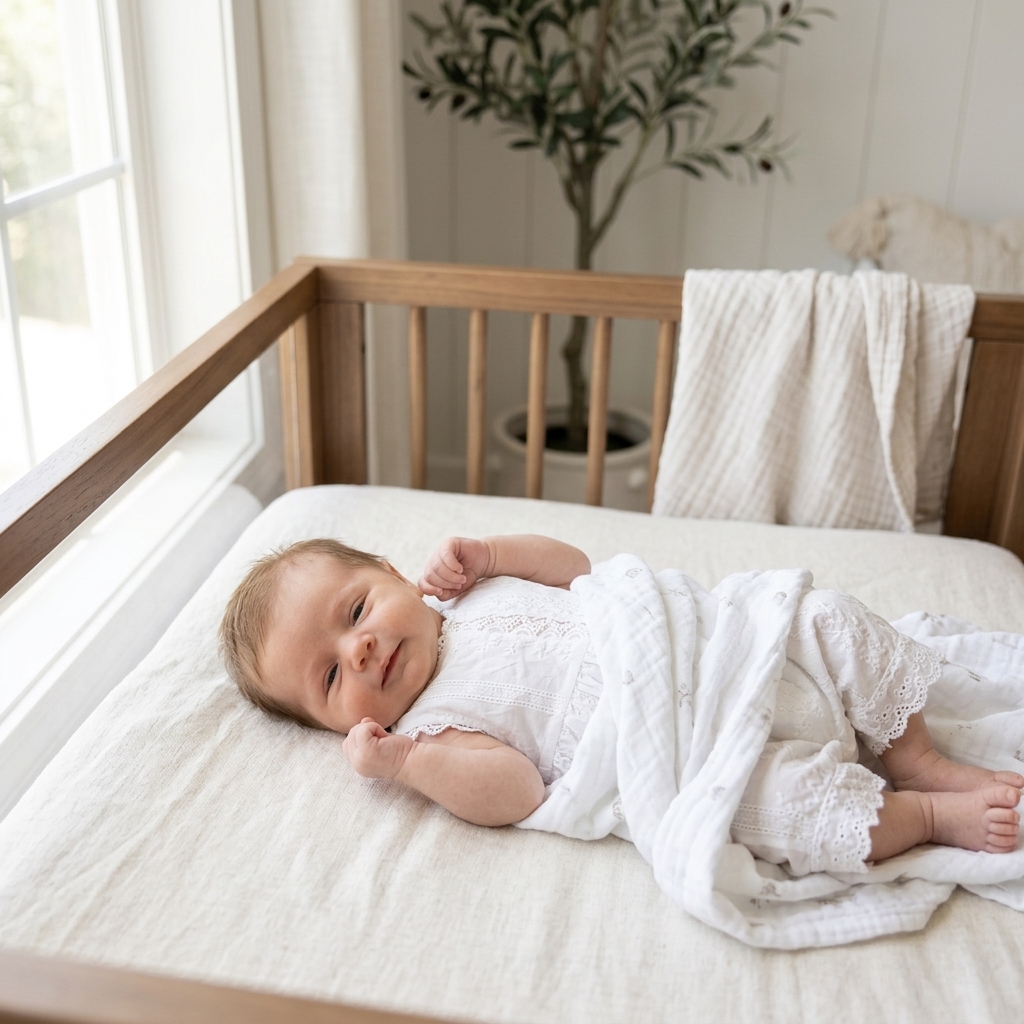
Muslin's breathability makes it a great swaddle fabric, but safe technique matters:
- Snug around the arms, loose at the hips: The wrap should be firm enough that it won't come undone, but leave room for the legs and hips to bend and move freely — important for healthy hip development.
- Always place a swaddled baby on their back to sleep.
- Stop swaddling at the first signs of rolling (usually around 8 weeks), switching to a sleep sack.
- Don't over-layer: A muslin swaddle counts as a layer — factor it into how warmly baby is dressed to avoid overheating.
- For pram shades, keep airflow: Never fully cover a pram with fabric in a way that traps heat or restricts air; clip it to allow ventilation and keep checking baby.
Caring for Muslins
- Wash before first use to soften and improve absorbency
- Use a fragrance-free, non-bio detergent; skip fabric softener (it reduces absorbency)
- Wash at a moderate temperature; tumble drying on low actually helps keep them soft, though air drying is gentler on the fibres
- Expect them to soften and improve over months of use
The Bottom Line
A good muslin swaddle blanket is one of the highest-value, most-used baby purchases you can make — endlessly versatile, breathable enough for safe warm-weather swaddling, and only better with age. Buy large squares in soft, certified natural cotton, get several, and you'll reach for them every single day of the early years.
For more on safe sleep and swaddling, see our baby sleepwear guide, and browse soft cotton pieces in our collections.