


If you've ever watched a baby light up at the sight of a particular soft bunny or scrap of blanket, you've met a lovey in action. These little comfort objects can become a baby's most treasured possession — a source of calm at bedtime, on car rides, and through every big new experience. But what exactly is a lovey, why do babies bond with them, and how do you choose a good one? Here's a parent's guide.
What is a lovey?
A lovey is a small, soft comfort object a baby forms an attachment to — you might also hear it called a security blanket, comforter, snuggly, or, in child-development terms, a transitional object. It's usually a little square of soft fabric, sometimes with a small animal head or knotted corners for tiny hands to grip. Whatever the shape, its job is the same: to offer familiar, portable comfort.
Why do babies get attached to a lovey?
That attachment isn't just cute — it's developmentally healthy. A lovey acts as a bridge between being with a caregiver and learning to self-soothe. The familiar texture and scent tell your baby they're safe, which is why a lovey can work wonders at these moments:
- Settling to sleep — a consistent comfort object becomes part of the bedtime cue that says it's time to rest.
- Easing separations — daycare drop-offs and time with new people feel less daunting with something familiar to hold.
- Self-soothing — it helps babies learn to calm themselves, an important step toward independence.
- Navigating change — travel, new places, and big milestones are all a little gentler with a trusted companion along.
When do babies bond with a comfort object?
Many babies start showing a preference for a particular object somewhere between 6 and 12 months, though it varies widely — some bond early, others never latch onto one at all, and all of that is completely normal. Just keep in mind that where sleep is concerned, safety comes first: soft objects shouldn't share the crib with babies under 12 months. For the full picture on the safe age and how to introduce one at bedtime, see our guide to when your baby can safely sleep with a lovey.
Types of comfort objects
Loveys come in a few forms, and babies aren't fussy about the label:
- Lovey / security blanket — a small flat comforter, often with a soft toy head or knotted corners.
- Muslin blanket — a lightweight, breathable square many babies adopt as their favorite.
- Soft toy — a small, simple stuffed animal (for supervised, age-appropriate use).
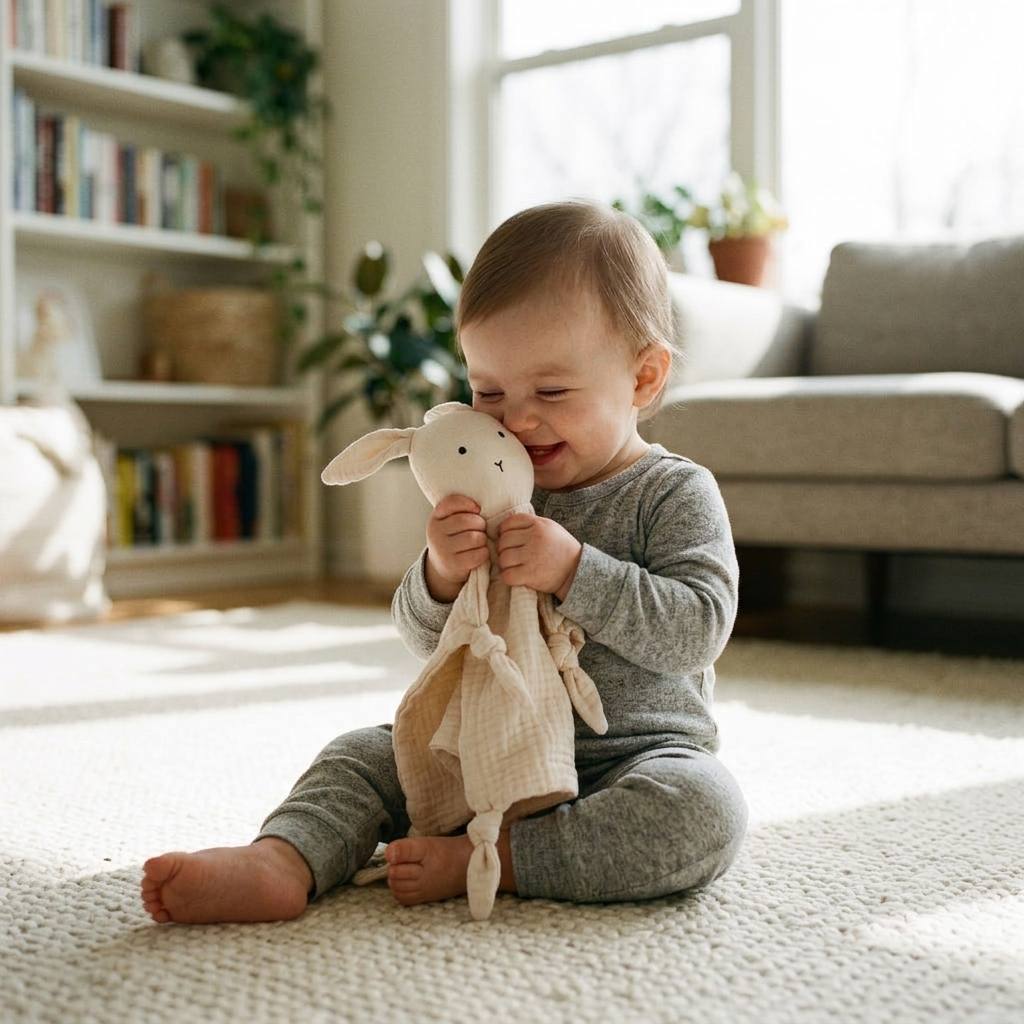
Our Bunny Muslin Comfort Lovey is a lovely example: a single, lightweight piece of breathable cotton muslin with a soft bunny and knotted corners made for little hands to hold — simple, gentle, and easy to love.
How to choose a good lovey
The best comfort objects share a few features:
- Small and lightweight — easy to carry and cuddle.
- Breathable, natural fabric — soft cotton or muslin over dense, heavily stuffed plush.
- One simple piece with no loose parts — avoid button eyes, beads, or anything that could detach.
- Machine washable — because it will be loved, dropped, and drooled on daily.

Muslin is a natural fit for comfort objects — soft, airy, and gentle on delicate skin (here's why muslin is so good for babies). A lightweight square like our Botanical Print Muslin Swaddle Blanket works as a breathable swaddle early on and can become a familiar, well-loved comforter as your baby grows.
Tips to help your baby bond with a lovey
- Introduce it during awake, supervised cuddles so it becomes familiar safely.
- Add your scent — keep it close to you for a little while so it carries a comforting, familiar smell.
- Keep it consistent — offer the same one at naps and bedtime so it becomes part of the routine.
- Buy two if you can — an identical backup is a lifesaver on laundry day or if one goes missing.
Frequently asked questions
What's the difference between a lovey and a security blanket? Very little — they're different names for the same idea. A lovey often has a small toy element, while a security blanket is just fabric, but both are transitional comfort objects.
When do babies get attached to a lovey? Commonly between 6 and 12 months, though it varies from baby to baby.
Are loveys safe? Yes, with age-appropriate use — choose a small, breathable, one-piece design, and keep soft objects out of the crib until your baby is over 12 months.
The bottom line
A lovey is a small comfort object with a big job: helping your baby feel secure, settle to sleep, and face the world with a little courage. Choose a soft, breathable, one-piece design, introduce it gently, and keep a backup on hand — and you'll have given your little one a trusted companion for years of cuddles ahead.