


Teething is one of the most discussed — and most misunderstood — aspects of baby development. Parents attribute an enormous range of symptoms to teething, pediatricians push back on most of them, and meanwhile a distressed baby with swollen gums needs real help regardless of what's officially causing what. Here's the complete, evidence-based guide to teething: when it starts, what it actually causes, and what actually helps.
When Do Babies Start Teething?
The first tooth typically erupts between 4 and 7 months, though the normal range extends considerably wider. Some babies cut their first tooth as early as 3 months; others don't get their first until 12–14 months. Both ends of this range are completely normal as long as the pediatric dentist or pediatrician is not concerned.
A family history of early or late teething is often predictive — if both parents teethed late, their children frequently do too. If your baby is 15 months with no teeth, that warrants a dental check-in, but a 12-month-old with one tooth is almost certainly within normal variation.
Baby Tooth Eruption Timeline
Primary (baby) teeth typically emerge in a fairly predictable sequence, though the timing within that sequence varies:
| Tooth | Lower | Upper |
|---|---|---|
| Central incisors (front teeth) | 6–9 months | 8–12 months |
| Lateral incisors | 10–16 months | 9–13 months |
| First molars | 14–18 months | 13–19 months |
| Canines | 17–23 months | 16–22 months |
| Second molars | 23–31 months | 25–33 months |
The lower central incisors almost always come first. Most children have a complete set of 20 primary teeth by age 2.5–3 years.
Real Teething Symptoms vs. Myths
This is where the evidence matters most, because parents and grandparents routinely attribute a much broader range of symptoms to teething than the research supports. Large prospective studies (particularly the ORBD study tracking 125 children through every tooth eruption) identified the following as genuinely associated with teething:
Symptoms That Are Actually Caused by Teething
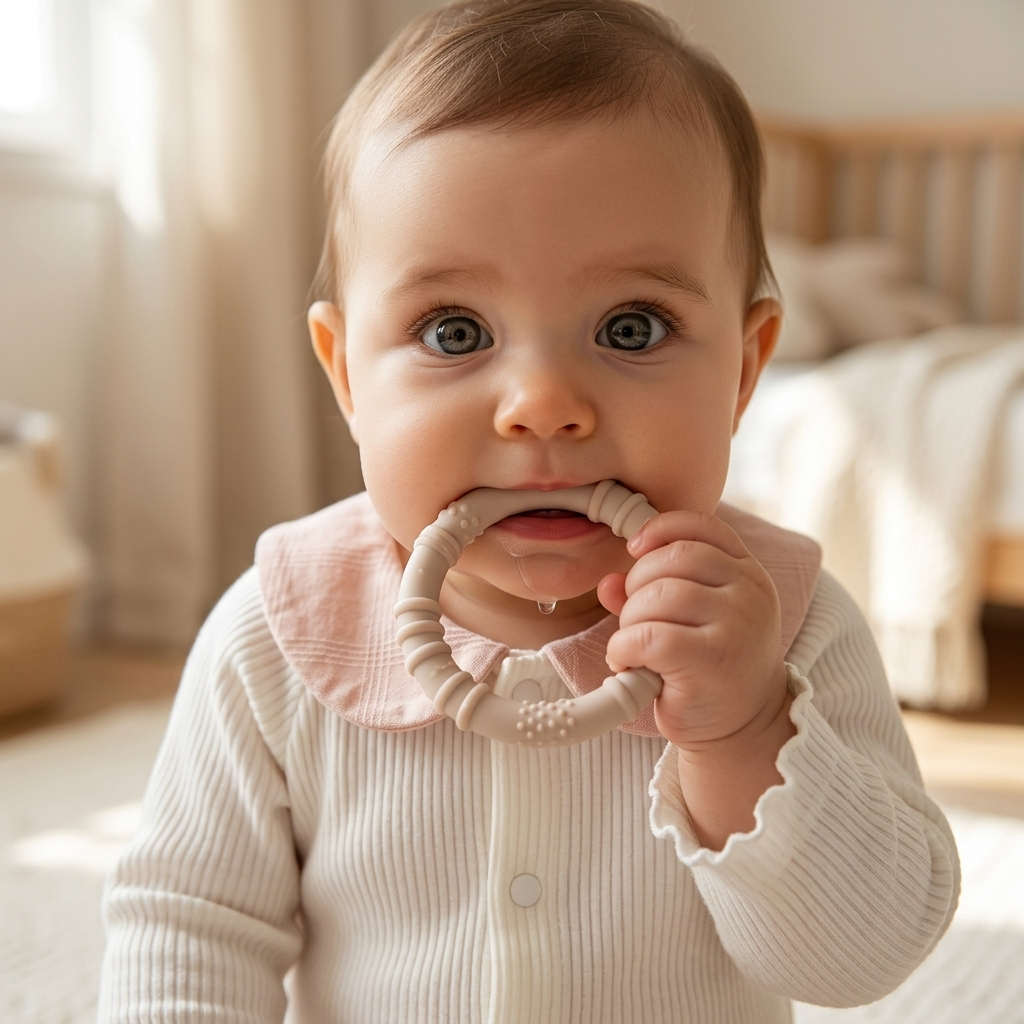
- Increased drooling: Significant, sometimes dramatic. Starts 2–3 months before any teeth appear as salivary glands mature.
- Gum swelling and tenderness: The gum over an erupting tooth becomes visibly swollen, red, and sensitive to pressure.
- Increased biting and mouthing: Counter-pressure on the gums provides relief, which is why teething babies bite everything within reach.
- Mild irritability: Correlates most strongly with molar eruption, which involves a broader surface area.
- Slightly disrupted sleep: Gum discomfort peaks in the days immediately before and during eruption.
- Decreased appetite for solids: Chewing on food is uncomfortable when gums are tender.
- Mild temperature elevation: Core body temperature may rise very slightly (less than 38°C/100.4°F). This is not a fever caused by teething.
Symptoms Not Caused by Teething (Despite Common Belief)
- Fever above 38°C/100.4°F: Teething does not cause actual fever. If your teething baby has a fever, investigate another cause — ear infection, roseola, or viral illness are common in this age group.
- Diarrhea: Not supported by evidence. The correlation exists because the teething age group is also the age group that starts solids and puts everything in their mouths, increasing exposure to pathogens.
- Rash on body: A drool rash around the mouth and chin is real; a widespread body rash is not teething-related.
- Ear pulling: Usually an ear infection or just curiosity. Teething pain doesn't radiate to the ear in a way that causes babies to pull at it.
- Significant illness: Any baby who appears genuinely unwell — high fever, inconsolable crying, difficulty breathing, refusing all feeds — should be seen by a doctor regardless of whether they're teething.
What Actually Provides Teething Relief
Evidence-Supported Options
- Cold teething rings: Chilled (not frozen) silicone or rubber teething rings provide counter-pressure and mild cold numbing. Freeze only if solid rubber — gel-filled rings can burst and the gel may be harmful.
- Cold washcloth: A wet washcloth chilled in the refrigerator for 15–20 minutes. The texture and temperature together are soothing for many babies.
- Gum massage: Clean finger or soft silicone finger brush pressed gently against swollen gum tissue. The counter-pressure is the mechanism — the same reason babies bite.
- Infant paracetamol or ibuprofen: For significant discomfort, age-appropriate acetaminophen (paracetamol) or ibuprofen (from 6 months) are the most effective relief options. Always follow dosing guidelines and consult your pediatrician.
What to Avoid
- Benzocaine gels (Orajel for babies): The FDA warns against benzocaine products for children under 2 due to risk of methemoglobinemia (a serious blood condition). Not recommended.
- Amber teething necklaces: No evidence of effectiveness and a genuine strangulation and choking hazard. Multiple pediatric organizations advise against these.
- Homeopathic teething tablets: Several brands have been recalled due to inconsistent belladonna levels. Avoid.
- Clove oil: Too concentrated for infant gum tissue. Can cause chemical burns at full strength.
How Teething Affects Dressing and Daily Routines
A teething baby drools constantly — which means outfit changes increase significantly during active teething periods. Bibs help, but the collar and chest area of any bodysuit will need frequent washing. This is the time to have more bodysuits in rotation than you think you need, and to make sure they're all machine-washable at 40°C or higher.
For a complete guide to how many outfits to have at each stage, see our baby outfits guide. For washing advice specific to drool and food stains, see our how to wash baby clothes guide.