


Ein zu großer Hut rutscht über die Augen Ihres Babys; ein zu enger hinterlässt einen roten Abdruck und bleibt zu Hause. Die richtige Größe macht den entscheidenden Unterschied – und sobald Sie den Kopfumfang Ihres Babys kennen, ist sie leichter zu finden, als Sie denken. Hier finden Sie eine einfache Übersicht über Babyhutgrößen nach Alter, erfahren, wie Sie zu Hause messen, und wie Sie eine bequeme, sichere Passform erreichen.
Babyhutgrößen richten sich nach dem Kopfumfang
Anders als bei manchen Kleidungsstücken werden Hüte nach einer einfachen Zahl bemessen: dem Kopfumfang Ihres Babys. Das Alter ist nur ein grober Richtwert, da die Köpfe von Babys unterschiedlich schnell wachsen. Am zuverlässigsten ist es daher, den Kopfumfang zu messen. Viele Hüte sind zusätzlich mit einer Altersgruppe gekennzeichnet, aber wenn Sie messen können, erhalten Sie eine deutlich bessere Passform.
Größentabelle für Babyhüte nach Alter
Nutzen Sie diese Tabelle als Ausgangspunkt und messen Sie anschließend zur Bestätigung. Die Kopfgrößen unterscheiden sich von Baby zu Baby. Betrachten Sie die Altersangaben daher als Orientierung, nicht als feste Regel.
| Alter | Kopfumfang (Zoll) | Kopfumfang (cm) |
|---|---|---|
| Frühchen | Bis zu 12,5" | Bis zu 32 cm |
| Neugeborene (0–3 Monate) | 13"–15" | 33–38 cm |
| 3–6 Monate | 15"–17" | 38–43 cm |
| 6–12 Monate | 17"–18,5" | 43–47 cm |
| 12–24 Monate | 18,5"–19,5" | 47–50 cm |
| 2–3 Jahre | 19,5"–20" | 50–51 cm |
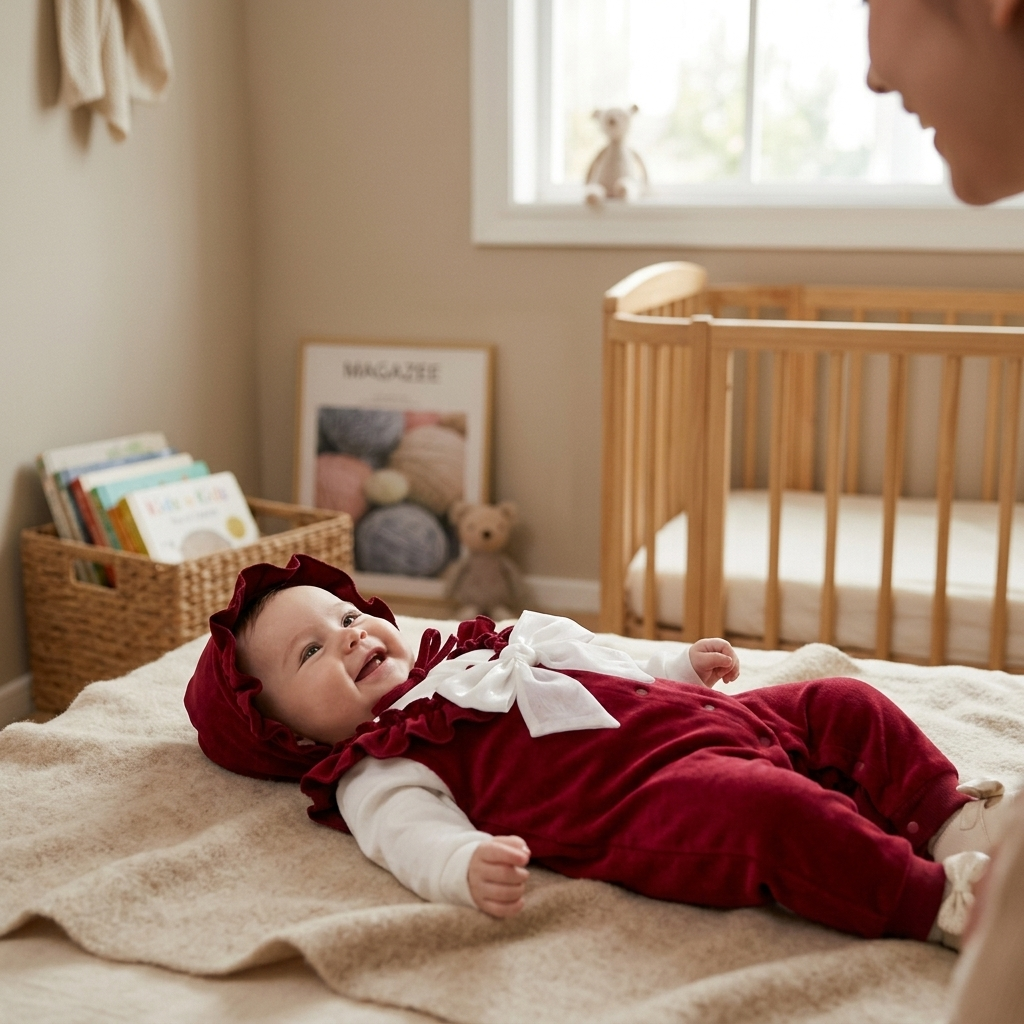
So messen Sie den Kopfumfang Ihres Babys
Sie benötigen lediglich ein weiches, flexibles Maßband, wie es zum Nähen verwendet wird. Falls Sie keines zur Hand haben, verwenden Sie ein Stück Schnur und messen Sie es anschließend an einem Lineal aus.
- Maßband anlegen: Legen Sie es um die breiteste Stelle des Kopfes Ihres Babys – etwa auf halber Höhe der Stirn, knapp oberhalb der Augenbrauen und Ohren, und hinten um die Stelle, an der der Kopf am weitesten hervorsteht.
- Eng anliegend, nicht straff: Das Maßband sollte flach am Kopf anliegen, ohne einzuschneiden.
- Zahl ablesen: Dieses Maß entspricht dem Kopfumfang Ihres Babys. Vergleichen Sie ihn mit der Tabelle oder dem Größenetikett des Hutes.
Babys zappeln, machen Sie sich daher keine Sorgen um absolute Genauigkeit. Messen Sie, wenn Ihr Baby ruhig ist oder schläft; ein annähernder Wert reicht völlig aus. Das Prinzip ist dasselbe wie beim Ermitteln der richtigen Schuhgröße für Babys: Eine schnelle Messung ist zuverlässiger, als das Alter zu schätzen.
Eine sichere, bequeme Passform
Der richtige Hut sitzt so eng, dass er an Ort und Stelle bleibt, aber niemals drückt. Achten Sie auf Folgendes:
- Keine roten Abdrücke: Wenn der Hut eine Linie auf der Stirn hinterlässt, ist er zu klein.
- Rutscht nicht über die Augen: Wenn er nach unten rutscht, ist er zu groß – wählen Sie eine kleinere Größe oder ein Modell zum Binden.
- Weicher, dehnbarer Stoff: Ein wenig Stretch sorgt dafür, dass der Hut mit Ihrem Baby mitwächst und bequem sitzt.
- Keine losen Bänder oder Schnüre in Halsnähe: Vermeiden Sie aus Sicherheitsgründen alles, was sich umwickeln oder verheddern könnte, und lassen Sie Ihr Baby niemals mit Hut schlafen.
Platz zum Wachsen
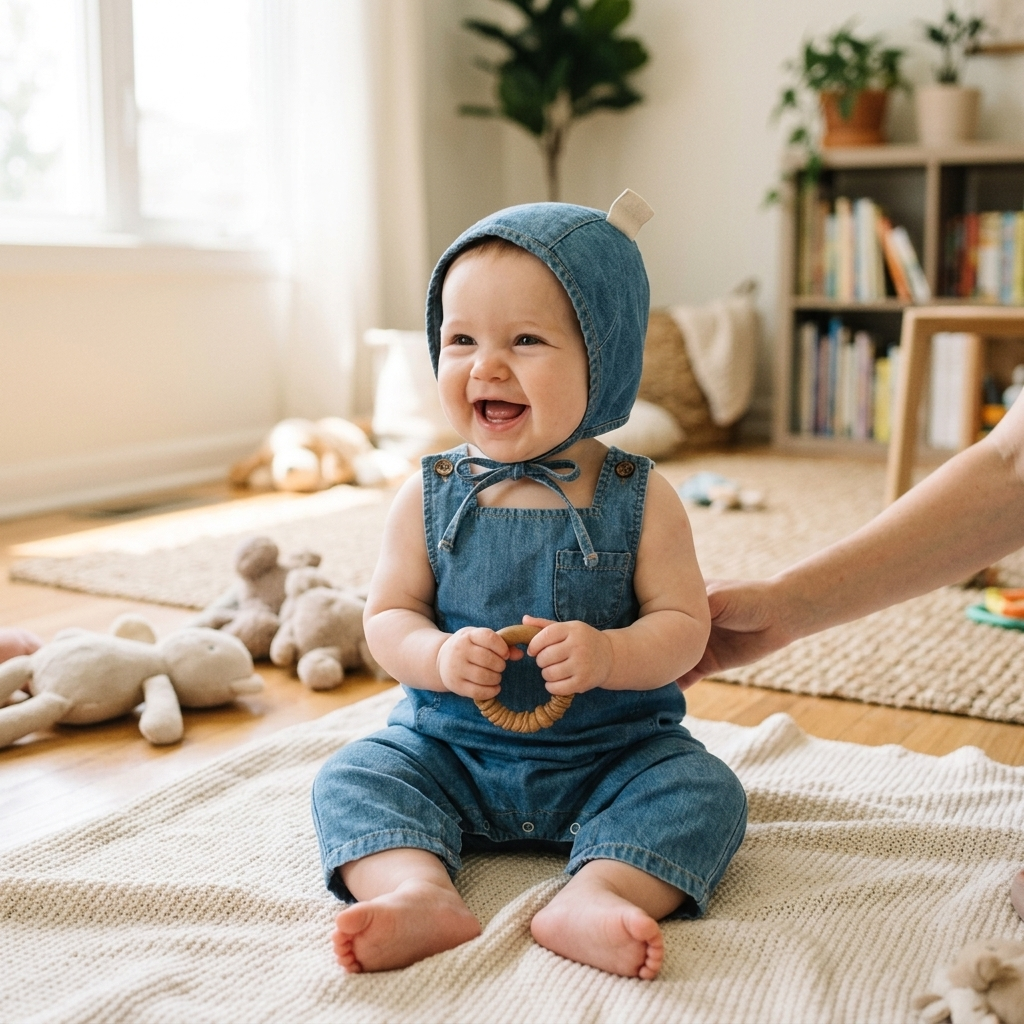
Der Kopf von Babys wächst im ersten Jahr schnell. Wenn Sie zwischen zwei Größen liegen, wählen Sie daher lieber die größere statt der kleineren Größe. Ein etwas weiter sitzender Hut funktioniert weiterhin, während ein enger innerhalb weniger Wochen zu klein wird. Dehnbare Strickmodelle sind besonders anpassungsfähig und passen sich dem Wachstum Ihres Babys an. Wie die Größen bei verschiedenen Kleidungsstücken und Marken variieren, erfahren Sie in unserem Ratgeber dazu, ob Babykleidung groß oder klein ausfällt.
Das Wichtigste auf einen Blick
Babyhüte werden nach dem Kopfumfang bemessen. Eine schnelle Messung um die breiteste Stelle des Kopfes ist daher der sicherste Weg zu einer guten Passform. Nutzen Sie die Alterstabelle als Ausgangspunkt, wählen Sie bei einer Zwischengröße die größere Größe und entscheiden Sie sich für weiche, dehnbare Stoffe, die angenehm anliegen, ohne Abdrücke zu hinterlassen. Entdecken Sie weiche, atmungsaktive Kleidungsstücke – einschließlich Hüten – in unserer Auswahl an Babykleidung aus Bio-Baumwolle.