


Most of the time, choosing baby clothes is about softness, fit, and how sweet an outfit looks. But there's a quieter consideration that matters just as much: safety. Baby clothing is regulated for good reason — small parts, cords, and certain designs can pose real hazards to babies who explore everything with their mouths and can't free themselves from a snag. The reassuring news is that knowing a handful of simple things to look for (and avoid) lets you dress your baby in confidence. Here's a practical guide to baby clothing safety.
Watch Out for Small Parts
Babies explore with their mouths, and anything that can detach from clothing becomes a potential choking hazard. The things to check:
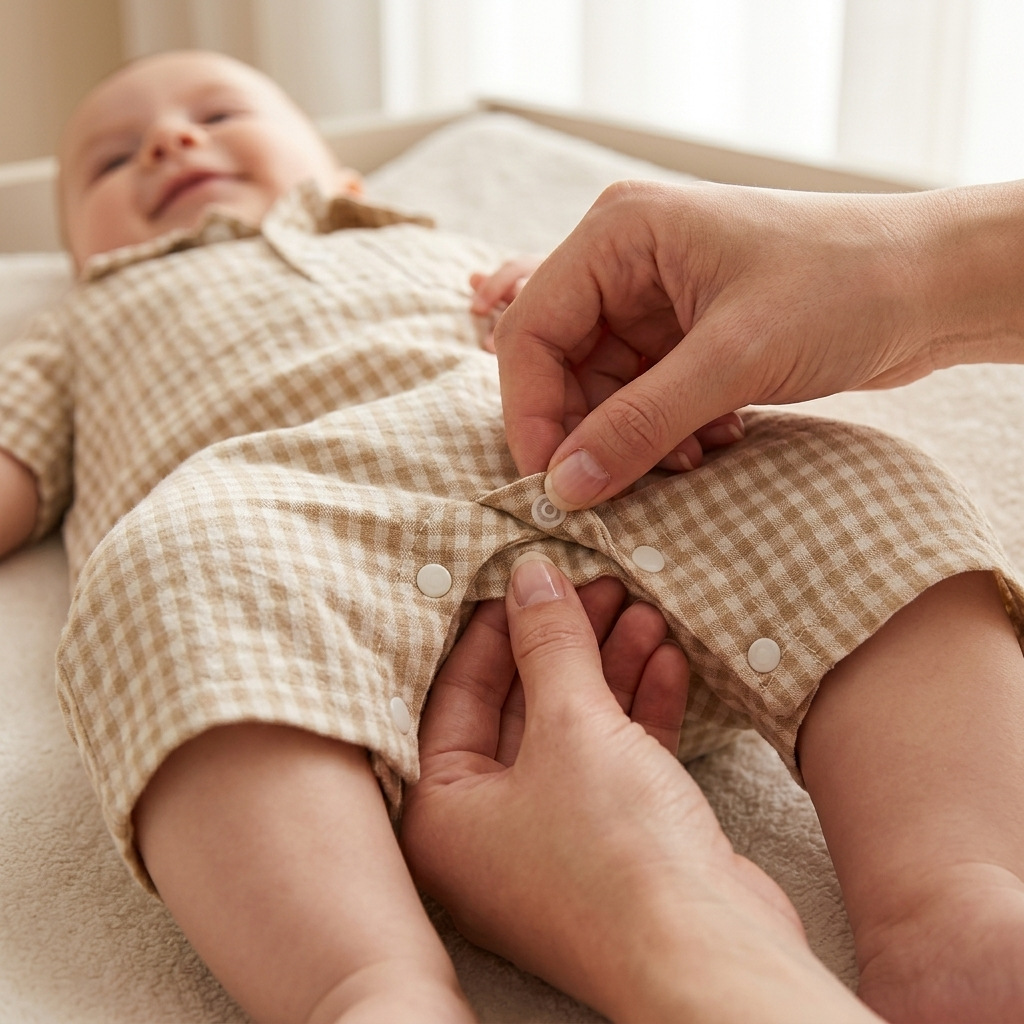
- Buttons, beads, bows, and decorations: Make sure they're very securely attached — give them a gentle tug. On clothing for young babies, fewer small embellishments is safer. Snaps and poppers are generally safer than buttons.
- Appliqués and trims: Anything stitched or glued on should be firmly fixed, with no loose edges a baby could pick at and mouth.
- Check regularly: Fastenings and decorations loosen with washing and wear — re-check periodically, especially on hand-me-downs and older items.
Cords and Drawstrings: A Known Hazard
Drawstrings and long cords — particularly around the neck and hood — are a recognised strangulation and entanglement hazard, and safety regulators (including the U.S. CPSC) have specifically targeted neck and waist drawstrings in children's clothing. The safe approach:
- Avoid drawstrings around the neck or hood entirely on baby clothing.
- Be cautious with long ties and ribbons: Decorative ties should be short and securely attached; very long ribbons or sashes are best avoided on babywear.
- Watch cords on accessories too: Hooded items, hats with long ties, and anything with a loop around the neck deserve scrutiny.

Sleepwear and Flammability
Baby sleepwear is subject to specific flammability rules in many countries. In the US, the CPSC requires that children's sleepwear (sizes above 9 months) be either flame-resistant or snug-fitting — because loose, baggy sleepwear can catch fire more easily. This is why you'll see snug cotton sleepsuits labelled “not flame resistant — must fit snugly.” Both approaches are safe; the key is not to put a baby in loose, oversized sleepwear that doesn't meet either standard. Choose correctly-fitting sleepwear and follow the label guidance.
Fit and Fabric Safety
- Right-sized, not oversized: Overly big clothes can ride up over the face or bunch dangerously; well-fitting clothes are safer (see our size chart).
- Breathable natural fabrics: Soft cotton reduces overheating risk and irritation (see our best fabrics guide).
- No loose threads: Long loose threads can wrap around tiny fingers or toes — a real hazard. Trim any you find, and check inside socks and mittens.
- Certifications: OEKO-TEX confirms fabric is free from harmful substances — reassurance against delicate skin.
The Car Seat Safety Reminder
Worth repeating because it's so important: never put a baby in a thick, bulky coat or snowsuit under a car seat harness. Bulky padding compresses in a crash, leaving the harness dangerously loose. Use thin layers with a snug harness and add warmth over the top (more in our winter dressing guide).
A Quick Safety Checklist
- Buttons, bows, and decorations securely attached (tug-tested)
- No drawstrings or long cords around the neck or hood
- Sleepwear either flame-resistant or snug-fitting (per the label)
- Well-fitting, not oversized
- No loose threads inside, especially in socks and mittens
- Soft, breathable fabric; secure, working fastenings
- Re-check older items and hand-me-downs before each use
The Bottom Line
Safe baby clothing comes down to simple, well-made design: securely attached decorations, no neck cords, correctly-fitting flame-aware sleepwear, breathable fabric, and no loose threads — with a quick re-check of older items. Choose reputable, properly-made clothing and run a ten-second safety glance before dressing, and you can focus on the fun part: how adorable your baby looks.
Browse our soft, simply-designed everyday pieces in the collections, and for hand-me-down safety checks see our hand-me-downs guide. This article is general information, not medical or safety-certification advice — always follow product labels and official guidance.