


When you're choosing clothes for a baby, the fabric matters more than the print, the cut, or the price tag. It's in constant contact with skin that's thinner and more reactive than an adult's, it determines how well your baby regulates temperature, and it decides whether an outfit survives a year of washing or falls apart in a month. Yet fabric is the thing most people skim past on a label. This guide breaks down the best (and worst) fabrics for baby clothes, what each does well, and how to choose with confidence.
What Makes a Good Baby Fabric?
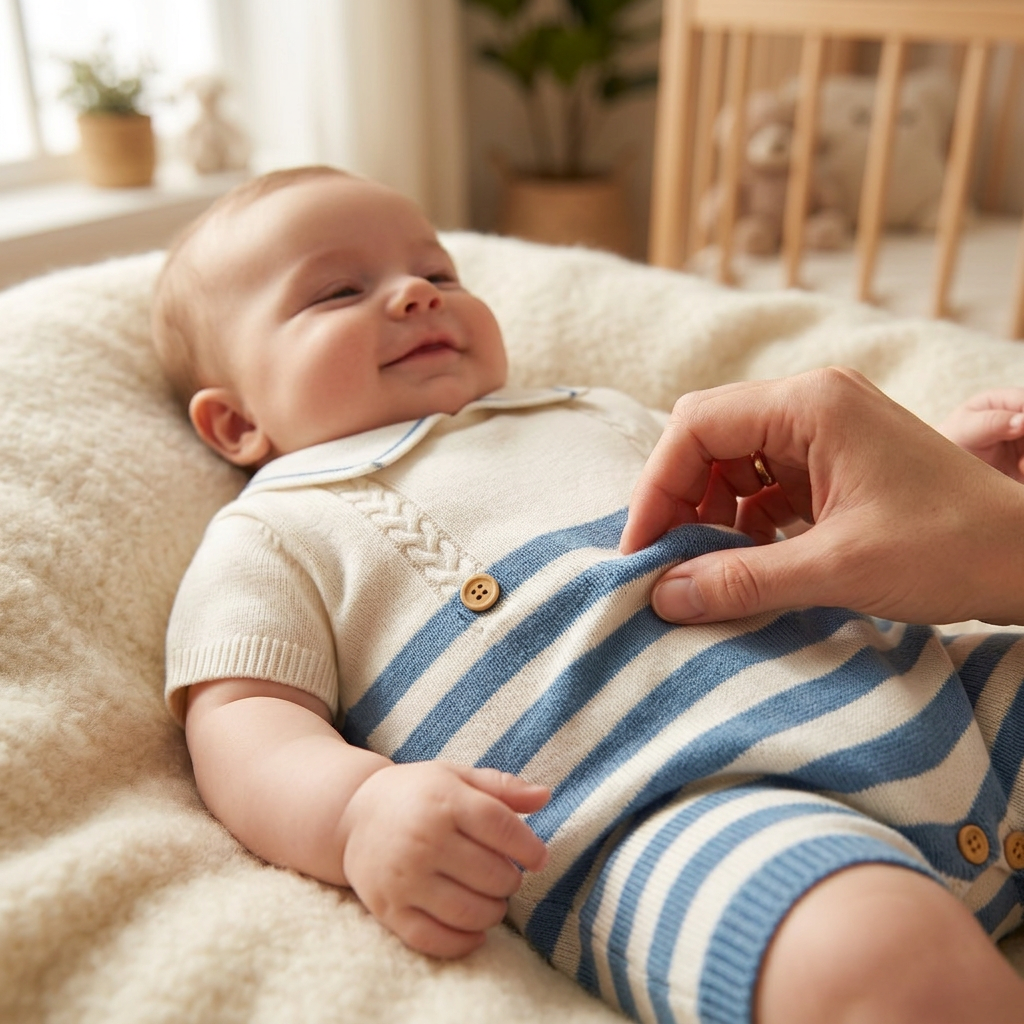
Before the specific materials, four qualities matter most for anything touching a baby's skin:
- Softness: No rough textures, stiff finishes, or scratchy seams against delicate skin.
- Breathability: Babies overheat easily and can't regulate temperature well, so fabric needs to let air circulate and wick moisture.
- Gentleness / low irritation: Few chemical residues, harsh dyes, or allergens — especially for sensitive or eczema-prone skin.
- Durability and easy care: Baby clothes are washed constantly; good fabric survives repeated hot washes and stays soft.
The Best Fabrics for Baby Clothes
- Cotton (the gold standard): Soft, breathable, absorbent, hypoallergenic, and easy to wash — cotton ticks every box and is the backbone of good babywear. Organic cotton goes further, grown without synthetic pesticides and processed with fewer harsh chemicals (see our organic cotton guide).
- Muslin (cotton): A loosely woven cotton that's exceptionally breathable and lightweight — ideal for warm weather, swaddles, and layering. Gets softer with every wash (see our muslin guide).
- Bamboo: Naturally soft (often silkier than cotton), breathable, moisture-wicking, and gentle on sensitive skin. Frequently blended with cotton for softness and durability.
- Merino wool (for warmth): Fine, non-itchy wool that regulates temperature remarkably well — warm in cold, cool in mild weather — and is naturally moisture-wicking. A great cold-weather base layer for most babies, though a small number are sensitive to it.
- Cotton blends with a little elastane: A small percentage of stretch (e.g. 95% cotton / 5% elastane) keeps the breathable comfort of cotton while adding the give that makes rompers and leggings move with a wriggling baby.
Fabrics to Approach with Caution
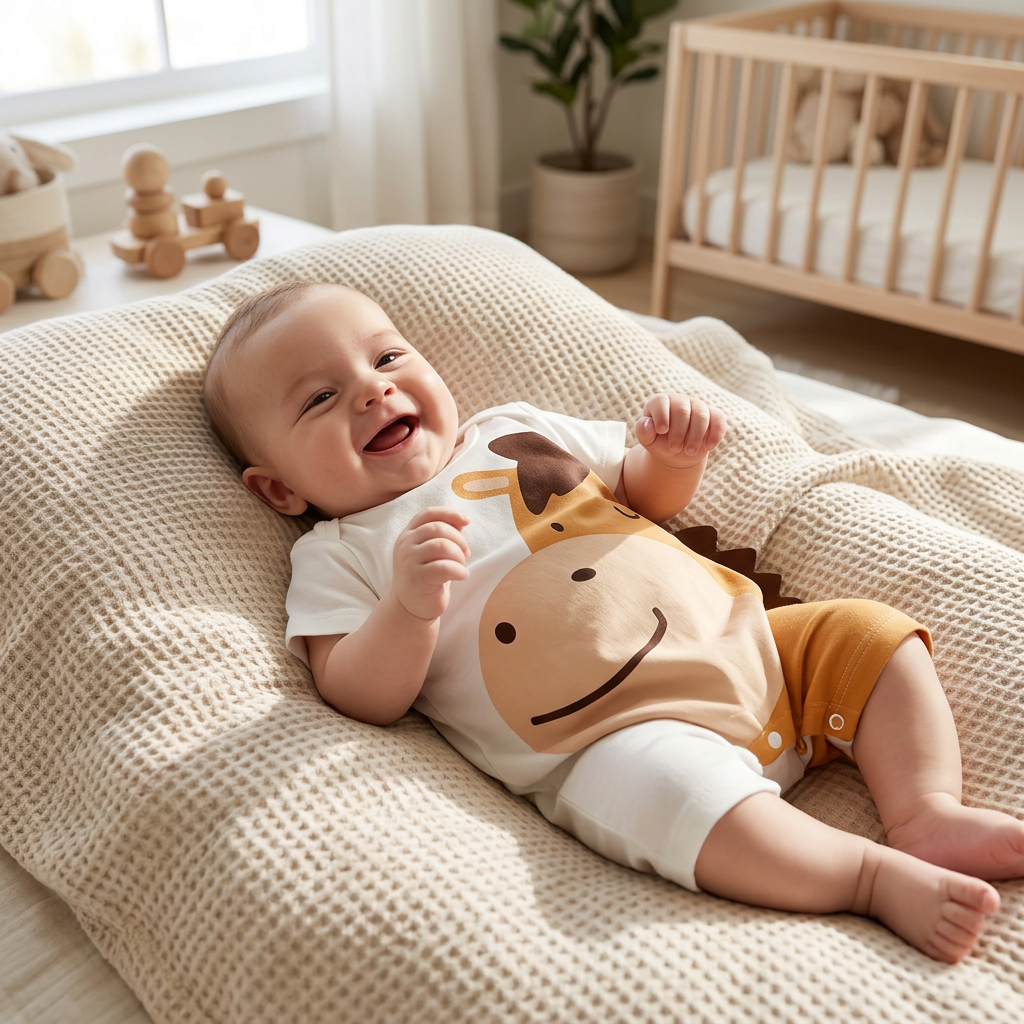
- Polyester and nylon (synthetics): They don't breathe well, trap heat and moisture, and can irritate sensitive skin — not ideal next to the skin. They're fine for outer layers (coats, pramsuits) where breathability matters less, but avoid them as base layers, especially in summer.
- Untreated/coarse wool: Regular wool can prickle and irritate — if used, keep a soft cotton layer underneath, or choose fine merino instead.
- Heavily treated “wrinkle-free” or flame-retardant-finish fabrics: Chemical finishes can irritate; look for certifications confirming the fabric is free from harmful substances.
- Fabrics with lots of synthetic embellishment against the skin: Sequins, stiff appliqués, and scratchy trims belong on outer layers, not next to skin.
The Role of Certifications
Because fabric quality and chemical safety aren't visible on sight, certifications are the reliable signal:
- GOTS (Global Organic Textile Standard): Confirms genuinely organic fibres plus strict limits on processing chemicals across the whole supply chain.
- OEKO-TEX Standard 100: Confirms the finished fabric has been tested and is free from a long list of harmful substances — exactly what you want against baby skin.
A soft fabric with one of these labels is a safe bet; an “organic” claim with no certification is worth a little scepticism.
Matching Fabric to Season and Use
- Summer / warm weather: Lightweight cotton, muslin, bamboo — maximum breathability.
- Winter / cold weather: Heavier cotton, cotton fleece, merino base layers — warmth that still breathes (layering beats one thick synthetic suit).
- Everyday wear: Soft cotton or cotton-blend rompers and bodysuits that wash easily.
- Sleep: Breathable cotton to avoid overheating (see our sleepwear guide).
The Bottom Line
For baby clothes, soft natural fibres win — cotton (ideally organic and certified) for everyday wear, muslin and bamboo for breathable warm-weather softness, and fine merino for cold-weather warmth. Keep synthetics to outer layers, watch for harsh finishes, and let GOTS or OEKO-TEX certifications guide you when you can't judge by touch. Get the fabric right and everything else — comfort, temperature, durability, and skin health — follows.
To see our own soft, breathable everyday pieces, browse our collections, and for the gentlest option for reactive skin see our sensitive skin clothing guide.