


“Is my baby too hot?” is one of the most common night-time worries there is — and one of the hardest to answer, because babies can't tell you and their hands always feel cold. The good news is that it comes down to two numbers you can actually control: the temperature of the room, and the number of layers your baby is wearing. Get those matched and the guesswork mostly disappears. Here's a temperature-by-temperature guide to dressing your baby for sleep.
The Ideal Room Temperature
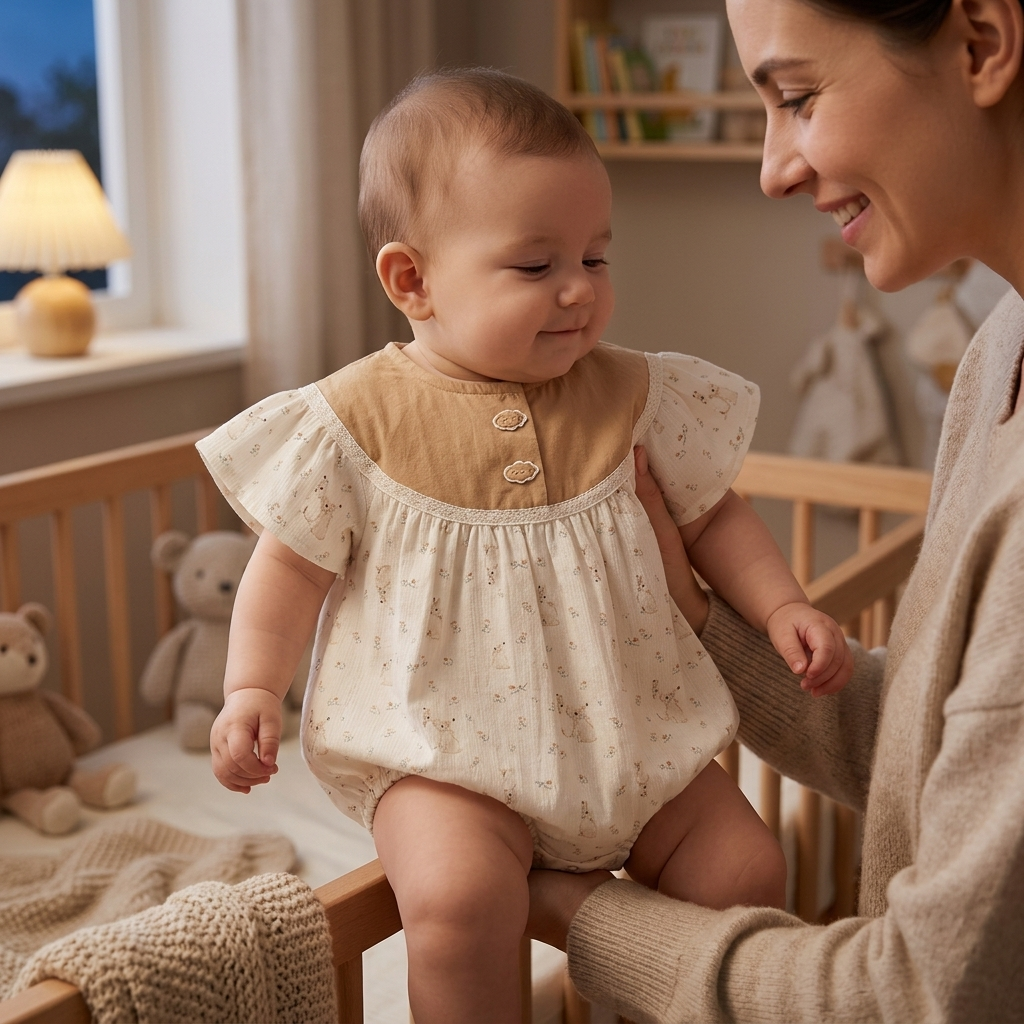
Safe-sleep guidance broadly agrees on a comfortable range of roughly 16–20°C (61–68°F) for a baby's room, with around 18–20°C often cited as the sweet spot. That's cooler than many parents instinctively set it — and deliberately so, because overheating is the greater risk for babies, not being slightly cool. A simple room thermometer takes the guesswork out entirely and is one of the cheapest useful things you can buy.
How to Dress Baby at Each Temperature
A practical starting point, assuming a sleep sack or wearable blanket over a base layer:
- Above 24°C (75°F) — very warm: A short-sleeve bodysuit alone, or just a nappy and a very light muslin. No sack, or the lightest one you have.
- 21–24°C (70–75°F) — warm: A short-sleeve bodysuit with a lightweight sleep sack.
- 18–20°C (64–68°F) — ideal: A long-sleeve bodysuit or light sleepsuit with a mid-weight sleep sack.
- 16–17°C (61–63°F) — cool: A long-sleeve sleepsuit, optionally a short-sleeve bodysuit underneath, with a warmer sleep sack.
- Below 16°C (61°F) — cold: Add a layer underneath rather than a heavy blanket — and if you can, warm the room instead.
Treat these as a starting point, not a rule: babies vary, and your own baby's comfort is the real guide.
How to Check If You Got It Right
Forget the hands — a baby's hands and feet run cool normally and will mislead you every time. Instead:
- Feel the back of the neck or the chest. It should feel comfortably warm, not hot, and not damp.
- Warm and sweaty means too hot — remove a layer. Damp hair, flushed cheeks, and rapid breathing are other signs.
- Cool chest means add a layer — though this is far less common than overheating.
- Check once during the evening, not obsessively all night. One check tells you whether the combination is right.
The Safety Rules That Don’t Change
- No loose blankets, duvets, pillows, or bumpers in the cot. A sleep sack gives warmth without anything loose — which is exactly why it replaced blankets.
- Always on the back, on a firm flat surface, in a clear cot.
- Never a hat indoors for sleep. Babies lose heat through the head; a hat indoors traps it and raises the overheating risk.
- Keep the cot away from radiators and direct sun, which can heat the sleeping space well above the room reading.
- Breathable fabrics matter. Cotton and muslin let heat escape in a way synthetics don't (see our best fabrics guide).
When the Seasons Change
Room temperature drifts more than you notice — a room that sat at 20°C all summer can be 16°C once the evenings turn, without you changing anything. When the weather shifts, re-check the thermometer and adjust the layer under the sack rather than piling on extras. The same logic applies to heatwaves in reverse: strip back to a single light layer (see our transitional layers guide).
The Bottom Line
Aim for a room around 16–20°C, then match the layers to it: a short-sleeve bodysuit in a warm room, a long-sleeve sleepsuit plus a warmer sack in a cool one, and nothing loose in the cot at any temperature. Check the back of the neck rather than the hands, err on the cooler side because overheating is the bigger risk, and re-check when the seasons turn. Two numbers, matched — and the nightly worry gets a lot quieter.
See our baby sleepwear guide for what to choose, our swaddle-to-sleep-sack guide for the transition, and browse soft breathable layers in the collections. This article is general information, not medical advice — always follow current safe-sleep guidance and your health professional.