


Picture this: your ten-month-old, who has never said a word, looks up at you during lunch, opens and closes their little fist in the air, and you realise — with something close to disbelief — that they just asked for more. No tears, no guessing, no escalating frustration. Just a small, deliberate gesture that means something. That moment, when a pre-verbal baby first tells you something on purpose, is what baby sign language is all about.
It isn't a parenting fad, and it isn't about producing a baby genius. It's a simple bridge across the gap between when babies understand language and when they can physically speak it — a gap that lasts the better part of a year and is the source of an enormous amount of frustration on both sides. Here's how it works and how to start.
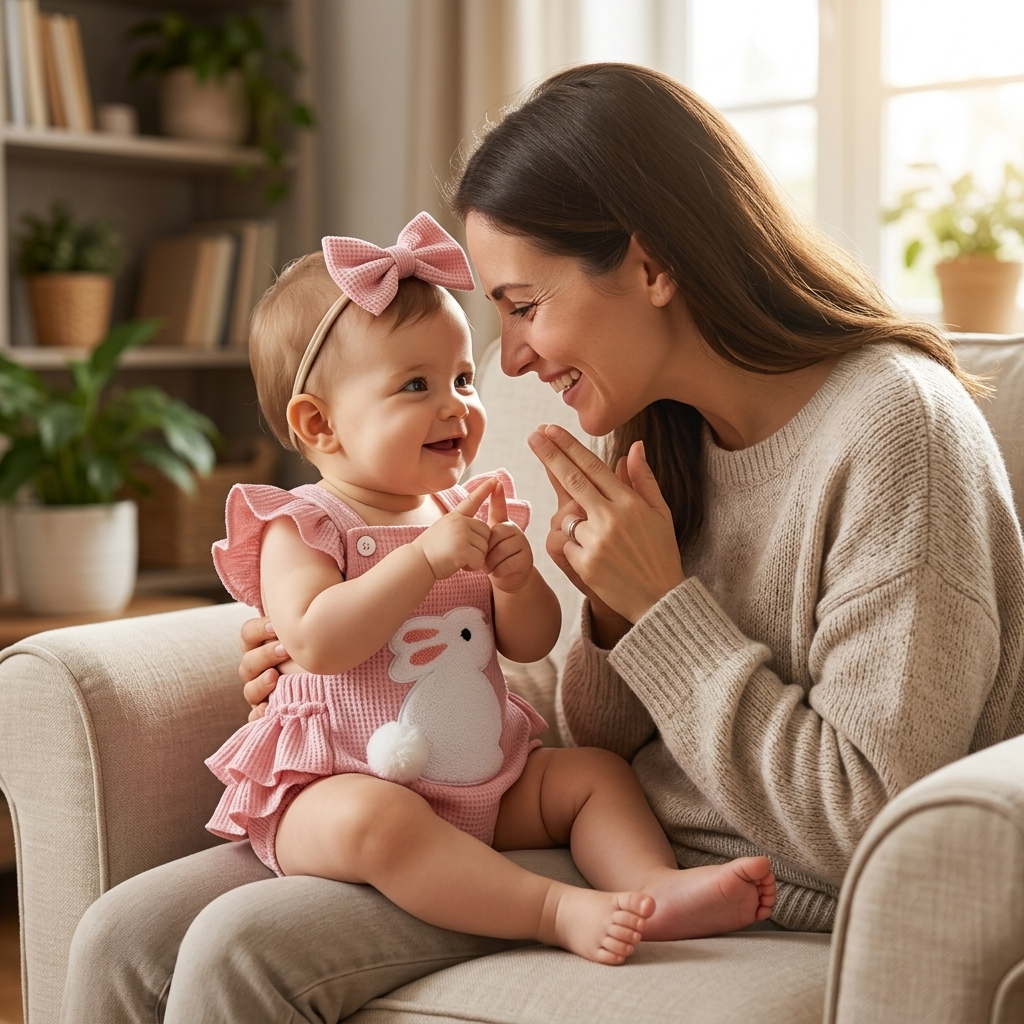
Why It Works: The Communication Gap
There's a well-documented mismatch in early development: babies understand far more than they can say, and they gain control of their hands long before they gain control of the fine motor movements needed for speech. A baby of 8–12 months can deliberately wave, point, and clap — but can't yet coordinate the tongue, lips, and breath for words. Signing simply gives them a tool they're physically ready to use, months before their voice catches up.
The concept was popularised by researchers Linda Acredolo and Susan Goodwyn, whose studies in the 1980s and 1990s on "symbolic gesturing" found that babies could readily learn and use simple gestures to communicate, and that doing so didn't delay speech — a worry many parents still have today.
Will It Delay Talking? (And Other Myths)
Myth: Signing makes babies talk later. This is the most common worry, and the evidence points the other way. Signing is always paired with the spoken word, so babies get more language exposure, not less. Most research finds signing either has no effect on speech timing or is associated with slightly earlier talking. It does not replace the drive to speak — babies abandon signs naturally as words become easier.
Myth: You need to learn ASL fluently. You don't. Most families use a handful of individual signs (often borrowed from American Sign Language, which is sensible since they're standardised) for high-value everyday concepts. You're not teaching a language; you're teaching a dozen useful words.
Myth: It's only for hearing-impaired families. Signing originated as essential communication in Deaf communities, and ASL is a full, rich language in its own right. Baby signing borrows a few of its signs for hearing babies as a temporary bridge — a different purpose, but one that owes a real debt to Deaf culture.
When to Start
You can start modelling signs as early as you like, but babies typically begin to sign back between 8 and 12 months — around the same time they develop pointing and waving. Starting around 6–7 months means the signs are familiar by the time their motor skills and memory are ready to reproduce them. If you start later, that's completely fine too; an older baby often picks signs up faster.
Don't expect instant results. There's usually a stretch of weeks where you're signing and nothing comes back. Then one day a sign appears — often imperfectly — and the floodgates open over the following weeks.
The First Signs to Teach
Start with a small set of signs tied to things your baby cares about most. Motivation is everything — a baby signs for what they want.
- Milk: Open and close your fist (like milking). Usually the first and most powerful sign because it's tied to such a strong need.
- More: Bring the fingertips of both hands together repeatedly. A mealtime favourite and often the fastest to catch on.
- All done / finished: Hands up, palms out, twisting at the wrists. Hugely useful for ending meals and activities without a meltdown.
- Eat / food: Fingertips to the lips. Pairs naturally with every meal.
- Drink: A 'C' shape hand tipped toward the mouth like holding a cup.
- Help: One flat hand placed on the other fist, lifting up. Reduces frustration enormously once mastered.
- Sleep: A flat hand drawn down over the face. Useful for tired cues.
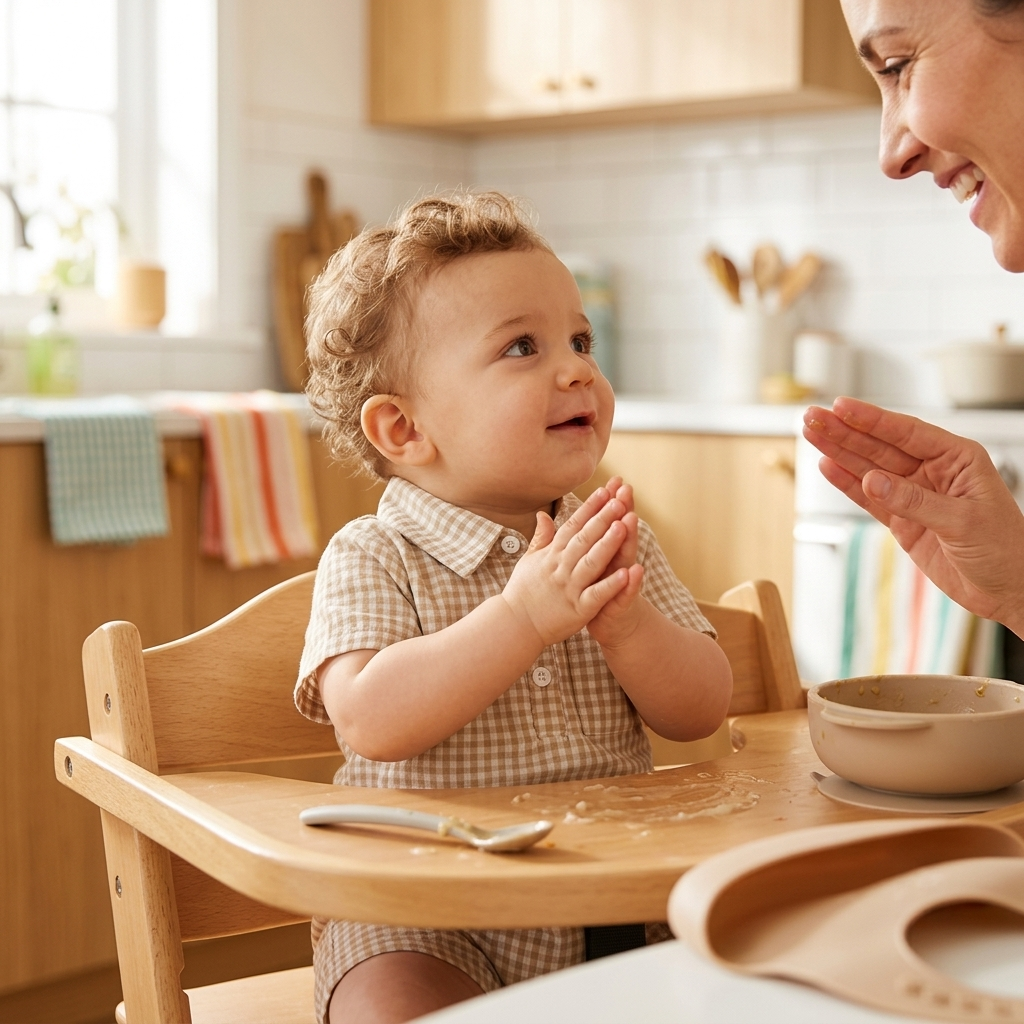
How to Teach a Sign (the Method That Works)
- Pair the sign with the spoken word, every time: Say "milk" while making the milk sign as you offer the feed. The pairing is what builds the connection.
- Use it in context, at the moment it matters: Sign "more" when offering more food, "all done" as you clear the tray. Signs learned in their natural context stick; signs drilled out of context don't.
- Repeat consistently: Every caregiver using the same signs the same way accelerates learning. Show grandparents and childcare the handful you're using.
- Get face-to-face and make eye contact: Babies learn signs by watching your hands and face together. Sit at their level.
- Celebrate any attempt: Early signs are approximate — a baby's "more" might just be two hands vaguely bumping. Respond enthusiastically to the attempt and the meaning, not the precision.
- Be patient and keep it light: This is play, not drilling. If it stops being fun for either of you, ease off. The pressure-free version is the one that works.
What to Realistically Expect
The biggest reported benefit isn't academic — it's the drop in frustration. A baby who can tell you they want more, or that they're all done, or that they need help, has fewer reasons to dissolve into tears, and you have fewer guessing games to lose. Many parents describe signing as taking the pressure out of the pre-verbal months on both sides.
The signs fade on their own as speech arrives — usually a baby will say and sign a word together for a while, then drop the sign once the word is reliable. That's the bridge doing exactly its job, then being quietly dismantled once it's no longer needed.
For the wider language picture, see our guides on when babies start talking and the first-year milestones by week. And for the communication leap that comes alongside it, our guide on separation anxiety covers the social development happening at the same age.