


Dressing a newborn can feel surprisingly intimidating in those first weeks. Their little limbs are floppy, their necks need support, and every snap seems to be in the wrong place at 3 a.m. The good news: with a simple routine and the right clothes, it becomes second nature fast. Here's a calm, step-by-step guide to dressing your baby comfortably and safely.
Before you start: set up and stay calm
Lay everything out first — a clean bodysuit or romper, a fresh diaper, and any layers you'll need. Dress your baby on a firm, flat surface like a changing mat, and keep the room warm and free of drafts. Talk or sing softly; your voice keeps babies relaxed while you work. Newborns often dislike having clothes pulled over their heads, so move gently and unhurriedly.
Step 1: The base layer
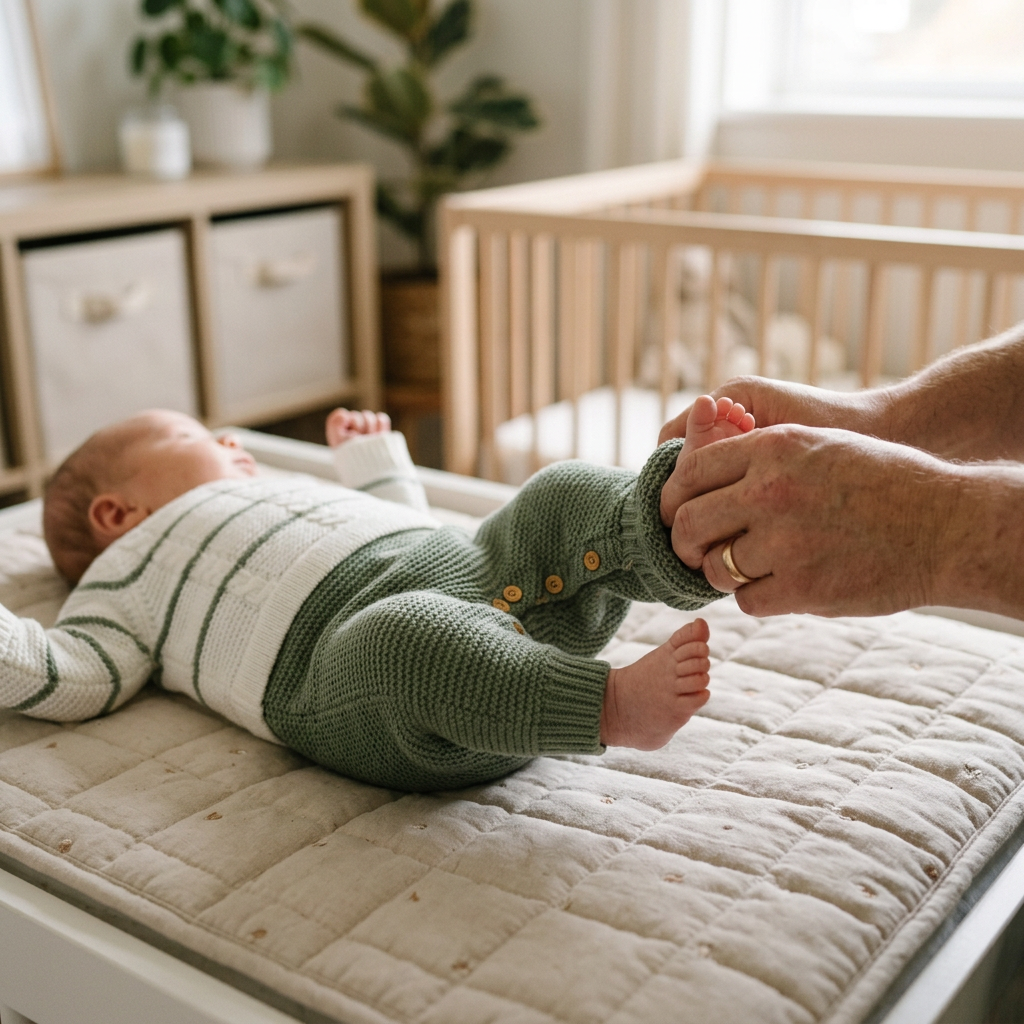
Start with a soft cotton bodysuit as the base. For envelope-neck styles, widen the neckline with both hands and ease it down over the head from front to back, keeping the fabric off your baby's face. Then guide each arm through — reach into the sleeve, take your baby's hand, and gently pull the fabric up the arm rather than pushing the arm down the sleeve. Fasten the bottom snaps last.
Step 2: Arms and legs, one at a time
The golden rule of newborn dressing: bring the clothing to the baby, not the baby to the clothing. Bunch each sleeve or leg up first, slide it over the hand or foot, then unroll it up the limb. Never tug a stiff arm or leg straight — support the joint and let it bend naturally. This protects your baby and makes the whole thing quicker.
Step 3: The outer layer or one-piece
Over the bodysuit, add a footed romper or sleepsuit for warmth and easy coverage. Footed one-pieces are a new-parent favorite because there are no separate socks to lose and nothing rides up. Snap or zip from the bottom up, then check that nothing is pulling or bunched under your baby.
How many layers does a newborn need?
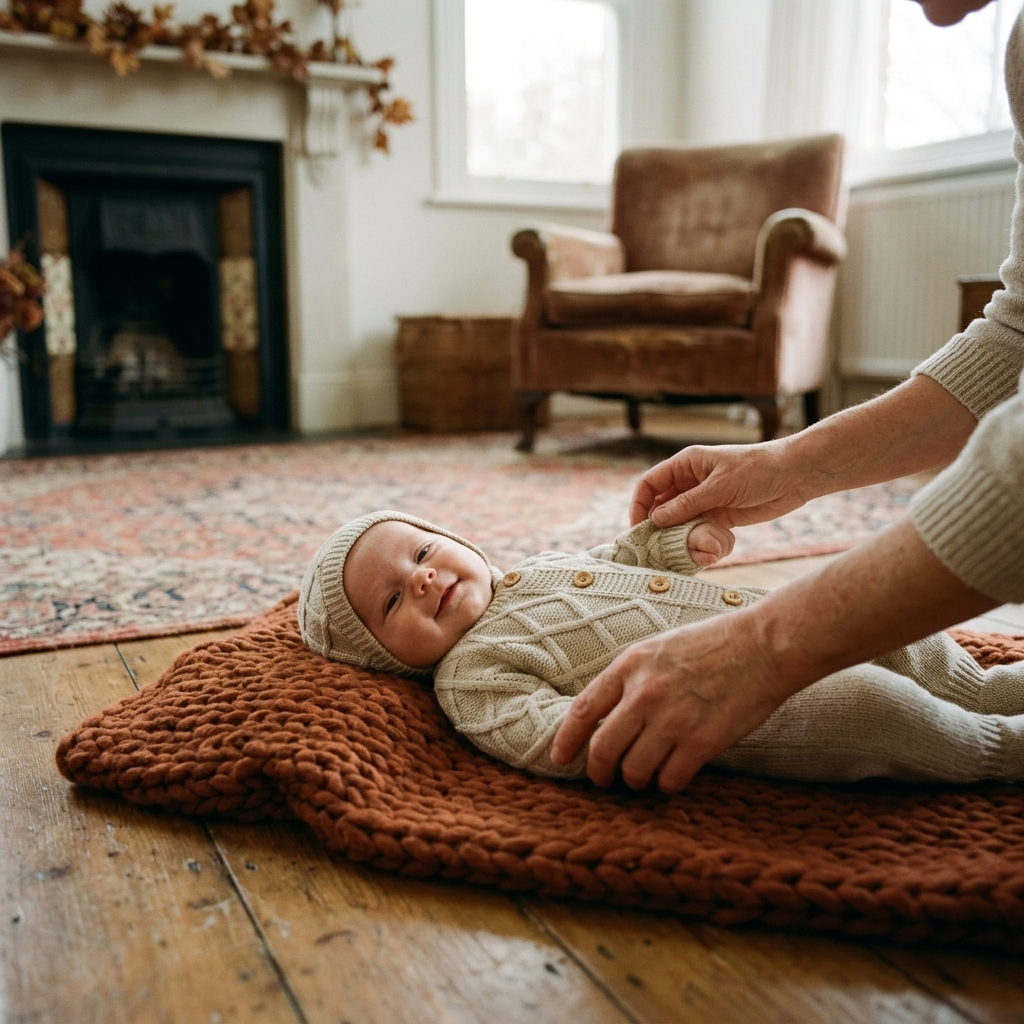
A simple rule: dress your baby in one more layer than you're comfortable wearing in the same room. Check their temperature by feeling the back of the neck or chest — not the hands and feet, which naturally run cool. If the chest feels hot or sweaty, remove a layer. Overheating is a real risk, so avoid over-bundling, and remember that hats are for outings in the cold, never for sleep. For more on this, see our guide to baby clothes safety.
Choosing newborn-friendly clothes
Dressing gets far easier when the clothes are designed for it. Look for: wide envelope necklines or full-length snaps and zippers, soft breathable cotton against the skin, flat seams, and footed styles that skip separate socks. Skip anything with tight elastic, scratchy tags, or decorations that could come loose. Simple, soft, easy-on basics — like well-made organic cotton baby clothes — make the daily routine calmer for everyone.
A note on sizing
Newborn (NB) and 0–3 months are not the same — see the difference in our newborn vs 0–3 months guide. Many babies move out of NB size within weeks, so don't over-buy the smallest size. If you're planning a first wardrobe, our post on how many baby clothes you actually need breaks it down by size. Babies born early may need extra guidance; our preemie clothing size chart can help.
The takeaway
Dressing a newborn comes down to preparation, gentle movement, and clothes that are built to be easy. Bring the clothing to the baby, layer sensibly, check for overheating, and choose soft, simple designs. Within a couple of weeks, you'll be doing it one-handed — promise. If your baby was premature or has any medical needs, always follow your pediatrician's guidance.